Quick Verdict: Jeep Goes Electric Without Losing Its Soul
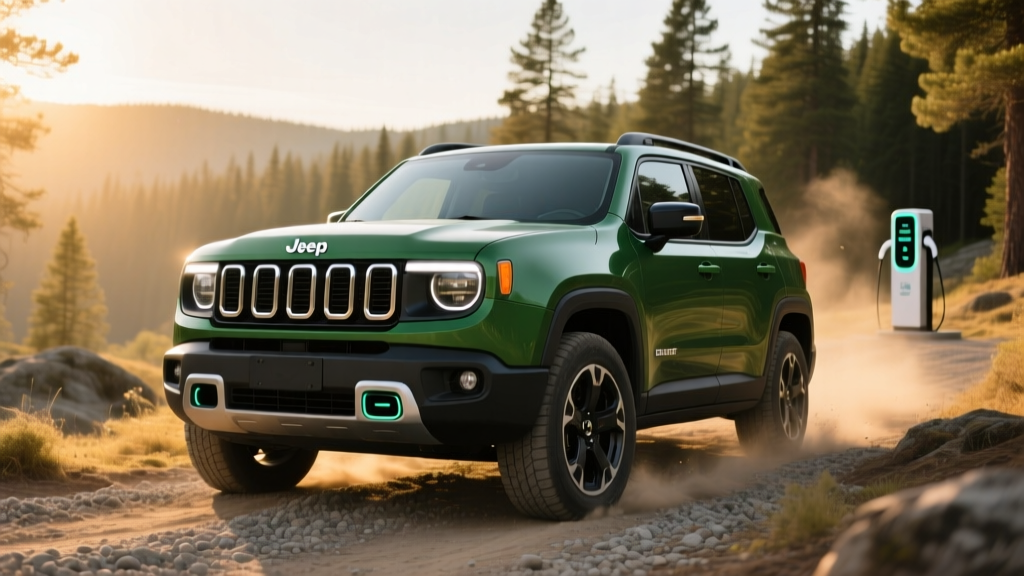
The 2026 Jeep Recon is the brand's most consequential vehicle in a decade: a fully electric, Trail Rated SUV built on Stellantis' STLA Large platform that promises Wrangler-adjacent off-road chops with daily-driver refinement. After digging into preliminary specs, platform data, and competitive positioning, the Recon shapes up as the most capable off-road EV SUV you can actually buy — though its highway efficiency and charging speed keep it from matching crossover-focused rivals on long road trips.
This review covers everything we know heading into the Recon's market arrival, with real-world expectations layered over manufacturer estimates. Because final EPA certification and IRS §30D battery-sourcing confirmation remain pending at publication, we flag every figure that is preliminary versus confirmed.
Range, Battery, and Real-World Efficiency
Jeep targets an EPA-estimated range of roughly 300 miles for the Recon in its most efficient configuration, powered by an estimated 85 kWh (usable) NMC (nickel-manganese-cobalt) lithium-ion battery pack. NMC chemistry gives Jeep the energy density needed to hit that range target in a package that still leaves room for robust skid plates and off-road suspension hardware.
EPA estimate: ~300 miles (preliminary, AWD configuration).
Real-world highway (70 mph): expect ~240–265 miles. The Recon's boxy aerodynamics and all-terrain tires create meaningful drag at speed.
Cold weather (below 30°F): budget for 20–30% range reduction, putting winter highway range in the 180–210 mile window. A heat pump (expected standard) will help mitigate cabin-heating losses, but battery chemistry still loses efficiency in deep cold.
Off-road use (low-speed technical trails): range holds up better than highway driving since aerodynamic drag is minimal, but aggressive terrain modes and frequent regeneration cycling can push consumption higher than city driving.
Efficiency is projected around 90–95 MPGe combined (roughly 35–38 kWh per 100 miles), which is competitive with the Ford Bronco Sport's expected electric variant but trails more aero-optimized crossovers like the Hyundai Ioniq 5 or Tesla Model Y. That's the physics trade-off for Trail Rated capability: you gain ground clearance and approach angles but surrender some highway watt-hours.
Charging Speed: DC Fast Charge and Home Level 2
The Recon rides on Stellantis' STLA Large architecture, which supports an 800-volt electrical system. That's a significant advantage — it enables faster DC charging and more efficient power delivery than 400V competitors.
| Charging Level | Power / Rate | Speed / Time |
|---|---|---|
| Level 1 (120V household) | ~1.4 kW | ~4–5 miles per hour |
| Level 2 (240V home, 48A) | ~11.5 kW | ~30–35 miles per hour; 0–100% in ~9 hours |
| DC Fast Charge (peak) | ~175 kW (est.) | 10–80% in approximately 25–28 minutes |
| DC Fast Charge (sustained avg) | ~120–130 kW | Above 80% SoC, charge rate tapers significantly |
A few realities worth flagging for prospective buyers:
- Peak kW is not sustained kW. The Recon may hit ~175 kW at low state of charge with a preconditioned battery, but the charge curve will taper as the battery fills. Expect an average rate closer to 120–130 kW across a full 10–80% session.
- Preconditioning matters. If you navigate to a DC fast charger using the Recon's built-in navigation, the battery thermal management system will begin warming the pack for optimal charge acceptance. Arriving at a charger cold (without preconditioning) can cut peak charge rates by 30–50%.
- Connector: NACS. Stellantis has committed to the Tesla North American Charging Standard (NACS) for its North American EVs. The Recon should ship with a native NACS port, granting access to Tesla Supercharger stations (now open to non-Tesla EVs via NACS) plus Electrify America, EVgo, and other networks.
Performance and Trail Rated Capability
Jeep hasn't released final horsepower figures, but the STLA Large platform supports dual-motor all-wheel-drive configurations producing an estimated 400+ horsepower. Expect a 0–60 mph time in the low-to-mid 5-second range for the top-trail trim, which would put the Recon in line with a V6-powered Wrangler Rubicon 392 in straight-line punch but with instant electric torque delivery.
| Attribute | Specification |
|---|---|
| Drivetrain | Dual-motor AWD (standard) |
| Horsepower | ~400+ hp (est., dual-motor combined) |
| 0–60 mph | ~5.0–5.5 seconds (est.) |
| Battery | ~85 kWh usable, NMC chemistry |
| EPA Range | ~300 miles (preliminary) |
| DC Fast Charge (peak) | ~175 kW |
| 10–80% DC Time | ~25–28 minutes |
| Level 2 Home Charge | ~11.5 kW / ~30–35 mi/hr |
| Ground Clearance | ~8.5–9.0 inches (est.) |
| Towing Capacity | ~3,500 lbs (est.) |
| Platform | STLA Large (800V architecture) |
The Trail Rated badge means the Recon must pass Jeep's internal gauntlet across five categories: traction, ground clearance, maneuverability, articulation, and water fording. Jeep has confirmed the Recon will feature:
- Selec-Terrain traction management with dedicated off-road modes (Sand, Mud, Snow, Rock)
- Electronic locking differentials (rear confirmed, front expected on top trims)
- Underbody protection — full-length skid plates shielding the battery, motor, and rear differential
- Estimated water fording depth of approximately 18–20 inches (a critical spec for trail use, though below the Wrangler's ~30 inches due to EV cooling-system vulnerability)
- Power-on-demand AWD with the ability to disconnect the front motor for efficiency on pavement, then re-engage in milliseconds off-road
Interior, Cargo, and Technology
The Recon is a midsize, five-passenger SUV with a two-row layout. Jeep is positioning it as a lifestyle-adventure vehicle — think of it as the electric successor to the Cherokee's spirit rather than a Wrangler replacement (that's a different conversation).
Interior and cargo dimensions (estimated):
- Front legroom: ~41 inches
- Rear legroom: ~38 inches
- Cargo behind rear seats: ~27–30 cubic feet
- Cargo with rear seats folded: ~55–60 cubic feet
- Front trunk (frunk): ~2–3 cubic feet (limited by front motor and electronics packaging)
The boxy, upright design maximizes headroom and cargo usability compared to sloped-roof crossovers, but it does mean the Recon sacrifices some aerodynamic efficiency. Removable roof panels and a fold-flat windshield (a Jeep heritage feature) are expected on higher trims, giving the open-air experience that sets Jeep apart from every other EV maker.
Standout technology:
- Uconnect 5 EV infotainment with a 12.3-inch touchscreen, native EV route planning that factors in charging stops, battery preconditioning, and state-of-charge targets
- Trail-specific displays: pitch/roll angle, individual wheel articulation, compass/altimeter, and a trail breadcrumb map for backtracking
- Over-the-air updates for powertrain calibration, traction management, and infotainment
- Driver assistance: adaptive cruise control with stop-and-go, lane centering, blind-spot monitoring, and trail-specific camera views (front/rear/underbody). Note: this is SAE Level 2 driver assistance — the driver must remain fully engaged at all times. This is not autonomous driving.
Notable drawbacks:
- Frunk space is modest compared to the Rivian R1S or Ford F-150 Lightning
- The boxy shape will produce noticeable wind noise above 70 mph compared to sleeker crossovers
- Towing capacity (~3,500 lbs estimated) trails the Rivian R1S (~7,700 lbs) and limits utility for boat or camper trailers
- Trail Rated water fording depth is constrained by EV thermal system vulnerability compared to ICE Wranglers
Pricing, Trims, and Federal Tax Credit Eligibility
Jeep has indicated the Recon will start in the low-to-mid $50,000 range, with fully loaded off-road trims pushing toward $60,000+. Here's the expected trim breakdown:
| Trim | Est. Base MSRP | Max §30D Credit | Effective Price (if eligible) |
|---|---|---|---|
| Recon (base) | ~$50,000–$52,000 | Up to $7,500 | ~$42,500–$44,500 |
| Recon Trail (mid) | ~$55,000–$57,000 | Up to $7,500 | ~$47,500–$49,500 |
| Recon Trailhawk (top) | ~$58,000–$62,000 | Up to $7,500 | ~$50,500–$54,500 |
Federal tax credit eligibility is not guaranteed. Under current IRS §30D rules, the 2026 Recon must clear several hurdles to qualify for the full $7,500 credit:
- MSRP cap: The Recon must have a base MSRP under $80,000 (SUV threshold). All expected trims clear this easily.
- Buyer income limits: Adjusted gross income must not exceed $150,000 (single), $225,000 (head of household), or $300,000 (joint). If you exceed these, the credit phases out entirely.
- Battery sourcing requirements: A percentage of critical minerals and battery components must be sourced from the US or free-trade-agreement partners. These thresholds tighten annually. Stellantis has been working to localize its STLA battery supply chain, but final 2026 sourcing compliance will not be confirmed until closer to launch.
- Point-of-sale transfer: If eligible, you can apply the credit as a point-of-sale discount at the dealer rather than waiting for a tax refund — effectively reducing your down payment.
Always verify current eligibility at IRS.gov before purchasing, as battery-sourcing rules and eligible-vehicle lists update regularly. Consult a tax professional for your specific situation.
Warranty and Long-Term Ownership
Stellantis is expected to provide the following warranty coverage for the 2026 Recon, consistent with its existing EV lineup:
- Battery pack: 8 years / 100,000 miles (minimum 70% capacity retention, as required by federal emissions-warranty standards that apply to EV batteries)
- Electric powertrain (motors, power electronics, reduction gear): 8 years / 100,000 miles
- Bumper-to-bumper: 3 years / 36,000 miles
- Corrosion: 5 years / unlimited miles (important for off-road use where underbody exposure to salt and water is common)
NMC battery chemistry typically sees 10–15% capacity loss over the first 100,000 miles, with degradation slowing considerably after the initial break-in period. For owners who primarily charge at home on Level 2 and avoid frequent DC fast charging to 100%, long-term health should be strong. The Recon's thermal management system (liquid cooling and heating) is critical for preserving battery life, especially for owners in extreme climates.
Competition and Decision Framework
The Recon enters a small but growing segment of adventure-oriented electric SUVs. Here's how it stacks up against the key rivals:
- Off-road capability is a genuine priority — not just a lifestyle aesthetic
- You want removable roof panels and a fold-flat windshield (no EV competitor offers this)
- Jeep's Trail Rated heritage and dealer service network matter to you
- You're willing to accept lower highway efficiency in exchange for ground clearance and articulation
- Rivian R1S: You need three rows, 7,700-lb towing, or 400+ mile range (at a higher price point)
- Hyundai Ioniq 5 / Kia EV9: You prioritize highway efficiency, faster DC charging, and a lower starting price over off-road chops
- Ford Bronco (ICE/PHEV): You want proven off-road hardware today and aren't ready for a full EV, or need longer range for remote trail access where charging is unavailable
- Genuine Trail Rated off-road hardware in an EV — locking diffs, skid plates, Selec-Terrain modes
- Open-air experience with removable roof panels and fold-flat windshield
- 800V architecture enables competitive DC fast charging
- Instant electric torque is ideal for technical rock crawling
- Qualifies under the $80K MSRP cap for the full §30D tax credit (pending sourcing compliance)
- Boxy aerodynamics hurt highway range and efficiency vs. sleeker crossovers
- Modest frunk space compared to Rivian R1S or Ford Lightning
- Estimated ~3,500-lb towing capacity trails Rivian R1S significantly
- Water fording depth limited compared to ICE Wrangler (EV cooling vulnerability)
- Final EPA range, pricing, and tax credit sourcing compliance not yet confirmed at publication
Who the 2026 Jeep Recon Is For
Best suited for: Active-lifestyle buyers who regularly drive on unpaved roads, forest service trails, or light-to-moderate off-road terrain and want to electrify without sacrificing capability. The Recon is a strong daily driver that can handle weekend trail runs, ski-trip mountain passes, and camping-access roads with genuine confidence — not just a lifted crossover pretending to be rugged.
Not ideal for: High-mileage highway commuters who prioritize maximum range and efficiency per mile (look at the Ioniq 5 or Model Y), families needing three rows (Rivian R1S or Kia EV9), or heavy towers hauling boats and campers above 3,500 pounds.
Frequently Asked Questions
What is the real-world range of the 2026 Jeep Recon?
The Recon targets approximately 300 miles of EPA-estimated range (preliminary). In real-world highway driving at 70 mph, expect 240–265 miles. In cold weather below 30°F, plan for 180–210 miles on the highway. Off-road at low speeds, range consumption is closer to city driving figures.
How fast does the Jeep Recon charge?
On a DC fast charger, the Recon is estimated to peak at ~175 kW and charge from 10–80% in roughly 25–28 minutes with a preconditioned battery. At home on a 240V Level 2 charger (48A), expect ~11.5 kW and a full charge in about 9 hours — practical for overnight charging.
Does the 2026 Jeep Recon qualify for the federal EV tax credit?
The Recon's estimated MSRP falls well under the $80,000 SUV cap, so it clears that hurdle. Full $7,500 credit eligibility depends on your income (must be under $150K single / $300K joint), and critically, on Stellantis' battery-sourcing compliance with §30D critical-mineral and component requirements. Verify at IRS.gov closer to your purchase date.
Is the Jeep Recon worth buying over the Rivian R1S or Hyundai Ioniq 5?
It depends on your priorities. The Recon wins on open-air experience, Trail Rated off-road credibility, and Jeep dealer accessibility. The Rivian R1S wins on range, towing, and three-row seating (at a higher price). The Ioniq 5 wins on efficiency, charging speed, and value. If genuine off-road capability and Jeep heritage matter to you, the Recon occupies a niche no competitor fills.
Can the Jeep Recon tow, and how much?
Estimated towing capacity is approximately 3,500 pounds — enough for a small utility trailer, a pair of dirt bikes, or a lightweight teardrop camper. It falls well short of the Rivian R1S (~7,700 lbs) and is not suited for boat trailers or mid-size travel trailers.
What charging connector does the Recon use?
The Recon is expected to use the NACS (North American Charging Standard) connector natively, giving access to the Tesla Supercharger network (open to NACS-equipped non-Tesla vehicles) as well as Electrify America, EVgo, and other major networks. See Stellantis' official announcements for final confirmation.
When will the 2026 Jeep Recon be available?
Jeep has confirmed the Recon for production, with initial deliveries targeted for the 2026 model year. Exact on-sale timing and final EPA-certified specifications will be confirmed closer to launch. All specs in this review are preliminary and subject to change.