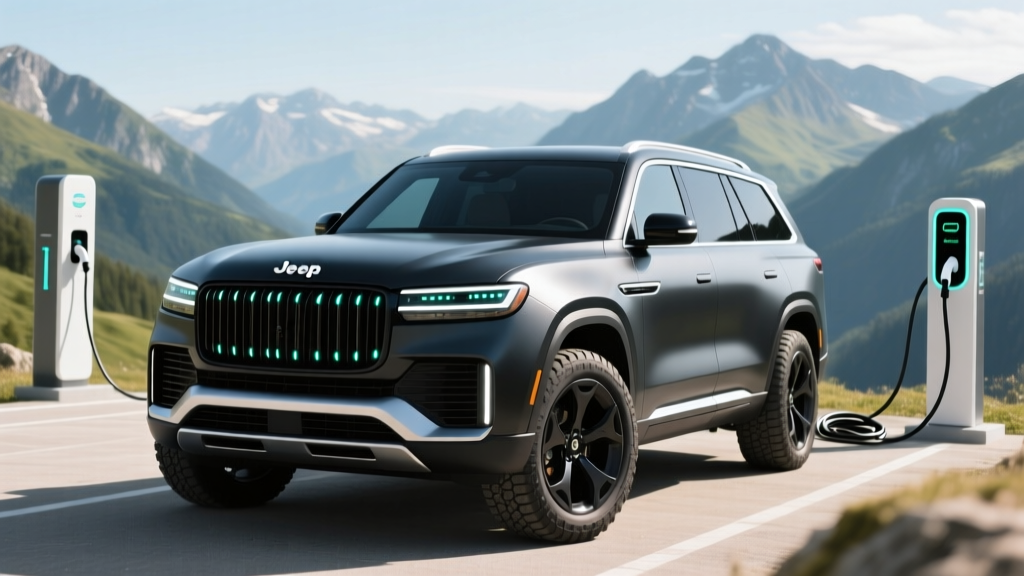
Quick Answer: The 2026 Jeep Grand Wagoneer EV is an announced full-size luxury electric SUV built on Stellantis' STLA Large platform. Jeep has targeted an EPA range of approximately 400 miles from a battery expected to exceed 110 kWh (usable), with DC fast charging capability up to 350 kW on an 800-volt architecture. Pricing is anticipated to start in the mid-$70,000 range before incentives. As of early 2026, the vehicle remains pre-production; final EPA certification, trim pricing, and §30D tax credit eligibility have not been confirmed. Buyers should treat all specifications below as preliminary until Jeep publishes official figures.
What the Grand Wagoneer EV Promises — And What We Actually Know
Stellantis unveiled the Grand Wagoneer EV concept and confirmed production intent, positioning it as the brand's flagship electric three-row SUV. It targets buyers who want the Grand Wagoneer's premium interior and towing capability without the 14–16 MPG combined fuel economy of the current twin-turbo inline-six (Hurricane) model.
Here is where the knowns and unknowns stand heading into the 2026 model year:
| Specification | Announced / Estimated | Confirmed Status |
|---|---|---|
| Platform | STLA Large (800V capable) | Confirmed by Stellantis |
| Battery capacity (usable) | ~115–125 kWh (estimated, NMC chemistry) | Preliminary |
| EPA range target | ~400 miles | Not EPA-certified |
| DC fast charge peak | Up to 350 kW | Preliminary |
| 10–80% charge time (est.) | ~20–25 minutes | Preliminary |
| Drivetrain | Dual-motor AWD expected | Likely, not final |
| Horsepower | 500+ HP (est.) | Preliminary |
| 0–60 mph | ~4.5–5.5 seconds (est.) | Preliminary |
| Towing capacity | 7,500–10,000 lbs target | Preliminary |
| Starting MSRP (est.) | ~$75,000–$80,000 | Not announced |
| Battery/powertrain warranty | 8 yr / 100,000 mi (expected, per federal mandate) | Standard for EVs |
Sources: Stellantis brand page; EPA certification data pending at fueleconomy.gov.
Real-World Range: Why 400 EPA Miles Won't Mean 400 on the Highway
A 400-mile EPA estimate would place the Grand Wagoneer EV among the longest-range electric SUVs available. But EPA testing uses a blended city/highway cycle with moderate temperatures — conditions that rarely match a family road trip at 75 mph in summer heat or a winter commute in the Rockies.
Real-World Range Expectations (Preliminary):
- EPA sticker: ~400 miles (target, not certified)
- Highway (70–80 mph, mild weather): ~310–340 miles
- Cold weather (below 32°F, highway): ~260–300 miles
- Towing (5,000+ lb trailer): ~180–230 miles
Full-size electric SUVs with boxy aerodynamics and heavy payloads see substantial range reduction at sustained highway speeds. Tesla's Model X, with a lower drag coefficient, achieves roughly 75–80% of its EPA rating at 75 mph in independent testing. Expect the Grand Wagoneer EV — which prioritizes interior volume and ground clearance over aero efficiency — to perform similarly or slightly lower.
If your typical driving involves a mix of suburban errands and moderate highway segments, 350+ real-world miles is achievable in mild weather. If you regularly tow a boat or drive in sub-freezing conditions, plan your charging stops around a 220–280 mile effective range.
Charging Speed and Infrastructure: What 350 kW Actually Means
The STLA Large platform supports 800-volt architecture, which enables higher charge rates with lower current — reducing heat and cable weight. Jeep has indicated peak DC fast charging up to 350 kW. But peak rate is not sustained rate.
| Charging Level | Power (kW) | Estimated Miles Added per Hour | Typical Use Case |
|---|---|---|---|
| Level 1 (120V household) | ~1.4 kW | ~4–5 mi/hr | Emergency / trickle only |
| Level 2 (240V home) | ~11.5–19.2 kW | ~35–60 mi/hr | Daily overnight charging |
| DC Fast (50 kW) | 50 kW | ~150–170 mi/hr | Older public stations |
| DC Fast (150 kW) | 150 kW | ~400–500 mi/hr (peak) | Common highway chargers |
| DC Fast (350 kW) | Up to 350 kW | ~800+ mi/hr (peak, brief) | Ultra-fast stations (Ionity, EA 350) |
Charging curve reality: A 350 kW peak typically sustains only between 10–40% state of charge (SoC). As the battery fills, the battery management system (BMS) tapers power to protect cell longevity. Expect the Grand Wagoneer EV to average roughly 180–220 kW across a 10–80% session at a capable 350 kW charger, yielding a 20–25 minute charge time. At a more common 150 kW Electrify America or Tesla Supercharger (via NACS adapter), expect 30–40 minutes for the same session.
Home charging is essential for this vehicle. With an estimated 115–125 kWh battery, Level 1 charging would require 80+ hours for a full charge — effectively unusable. A Level 2 home charger at 48 amps (11.5 kW) will add roughly 35–40 miles per hour of charging, requiring about 10–12 hours for a full charge from empty. An 80-amp hardwired unit (19.2 kW) could cut that to 6–8 hours. Budget $800–$2,500 for a quality Level 2 unit plus licensed electrician installation, with a possible panel upgrade adding $1,500–$3,500 if your home has a 100-amp service panel.
Grand Wagoneer EV vs. Gas Grand Wagoneer: Cost of Ownership Breakdown
The current gas Grand Wagoneer with the 3.0L Hurricane twin-turbo I6 returns roughly 14 city / 20 highway / 17 combined MPG according to EPA data. Let's compare five-year running costs for a driver covering 15,000 miles per year.
| Cost Factor (5 yr / 75,000 mi) | Gas Grand Wagoneer (est.) | Grand Wagoneer EV (est.) |
|---|---|---|
| Purchase price (base MSRP) | ~$87,000 | ~$75,000–$80,000 |
| Federal tax credit (§30D) | $0 | Up to $7,500 (if eligible*) |
| Fuel / energy cost | ~$16,200 (premium gas at $4.30/gal, 15.5 MPG avg) | ~$5,400 (home charging at $0.16/kWh, 2.2 kWh/mi) |
| Maintenance (oil, filters, brakes) | ~$4,500 | ~$1,500 (no oil changes; regen saves brakes) |
| Insurance (avg) | ~$12,000 | ~$13,500 (EV premium ~10–15%) |
| Total estimated 5-yr cost | ~$119,700 | ~$87,900–$92,900 |
Key caveats: The EV figures assume primarily home charging at residential electricity rates. If you rely heavily on public DC fast charging at $0.40–$0.55/kWh, your energy cost could double to ~$10,000–$12,000 over five years. The gas model's cost assumes premium fuel; regular-grade use in the Hurricane engine is not recommended per Stellantis.
*§30D tax credit eligibility for the Grand Wagoneer EV is unconfirmed. The credit requires the vehicle to meet battery component and critical mineral sourcing thresholds, the buyer must fall under income caps ($150K single / $300K joint), and the MSRP must not exceed $80,000 for SUVs. Verify current rules at IRS.gov before purchasing.
What First-Time EV Buyers Must Know Before Reserving
If the Grand Wagoneer EV would be your first electric vehicle, these practical realities will shape your ownership experience more than any spec sheet:
1. Home charging access is non-negotiable for a vehicle this size. With a 115+ kWh battery, public-only charging is expensive, time-consuming, and logistically difficult. Confirm your home can support a 240V / 48-amp (minimum) circuit before placing a deposit. If you live in an apartment or park on the street, this vehicle is not practical as a daily driver today.
2. Cold weather reduces range by 20–35%. Lithium-ion batteries lose efficiency in freezing temperatures, and cabin heating draws significant energy. The Grand Wagoneer EV is expected to include a heat pump (increasingly standard on premium EVs), which mitigates but does not eliminate winter range loss. If you live in Minnesota, Montana, or New England, plan for 260–300 real-world winter miles.
3. Charging on road trips requires planning. While the US charging network has expanded significantly — Tesla's Supercharger network now accepts NACS-equipped non-Tesla vehicles, and Electrify America continues to deploy 350 kW stations — rural routes in the Mountain West, Great Plains, and parts of the South still have gaps. Apps like A Better Routeplanner (ABRP) and PlugShare are essential trip-planning tools.
4. Towing dramatically cuts range. Pulling a 6,000-pound camper trailer can reduce effective range by 40–50%. If you plan to tow frequently, expect 180–230 real-world miles between charges, and plan routes around chargers that can accommodate a truck-and-trailer configuration (increasingly available but not universal).
5. Insurance premiums are typically higher for EVs. Repair costs for EVs — particularly battery-adjacent damage — tend to be higher, and insurers price accordingly. Get quotes before purchasing; the premium over a gas Grand Wagoneer is typically 10–15%, though it varies by carrier and state.
Common Misconceptions About the Grand Wagoneer EV
| Myth | Fact |
|---|---|
| "400 miles means I'll get 400 miles on a road trip." | EPA is a blended cycle. At 75 mph, expect 310–340 real-world miles in mild weather, less in cold or with cargo. |
| "350 kW charging means it always charges at 350 kW." | Peak rate sustains for a narrow SoC window (roughly 10–40%). Average rate across a 10–80% session is closer to 180–220 kW. |
| "I'll save $7,500 no matter what." | The §30D credit depends on your income, the vehicle's MSRP, and battery sourcing compliance. Not every buyer or every trim will qualify. |
| "The battery will need replacing in 5 years." | Modern NMC batteries with active thermal management typically retain 85–90% capacity after 100,000 miles. Federal warranty mandate requires 8 years / 100,000 miles at minimum 70% capacity retention. |
| "I can charge it on a regular outlet." | Level 1 (120V) adds ~4–5 miles per hour. Fully charging a 120 kWh battery would take 80+ hours — not viable for daily use. |
| "It drives itself on the highway." | Any ADAS offered will be SAE Level 2 — meaning the driver must remain fully engaged with hands on the wheel and eyes on the road. No production vehicle sold to consumers is self-driving. |
Decision Framework: Should You Wait, Buy Gas, or Look Elsewhere?
Choose the Grand Wagoneer EV if:
- You have reliable home Level 2 charging access (garage or driveway with 240V circuit)
- You want a three-row luxury EV with 350+ real-world miles of range and are willing to wait for 2026–2027 production
- You primarily drive in moderate climates or accept winter range trade-offs
- You want to eliminate $200–$300/month in premium fuel costs
Stick with the gas Grand Wagoneer if:
- You tow heavy trailers frequently and need 400+ miles between fuel stops
- You lack home charging access and cannot install a Level 2 unit
- You drive primarily in extreme cold and cannot tolerate range reduction
- You need the vehicle immediately and cannot wait for production and delivery
Consider alternatives if:
- You want a proven three-row EV now: the Rivian R1S, Tesla Model X, or Kia EV9 are available today with confirmed specs
- You want a plug-in hybrid bridge: the Jeep Grand Cherokee 4xe offers 25 miles of electric-only range with gas backup — a practical option if your daily commute is short but you road-trip often
Frequently Asked Questions
Is the Jeep Grand Wagoneer EV available to buy right now?
No. As of early 2026, the Grand Wagoneer EV remains an announced production vehicle. Stellantis has confirmed it will be built on the STLA Large platform, but final specifications, pricing, and delivery timelines have not been published. Reservations may be available through select dealerships, but no customer deliveries have occurred.
Will it qualify for the $7,500 federal EV tax credit?
Possibly, but it is not guaranteed. Under current IRS §30D rules, eligibility depends on: (1) buyer income not exceeding $150,000 (single) or $300,000 (joint modified AGI), (2) vehicle MSRP not exceeding $80,000 for SUVs, and (3) the battery meeting critical mineral and component sourcing thresholds that tighten annually. Jeep has not confirmed whether the Grand Wagoneer EV's battery supply chain will meet these requirements. Always check the latest eligible vehicle list at IRS.gov before purchasing.
How much will it cost to charge at home versus a gas fill-up?
At the US average residential electricity rate of roughly $0.16/kWh, fully charging an estimated 120 kWh battery costs approximately $19. A comparable gas fill-up for the ICE Grand Wagoneer (26-gallon tank at $4.30/gal premium) costs roughly $112. Over 15,000 miles per year, home EV charging saves approximately $2,000–$2,500 annually versus premium gasoline.
Can it tow as much as the gas Grand Wagoneer?
Jeep has targeted a towing capacity in the 7,500–10,000 pound range, which would be competitive with the gas model's 9,750-pound rating. However, towing at capacity will reduce real-world range by roughly 40–50%, limiting effective range to approximately 180–230 miles. Final tow ratings await SAE J2807 testing certification.
What connector does it use — NACS or CCS?
Stellantis has not confirmed the charge port standard for the Grand Wagoneer EV. The industry is rapidly shifting toward NACS (Tesla's connector, now SAE J3400), and several automakers have committed to NACS for 2025+ models. If the Grand Wagoneer EV ships with CCS1, adapters will be available for Tesla Supercharger access. We will update this guide when Jeep confirms the connector.
What happens if the battery degrades?
Federal law requires EV manufacturers to warranty the battery for at least 8 years or 100,000 miles (whichever comes first), with capacity retention typically guaranteed above 70%. Real-world data from similar NMC packs suggests 85–92% retention at 100,000 miles with proper care (avoiding frequent 100% charges and extreme heat exposure). Out-of-warranty battery replacement for a pack this size currently costs $15,000–$25,000, though prices are declining as the supply chain matures.