The Short Answer on the Jeep Grand Wagoneer Electric
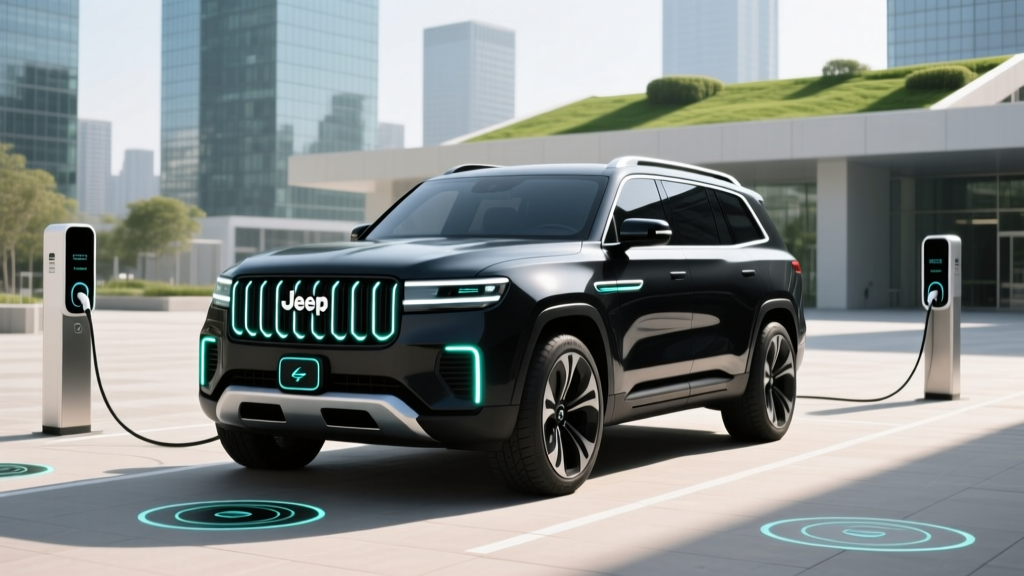
As of early 2026, the Jeep Grand Wagoneer electric has not been officially released or fully spec'd by Stellantis. Jeep has confirmed that an all-electric Grand Wagoneer is part of its broader electrification roadmap, built on the STLA Large platform. However, no EPA range figures, battery capacity, pricing, or on-sale date have been published. What you're reading below is a data-driven preview based on confirmed platform details, Jeep's own statements, and comparable three-row electric SUVs already on the market. If you need a vehicle today, the gas-powered Grand Wagoneer or a rival like the Rivian R1S or Kia EV9 are your current options.
What Is the Jeep Grand Wagoneer Electric?
Stellantis has invested heavily in its four STLA skateboard platforms, and the STLA Large architecture — designed to underpin full-size SUVs and trucks — is the expected foundation for an electric Grand Wagoneer. This platform supports battery packs ranging from roughly 85 to 120 kWh (usable) and is engineered for both rear- and all-wheel-drive configurations.
Jeep's current Grand Wagoneer lineup is a premium three-row SUV starting around $89,000 for the 2025 model year and topping out above $115,000 for the Series III with the Hurricane inline-six. An electric variant would need to match or exceed that level of luxury, technology, and towing capability while adding the efficiency and performance benefits of a battery-electric powertrain.
Jeep CEO Christian Meunier has publicly stated that the brand will offer a fully electric vehicle in every segment it competes in, and the Grand Wagoneer — as Jeep's flagship — is a logical candidate. However, Stellantis has recently recalibrated some of its EV timelines, delaying certain programs and adjusting investment in battery plants, which means firm dates remain elusive.
Expected Specs: Platform, Range, and Charging Estimates
Because official specs haven't been released, the table below draws on STLA Large platform capabilities and comparable vehicles to project what a Grand Wagoneer EV could deliver. All figures are preliminary estimates and subject to change when Jeep makes a formal announcement.
| Attribute | Estimated Spec | Basis / Comparable |
|---|---|---|
| Platform | STLA Large | Confirmed by Stellantis |
| Battery Capacity (usable) | ~100–120 kWh | STLA Large supports up to 120 kWh |
| Battery Chemistry | NMC (likely) or LFP option | Large SUVs typically use NMC for energy density |
| EPA Range (est.) | ~300–350 miles | Comparable: Rivian R1S Dual-Motor Max — 352 mi; Kia EV9 GT-Line AWD — 270 mi |
| Peak DC Fast Charge Rate | ~200–250 kW | 800V architecture likely on STLA Large |
| 10–80% DC Charge Time (est.) | ~22–30 minutes | Depends on charge curve taper above 80% |
| Level 2 Charge Rate | ~11.5 kW (est.) | Typical for premium large SUVs |
| Horsepower | ~450–600 HP (AWD dual-motor) | Current gas Grand Wagoneer: 510 HP (Hurricane I6) |
| 0–60 mph (est.) | ~4.0–5.0 seconds | Electric torque advantage over gas |
| Towing Capacity (est.) | ~8,000–10,000 lbs | Current gas Grand Wagoneer: 9,850 lbs |
| Seating | 7 or 8 passengers | Matches current Grand Wagoneer |
| Starting MSRP (est.) | ~$90,000–$100,000+ | Gas Grand Wagoneer starts ~$89,000 |
Real-World Range Reality Check
If the Grand Wagoneer EV achieves an EPA-estimated 330 miles, expect real-world highway range to land closer to 260–285 miles at sustained 70–75 mph speeds, and potentially 220–250 miles in cold weather (below 30°F). Large, heavy, boxy SUVs with high frontal area tend to see 15–25% range reduction on the highway versus the EPA combined cycle. Cold temperatures further reduce battery efficiency and increase cabin heating load. These are physics, not defects — every large EV SUV behaves similarly.
How Does an Electric Grand Wagoneer Compare to the Gas Version?
The current gas-powered Grand Wagoneer uses Stellantis's 3.0-liter Hurricane twin-turbo inline-six, producing 510 horsepower and 500 lb-ft of torque. It achieves an EPA-estimated 14 city / 19 highway / 16 combined MPG. Let's compare the operating economics side by side.
| Metric | Gas Grand Wagoneer (2025) | Electric Grand Wagoneer (Projected) |
|---|---|---|
| EPA Efficiency | 16 MPG combined | ~85–95 MPGe (est.) / ~35–40 kWh/100mi |
| Annual Fuel/Energy Cost (15,000 mi/yr) | ~$3,750 (at $4.00/gal) | ~$900 home charging (at $0.16/kWh) / ~$1,800 mixed public DCFC |
| Annual Maintenance (est.) | ~$800–$1,200 | ~$300–$500 (no oil changes, fewer wear items) |
| 5-Year Fuel/Energy Total | ~$18,750 | ~$4,500 (home) to ~$9,000 (mostly public DCFC) |
| 5-Year Maintenance Total | ~$4,000–$6,000 | ~$1,500–$2,500 |
| Federal Tax Credit (§30D) | None | Up to $7,500 — subject to MSRP, income, and sourcing rules |
| Purchase Price (base) | ~$89,000 | ~$90,000–$100,000 (est.) |
The fuel savings with an electric Grand Wagoneer are substantial — potentially $10,000–$14,000 over five years if you charge primarily at home. But the upfront cost is likely to be similar or slightly higher, and the purchase only makes financial sense if you have reliable access to Level 2 home charging. Public DC fast charging at $0.35–$0.50/kWh narrows the savings gap considerably.
Federal Tax Credit and Incentive Reality
The IRS §30D clean vehicle credit can provide up to $7,500 for qualifying new EVs. However, eligibility depends on several factors that change frequently:
- MSRP Cap: SUVs, vans, and pickup trucks must have an MSRP at or below $80,000. This is a major hurdle — if the electric Grand Wagoneer starts above $80,000 (which is likely given the gas version's pricing), it would not qualify for the federal credit unless Stellantis prices a base trim under the cap.
- Buyer Income Limits: Adjusted gross income must not exceed $300,000 (joint), $225,000 (head of household), or $150,000 (single).
- Battery Component & Critical Mineral Sourcing: Increasing percentages of battery components must be manufactured or assembled in North America, and critical minerals must be sourced from the US or free-trade-agreement partners. These thresholds tighten annually.
- Point-of-Sale Transfer: Qualified buyers can transfer the credit to the dealer at purchase, reducing the out-of-pocket cost immediately rather than waiting for a tax refund.
Bottom line: Given the Grand Wagoneer's luxury positioning, the $80,000 MSRP cap is the most likely disqualifier. Don't count on the $7,500 credit unless Jeep introduces a surprisingly aggressive base price. Consult a tax professional and check the latest fueleconomy.gov listings before purchasing.
Real-World Ownership Considerations
Before committing to a large electric SUV, weigh these practical factors:
Home Charging Access
A vehicle this size with a ~100+ kWh battery needs Level 2 (240V) home charging to be practical. On a standard 120V Level 1 outlet, you'd add roughly 3–4 miles of range per hour — meaning a full charge from near-empty could take over 30 hours. A 48-amp Level 2 home charger (like a ChargePoint Home Flex or Tesla Wall Connector) adds roughly 25–30 miles per hour, allowing an overnight top-up. Expect $1,200–$3,000 for a professional Level 2 installation, potentially more if your electrical panel needs a 200-amp upgrade.
Public Charging Infrastructure
For road trips, DC fast charging is essential. The STLA Large platform is expected to support NACS (Tesla-style) connectors, which would give the Grand Wagoneer EV access to the Tesla Supercharger network — now the largest and most reliable in North America. At a 250 kW charger, a 10–80% session could take roughly 20–25 minutes, though sustained charge rates typically taper significantly above 80% state of charge. Plan for 30–40 minute stops on long trips.
Climate and Driving Patterns
If you live in a region with harsh winters (Upper Midwest, Northeast, Mountain West), expect 15–30% range loss in sustained sub-freezing temperatures. Battery preconditioning (warming the pack before DC fast charging) is essential for maintaining charge speed in cold weather. A heat pump — which the STLA Large platform should support — improves cabin heating efficiency and reduces the range penalty.
Insurance and Depreciation
Premium EV SUVs tend to carry higher insurance costs than their gas counterparts, often 10–20% more due to higher repair costs and battery replacement risk. Depreciation on luxury EVs has been steep in recent years — the gas Grand Wagoneer already suffers significant depreciation, and an electric version may face similar headwinds unless Stellantis offers strong battery warranties (8 years / 100,000 miles is the federal minimum for EV battery coverage).
Current Alternatives: What You Can Buy Today
If the Grand Wagoneer electric timeline doesn't align with your purchase plans, here's how the current field of three-row electric SUVs stacks up:
| Model | EPA Range | Battery | Peak DC kW | 10–80% Time | 0–60 mph | Base MSRP |
|---|---|---|---|---|---|---|
| Rivian R1S (Dual-Motor Max) | 352 mi | ~141 kWh (NMC) | ~220 kW | ~30 min | 4.5 sec | ~$84,900 |
| Kia EV9 (GT-Line AWD) | 270 mi | 100 kWh (NMC) | ~210 kW | ~24 min | 5.0 sec | ~$60,500 |
| Cadillac Escalade IQ | ~450 mi (est. GM) | ~200 kWh (NMC, Ultium) | ~350 kW | ~20 min (est.) | ~3.5 sec (V-Series) | ~$130,000 |
| Volvo EX90 (Twin Motor) | ~300 mi (est.) | ~107 kWh (NMC) | ~250 kW | ~25 min | ~4.7 sec | ~$80,000 |
Each of these is available or in active delivery as of early 2026. The Rivian R1S is the closest analog to what a Grand Wagoneer EV would offer in terms of size, capability, and price. The Kia EV9 is significantly more affordable but smaller and less luxurious. The Cadillac Escalade IQ is the direct luxury flagship competitor, though at a much higher price point.
Decision Framework: Should You Wait or Buy Now?
Wait for the Grand Wagoneer Electric If:
- You specifically want the Grand Wagoneer's design, interior luxury, and brand cachet
- You have home Level 2 charging and your daily driving is under 100 miles
- You're not in a rush — Stellantis has not committed to a firm on-sale date
- Towing capacity is a priority and you want to see how Jeep handles EV towing
Buy an Alternative Now If:
- You need a three-row electric SUV within the next 6–12 months
- You want proven reliability data and real-world range validation
- Budget matters — the Rivian R1S and Kia EV9 are priced and available today
- You want to lock in current §30D tax credit eligibility before sourcing rules tighten further
Common Misconceptions About the Grand Wagoneer Electric
| Myth | Fact |
|---|---|
| "The Grand Wagoneer EV is available to order now." | It has not been officially released. Jeep has signaled intent but published no order books, pricing, or delivery timelines as of early 2026. |
| "It will definitely qualify for the $7,500 tax credit." | The $80,000 MSRP cap for SUVs makes this unlikely unless Jeep prices a base trim aggressively. Income limits and battery sourcing rules add further restrictions. |
| "An electric Grand Wagoneer will tow just as much as the gas version." | EVs can produce strong torque for towing, but towing drastically reduces range — expect a 40–60% range drop when towing near max capacity. The gas version's 9,850-lb rating may not carry over exactly. |
| "Charging takes too long for a big SUV." | At a 250 kW DC fast charger, a 10–80% session could take 20–25 minutes. That's a rest stop, not a roadblock — but you need to plan around charger availability on long routes. |
| "The battery will need expensive replacement within a few years." | Modern NMC and LFP batteries are designed for 200,000+ miles with gradual degradation (typically 10–15% over 8 years). Federal law mandates at least 8-year / 100,000-mile battery warranties for EVs. |
Frequently Asked Questions
Has Jeep officially announced the Grand Wagoneer electric?
Jeep and Stellantis have confirmed that an electric Grand Wagoneer is planned as part of their electrification strategy, using the STLA Large platform. However, no official release date, pricing, or full specification sheet has been published as of early 2026. Stellantis has also adjusted some EV timelines recently, so dates remain fluid.
What platform will the electric Grand Wagoneer use?
The STLA Large platform, one of four Stellantis skateboard architectures. It supports battery packs up to approximately 120 kWh, 800-volt electrical architecture for fast DC charging, and both single- and dual-motor drivetrain layouts.
Will the Grand Wagoneer EV have NACS (Tesla) charging?
Stellantis has indicated that its future EVs will adopt the NACS connector standard, which would provide access to the Tesla Supercharger network. This is expected but not yet officially confirmed for the Grand Wagoneer specifically.
How much will the Jeep Grand Wagoneer electric cost?
No official pricing exists yet. Given the gas Grand Wagoneer starts around $89,000 and climbs above $115,000, expect the electric version to land in a similar or slightly higher range. This likely places it above the $80,000 MSRP cap for the federal §30D tax credit on SUVs.
Can I charge a large EV SUV at home?
Yes, but you'll need a Level 2 (240V) home charger for practical daily use. A 48-amp Level 2 charger adds roughly 25–30 miles of range per hour, which is sufficient for overnight charging. Professional installation typically costs $1,200–$3,000, more if your home needs an electrical panel upgrade. Level 1 (120V) charging is technically possible but impractically slow for a 100+ kWh battery.
Is an electric Grand Wagoneer better than a plug-in hybrid alternative?
It depends on your driving patterns. A PHEV (plug-in hybrid) offers 30–40 miles of electric-only range for daily commuting plus a gas engine for long trips — ideal if you lack home charging or frequently drive 300+ miles. A full EV offers lower operating costs, no tailpipe emissions, and a smoother driving experience, but requires reliable charging access and trip planning for long routes. Jeep currently offers the Wrangler 4xe and Grand Cherokee 4xe as PHEVs; a Grand Wagoneer PHEV has not been confirmed.