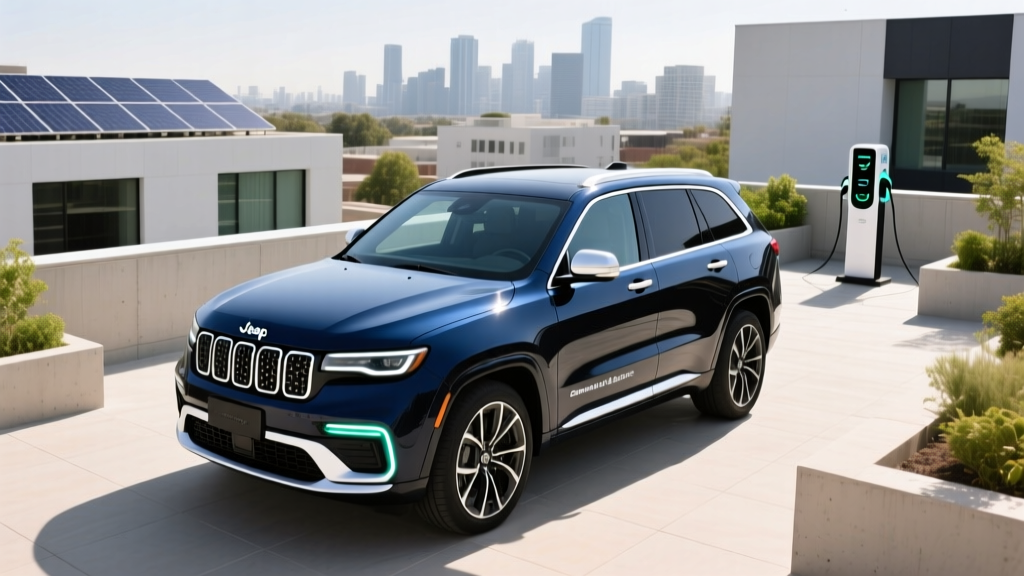
Quick Answer: The all-electric Jeep Grand Cherokee (based on the Recon platform and STLA Large architecture) is expected to arrive for the 2026–2027 model year with an estimated EPA range of 300–350 miles, a ~100 kWh battery pack, DC fast charging up to 200+ kW, and a starting MSRP likely between $55,000–$60,000. It will compete directly with the Rivian R1S, Tesla Model X, and Hyundai Ioniq 9 in the three-row electric SUV segment. If you need a Jeep-badged EV today, the Wrangler 4xe (PHEV) remains the only electrified option in the lineup.
What We Know About the Jeep Grand Cherokee Electric So Far
Stellantis has confirmed that an all-electric Grand Cherokee is in development, riding on the STLA Large platform—the same flexible architecture underpinning the Dodge Charger Daytona EV and the upcoming Jeep Cherokee EV. Unlike the gasoline Grand Cherokee (which continues alongside), the electric variant will be a distinct model engineered for zero tailpipe emissions while retaining the brand's off-road identity.
As of early 2026, Stellantis has not published final EPA-certified range figures, official pricing, or a firm on-sale date. What follows is a synthesis of confirmed platform data, supplier disclosures, and industry analysis. Treat all specifications as preliminary estimates until the manufacturer releases the production spec sheet.
Expected Specs: Battery, Range, and Charging
The STLA Large platform supports battery packs ranging from roughly 85 kWh to 118 kWh in usable capacity, with both NMC (nickel manganese cobalt) and potential LFP (lithium iron phosphate) chemistry options. For a vehicle in the Grand Cherokee's weight class (~5,200–5,600 lbs estimated), a pack in the 100–110 kWh range is the most likely configuration to hit the targeted 300+ mile EPA range.
| Specification | Estimated Value |
|---|---|
| Battery Capacity (usable) | ~100–110 kWh (NMC) |
| EPA Range (est.) | 300–350 miles |
| Real-World Highway Range | ~250–290 miles (70+ mph) |
| Cold-Weather Range (20°F) | ~210–260 miles |
| Peak DC Fast Charge Rate | ~200–250 kW |
| 10–80% DC Fast Charge Time | ~22–28 minutes (est.) |
| Level 2 Charge Rate (AC) | 11.5 kW (est.) |
| Level 2 Time (0–100%) | ~9–11 hours |
| Drivetrain | Dual-motor AWD |
| Horsepower (est.) | 450–550 hp |
| 0–60 mph (est.) | 4.5–5.5 seconds |
| Towing Capacity (est.) | 5,000–6,000 lbs |
| Connector Standard | NACS (Tesla Supercharger compatible) |
EPA vs. Real-World Range Reality: A 320-mile EPA estimate sounds generous, but sustained highway driving at 75 mph typically consumes 15–20% more energy than the EPA combined cycle. Expect roughly 260–280 miles of real-world highway range in mild weather. In winter conditions (below 30°F), battery chemistry and cabin heating can reduce range by 20–30%, dropping effective range to 210–260 miles. A heat pump (if equipped) would mitigate some of this loss.
Charging Infrastructure: Home and Public
The Grand Cherokee Electric is expected to adopt the NACS (North American Charging Standard) connector, granting access to Tesla's Supercharger network—the most reliable DC fast-charging infrastructure in the U.S. with over 25,000 stalls as of 2026.
| Level | Power (kW) | Miles Added per Hour | Typical Use Case |
|---|---|---|---|
| Level 1 (120V) | 1.2–1.4 kW | ~3–4 miles/hr | Emergency / overnight trickle |
| Level 2 (240V, 48A) | 11.5 kW | ~30–35 miles/hr | Home daily charging |
| DC Fast (peak) | 200–250 kW | ~600+ miles/hr (peak) | Road trips, 10–80% in ~25 min |
Home Charging Reality: A Level 2 home charger (240V, 48-amp hardwired unit like the ChargePoint Home Flex or Emporia V2) will fully replenish a ~105 kWh battery in roughly 9–11 hours. Most owners will plug in overnight and wake to a full charge. Installation costs for a Level 2 circuit range from $500–$2,000 depending on panel proximity and whether your electrical panel needs a 200-amp upgrade (an additional $1,500–$3,000 in older homes). Always get a quote from a licensed electrician before purchasing equipment.
Charging Curve Caveat: DC fast-charging speeds peak only between roughly 10–40% state of charge. Above 60%, the charge rate tapers significantly to protect the battery. A "250 kW peak" rating does not mean 250 kW sustained—the average rate across a 10–80% session is typically 60–70% of the peak value.
How It Compares: Electric Grand Cherokee vs. Gas vs. PHEV
The current gasoline Grand Cherokee (3.6L V6) achieves an EPA-rated 21 MPG combined, while the Grand Cherokee 4xe plug-in hybrid delivers 56 MPGe and 25 miles of electric-only range before the gas engine engages. Here's how an all-electric version is likely to stack up in annual operating costs.
| Powertrain | Efficiency | Annual Energy Cost | 5-Year Fuel Cost |
|---|---|---|---|
| Gas Grand Cherokee (V6) | 21 MPG combined | ~$2,500 (at $3.50/gal) | ~$12,500 |
| Grand Cherokee 4xe (PHEV) | 56 MPGe / 24 MPG gas | ~$1,600 (mixed EV/gas) | ~$8,000 |
| Grand Cherokee Electric (est.) | ~2.5 mi/kWh (est.) | ~$810 (home, $0.135/kWh) | ~$4,050 |
Home charging at the U.S. average electricity rate of ~$0.135/kWh (per EIA data) delivers roughly a 68% reduction in annual fueling cost compared to gasoline. Public DC fast charging, however, typically costs $0.30–$0.48/kWh, which narrows the savings gap substantially on road trips. If you rely exclusively on public charging, your annual "fuel" cost could rise to $1,800–$2,200—still below gasoline, but not dramatically so.
Purchase Price, Tax Credits, and Total Cost of Ownership
The electric Grand Cherokee will carry a premium over its gas counterpart. The 2025 gas Grand Cherokee L starts at roughly $40,000; expect the EV variant to start between $55,000–$60,000, with fully loaded trims (Overland, Summit Reserve equivalents) potentially reaching $70,000+.
Federal §30D EV Tax Credit — Key Eligibility Rules (2026):
- MSRP Cap: SUVs must be priced at or below $80,000
- Buyer Income Cap: Modified AGI ≤ $300,000 (joint), $225,000 (head of household), $150,000 (individual)
- Battery Sourcing: Critical minerals and battery components must meet phased-in domestic-content thresholds that tighten annually through 2032
- Point-of-Sale Transfer: You can transfer the credit to the dealer for an upfront price reduction at purchase
- Maximum Credit: Up to $7,500 ($3,750 for critical minerals + $3,750 for battery components)
Source: IRS Clean Vehicle Credits. Eligibility varies by individual tax situation. Consult a tax professional.
| Cost Category | Gas Grand Cherokee | Grand Cherokee EV (est.) |
|---|---|---|
| Purchase Price (base) | $40,000 | $57,000 |
| Federal Tax Credit | $0 | Up to –$7,500 |
| Net Purchase Price | $40,000 | $49,500 |
| Fuel/Energy (5 years) | $12,500 | $4,050 |
| Maintenance (5 years) | $3,500 | $1,500 |
| Insurance (5 years) | $9,000 | $10,500 |
| Home Charger Install | $0 | $1,200 |
| Estimated Depreciation | $18,000 | $22,000 |
| Total 5-Year Cost | $83,000 | $88,750 |
The EV's lower fuel and maintenance costs (no oil changes, fewer brake replacements due to regenerative braking) recover a meaningful portion of the upfront premium, but do not fully close the gap within five years at current pricing. The breakeven point typically arrives around years 6–8, depending on local electricity rates, driving mileage, and whether you qualify for the full tax credit. Higher-mileage drivers (20,000+ miles/year) reach parity faster.
Common Misconceptions — Fact vs. Fiction
| Myth | Fact |
|---|---|
| "EV batteries need replacing every 5 years." | Modern NMC and LFP packs are engineered for 1,500–3,000+ charge cycles. Stellantis typically warrants its EV batteries for 8 years/100,000 miles with a minimum 70% capacity retention threshold. Real-world degradation data from similar platforms shows ~10–15% capacity loss over 150,000 miles. |
| "The electric Grand Cherokee won't be a real Jeep off-road." | The STLA Large platform supports dual-motor AWD with torque vectoring. Jeep has demonstrated electric 4x4 capability in the Recon concept. Ground clearance, approach/departure angles, and Trail Rated certification details are TBD, but instant electric torque is advantageous for rock crawling. |
| "I'll save $7,500 no matter what." | The §30D credit has strict income caps, MSRP limits, and battery-sourcing requirements that change annually. Not every buyer or every trim will qualify for the full $7,500. Always verify current-year rules on IRS.gov. |
| "Public charging is as cheap as home charging." | Public DC fast chargers cost 2–4× more per kWh than home electricity. A cross-country road trip might cost $150–$250 in charging, compared to $20–$30 for the same distance charged at home. |
| "EVs are worse in cold weather." | EVs lose 20–30% range in sub-freezing temps, but preconditioning (warming the battery while plugged in) restores much of the charging speed. A garage-parked EV starts "warm" every morning—unlike a gas car that idles to heat up. |
Who Should Wait, and Who Should Buy Now?
The electric Grand Cherokee is still in pre-production. If your timeline allows a 12–18 month wait, it could be a compelling option—especially if you want a three-row family SUV with Jeep's design language and genuine off-road credibility. But if you need a vehicle today, you have strong alternatives.
Wait for the Jeep Grand Cherokee Electric if:
- You want a Jeep-badged, fully electric three-row SUV
- You have reliable home charging access (garage or driveway with 240V circuit)
- Your daily commute is under 80 miles round-trip and you take 2–3 road trips per year
- You value off-road capability and plan to use it
- You can wait until late 2026 or 2027 for delivery
Buy an alternative now if:
- You need a vehicle within the next 3–6 months
- You lack home charging access and your area has sparse public DC infrastructure
- You regularly tow over 6,000 lbs (current EVs lose significant range while towing)
- Budget is tight and you need a sub-$45,000 option (consider the gas Grand Cherokee or a used EV)
- You want proven real-world range data before committing (wait for EPA certification)
First-Time EV Buyer Essentials
If the Grand Cherokee Electric would be your first EV, here's what the buying guide doesn't tell you:
1. Home charging is non-negotiable for convenience. Relying solely on public charging is viable but adds 30–60 minutes per week of dedicated charging time and significantly higher per-mile energy costs. Before ordering, confirm you can install a 240V/48A circuit. Renters and condo dwellers should investigate workplace charging or shared-building EV infrastructure.
2. Plan road trips around chargers, not gas stations. Apps like A Better Routeplanner and PlugShare let you map DC fast-charger locations along your route. With NACS compatibility, the Tesla Supercharger network gives the Grand Cherokee Electric access to the most reliable public infrastructure available—averaging 99% uptime across the network.
3. Insurance will likely cost more. EVs carry higher insurance premiums (typically 10–20% above gas equivalents) due to higher repair costs for battery and structural damage. Get quotes from multiple insurers before committing. Companies like Geico, Progressive, and Tesla Insurance (where available) offer EV-specific policies.
4. Maintenance is minimal but not zero. Expect cabin air filter replacements, tire rotations (EVs wear tires faster due to weight and instant torque), brake fluid checks, and windshield washer refills. Budget roughly $300/year vs. $700/year for a gas equivalent.
5. Battery degradation is gradual, not catastrophic. Based on data from fueleconomy.gov and long-term fleet studies, most modern EV batteries retain 85–90% of original capacity after 100,000 miles. The federal warranty mandate of 8 years/100,000 miles (with a 70% capacity retention floor) provides a strong safety net.
Frequently Asked Questions
When will the Jeep Grand Cherokee Electric be available to buy?
Stellantis has targeted a late-2026 reveal with deliveries beginning in the 2027 model year. Exact timing depends on production ramp at the company's EV-capable assembly plants. Pre-orders may open in mid-to-late 2026.
Will the electric Grand Cherokee have three rows of seating?
Yes—Jeep has indicated the electric Grand Cherokee will retain the three-row configuration of the current Grand Cherokee L, seating up to seven passengers. This positions it against the Rivian R1S and Hyundai Ioniq 9 in the three-row electric SUV segment.
Can I take the electric Grand Cherokee off-road?
Jeep intends to offer Trail Rated variants with features like electronic locking differentials, Selec-Terrain drive modes, and competitive ground clearance. Electric motors provide instant torque at zero RPM, which is advantageous for rock crawling. However, off-road driving significantly increases energy consumption—expect range to drop 30–50% during low-speed technical trail use.
What happens if the battery fails out of warranty?
Full battery pack replacement for a ~100 kWh pack currently costs $12,000–$18,000 at dealer rates. However, catastrophic out-of-warranty failures are rare. More commonly, individual modules can be replaced at lower cost, and third-party EV repair shops are increasingly offering module-level service at 40–60% less than dealer pricing.
Does the Grand Cherokee Electric qualify for the $7,500 federal tax credit?
It's too early to confirm. Eligibility depends on the final MSRP (must be ≤$80,000 for SUVs), your income, and whether Stellantis meets the escalating battery-sourcing and critical-mineral thresholds in effect at time of purchase. The point-of-sale transfer option allows you to apply the credit as a down-payment reduction at the dealer. Check IRS.gov for current-year rules closer to launch.
How does the Grand Cherokee Electric compare to the Rivian R1S?
The Rivian R1S (Dual-Motor, Standard Pack) offers an EPA-estimated 270 miles of range, starts around $75,000, and excels in adventure-oriented design. The Grand Cherokee Electric is expected to undercut the R1S on price while offering comparable or slightly better range. However, Rivian has a multi-year head start in production maturity, service infrastructure, and real-world reliability data. Wait for independent reviews before comparing.