The Real Math Behind a Jeep EV Lease in 2026
Stellantis has finally pushed its Jeep brand into the battery-electric era with the Wagoneer S and the rugged Recon. For many buyers, a Jeep EV lease looks like the lowest-risk way to get into one of these new platforms — especially because leased EVs can sidestep some of the strictest federal tax-credit sourcing rules. But a low monthly payment doesn't tell the whole story. Real ownership cost includes charging, insurance, maintenance, depreciation, and whether you actually qualify for incentives.
This guide runs the full 5-year numbers on Jeep's current EV lineup, using EPA data, IRS rules, and real-world ownership variables. We'll show you exactly what a Jeep EV costs to drive — and where the savings (and surprises) actually land.
Jeep's 2026 EV Lineup: What You Can Actually Lease
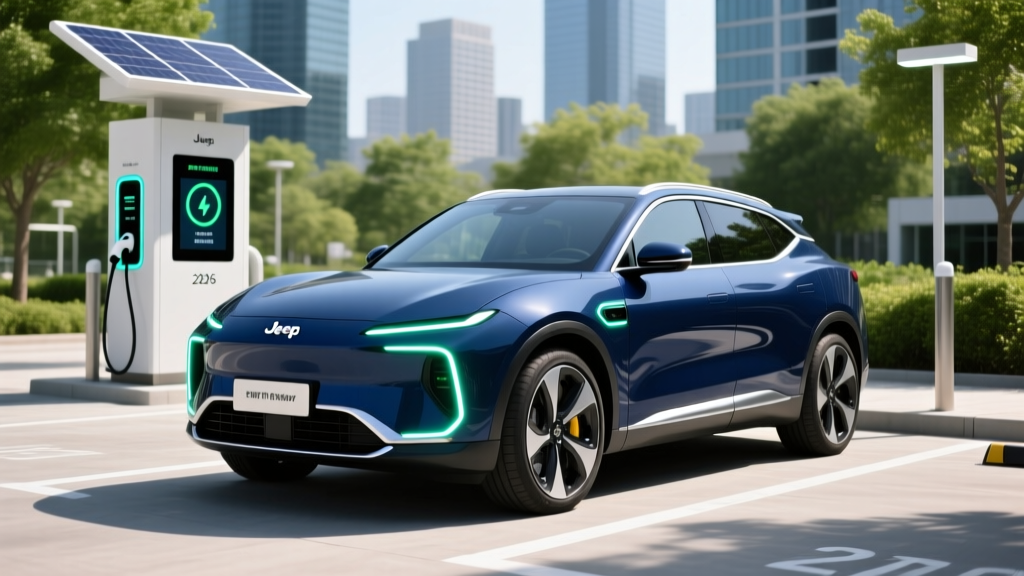
As of the 2026 model year, Jeep offers two fully electric models in the U.S. Both ride on the STLA Large platform and use a 100.5 kWh (usable) NMC lithium-ion battery pack with dual motors and standard AWD.
| Spec | 2026 Jeep Wagoneer S | 2026 Jeep Recon |
|---|---|---|
| Body Style | Midsize SUV (coupe-like roofline) | Midsize off-road SUV |
| Battery (usable) | 100.5 kWh, NMC | 100.5 kWh, NMC |
| Horsepower | 600 hp | ~550 hp (est.) |
| 0–60 mph | 3.4 seconds | ~4.5 seconds (est.) |
| EPA Range | ~300 miles | ~280 miles (est.) |
| MPGe (combined) | ~94 MPGe | ~85 MPGe (est.) |
| Max DC Fast Charge | ~200 kW peak | ~200 kW peak |
| 10–80% DC Charge | ~23 minutes | ~25 minutes |
| Level 2 (240V) Rate | 11.5 kW | 11.5 kW |
| Base MSRP | ~$65,200 | ~$58,000 (est.) |
| Battery/Powertrain Warranty | 8 yr / 100,000 mi | 8 yr / 100,000 mi |
Real-World Range Note: The EPA sticker is a lab estimate. Expect the Wagoneer S to deliver roughly 250–270 miles on a highway-heavy road trip at 70+ mph, and as low as 210–230 miles in sub-freezing winter conditions. The Recon's boxier profile and off-road tires will reduce real-world range further — plan for 220–240 miles highway, less in cold weather. Always precondition the battery before DC fast charging to hit peak kW rates.
5-Year Total Cost of Ownership: Jeep EV vs. Gas Jeep Grand Cherokee
To understand whether a Jeep EV lease makes financial sense, we need to compare total 5-year / 60,000-mile costs against a close gas equivalent — the Jeep Grand Cherokee 4xe (PHEV) or the V6 gas Grand Cherokee. Below, we model the Wagoneer S against a gas Grand Cherokee Limited (MSRP ~$52,000, 22 MPG combined).
| Cost Category (5 yr / 60k mi) | Wagoneer S (EV) | Grand Cherokee Gas |
|---|---|---|
| Purchase / Lease Cost (net of incentives) | ~$33,000 (lease payments) | ~$29,500 (lease payments) |
| Fuel / Charging | ~$3,900 | ~$9,800 |
| Maintenance | ~$1,800 | ~$4,200 |
| Insurance (5-year total) | ~$12,500 | ~$9,500 |
| Depreciation (est.) | ~$18,000 | ~$16,000 |
| Estimated 5-Year Total | ~$69,200 | ~$69,000 |
The totals are remarkably close — and that's before factoring in state incentives or utility rebates, which can tip the scale further in the EV's favor. Let's unpack each line item.
Charging vs. Gas: The $/Mile Math
Assumptions: Home electricity at $0.16/kWh (U.S. average); gas at $3.40/gallon; Wagoneer S at 2.6 kWh/mile (from ~94 MPGe); Grand Cherokee at 22 MPG combined. Public DC fast charging priced at $0.40/kWh for ~20% of miles.
| Metric | Wagoneer S (EV) | Grand Cherokee (Gas) |
|---|---|---|
| Energy Cost per Mile (80% home / 20% DCFC) | ~$0.065/mi | ~$0.155/mi |
| Cost per 60,000 Miles | ~$3,900 | ~$9,300 |
| Annual Fuel/Charging Savings (EV) | ~$1,080/year | |
Charging at home is where the math works. If you rely exclusively on public DC fast chargers, the per-mile cost nearly doubles and the savings shrink significantly. EPA's fuel-economy site lets you model costs with your local electricity rate.
Maintenance: Where EVs Quietly Win
| Maintenance Item (5 yr / 60k mi) | EV (Wagoneer S) | Gas (Grand Cherokee) |
|---|---|---|
| Oil Changes | $0 (none needed) | ~$600 (6+ changes) |
| Brake Pads / Rotors | ~$200 (regen extends life 2–3x) | ~$900 |
| Transmission Fluid | $0 (single-speed reduction gear) | ~$300 |
| Cabin Air Filter | ~$200 | ~$200 |
| Coolant / Misc. Fluids | ~$150 | ~$400 |
| Tire Rotation / Replacement | ~$1,250 (EVs wear tires faster due to weight/torque) | ~$1,000 |
| Total Estimated Maintenance | ~$1,800 | ~$3,400 |
The regenerative braking system in the Wagoneer S and Recon significantly reduces brake-pad wear — many EV owners go 80,000+ miles on original pads. However, the heavy battery pack and instant torque do accelerate tire wear. Budget for a tire replacement around 35,000–45,000 miles.
Federal Tax Credit: IRS §30D Rules for 2026
The federal EV tax credit under IRS §30D offers up to $7,500, but eligibility depends on several requirements that trip up many buyers. Here's the current checklist:
- MSRP Cap: SUVs, vans, and trucks must have an MSRP ≤ $80,000. Both the Wagoneer S (~$65,200) and Recon (~$58,000) clear this threshold at base trims. Higher trims with options that push MSRP above $80,000 will disqualify the vehicle.
- Buyer Income Limits: Modified adjusted gross income (MAGI) must not exceed $300,000 (married filing jointly), $225,000 (head of household), or $150,000 (single). This applies to the tax year you take delivery or the prior year — whichever is lower.
- Battery Sourcing — Critical Minerals (up to $3,750): A required percentage of critical minerals must be extracted or processed in the U.S. or a free-trade-agreement country, or recycled in North America. This threshold increases annually. For 2026, the requirement is 80%.
- Battery Sourcing — Components (up to $3,750): A required percentage of battery components must be manufactured or assembled in North America. For 2026, the requirement is 90%. Vehicles with battery components from a "foreign entity of concern" (FEOC) are disqualified entirely.
- Point-of-Sale Transfer: As of 2024, you can transfer the credit to the dealer at purchase, reducing your out-of-pocket cost immediately — even if you have no tax liability. This also applies to leases under certain conditions.
- One Credit per Vehicle, per Taxpayer: You can only claim the credit once per VIN, and you cannot have claimed another new-vehicle EV credit in the prior 3 years.
The Lease Loophole (Commercial Credit §45W): Here's where a Jeep EV lease gets interesting. Under IRS rules, leased vehicles are technically owned by the leasing company, which can claim the commercial clean-vehicle credit (§45W) without the same battery-sourcing and income restrictions that apply to purchases. Many automakers pass this $7,500 savings directly to the lessee as a "lease cash" or "capital cost reduction" incentive. Check with your local Jeep dealer whether Stellantis is currently applying this pass-through to Wagoneer S or Recon leases — this is often the easiest path to the full $7,500 regardless of your income or the battery's mineral sourcing.
State, Local, and Utility Incentives
Federal credits are only part of the picture. Depending on where you live, additional incentives can meaningfully reduce cost:
- State rebates: California (CVRP, up to $7,000 for income-eligible buyers), Colorado (up to $5,000 state tax credit), New York (up to $2,000 point-of-sale rebate), and others. Amounts, income caps, and availability vary — check your state energy office.
- Utility rebates: Many electric utilities offer $500–$1,500 rebates for purchasing an EV or installing a Level 2 home charger. Some offer time-of-use (TOU) rate plans that drop overnight charging costs to $0.06–$0.08/kWh.
- HOV lane access: States like California, New Jersey, and Florida grant EVs solo access to carpool lanes — a non-monetary benefit worth real time savings for commuters.
Always verify current program status with your state energy office and utility provider. Incentive programs frequently change funding levels and eligibility criteria.
Insurance Costs: The Line Item That Bites Back
EV insurance premiums are typically 15–30% higher than equivalent gas vehicles. For the Wagoneer S, expect annual premiums in the $2,200–$2,800 range depending on your state, driving record, and coverage levels — compared to roughly $1,700–$2,100 for a gas Grand Cherokee.
The reasons are structural, not arbitrary:
- Higher repair costs: Battery packs are expensive to replace if damaged. Even minor collision damage near the battery enclosure can trigger a total-loss declaration.
- Specialized labor: EV repairs require high-voltage-certified technicians, and fewer shops have them — driving up labor rates.
- Parts scarcity: New EV platforms like STLA Large have limited aftermarket parts availability, keeping repair costs elevated.
- Vehicle MSRP: A $65,000 vehicle simply costs more to insure for collision and comprehensive than a $52,000 one.
What to do: Get insurance quotes before signing a lease. Some insurers (GEICO, State Farm, Progressive) offer EV-specific discounts. Bundling home and auto, maintaining a clean record, and opting for a higher deductible can bring premiums closer to parity with gas vehicles.
Depreciation and Resale Value: What History Tells Us
EV depreciation has been volatile. Early EVs lost value faster than gas cars due to rapid technology improvements, battery degradation fears, and a small used-EV market. But as adoption has scaled and battery longevity data has matured, the gap has narrowed.
For the Wagoneer S and Recon, consider these factors:
- 8-year / 100,000-mile battery warranty: Stellantis guarantees the battery will retain at least 70% of its original capacity during the warranty period. This provides a floor for used-vehicle value.
- Platform risk: The STLA Large is new. If Stellantis rapidly introduces improved versions (solid-state batteries, faster charging), early adopters could see steeper depreciation — a known risk with first-generation EV platforms.
- Brand strength: Jeep's brand loyalty, especially in the off-road community, could support Recon resale values better than typical EVs. The Wagoneer S, positioned as a performance luxury SUV, may depreciate more in line with competitors like the BMW iX or Audi Q8 e-tron.
- Leasing as a hedge: With a lease, depreciation is the leasing company's problem, not yours. You lock in a residual value at signing and walk away at term-end regardless of market conditions. This is one of the strongest arguments for leasing a first-generation EV.
Industry data from sources like iSeeCars and Kelley Blue Book suggest mainstream EVs now depreciate roughly 45–55% over 5 years — compared to 40–50% for gas vehicles. The gap exists but is narrowing, and leasing eliminates your exposure entirely.
Home Charging Setup: The Hidden Upfront Cost
A Jeep EV lease isn't truly "ready to go" until you have reliable home charging. The Wagoneer S and Recon both accept 11.5 kW on Level 2 (240V), which adds roughly 30–35 miles of range per hour of charging — enough to fully replenish the 100.5 kWh battery overnight.
Here's what a typical Level 2 installation costs:
| Item | Estimated Cost Range |
|---|---|
| Level 2 Charger (40–48A, hardwired) | $400–$700 |
| Electrician Labor (run 240V/50A circuit to garage) | $600–$2,000 |
| Electrical Panel Upgrade (if needed, 100A → 200A) | $1,500–$3,500 |
| Permits | $50–$200 |
| Total (no panel upgrade) | $1,050–$2,900 |
| Total (with panel upgrade) | $2,550–$6,400 |
If your home already has a 240V outlet (dryer, oven) near your parking spot, costs drop dramatically. A licensed electrician should always assess your panel capacity before installation. Many utility companies offer rebates of $300–$1,000 for Level 2 charger installation — check with your provider.
Frequently Asked Questions
How much does it really cost to own a Jeep EV over 5 years?
Our model estimates approximately $69,200 over 5 years and 60,000 miles for the Wagoneer S, including lease payments, charging, insurance, maintenance, and estimated depreciation. This is roughly on par with a gas Grand Cherokee (~$69,000), with the EV winning on fuel and maintenance but losing on insurance and purchase price. State incentives and utility rebates can shift the balance $2,000–$7,000 in the EV's favor.
Do I qualify for the $7,500 federal tax credit on a Jeep EV?
It depends on your income (MAGI ≤ $300k joint / $150k single), the vehicle's MSRP (must be ≤ $80,000 for SUVs), and battery sourcing requirements (critical minerals and North American component manufacturing). However, leasing may allow you to bypass these restrictions through the commercial credit (§45W) pass-through. Confirm with your dealer whether Stellantis is currently applying the $7,500 as lease cash on the Wagoneer S or Recon. Review current rules at IRS.gov.
How much do I save on fuel and maintenance with a Jeep EV?
Compared to a gas Grand Cherokee, expect to save roughly $5,400 on fuel and $1,600 on maintenance over 5 years / 60,000 miles — totaling about $7,000 in operational savings. These savings assume 80% home charging at $0.16/kWh. If you rely heavily on public DC fast charging, fuel savings shrink to roughly $2,500 over the same period.
Are Jeep EVs more expensive to insure?
Yes, typically 15–30% more than a gas equivalent. For the Wagoneer S, budget $2,200–$2,800 annually compared to $1,700–$2,100 for a gas Grand Cherokee. Higher repair costs, specialized labor, and the vehicle's MSRP all contribute. Get quotes from multiple insurers before committing.
How well do Jeep EVs hold their value?
First-generation EVs carry depreciation uncertainty, but the 8-year / 100,000-mile battery warranty and Jeep's strong brand loyalty (especially for the Recon's off-road positioning) provide some support. Industry averages suggest 45–55% depreciation over 5 years for mainstream EVs. Leasing eliminates your depreciation risk entirely — the leasing company absorbs any market-value shortfall at lease end.
Is a Jeep EV lease better than buying?
For first-generation models like the Wagoneer S and Recon, leasing offers compelling advantages: potential access to the $7,500 commercial credit pass-through regardless of income, no depreciation risk, lower monthly payments, and the ability to upgrade to improved EV technology in 3 years. Buying makes more sense if you drive under 10,000 miles/year, plan to keep the vehicle 8+ years, and want to build equity. Run both scenarios with your dealer using current incentive data.
Bottom Line: Who Should Lease a Jeep EV?
A Jeep EV lease in 2026 makes the most sense for buyers who:
- Want to access the full $7,500 incentive without worrying about income caps or battery-sourcing rules (via the §45W lease pass-through)
- Have reliable home charging access (or can install a Level 2 circuit)
- Drive 10,000–15,000 miles annually, where the per-mile electricity savings compound
- Prefer to avoid first-generation depreciation risk and upgrade to newer EV tech in 36–48 months
- Want a performance SUV (Wagoneer S) or genuine off-road EV capability (Recon) without a long-term commitment
If your budget is tight, your commute is short, or you lack home charging access, a Jeep PHEV like the Wrangler 4xe or Grand Cherokee 4xe may offer a more practical bridge to electrification. But for buyers ready to go fully electric, a lease is the smartest way to manage cost, risk, and flexibility in 2026.