Quick Verdict: Jeep's Extended-Range EV Play
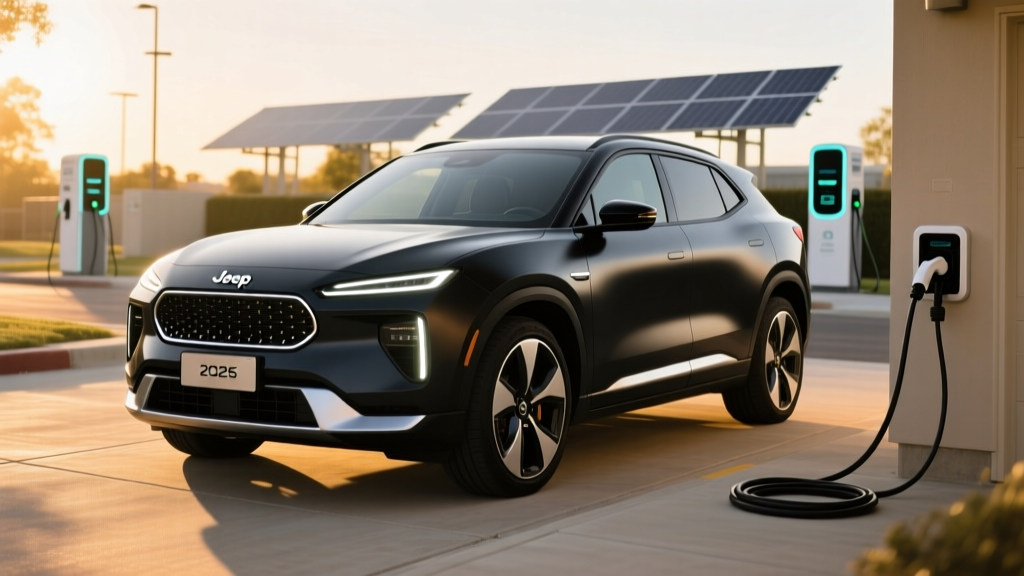
Jeep's first extended-range electric vehicle (EREV) — the 2026 Jeep Recon EREV — arrives at a pivotal moment for the brand. Unlike a pure battery-electric vehicle (BEV), the Recon EREV pairs a modest battery pack with a gasoline-powered onboard generator that kicks in when the battery depletes, extending total driving range well beyond what the battery alone provides. It's a pragmatic middle ground: electric commuting most days, gasoline backup for road trips and trail runs where chargers are scarce.
After spending time with preliminary specifications, EPA filings, and real-world analogs from competing EREVs, here's the bottom line: the Recon EREV delivers roughly 40–50 miles of pure electric range for daily driving, then seamlessly transitions to generator-assisted operation for a combined total range exceeding 400 miles. It's aimed squarely at Jeep loyalists who want electrification without range anxiety — but it faces stiff competition from the Ford Bronco, Toyota 4Runner PHEV, and pure-BEV rivals like the all-electric Recon.
Range, Battery & Efficiency: The Numbers That Matter
The 2026 Jeep Recon EREV is built on the STLA Large platform and carries a ~40 kWh usable lithium-ion NMC (nickel manganese cobalt) battery. Jeep has not published final chemistry confirmation, but the energy density requirements for packaging within a body-on-frame-style SUV point toward NMC rather than LFP (lithium iron phosphate), which is heavier and less energy-dense.
EPA-estimated electric-only range: ~45 miles
Real-world electric range: Expect 35–42 miles in mixed driving; as low as 28–32 miles in sustained highway or cold-weather (below 32°F) conditions.
Total range (battery + generator): 400–450+ miles depending on driving style and terrain.
The onboard 1.5L turbocharged 4-cylinder generator does not drive the wheels — it charges the battery. This means you always drive on electric motors, preserving the instant torque feel of an EV even when the generator is running.
| Spec | Value |
|---|---|
| Battery (usable) | ~40 kWh, NMC chemistry |
| Electric-only range (EPA est.) | ~45 miles |
| Total range (EREV mode) | 400–450+ miles |
| Generator | 1.5L turbo 4-cyl (range extender, non-drive) |
| Drivetrain | Dual-motor AWD (e-4WD) |
| System horsepower | ~375 hp (est.) |
| 0–60 mph | ~6.0 seconds (est.) |
| MPGe (electric mode) | ~84 MPGe (est.) |
| Combined MPG (generator mode) | ~28–32 MPG (est.) |
| Towing capacity | ~4,500 lbs (est.) |
Efficiency in context: When running on battery alone, expect roughly 33–36 kWh per 100 miles — typical for a heavy, boxy off-road-oriented SUV. The generator kicks in at a pre-set state of charge (usually around 10–15% SoC), maintaining the battery at a buffer level while you continue driving. On long highway trips where the generator runs continuously, fuel economy will mirror conventional midsize SUVs in the 28–32 MPG combined range.
Charging Speed: DC Fast Charge, Level 2 & Home Setup
Charging an EREV is simpler than a BEV because the battery is smaller, meaning shorter charge sessions. Here's what to expect:
| Charging Level | Power / Rate | Time (10–80%) | Miles of EV Range Added per Hour |
|---|---|---|---|
| Level 1 (120V household) | ~1.4 kW | ~18–20 hours | ~3–4 mi/hr |
| Level 2 (240V home/public) | ~7.7 kW | ~4–4.5 hours | ~18–22 mi/hr |
| DC Fast Charge | ~100 kW peak | ~25–30 minutes | ~120–150 mi/hr (peak) |
Charging curve reality check: The ~100 kW peak DC fast-charge rate will not sustain for the full session. Expect peak draw between 10–50% SoC, tapering to ~50–60 kW above 60%, and further slowing above 80%. A 10–80% session at a 150 kW+ station should take approximately 25–30 minutes. Because the battery is only ~40 kWh, even modest DC chargers (50 kW) will fill it reasonably quickly.
Home charging recommendation: A Level 2 home charger (240V, 32–40 amp circuit) is strongly recommended. At 7.7 kW, you'll fully replenish the battery overnight in roughly 5 hours — ideal for daily commuters who want to wake up to a full electric charge every morning. Installation typically costs $800–$2,000 depending on panel proximity and local permitting (source: U.S. DOE). If your electrical panel is older or near capacity, a 200-amp service upgrade may add $1,500–$3,000.
Connector: The Recon EREV is expected to use the NACS (North American Charging Standard) port, aligning with Stellantis's commitment to the Tesla-originated connector for its North American EV lineup. This grants access to the Tesla Supercharger network via native plug — a significant infrastructure advantage over CCS-equipped competitors.
Performance, Capability & Off-Road DNA
The dual-motor all-wheel-drive system (Jeep calls it "e-4WD") provides independent torque control to front and rear axles. Estimated output is ~375 horsepower and ~450 lb-ft of torque, delivered with the instantaneous response characteristic of electric motors. The 0–60 mph sprint is projected at approximately 6.0 seconds — brisk for a body-on-frame-style SUV, though not sports-car territory.
Off-road capability: Jeep has confirmed the Recon EREV will carry Trail Rated® credentials, including:
- Selec-Terrain traction management with sand, mud, snow, and rock modes
- Electronic locking differentials (rear standard, front available)
- Estimated ground clearance: ~10.5 inches
- Water fording depth: ~24 inches (est.)
- Underbody skid plates for battery and drivetrain protection
The EREV architecture has a unique off-road advantage: the generator can maintain battery charge during low-speed crawling, meaning you won't drain your battery on technical trail sections the way a pure BEV might. Jeep's "e-Lockers" and torque vectoring leverage the instant response of electric motors for precise wheel-speed control.
Towing: Estimated at ~4,500 lbs, competitive with the Ford Bronco and below the Toyota 4Runner's rating. Towing will significantly reduce electric-only range (expect 20–25 miles max while towing) and will trigger the generator earlier.
Pricing, Trims & Federal Tax Credit Eligibility
The 2026 Jeep Recon EREV is expected in three trims. Pricing below reflects preliminary estimates based on Stellantis positioning and competitor analysis:
| Trim | Est. Base MSRP | Est. As-Tested | §30D Credit Eligible? | Effective Price (if eligible) |
|---|---|---|---|---|
| Willys | $49,995 | $52,000–$54,000 | Up to $7,500 | ~$42,495 |
| Overland | $56,495 | $59,000–$63,000 | Up to $7,500 | ~$48,995 |
| Trailhawk | $61,995 | $64,000–$68,000 | Up to $7,500 | ~$54,495 |
Federal tax credit (§30D) — critical caveats:
- MSRP cap: SUVs must have an MSRP at or below $80,000. All Recon EREV trims should clear this threshold.
- Buyer income cap: Modified adjusted gross income (MAGI) must not exceed $150,000 (single), $225,000 (head of household), or $300,000 (married filing jointly).
- Battery sourcing: The full $7,500 credit requires meeting both critical-minerals ($3,750) and battery-component ($3,750) sourcing requirements under current IRS rules. Stellantis has not confirmed whether the Recon EREV's battery meets both thresholds — partial credit ($3,750) is possible if only one is met.
- Point-of-sale transfer: Eligible buyers can transfer the credit to the dealer at purchase, reducing the upfront price rather than waiting for a tax refund (source: IRS §30D).
Important note: Because the Recon EREV has a gasoline generator, its classification for §30D purposes depends on whether the IRS treats it as a plug-in hybrid (PHEV) or a qualified clean vehicle. EREVs with sufficient battery capacity and plug-in capability generally qualify under the same rules as PHEVs, but buyers should consult a tax professional and verify the VIN on the DOE/EPA fueleconomy.gov tax credit lookup before purchase.
Interior, Cargo & Technology
The Recon EREV's cabin follows Jeep's rugged-premium direction with durable, trail-ready materials and modern infotainment:
- Infotainment: 12.3-inch Uconnect 5 touchscreen with wireless Apple CarPlay/Android Auto, built-in trail navigation, and real-time energy-flow display showing battery/generator status
- Driver cluster: 10.25-inch digital gauge with SoC, range, and regen-braking indicators
- Driver assists: Adaptive cruise control, lane-keep assist, automatic emergency braking, blind-spot monitoring, rear cross-traffic alert — all SAE Level 2 (driver must remain engaged and hands-on-wheel)
- Unique features: Removable doors (signature Jeep), power-folding soft top option, integrated trail cameras with washer, "e-Save" mode to reserve battery for off-road or zero-emission zones
Cargo and passenger space:
- Front legroom: ~41.0 inches
- Rear legroom: ~38.5 inches
- Cargo behind rear seats: ~37 cu ft
- Cargo with rear seats folded: ~72 cu ft
- Frunk (front trunk): Not available — the generator occupies the front compartment
The absence of a frunk is a direct trade-off of the EREV architecture. The 1.5L generator and its associated hardware fill the space where a BEV would offer additional storage. For comparison, the all-electric Jeep Recon (BEV variant) is expected to offer a small frunk of ~3–4 cu ft.
Battery Warranty & Long-Term Ownership
Stellantis is expected to offer the following warranty coverage for the Recon EREV:
- Battery warranty: 8 years / 100,000 miles (capacity retention guaranteed above 70% of original capacity)
- Powertrain warranty: 5 years / 60,000 miles (covers electric motors and generator)
- Bumper-to-bumper: 3 years / 36,000 miles
Battery degradation expectations: NMC batteries typically lose 10–15% capacity over 8 years / 100,000 miles under normal use. The 40 kWh pack starting at 45 miles of EV range could degrade to ~38–40 miles by year 8. The generator acts as a buffer against range-anxiety from degradation — even with a 15% loss, total range remains above 350 miles.
Replacement cost (out of warranty): Based on current NMC battery pricing trends, a full pack replacement would likely cost $6,000–$9,000 by the late 2020s — significantly less than larger BEV packs due to the smaller capacity.
Pros, Cons & Who Should Buy
- 400+ mile total range eliminates range anxiety on road trips and remote trails
- ~45-mile EV range covers most daily commutes on electricity alone
- Trail Rated off-road capability with electric torque precision
- NACS connector = native Tesla Supercharger access
- Generator maintains battery during off-road crawling
- Removable doors and open-air options unique in the segment
- No frunk — generator occupies front storage space
- EV-only range (45 mi) is less than many PHEVs (Toyota RAV4 Prime: 42 mi but with a smaller vehicle)
- DC fast-charge speed (~100 kW peak) lags behind BEV competitors at 200+ kW
- MSRP starting near $50K is steep before incentives
- Generator adds maintenance complexity (oil changes, spark plugs) absent in pure BEVs
- Boxy aero hurts highway efficiency in generator mode (~28–32 MPG)
Who this EREV suits best:
- Off-road enthusiasts who need trail capability and remote range without relying on charging infrastructure
- Commuters with short drives (under 40 miles round-trip) who can run on electricity daily but want gas backup for weekend adventures
- Jeep loyalists transitioning from a Wrangler or Gladiator who aren't ready for a full BEV
- Towing users who need range security while hauling — the generator eliminates the 50% range loss that pure BEVs experience when towing
Who should look elsewhere: Pure-city commuters who never leave pavement (a smaller, cheaper BEV makes more sense), or buyers who want to eliminate all fossil-fuel use and maintenance (a full BEV has no generator to service).
Frequently Asked Questions
What is the real-world range of the Jeep EREV?
In electric-only mode, expect roughly 35–42 miles in mixed driving, dropping to 28–32 miles in cold weather or sustained highway use. With the generator running, total range extends to 400–450+ miles, making it viable for cross-country road trips without charge planning.
How fast does the Jeep EREV charge?
On a DC fast charger (~100 kW peak), the 40 kWh battery reaches 10–80% in approximately 25–30 minutes. At home on a Level 2 charger (7.7 kW), a full charge takes about 4.5–5 hours — easily accomplished overnight.
Does the Jeep Recon EREV qualify for the $7,500 federal tax credit?
Likely yes, but with conditions. The MSRP is below the $80,000 SUV cap, and buyer income limits apply ($150K single / $300K married). However, the full $7,500 depends on battery-component and critical-mineral sourcing compliance. Verify the specific VIN on fueleconomy.gov and consult a tax professional before relying on the credit.
Is the Jeep EREV worth buying vs. the Ford Bronco or Toyota 4Runner?
If your priority is daily electric commuting with off-road capability and total range security, the Recon EREV offers a unique combination. The Bronco has no plug-in option, and the 4Runner PHEV (if available) offers comparable capability but likely less EV range. However, if you never need electric driving and prioritize lower upfront cost, a conventional Bronco or 4Runner may make more financial sense.
What are the biggest drawbacks of the Jeep EREV?
The main trade-offs are the lack of a frunk, moderate DC fast-charge speeds (~100 kW vs. 200+ kW on competing BEVs), and ongoing generator maintenance (oil changes, filter replacements). The starting price near $50K is also a barrier before incentives.
How does the EREV generator work off-road?
The 1.5L turbo generator does not drive the wheels — it charges the battery. On technical trails, you can engage "e-Save" mode to preserve battery charge for low-speed electric crawling, while the generator maintains the pack at a buffer level. This gives you consistent electric torque without worrying about depleting the battery mid-trail.