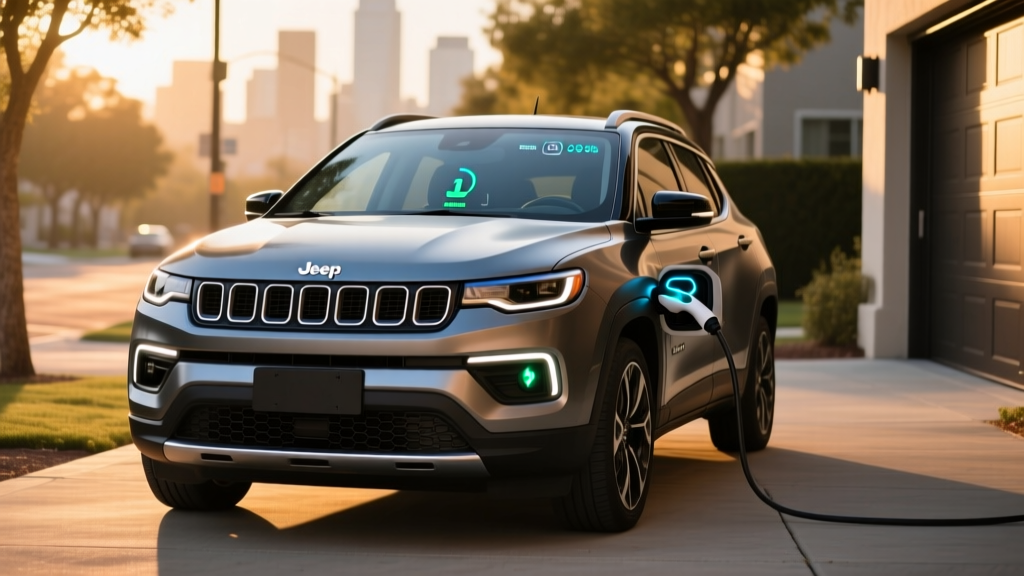
Quick Answer: The Jeep Compass Electric (badged as the Jeep Avenger in some markets and built on the STLA Medium platform) is an upcoming compact electric SUV targeting ~250 miles of EPA range, a ~54–58 kWh battery pack, and a starting MSRP estimated between $35,000 and $40,000 before incentives. As of early 2026, Stellantis has announced the vehicle for the North American market but has not published final EPA-certified figures. If you need an EV today in this segment, consider the Hyundai Kona Electric, Chevrolet Equinox EV, or Volvo EX30 as available alternatives.
What We Know About the Jeep Compass Electric So Far
Stellantis has confirmed that a compact electric Jeep SUV will arrive in North America, riding on the STLA Medium platform — the same architecture underpinning the European-market Jeep Avenger and several upcoming Peugeot and Alfa Romeo EVs. The Compass Electric nameplate is the likely branding for the U.S. and Canada, positioning it between the smaller Avenger and the larger Recon in Jeep's electric lineup.
Here is what has been announced or can be reasonably projected from STLA Medium platform specs:
| Spec | Estimated / Announced |
|---|---|
| Platform | STLA Medium (BEV) |
| Battery Capacity (usable) | ~54–58 kWh (NMC chemistry) |
| EPA Range (target) | ~240–260 miles |
| Drivetrain | FWD standard; AWD available |
| Horsepower | ~156 hp (FWD); ~210 hp (AWD est.) |
| 0–60 mph | ~8.0–9.0 seconds (FWD) |
| Max DC Fast Charge Rate | ~100–120 kW (peak) |
| 10–80% DC Charge Time | ~25–30 minutes (estimated) |
| Level 2 (AC) Charge Rate | 11 kW onboard charger |
| Starting MSRP (est.) | $35,000–$40,000 |
| Battery/Powertrain Warranty | 8 years / 100,000 miles (typical Stellantis) |
Important caveat: These figures are preliminary. Jeep's European Avenger achieves roughly 247 miles on the more generous WLTP cycle with a 54 kWh battery, which typically translates to 200–220 miles under the stricter EPA test. A North American Compass Electric variant may receive a larger battery pack or efficiency tuning to hit the 250-mile target Stellantis has referenced in press materials. Final EPA-certified numbers will appear on fueleconomy.gov once the vehicle is certified.
Real-World Range Expectations: If the Compass Electric lands at an EPA-rated 250 miles, plan for approximately 210–230 miles in mixed highway driving at 70+ mph, and 175–200 miles in freezing temperatures (below 32°F) with cabin heating active. Cold weather can reduce lithium-ion battery efficiency by 20–30%, a factor buyers in northern states must budget for.
How Does the Jeep Compass Electric Compare to Gas and Hybrid Compact SUVs?
The current gas-powered Jeep Compass starts around $28,000 and achieves an EPA-rated 25 MPG combined (24 city / 32 highway for the 4x2 model, per fueleconomy.gov). The Compass 4xe plug-in hybrid delivers 32 MPGe with roughly 25 miles of electric-only range. Here's how the electric version stacks up on key ownership metrics:
| Metric | Compass Electric (est.) | Compass Gas (2025) | Compass 4xe PHEV |
|---|---|---|---|
| Starting MSRP | $35,000–$40,000 | ~$28,000 | ~$36,000 |
| EPA Range / MPG | ~250 mi | 25 MPG combined | 32 MPGe / 25 mi EV |
| Fuel / Energy Cost (per mile) | $0.04–$0.06 (home) | $0.14–$0.16 (gas) | $0.06–$0.12 (mixed) |
| Annual Fuel/Energy (12k mi) | $480–$720 | $1,680–$1,920 | $720–$1,440 |
| Maintenance Cost (annual) | $200–$400 | $600–$900 | $500–$800 |
| Federal Tax Credit (§30D) | Up to $7,500* | $0 | Up to $3,750* |
| CO₂ Tailpipe Emissions | None | ~355 g/mi | Varies by EV share |
*Federal tax credit eligibility under IRS §30D depends on MSRP caps (≤$80,000 for SUVs), buyer income limits ($150K single / $300K joint AGI), and battery critical-mineral and component sourcing requirements. The Compass Electric's credit eligibility will not be confirmed until Stellantis publishes sourcing data. Always verify with a tax professional.
Real-World Ownership Costs: 5-Year Breakdown
Upfront sticker price is only part of the equation. Here is a 5-year / 60,000-mile total cost of ownership estimate comparing the Compass Electric (assuming $38,000 MSRP, $7,500 credit) against the gas Compass ($28,000 MSRP):
| Cost Category | Compass Electric | Compass Gas |
|---|---|---|
| Purchase Price (after credit) | $30,500 | $28,000 |
| Home Charger Install (Level 2) | $1,200–$2,500 | $0 |
| Fuel / Energy (5 years) | $2,400–$3,600 | $8,400–$9,600 |
| Maintenance (5 years) | $1,000–$2,000 | $3,000–$4,500 |
| Insurance (5 years, avg) | $7,500–$9,000 | $6,000–$7,500 |
| Estimated Depreciation | $12,000–$15,000 | $10,000–$13,000 |
| Total (5-year est.) | $54,600–$62,600 | $55,400–$62,600 |
Key takeaway: The Compass Electric reaches cost parity with the gas model within roughly 3–4 years of ownership if you charge primarily at home. The savings widen significantly if gas prices rise above $4/gallon. However, insurance premiums for EVs tend to run 15–25% higher due to battery replacement costs and specialized repair requirements — get quotes before committing.
Charging the Compass Electric: What to Expect
Understanding charge speeds is essential. Here is a breakdown by charging level, assuming a ~56 kWh usable battery:
| Level | Power (kW) | Miles Added per Hour | Full Charge Time | Typical Use |
|---|---|---|---|---|
| Level 1 (120V outlet) | ~1.4 kW | ~4–5 mi/hr | ~40+ hours | Emergency / overnight trickle |
| Level 2 (240V home) | ~7.7–11 kW | ~25–35 mi/hr | ~5–7 hours | Daily home charging |
| DC Fast Charge | ~100–120 kW peak | ~150–180 mi/hr (peak) | 10–80% in ~25–30 min | Road trips |
Charge curve reality: The peak DC rate of ~120 kW will only be sustained between roughly 10–50% State of Charge (SoC). Above 80%, the rate tapers sharply to protect battery longevity — expect the 80–100% portion to take nearly as long as the 10–80% session. Plan road-trip stops around 10–80% charges for optimal time efficiency.
Home charging setup: A Level 2 home charger (240V, 40–48 amp circuit) will fully replenish the battery overnight. Installation costs range from $800 for a simple outlet near the panel to $2,500+ if you need a panel upgrade from 100A to 200A service. Always hire a licensed electrician and check local permit requirements.
Federal Tax Credit Eligibility: What You Need to Know
The §30D Clean Vehicle Credit can reduce your effective purchase price by up to $7,500, but eligibility is not automatic. Here is the checklist for the 2026 tax year:
- MSRP cap: Vehicle must have an MSRP ≤ $80,000 (SUV/truck classification).
- Buyer income cap: Modified AGI must not exceed $150,000 (single), $225,000 (head of household), or $300,000 (married filing jointly).
- Battery sourcing: At least 80% of critical minerals must be sourced from the U.S. or FTA partners; 100% of battery components must be manufactured or assembled in North America (phased thresholds — verify current-year requirements at irs.gov).
- Point-of-sale transfer: You can transfer the credit to the dealer at purchase for an immediate price reduction, or claim it on your tax return.
- One-time use: The credit is per-vehicle, and you are limited to one transferred credit per year.
For the Compass Electric, the MSRP and income caps are unlikely to be obstacles. The battery sourcing requirement is the wildcard — Stellantis has been building battery supply chains through partnerships (including ACC, a joint venture with Samsung SDI), but specific mineral provenance for the North American Compass Electric variant has not been publicly confirmed. Verify eligibility at the point of purchase.
Common Misconceptions About the Jeep Compass Electric
| Myth | Fact |
|---|---|
| "It's just the European Avenger rebadged." | The North American Compass Electric is expected to ride on the same STLA Medium platform but with a larger battery, different tuning, and Jeep-specific design to meet U.S. range and safety expectations. |
| "EVs don't work in cold weather." | Cold reduces range by 20–30%, but preconditioning (warming the battery while plugged in) recovers significant efficiency. Modern thermal management systems keep batteries in optimal temperature windows. |
| "The battery will need replacing in 5 years." | NMC batteries in modern EVs typically retain 85–90% capacity after 100,000 miles. The federal mandate requires battery warranties of at least 8 years / 100,000 miles with a minimum 70% capacity retention threshold. |
| "I'll qualify for the full $7,500 tax credit." | Eligibility depends on income, MSRP, and battery sourcing. The credit is not guaranteed — always verify before relying on it in your budget. |
| "Charging takes too long for road trips." | A 10–80% DC fast charge in ~25–30 minutes aligns with a typical rest-stop break. Planning with apps like PlugShare or A Better Routeplanner minimizes downtime. |
Decision Framework: Is the Jeep Compass Electric Right for You?
Choose the Jeep Compass Electric if:
- You want a compact electric SUV with Jeep brand identity and available AWD for light off-road or snow driving.
- You have access to home Level 2 charging (garage or driveway with 240V access).
- Your daily commute is under 80 miles round-trip, keeping you well within the battery's comfort zone.
- You plan to keep the vehicle 4+ years to capture full fuel and maintenance savings.
- You qualify for the §30D tax credit and the Compass Electric's battery sourcing is confirmed eligible.
Consider an alternative (Kona Electric, Equinox EV, Ioniq 5) if:
- You need an EV now — the Compass Electric is not yet available for purchase in the U.S.
- You regularly drive 300+ mile highway trips in cold climates and need 300+ miles of range.
- You rely exclusively on apartment or street parking with no home charging option.
- You want DC fast charging above 150 kW for minimal road-trip downtime (the Compass Electric's ~120 kW peak is adequate but not class-leading).
Consider the Compass 4xe PHEV instead if:
- You want electric commuting (25 mi EV range) without range anxiety on long trips.
- You cannot install a home charger and need the flexibility of a gas tank.
- Your budget is tight and you want a lower MSRP with partial electric savings.
Frequently Asked Questions
When will the Jeep Compass Electric be available in the U.S.?
Stellantis has targeted a North American launch for the 2025–2026 timeframe, but a firm on-sale date has not been announced. Monitor Jeep's U.S. press site and fueleconomy.gov for EPA certification, which typically arrives weeks before vehicles hit dealer lots.
Will the Jeep Compass Electric qualify for the $7,500 federal tax credit?
It is likely to meet the MSRP and income requirements, but the battery critical-mineral and component sourcing thresholds under §30D are the deciding factors. Stellantis has not published the sourcing breakdown for the North American variant. Confirm eligibility at the dealership or via the IRS's updated qualified vehicle list before purchasing.
Can the Jeep Compass Electric tow?
Towing capacity has not been officially published. The European Avenger is rated for approximately 1,650 lbs (braked). A North American variant with AWD may offer similar or slightly higher capacity, but EV towing significantly reduces range — expect a 30–50% range reduction when towing near maximum capacity.
What is the battery chemistry, and how long will it last?
The STLA Medium platform is expected to use NMC (nickel-manganese-cobalt) chemistry, which offers higher energy density than LFP but is more sensitive to sustained 100% charges. Best practice: charge to 80% daily, 100% only before long trips. Expect 85–90% State of Health after 100,000 miles based on industry-wide degradation data for similar packs.
How does the Compass Electric compare to the Hyundai Kona Electric or Chevrolet Equinox EV?
The Kona Electric (261 mi EPA, ~$33,000) and Equinox EV (319 mi EPA, ~$33,000) both offer more confirmed range and are available now. The Compass Electric's differentiator will be Jeep brand cachet, available AWD, and Trailhawk off-road styling — but it must deliver competitive pricing and confirmed tax-credit eligibility to justify a wait.
Do I need a home charger to own the Compass Electric?
It is strongly recommended. Level 1 (120V) charging adds only ~4–5 miles per hour — inadequate for daily use if your commute exceeds 20 miles. Without home charging, you will depend on public DC fast chargers and Level 2 destination chargers, which costs 2–4× more per mile and adds significant time. Use PlugShare to map charging infrastructure near your home and workplace before committing.