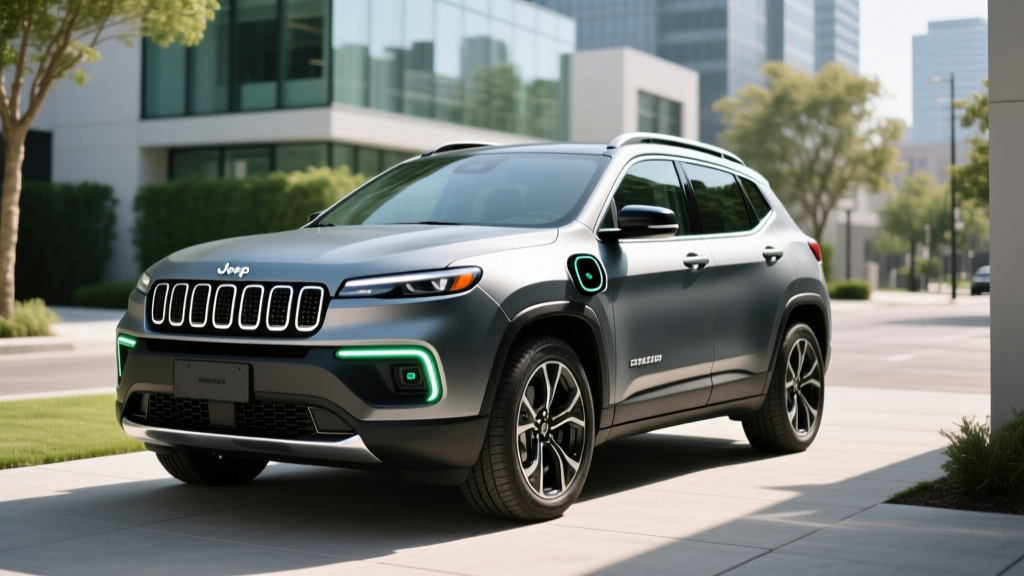
Quick Answer: The Jeep Cherokee EV is an upcoming all-electric compact SUV from Stellantis, expected to arrive for the 2026 model year on the STLA Medium platform. Preliminary estimates suggest an EPA range of approximately 270–320 miles, a starting MSRP near $45,000–$50,000, and DC fast-charging capability around 150–200 kW. As of early 2026, final EPA-certified specs, official pricing, and trim details have not been published by Jeep. This guide covers what is confirmed, what is projected from platform data, and how the Cherokee EV stacks up against gas and hybrid alternatives in real ownership cost.
What We Know About the Jeep Cherokee EV So Far
Stellantis confirmed the Jeep Cherokee EV as part of its broader electrification strategy, built on the STLA Medium platform — the same architecture underpinning vehicles like the Peugeot e-3008 and the upcoming Jeep Compass EV in Europe. The STLA Medium platform supports battery packs from approximately 87 kWh to 104 kWh (usable capacity), with both single-motor front-wheel-drive and dual-motor all-wheel-drive configurations.
For the US-market Cherokee EV, Jeep has signaled a compact SUV slotting between the smaller Avenger (not sold in the US) and the larger Grand Cherokee 4xe (which is a PHEV, not a BEV). The Cherokee EV is intended to replace the discontinued gas-powered Cherokee (last sold for the 2023 model year) with a fully electric successor.
Confirmed details as of early 2026:
- Platform: STLA Medium (800V-capable architecture)
- Body style: Compact two-row SUV
- Drivetrain: FWD and AWD options expected
- Production: Likely at a Stellantis North American plant (final location unannounced)
- Connector: NACS (Tesla-style), consistent with Stellantis's commitment to the North American Charging Standard for new EVs
Projected but not yet EPA-certified:
- Battery capacity: ~87–104 kWh usable (NMC chemistry expected for US models)
- EPA range: ~270 miles (AWD) to ~320 miles (FWD, larger pack)
- Peak DC fast-charge rate: 150–200 kW
- Level 2 AC charging: ~11 kW onboard charger
- Horsepower: 210 hp (single motor) to 380+ hp (dual motor)
- 0–60 mph: ~7.5 seconds (FWD) to ~5.0 seconds (AWD)
Estimated Specs and Pricing Breakdown
| Specification | FWD Standard Range (Est.) | AWD Extended Range (Est.) |
|---|---|---|
| Battery (usable) | ~87 kWh (NMC) | ~104 kWh (NMC) |
| EPA Range | ~300–320 mi | ~270–290 mi |
| Real-World Highway Range | ~250–270 mi | ~220–240 mi |
| Cold-Weather Range (20°F) | ~210–240 mi | ~185–210 mi |
| Peak DC Charge Rate | ~150–175 kW | ~175–200 kW |
| 10–80% DC Fast Charge | ~28–32 min | ~30–35 min |
| Level 2 (240V) Rate | ~11 kW | ~11 kW |
| Level 2 Full Charge Time | ~8–9 hours | ~9.5–10.5 hours |
| Horsepower | ~210 hp | ~380 hp |
| 0–60 mph | ~7.5 sec | ~5.0 sec |
| Estimated Base MSRP | $45,000–$47,000 | $50,000–$53,000 |
| Battery/Powertrain Warranty | Expected 8 yr / 100,000 mi (Stellantis standard) | |
A note on range expectations: The EPA sticker is a laboratory estimate. Real-world highway driving at 70–75 mph typically yields 80–85% of EPA range for most SUVs due to aerodynamic drag. In cold weather (below 30°F), expect an additional 15–30% reduction as the battery uses energy for thermal management and cabin heating. A heat pump, if equipped, can reduce cold-weather losses by roughly 5–10 percentage points.
Real-World Range Reality Check: If the AWD Extended Range model achieves an EPA rating of 280 miles, plan for approximately 225–240 miles on a highway road trip in moderate weather, and 185–210 miles in sub-freezing conditions. Always plan charging stops with a 15–20% buffer.
Jeep Cherokee EV vs. Gas Cherokee vs. Competing PHEVs
The most direct comparison for shoppers is the last gas-powered Jeep Cherokee (2023 model year, 2.4L I-4 or 2.0L turbo) and the Jeep Grand Cherokee 4xe plug-in hybrid. Here is how the numbers stack up:
| Metric | Cherokee EV (AWD Est.) | 2023 Cherokee Gas (2.0T AWD) | Grand Cherokee 4xe (PHEV) |
|---|---|---|---|
| Powertrain | Dual-motor BEV | 2.0L Turbo I-4 | 2.0L Turbo + electric motors |
| EPA Range / MPG | ~280 mi (est.) | 24 MPG combined | 56 MPGe / 25 mi electric-only |
| Energy Cost per Mile | ~$0.04–$0.06 (home charging) | ~$0.14–$0.17 ($3.40/gal gas) | ~$0.08–$0.12 blended |
| Annual Fuel/Energy (12k mi) | ~$480–$720 | ~$1,700–$2,040 | ~$960–$1,440 |
| Estimated MSRP | ~$50,000–$53,000 | ~$37,000–$42,000 (discontinued) | ~$59,495 (2025 base) |
| Federal Tax Credit (§30D) | Up to $7,500 (if eligible) | $0 | Up to $7,500 (if eligible) |
| Maintenance (5 yr est.) | ~$1,500–$2,000 | ~$3,500–$4,500 | ~$3,000–$4,000 |
| 5-Year Total Energy + Maint. | ~$3,900–$5,600 | ~$12,000–$14,700 | ~$7,800–$11,200 |
Key takeaway: The Cherokee EV carries a higher upfront price than the discontinued gas Cherokee, but the annual energy savings of $1,000–$1,300 and lower maintenance costs (no oil changes, fewer brake replacements due to regenerative braking) narrow the gap substantially over a 5-year ownership period. Compared to the Grand Cherokee 4xe, the Cherokee EV is less expensive and offers far more electric-only range, but the 4xe provides unlimited gas-engine range for frequent long-distance drivers without charging access.
Federal Tax Credit and Purchase Incentives
The Cherokee EV may qualify for the IRS §30D Clean Vehicle Credit of up to $7,500, but eligibility depends on several requirements that change frequently:
- MSRP Cap: SUVs must have an MSRP at or below $80,000 — the Cherokee EV should comfortably clear this threshold.
- Buyer Income Limits: AGI must not exceed $150,000 (single), $225,000 (head of household), or $300,000 (joint filers).
- Battery Component Sourcing: A percentage of battery components must be manufactured or assembled in North America. This threshold increases annually — for 2026, 80% of components must qualify for the $3,750 battery portion.
- Critical Minerals: A percentage of critical minerals must be sourced from the US or a free-trade-agreement country. The 2026 threshold is 80% for the $3,750 minerals portion.
- Point-of-Sale Transfer: Buyers can transfer the credit to the dealer at purchase, reducing the out-of-pocket price immediately rather than waiting for a tax refund.
- Foreign Entity of Concern (FEOC) Restriction: Vehicles with battery components from a FEOC (e.g., certain Chinese suppliers) may be disqualified entirely.
Because Stellantis has not yet published the Cherokee EV's battery supply chain details, we cannot confirm whether it will qualify for the full $7,500, a partial $3,750, or $0 at launch. Buyers should check fueleconomy.gov once the vehicle is EPA-certified for the definitive answer. Consult a tax professional for your personal eligibility.
Real-World Ownership Costs: 5-Year Breakdown
Below is a projected 5-year / 60,000-mile cost-of-ownership comparison assuming the Cherokee EV AWD at ~$52,000 MSRP with a $7,500 tax credit, versus a comparably equipped gas compact SUV at ~$38,000.
| Cost Category | Cherokee EV (AWD Est.) | Gas Compact SUV (AWD) |
|---|---|---|
| Purchase Price (MSRP) | $52,000 | $38,000 |
| Federal Tax Credit | –$7,500 | $0 |
| Effective Purchase Price | $44,500 | $38,000 |
| Home Charger Install (Level 2) | $1,200–$2,500 | $0 |
| Energy/Fuel (5 yr, 60k mi) | $2,400–$3,600 | $8,500–$10,200 |
| Maintenance (5 yr) | $1,500–$2,000 | $3,500–$4,500 |
| Insurance (5 yr est.) | $9,000–$11,000 | $7,000–$9,000 |
| Estimated Depreciation | $18,000–$22,000 | $14,000–$17,000 |
| Total 5-Year Cost (approx.) | $76,600–$85,600 | $71,000–$78,700 |
Where the EV wins: Energy costs are 60–70% lower with home charging, and maintenance savings are significant — EVs skip oil changes, transmission fluid, spark plugs, and experience far less brake wear due to regenerative braking.
Where the EV costs more: Insurance premiums for EVs tend to run 15–25% higher due to repair cost data and higher vehicle values. Depreciation remains less predictable for newer EV models, though mainstream brands like Jeep with strong dealer networks may fare better than startups. The home Level 2 charger installation ($1,200–$2,500 for most homes with a 200-amp panel and short conduit runs; potentially $3,000–$5,000 if a panel upgrade is needed) is a one-time cost that gas cars don't carry.
Charging at Home and on the Road
For most EV owners, 80–90% of charging happens at home. A Level 2 home charger (240V, 32–48 amps) delivering 7.7–11.5 kW will fully replenish the Cherokee EV's battery overnight — approximately 8–10.5 hours depending on pack size. At the US average residential electricity rate of ~$0.16/kWh, a full charge from empty costs roughly $14–$17, providing 270–320 miles of range.
On the road, the STLA Medium platform's 800V architecture should enable DC fast charging at 150–200 kW peak. However, peak rate is not sustained rate. A typical charge curve tapers significantly above 80% state of charge (SoC) to protect battery health. Expect the 10–80% charge to take roughly 28–35 minutes, but a 10–100% charge could take 50–65 minutes. For road trips, charging to 80% and driving on is far more time-efficient than topping off completely.
The expected NACS connector means native access to Tesla's Supercharger network (over 25,000 stalls in North America), which remains the most reliable DC fast-charging network by a wide margin. Electrify America, EVgo, and ChargePoint stations with NACS cables or adapters will also be compatible.
If you lack home charging: Public DC fast charging costs roughly $0.30–$0.50/kWh depending on network and time of day, raising the per-mile energy cost to $0.08–$0.13 — still cheaper than gas but erasing much of the home-charging savings advantage. If your housing situation does not support Level 2 installation (apartment, street parking, older electrical panel), a PHEV like the Grand Cherokee 4xe may be a more practical electrified option.
Common Misconceptions Addressed
| Myth | Fact |
|---|---|
| "EV batteries need replacing every few years." | Modern NMC and LFP batteries are designed for 15–20 years of service. Stellantis is expected to warranty the Cherokee EV's battery for 8 years/100,000 miles with a capacity retention threshold of ~70%. Real-world degradation data from similar platforms shows ~10–15% capacity loss over 100,000 miles. |
| "The Cherokee EV will tow like a gas Jeep." | EVs can tow, but range drops dramatically under load — typically 40–60% range reduction when towing near max capacity. Expect a towing rating of 2,000–3,500 lbs for the Cherokee EV, suitable for light trailers but not heavy boat or camper hauling. |
| "I'll save $7,500 no matter what." | The §30D credit has income caps, MSRP caps, and battery-sourcing requirements. Not all buyers qualify, and not all trims may meet sourcing thresholds. Verify on fueleconomy.gov after EPA certification. |
| "Electricity isn't really cleaner." | Even on coal-heavy US grids, EVs produce fewer lifecycle emissions than comparable gas vehicles per EPA analysis. On cleaner grids (hydro, wind, solar), the advantage is substantial. Emissions decrease further as grids decarbonize over the vehicle's lifetime. |
| "Fast charging ruins the battery." | Occasional DC fast charging has minimal impact. Modern thermal management systems precondition the battery to optimize charge acceptance and limit heat damage. Daily Level 2 home charging is gentler and recommended for routine use. |
Decision Framework: Is the Cherokee EV Right for You?
Choose the Jeep Cherokee EV if:
- You have reliable home Level 2 charging access (garage or driveway with 240V outlet)
- Your daily driving is under 80 miles round-trip (covers ~90% of US commutes)
- You take road trips 3–5 times per year and are comfortable planning DC fast-charge stops
- You want a mainstream-brand electric SUV with Jeep dealer support and a conventional SUV form factor
- You qualify for the §30D tax credit, narrowing the effective price gap with gas alternatives
Consider a gas vehicle or PHEV instead if:
- You live in an apartment or park on the street with no charging access
- You regularly tow heavy loads (>3,500 lbs) or drive more than 300 miles between stops in rural areas
- You live in an extreme cold climate (consistent sub-10°F winters) and cannot tolerate 30%+ range loss
- Your budget is strictly under $35,000 and you need a vehicle immediately (the Cherokee EV may not arrive until mid-to-late 2026)
- You want proven long-term resale data — EV depreciation curves are still maturing
Frequently Asked Questions
When will the Jeep Cherokee EV be available to buy?
Stellantis has indicated a 2026 timeframe for the Cherokee EV's arrival in North America, but an exact on-sale date has not been announced. Pre-orders or reservation details are expected closer to the reveal event. Check Jeep's official site for updates.
Will the Cherokee EV have four-wheel drive?
Yes — a dual-motor AWD configuration is expected alongside a single-motor FWD option. Jeep's brand identity depends on off-road credibility, so expect terrain-select modes and reasonable ground clearance, though it will not match a Wrangler's trail capability.
How long will the battery last before needing replacement?
Based on data from similar STLA-platform vehicles and industry-wide NMC degradation curves, expect approximately 85–90% battery capacity retention at 100,000 miles and 75–85% at 150,000 miles. Full battery replacement costs, if ever needed out of warranty, are projected at $10,000–$16,000 for a pack of this size — but most EV batteries outlast the vehicle itself.
Can I charge the Cherokee EV at Tesla Superchargers?
Yes — with the expected NACS charge port, the Cherokee EV should have native compatibility with Tesla Superchargers without requiring an adapter, consistent with the industry-wide shift to NACS for the 2025+ model years.
Will the Cherokee EV qualify for the $7,500 federal tax credit?
It depends on battery sourcing, your income, and final MSRP. The MSRP should fall well under the $80,000 SUV cap. The critical question is whether Stellantis's battery supply chain meets the 2026 critical-minerals and component-sourcing thresholds. This will be confirmed on fueleconomy.gov once the vehicle receives EPA certification.
Is the Cherokee EV a good first EV?
For buyers with home charging access and typical commuting patterns, yes — it offers competitive range, mainstream dealer support, and familiar SUV packaging. First-time EV buyers should prioritize installing a Level 2 home charger before delivery and familiarize themselves with route-planning apps like A Better Routeplanner for road trips.