The Short Answer on the Jeep Cherokee Electric
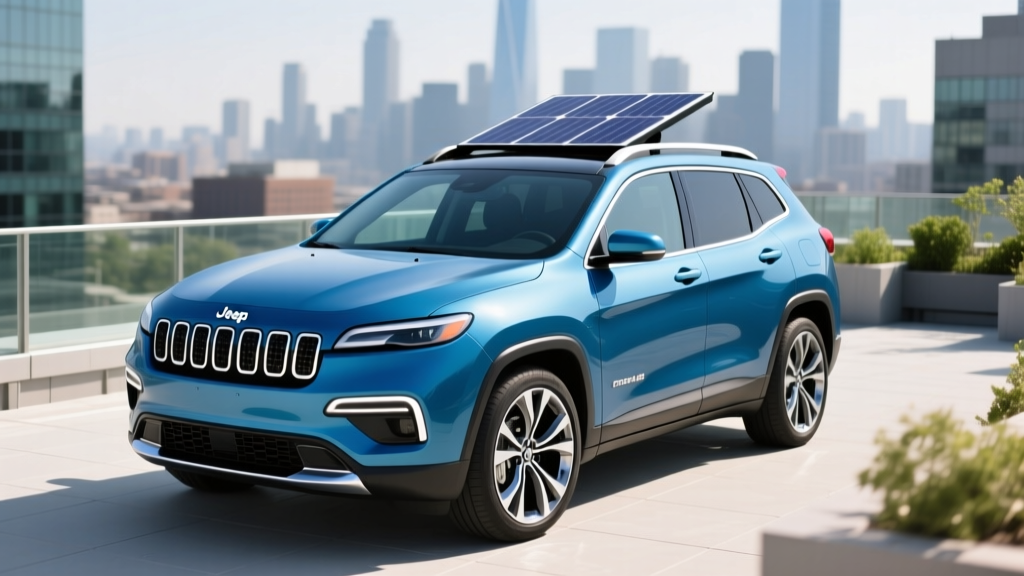
As of early 2026, Jeep has not officially released or begun selling a fully electric Jeep Cherokee in the United States. The gasoline Cherokee was discontinued after the 2021 model year, and while Stellantis (Jeep's parent company) has announced broad electrification plans under its "Dare Forward 2030" strategy, a battery-electric Cherokee has not appeared on the confirmed U.S. product roadmap with firm specs, pricing, or a sale date.
If you're searching for a Jeep Cherokee electric, you're likely weighing whether to wait for an electrified Cherokee nameplate revival, consider the existing Jeep Wrangler 4xe or Grand Cherokee 4xe plug-in hybrids, or cross-shop competing electric SUVs like the Ford Mustang Mach-E, Hyundai Ioniq 5, or Tesla Model Y. This guide gives you the facts, the numbers, and a decision framework so you don't pause your purchase for a vehicle that may not arrive on your timeline.
What Jeep Has Actually Said About an Electric Cherokee
Stellantis has committed to offering BEV (battery electric vehicle) options across its brands by 2030. In Europe, Jeep sells the Avenger (a compact electric SUV) and has introduced the Recon and Wagoneer S as electric models in the U.S. market. However, the Cherokee nameplate specifically has not been confirmed for a battery-electric revival in North America as of this writing.
What we know from Stellantis brand announcements:
- The Jeep Wagoneer S (2024–2026) is Jeep's first fully electric vehicle sold in the U.S., built on the STLA Large platform with an EPA-estimated range of approximately 300+ miles and 600 horsepower.
- The Jeep Recon is announced as an electric off-road SUV, expected to follow, also on STLA Large.
- The Cherokee slot in Jeep's lineup — a compact, unibody crossover between the Compass and Grand Cherokee — remains vacant in the U.S. since the 2021 discontinuation.
Bottom line: Any specs, range figures, or pricing you may have seen attributed to a "Jeep Cherokee EV" are speculative. Until Jeep publishes official details, treat them as preliminary estimates at best.
What an Electric Cherokee Would Likely Need to Compete
If Jeep does revive the Cherokee as a BEV, it would enter one of the most competitive segments in the EV market: the compact-to-midsize electric crossover. Here's what the benchmark competitors deliver in 2026, which sets the bar for any future Cherokee EV.
| Model | EPA Range | Battery (kWh) | Peak DC Charge | 10–80% Time | 0–60 mph | Base MSRP |
|---|---|---|---|---|---|---|
| Tesla Model Y (Long Range) | ~320 mi | ~78 kWh (NMC) | 250 kW | ~20 min | 4.8 sec | ~$44,990 |
| Hyundai Ioniq 5 (Long Range RWD) | ~303 mi | 84 kWh (NMC) | 240 kW | ~18 min | 5.1 sec | ~$43,500 |
| Ford Mustang Mach-E (Extended Range) | ~312 mi | 91 kWh (NMC) | 150 kW | ~32 min | 5.1 sec | ~$42,995 |
| Jeep Wagoneer S (Launch Edition) | ~300+ mi (est.) | ~100 kWh (est.) | ~200 kW (est.) | TBD | 3.4 sec | ~$65,000 |
For a future electric Cherokee to be competitive, it would realistically need:
- EPA range: 280–320 miles to match segment expectations
- DC fast charging: At least 150 kW peak, ideally 200+ kW with a strong charge curve (sustaining above 100 kW past 60% SoC)
- Starting MSRP: Under $45,000 to qualify for the full IRS §30D federal tax credit (SUV MSRP cap is $80,000, but the $45K–$55K sweet spot is where volume lives)
- NACS connector: Essential for Supercharger network access, which is now the dominant DC network in the U.S.
Jeep's Current Electrified Options: 4xe Plug-In Hybrids
If you want an electrified Jeep today, the 4xe (plug-in hybrid) lineup is what's available. These are not BEVs — they pair a turbocharged gasoline engine with an electric motor and a smaller battery for limited electric-only driving.
| Model | Electric-Only Range | Battery (kWh) | Combined MPGe | Total Range (gas+elec) | Base MSRP |
|---|---|---|---|---|---|
| Wrangler 4xe | ~22 mi | 17.3 kWh | 49 MPGe | ~370 mi | ~$50,695 |
| Grand Cherokee 4xe | ~26 mi | 17.3 kWh | 56 MPGe | ~440 mi | ~$59,495 |
Real-world PHEV context: The 22–26 miles of electric range covers short commutes and school runs, but once the battery depletes, you're driving a heavy hybrid getting roughly 20–24 MPG combined. The 4xe models work best for drivers who can charge at home nightly and have commutes under 25 miles round-trip. For longer road trips, the gasoline engine eliminates range anxiety entirely — but you're paying for two powertrains in weight, complexity, and maintenance.
EV vs. Gas vs. PHEV: Real Cost Comparison
Whether you're waiting for an electric Cherokee or choosing an available alternative, the economics matter. Here's a 5-year total cost of ownership comparison for a typical driver (15,000 miles/year, home charging available, mid-tier electricity rate).
| Cost Category | BEV (e.g., Ioniq 5) | PHEV (e.g., Grand Cherokee 4xe) | Gas SUV (e.g., Toyota RAV4) |
|---|---|---|---|
| Purchase Price (after credits) | ~$36,000* | ~$52,000* | ~$32,000 |
| Fuel / Electricity (5 yr) | ~$3,750 | ~$5,800 | ~$8,250 |
| Maintenance (5 yr) | ~$1,500 | ~$3,200 | ~$3,500 |
| Insurance (5 yr avg) | ~$9,500 | ~$9,000 | ~$7,500 |
| Estimated Depreciation | ~$14,000 | ~$18,000 | ~$12,000 |
| 5-Year Total | ~$64,750 | ~$88,000 | ~$63,250 |
*Assumes $7,500 federal tax credit for BEV (§30D, subject to income, sourcing, and MSRP eligibility) and $3,750 credit for PHEV. Your actual credit may differ. Consult a tax professional.
Key takeaway: A competitively priced BEV crossover and a mainstream gas SUV reach near-parity over 5 years when the federal tax credit applies and home charging keeps fuel costs low. The PHEV, despite its flexibility, often costs more over the same period due to its higher purchase price and dual-powertrain maintenance.
Common Misconceptions About Waiting for an Electric Cherokee
| Myth | Fact |
|---|---|
| "The electric Cherokee is launching next year." | No official U.S. launch date has been announced by Jeep or Stellantis as of 2026. The Wagoneer S and Recon are Jeep's confirmed U.S. EVs. |
| "I should wait because it'll be cheaper than a Model Y." | Jeep's EV pricing (Wagoneer S starts ~$65K) suggests a Cherokee EV, if it arrives, may not undercut competitors. Volume-competitive pricing under $45K is possible but unconfirmed. |
| "An electric Jeep will have unmatched off-road capability." | EVs offer instant torque and precise wheel control, but added battery weight (typically 4,500–5,500 lbs for midsize SUVs) affects approach/departure geometry and trail agility. Purpose-built off-road EVs are still early. |
| "I won't qualify for any tax credits if I buy now." | The §30D credit remains available for eligible new BEVs and PHEVs through 2032, subject to MSRP caps ($55K sedans / $80K SUVs and trucks), buyer income limits ($150K single / $300K joint), and battery sourcing requirements. Verify at purchase. |
| "EVs don't work in cold weather." | Cold reduces range by 15–30% depending on temperature and cabin heating use. A BEV with 300 mi EPA range may deliver 210–255 mi at 20°F. This is manageable with route planning and preconditioning but is a real factor for northern-climate buyers. |
Decision Framework: Should You Wait, Buy a 4xe, or Cross-Shop?
If X, Then Y — Your Electrified Jeep Decision Tree
- If you need a vehicle within 3–6 months → Do not wait for an unconfirmed Cherokee EV. Cross-shop the Hyundai Ioniq 5, Tesla Model Y, or Ford Mustang Mach-E for a fully electric SUV, or consider the Grand Cherokee 4xe if you want the Jeep badge with some electric driving.
- If your daily commute is under 25 miles and you can charge at home → A PHEV like the Wrangler 4xe or Grand Cherokee 4xe covers most daily driving on electricity. You keep gas flexibility for road trips. Just know you're paying a premium for dual powertrains.
- If you want a full EV and love the Jeep brand → The Wagoneer S is available now as Jeep's first U.S. BEV, but it starts around $65,000 — well above Cherokee-class pricing. The Recon (off-road-oriented EV) is expected to follow. Neither is a Cherokee successor in size or price.
- If you're flexible and can wait 2+ years → Monitor Stellantis product announcements. A Cherokee EV on the STLA Large platform is plausible, but unconfirmed. Don't delay a needed purchase for speculation.
- If off-road capability is your top priority → The Wrangler 4xe remains the most capable electrified trail vehicle Jeep sells. No electric equivalent exists yet with proven off-road credentials at a mainstream price.
- If you lack home charging access → A BEV is still viable but requires reliable public DC fast charging near your home or workplace. Check the DOE's Alternative Fuels Data Center for charger density in your area before committing. A PHEV reduces this dependency.
Real-World Ownership Considerations Before You Go Electric
Whether you choose a BEV now or wait for Jeep to expand its electric lineup, these ownership realities apply:
Home Charging Is the Foundation
Level 2 home charging (240V, typically 32–48 amps / 7.7–11.5 kW) adds 25–37 miles of range per hour and fully replenishes most EV batteries overnight. Installation costs range from $500–$1,500 if your electrical panel has capacity, to $2,000–$4,500+ if a panel upgrade (100A to 200A) is needed. A licensed electrician should assess your panel before you buy.
Cold Climate Range Loss Is Real
If you live where winters regularly drop below freezing, plan for 20–30% range reduction. A future Cherokee EV with a 300-mile EPA rating could deliver 210–240 miles in January. Heat pumps (which Jeep's STLA platforms are expected to include) mitigate this by 5–10 percentage points compared to resistive heating.
Insurance Costs More for EVs
EV insurance premiums average 15–25% higher than equivalent gas vehicles, driven by higher repair costs (battery protection, specialized labor, and parts). Get quotes before purchasing — the $100–$200/month difference adds up.
The Federal Tax Credit Is Not Guaranteed
The §30D credit of up to $7,500 for new BEVs (and up to $3,750 for PHEVs) requires meeting all of these conditions:
- Vehicle MSRP under $80,000 (SUVs/trucks) or $55,000 (sedans)
- Buyer modified adjusted gross income under $150,000 (single) or $300,000 (joint)
- Battery components and critical minerals must meet escalating domestic-sourcing thresholds (which tighten annually through 2032)
- The credit can now be transferred to the dealer at point of sale, reducing your out-of-pocket cost immediately
Always verify eligibility with your dealer and a tax professional at the time of purchase. Rules change, and a vehicle that qualifies in January may face different sourcing thresholds later in the year.
Frequently Asked Questions
Is the Jeep Cherokee coming back as an electric vehicle?
Jeep and Stellantis have not officially confirmed a battery-electric Cherokee for the U.S. market as of 2026. Jeep's confirmed U.S. electric vehicles are the Wagoneer S (available now) and the Recon (upcoming). The Cherokee nameplate has been absent from U.S. showrooms since the 2021 model year.
What is Jeep's cheapest electric vehicle?
The Jeep Wagoneer S, starting around $65,000 before incentives, is currently Jeep's most affordable (and only) fully electric vehicle available in the U.S. There is no lower-priced Jeep BEV in the lineup. If a Cherokee EV is eventually produced, it would likely target a lower price point, but this is unconfirmed.
Should I buy a Grand Cherokee 4xe or wait for an all-electric Jeep?
The Grand Cherokee 4xe gives you 26 miles of electric-only range for short commutes and a gasoline engine for longer trips. It's a practical bridge if you want electrified driving today without range anxiety. However, at ~$59,495 starting MSRP, it's expensive compared to dedicated BEV crossovers that offer 300+ miles of range at lower prices. If your priority is maximum electric driving and lowest running costs, a dedicated BEV like the Ioniq 5 or Model Y is more efficient per dollar.
How much does it cost to charge an electric SUV at home?
At the U.S. average residential electricity rate of approximately $0.16/kWh (EIA, 2025 data), fully charging an 84 kWh battery (typical midsize EV SUV) costs about $13.44. That delivers roughly 280–300 miles of range — equivalent to about $0.045 per mile. A comparable gas SUV at 25 MPG and $3.40/gallon costs $0.136 per mile — roughly 3x more per mile driven.
Will a future Jeep Cherokee EV qualify for the $7,500 tax credit?
If a Cherokee EV is eventually released with an MSRP under $80,000 (SUV cap) and meets the 2026 battery sourcing and critical mineral requirements, it could qualify. However, eligibility depends on where battery components and minerals are sourced, and these thresholds tighten each year. It's too early to confirm credit eligibility for an unannounced vehicle. Check the IRS's qualifying vehicle list at the time of any purchase.
What's the best electric SUV to buy instead of waiting for a Cherokee EV?
For the best combination of range, charging speed, and value in 2026: the Hyundai Ioniq 5 (303 mi range, 18-min 10–80% charging, NACS adapter included) and Tesla Model Y (320 mi range, native Supercharger access) lead the segment. If you want AWD and off-road credibility in an EV, the segment is still thin — which is partly why buyers are looking to Jeep for an answer.