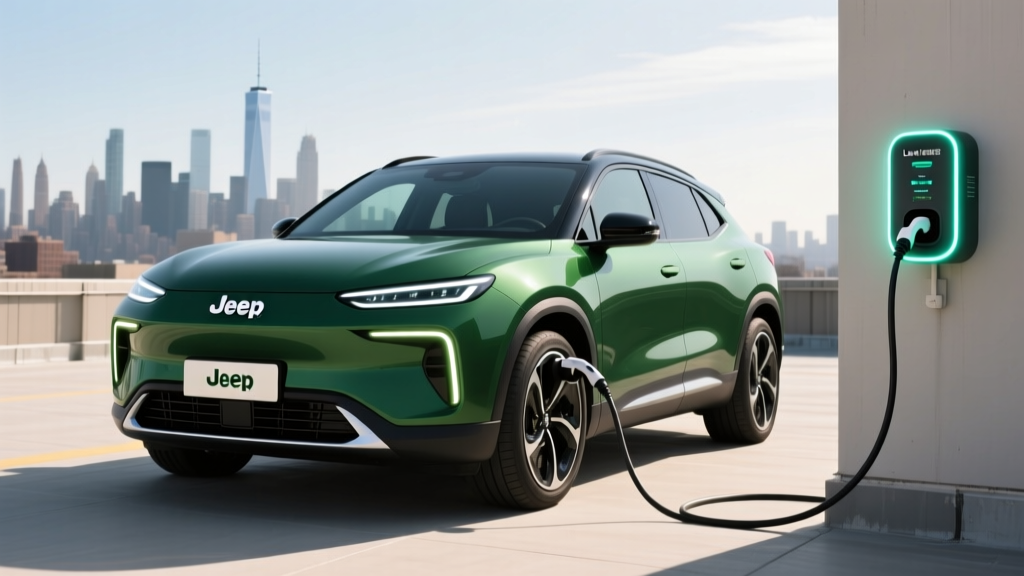
Stellantis has finally brought its smallest electric utility vehicle stateside. The 2026 Jeep Avenger EV arrives as a subcompact crossover aimed squarely at urban commuters who want Jeep styling without the fuel bill — or the bulk of a Wrangler 4xe. After spending time with the specs, charging data, and real-world efficiency figures, here is what prospective buyers need to know before heading to the dealer.
Range and Efficiency: What the EPA Says vs. the Real World
The Jeep Avenger EV is equipped with a 54 kWh usable battery pack (51 kWh net) using NMC (nickel-manganese-cobalt) chemistry. The EPA rates the front-wheel-drive model at 205 miles of combined range. On the European WLTP cycle — which tends to run 15–20% more optimistic than the EPA — the Avenger posts 249 miles (400 km). US buyers should anchor to the EPA figure.
Real-world expectation: Plan on 175–190 miles in mixed highway driving at 70+ mph. In cold weather (below 30°F), expect a 20–30% reduction, dropping effective range to roughly 145–165 miles. City driving with regenerative braking recovers the most energy and can push you close to or slightly above the EPA sticker.
Efficiency lands at 111 MPGe combined (30 kWh/100 mi), which is competitive with the Hyundai Kona Electric and slightly behind the Chevrolet Bolt EUV. The Avenger's relatively light curb weight (~3,300 lbs) helps it punch above its battery size, but the bluff-front styling creates more drag than sleeker rivals at highway speed.
Charging Speed: DC Fast and Home Level 2
Charging is where subcompact EVs often compromise, and the Avenger is adequate rather than class-leading. Here is the full breakdown:
| Level | Power | Speed / Time |
|---|---|---|
| Level 1 (120V household) | ~1.4 kW | ~4 mi/hr · ~36 hrs (0–100%) |
| Level 2 (240V home/work) | 11 kW (onboard charger) | ~25 mi/hr · ~5.5 hrs (0–100%) |
| DC Fast Charge | 100 kW peak | 10–80% in ~24 min |
The 100 kW DC fast-charge peak is respectable for a 54 kWh pack — that is roughly a 1.85C charge rate. However, like most NMC packs, the charge curve tapers noticeably above 80%, so plan on 35–40 minutes for a 10–90% session. The Avenger uses the CCS1 connector standard, though Stellantis has confirmed NACS adapter compatibility for Tesla Supercharger access beginning in the 2026 model year.
For daily ownership, the 11 kW onboard Level 2 charger is the more relevant number. A full overnight charge on a home Level 2 station (like a ChargePoint Home Flex or Wallbox Pulsar Plus) takes about 5.5 hours — easily handled while you sleep. If your home electrical panel supports a 48-amp circuit, you will max out the onboard charger; on a 32-amp circuit, expect closer to 7.7 kW and roughly 7 hours for a full charge.
Performance and Drivetrain
The US-spec Avenger EV uses a single front-mounted motor producing 156 horsepower and 192 lb-ft of torque. The 0–60 mph sprint takes approximately 9.0 seconds. This is front-wheel drive only — there is no dual-motor AWD option for the Avenger, which may disappoint buyers in snow-belt states who associate Jeep with off-road capability.
In practice, the Avenger feels peppy around town thanks to instant electric torque, but highway passing requires planning. The suspension tuning prioritizes comfort over sportiness, and the steering is light — ideal for parking, less engaging on canyon roads. Ground clearance is 7.9 inches, respectable for a subcompact crossover, but the Avenger is strictly a pavement-and-light-gravel vehicle. Do not expect Rubicon-level trail prowess.
Interior, Cargo, and Technology
Inside, the Avenger borrows heavily from the Stellantis parts bin. The centerpiece is a 10.25-inch Uconnect 5 infotainment touchscreen with wireless Apple CarPlay and Android Auto. A digital 7-inch driver display replaces analog gauges. Higher trims add navigation, a 6-speaker audio upgrade, and a wireless phone charging pad.
Cargo space measures 19.0 cubic feet behind the rear seats and approximately 42.5 cubic feet with the 60/40 split rear bench folded. Rear-seat legroom is 34.3 inches — tight for adults on longer trips but adequate for children. There is no front trunk (frunk); the space under the hood houses the motor and power electronics.
Driver-assistance tech includes adaptive cruise control, lane-keeping assist, automatic emergency braking, blind-spot monitoring, and a 360-degree camera on upper trims. These are SAE Level 1–2 assist features — the driver must remain fully engaged at all times. There is no hands-free driving system available on the Avenger.
Pricing, Trims, and Federal Tax Credit
The 2026 Jeep Avenger EV is offered in three trims for the US market:
| Trim | MSRP | Key Features |
|---|---|---|
| Sport | $33,995 | 10.25" screen, 17" wheels, basic ADAS suite |
| Latitude | $37,495 | Heated seats, wireless charging, 18" wheels, roof rails |
| Limited | $40,995 | Leather, 360° camera, power liftgate, ambient lighting |
Destination charges add approximately $1,595. As-tested, a fully loaded Limited with the optional panoramic sunroof and premium paint lands near $43,500.
- MSRP cap: SUVs/crossovers must be ≤ $80,000 — the Avenger clears this easily.
- Income cap: Modified AGI must not exceed $150,000 (single), $225,000 (head of household), or $300,000 (joint filers).
- Battery sourcing: A percentage of critical minerals and battery components must be sourced from US free-trade partners. Stellantis has indicated the Avenger's battery is assembled in Europe (Tychy, Poland plant), which may affect eligibility for the full $7,500 credit.
- Point-of-sale transfer: If eligible, the credit can be applied as an upfront discount at the dealer.
If the Avenger qualifies for only the $3,750 half-credit (critical minerals requirement met but battery assembly not), the effective Sport price drops to roughly $30,245. If it qualifies for the full $7,500, the Sport undercuts $27,000 — genuinely compelling territory.
Spec Table: 2026 Jeep Avenger EV at a Glance
| Spec | Value |
|---|---|
| EPA Range | 205 miles |
| Battery (usable) | 54 kWh, NMC |
| Efficiency | 111 MPGe / 30 kWh/100 mi |
| Peak DC Charge | 100 kW (10–80% in ~24 min) |
| Level 2 Onboard Charger | 11 kW |
| Motor | Single FWD, 156 hp, 192 lb-ft |
| 0–60 mph | ~9.0 seconds |
| Cargo (rear up / folded) | 19.0 / 42.5 cu ft |
| Base MSRP | $33,995 |
| Battery Warranty | 8 years / 100,000 miles |
Pros and Cons
- Approachable MSRP under $34K before credits
- Compact footprint, easy to park in tight urban spots
- 11 kW onboard charger is faster than many rivals
- Uconnect 5 is one of the better infotainment systems
- 7.9" ground clearance for light gravel and snow
- 205-mile range limits road-trip utility
- FWD only — no AWD option despite Jeep branding
- Rear seat and cargo space tighter than Kona Electric
- 100 kW DC peak is slower than Hyundai/Kia E-GMP rivals
- European-built battery may limit federal tax credit
Who Should Buy the Jeep Avenger EV?
The Avenger is a city-commuter specialist. If your daily drive is under 60 miles round-trip, you have home Level 2 charging, and you want a small crossover with Jeep design cues, the Avenger makes a strong case. It is also a solid second-car EV for households that already have a larger vehicle for road trips and towing.
It is not the right pick if you need AWD for mountain passes, regularly carry four adults, or plan to take multi-state road trips where 205 miles of range means frequent charging stops. For those needs, the Hyundai Kona Electric (261 mi EPA), Chevrolet Equinox EV (319 mi), or Tesla Model Y (310 mi) are stronger choices — though all are larger and most are more expensive.
Warranty and Ownership Costs
Stellantis backs the Avenger EV's battery and electric powertrain with an 8-year/100,000-mile warranty, with a capacity retention threshold of 70% — meaning the manufacturer considers the battery "failed" only if it drops below 70% of original capacity within that window. The basic vehicle warranty is 3 years/36,000 miles, which is shorter than Hyundai's 5-year/60,000-mile bumper-to-bumper coverage.
Insurance estimates for the Avenger EV run $1,400–$1,800 annually depending on zip code and driving record — roughly on par with a gas-powered Jeep Compass. Maintenance costs are minimal: no oil changes, no transmission fluid, and regenerative braking extends pad life significantly. Budget for cabin air filter replacement (~$40) and windshield washer fluid, and you are largely done.
According to fueleconomy.gov, charging at the national average electricity rate of $0.16/kWh costs roughly $4.80 for a full 0–100% charge, or about $0.048 per mile. Compare that to a 28 MPG gas crossover at $3.40/gallon ($0.121/mi) and the Avenger saves roughly $730 per year in fuel at 10,000 miles driven.
Frequently Asked Questions
What is the real-world range of the Jeep Avenger EV?
The EPA rates it at 205 miles combined. In real-world highway driving at 70 mph, expect 175–190 miles. In cold weather below freezing, plan on 145–165 miles. City driving with regen braking can match or slightly exceed the EPA number.
How fast does the Avenger EV charge?
On a DC fast charger, it peaks at 100 kW and charges from 10–80% in approximately 24 minutes. At home on a Level 2 (240V) station, the 11 kW onboard charger delivers about 25 miles of range per hour, with a full charge taking roughly 5.5 hours.
Does the Jeep Avenger EV qualify for the $7,500 federal tax credit?
It depends on battery-sourcing compliance. The Avenger is assembled in Poland with an NMC battery that may not meet all IRS §30D critical-mineral and battery-component requirements. It may qualify for $3,750 (half credit) or the full $7,500 — verify on IRS.gov before purchasing. The MSRP is well under the $80,000 SUV cap, and most buyers will clear the income thresholds.
Is the Jeep Avenger EV worth buying over competitors?
If you want the smallest, most affordable Jeep-branded EV for urban commuting, it has little direct competition. But the Hyundai Kona Electric offers 261 miles of range and more cargo space for a similar price. The Chevrolet Equinox EV provides over 300 miles for roughly $5,000 more. Choose the Avenger for its compact size, parking ease, and brand loyalty — choose a rival for range and practicality.
Is there an AWD version of the Avenger EV?
Not for the US market. The Avenger is front-wheel drive only. Stellantis has offered an AWD variant in Europe, but it has not been confirmed for American dealers. If AWD is a priority, look at the Subaru Solterra or Hyundai Ioniq 5 with dual-motor AWD.
What connector does the Avenger EV use?
The US-spec Avenger uses CCS1 for DC fast charging and J1772 for Level 1/2 AC charging. Stellantis has confirmed NACS adapter support for Tesla Supercharger network access, though the native port remains CCS1.