Jeep All-Electric in 2026: The Quick Answer
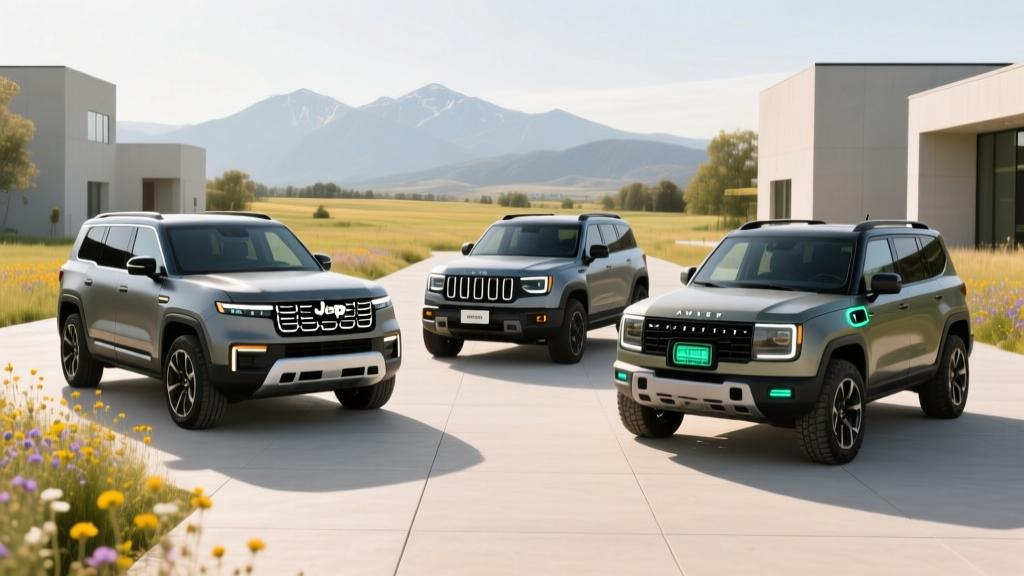
Jeep's all-electric lineup for 2026 centers on three models: the Wagoneer S (a premium midsize SUV, ~300 miles EPA range, starting near $65,000), the Recon (a rugged, off-road-focused midsize SUV, ~300+ miles estimated, starting near $52,000), and the Avenger EV (a compact crossover primarily for global markets, ~250 miles WLTP, limited U.S. availability). The Wagoneer S is the only model widely available to U.S. buyers as of early 2026, with the Recon expected to follow mid-year. All models use Stellantis' STLA Large platform with NMC battery chemistry and support DC fast charging up to approximately 175-200 kW.
The 2026 Jeep All-Electric Lineup at a Glance
Jeep's transition to battery-electric vehicles has been gradual but deliberate. Unlike competitors that rushed to market, Jeep leveraged Stellantis' STLA Large platform — an 800-volt-capable architecture designed for both on-road efficiency and off-road capability. Here's what's available or announced for U.S. buyers:
| Spec | Wagoneer S (2026) | Recon (2026 est.) | Avenger EV (WLTP) |
|---|---|---|---|
| EPA Range | ~300 mi (est.) | ~300+ mi (est.) | N/A (U.S.) / ~250 mi WLTP |
| Battery (usable) | ~100 kWh, NMC | ~100 kWh, NMC | ~54 kWh, NMC |
| Horsepower | 600 hp (AWD) | ~500+ hp (AWD) | 156 hp (FWD) |
| 0-60 mph | ~3.4 sec | ~4.5 sec (est.) | ~9.0 sec |
| Max DC Charge Rate | ~200 kW | ~175 kW (est.) | ~100 kW |
| 10-80% DCFC Time | ~23 min (est.) | ~25 min (est.) | ~28 min |
| Level 2 Charge Rate | ~11 kW | ~11 kW | ~11 kW |
| Drivetrain | Dual-motor AWD | Dual-motor 4xe AWD | Single-motor FWD |
| Starting MSRP | ~$65,000 | ~$52,000 (est.) | Not U.S. |
| Battery Warranty | 8 yr / 100,000 mi | 8 yr / 100,000 mi | 8 yr / 100,000 mi |
Note: Recon and Avenger figures are preliminary estimates based on Stellantis disclosures and may change at launch. The Avenger EV is not confirmed for U.S. sale; it is included here for global-market readers. Always verify final specs at jeep.com.
Real-World Range Reality Check
The Wagoneer S's estimated ~300-mile EPA figure is a solid baseline, but plan for less in practice. In highway driving at 70+ mph, expect roughly 250-270 miles. In cold weather (below 30°F), range can drop 20-30%, putting real-world winter range closer to 210-240 miles without preconditioning. The Recon, with its boxier aerodynamic profile and off-road tires, will likely see even steeper highway and cold-weather penalties — budget for 230-260 miles in mixed real-world use.
Jeep EV vs. Gas Wrangler & Grand Cherokee: Cost Comparison
For buyers cross-shopping a Jeep all-electric model against the gas-powered lineup, the economics shift depending on your driving volume, electricity rate, and how long you keep the vehicle. Here's a five-year comparison pitting the Wagoneer S against a gas Grand Cherokee L and a Wrangler 4xe (PHEV):
| Cost Factor (5 yr / 75,000 mi) | Wagoneer S (EV) | Grand Cherokee L (Gas) | Wrangler 4xe (PHEV) |
|---|---|---|---|
| Purchase Price (base MSRP) | ~$65,000 | ~$45,000 | ~$50,000 |
| Est. Federal Tax Credit (§30D) | Up to $7,500* | $0 | Up to $3,750* |
| Fuel / Charging Cost | ~$4,500 (home L2, $0.14/kWh) | ~$10,500 ($3.50/gal, 21 MPG) | ~$6,800 (mixed gas + electric) |
| Maintenance (5 yr est.) | ~$1,500 | ~$4,000 | ~$3,500 |
| Insurance (5 yr est.) | ~$12,000 | ~$8,500 | ~$9,500 |
| Estimated Depreciation | ~$26,000 | ~$18,000 | ~$22,000 |
| 5-Year Total Cost | ~$57,000 | ~$50,000 | ~$52,050 |
*Federal tax credit eligibility depends on MSRP caps ($80,000 for SUVs), buyer income limits ($300K MFJ / $150K single), and battery critical-mineral sourcing requirements per IRS §30D rules. Credit may be applied at point of sale. Consult a tax professional.
The numbers reveal a familiar EV pattern: the Wagoneer S costs more upfront but saves substantially on fuel and maintenance. Over five years, the gap narrows to roughly $7,000 — and if electricity rates are lower or gas prices rise, the EV breaks even sooner. However, higher insurance premiums and steeper depreciation partially offset the savings.
Charging the Jeep All-Electric Fleet: What You Need to Know
Charging infrastructure is where Jeep ownership either thrives or frustrates. Here's the breakdown by charging level:
| Level | Power | Miles Added/Hour | Use Case |
|---|---|---|---|
| Level 1 (120V outlet) | ~1.4 kW | ~3-5 mi/hr | Overnight trickle; emergency only |
| Level 2 (240V home) | ~11 kW | ~30-35 mi/hr | Daily home charging; full charge in ~9-10 hr |
| DC Fast Charge | Up to ~200 kW | ~700+ mi/hr (peak) | Road trips; 10-80% in ~23 min |
Home Charging Setup Costs
Most Jeep EV buyers will want a Level 2 home charger. Here's what installation typically costs:
| Component | Cost Range |
|---|---|
| Level 2 charger (hardware) | $400 - $750 |
| Electrician labor (standard install) | $600 - $1,500 |
| Electrical panel upgrade (if needed, 200A) | $1,500 - $3,500 |
| Permit / inspection | $50 - $250 |
| Total (typical) | $1,050 - $2,500 |
| Total (with panel upgrade) | $2,550 - $6,000 |
Jeep has adopted the NACS (Tesla) connector for North American models, giving Wagoneer S and Recon owners direct access to Tesla's Supercharger network — currently the most reliable DC fast-charging network in the U.S. This is a significant advantage over CCS-only competitors. For non-Tesla networks like Electrify America and EVgo, an adapter may be needed depending on station connector availability.
Charging curve reality: The Wagoneer S's ~200 kW peak rate applies only between roughly 10-40% state of charge. Above 60%, the rate tapers significantly — expect ~80-100 kW through 80%, and a crawl above 90%. Plan road-trip stops around 10-80% sessions for optimal time efficiency. A full 0-100% session at a DC fast charger can take 45+ minutes, which is why Level 2 home charging remains essential.
Federal Tax Credit Eligibility for Jeep EVs
The §30D federal tax credit can reduce the effective price of a Jeep EV by up to $7,500, but eligibility is not automatic. Here's the checklist for 2026:
- MSRP Cap: Vehicle MSRP must not exceed $80,000 for SUVs (Wagoneer S and Recon qualify at base trims; higher trims may exceed the cap)
- Buyer Income Cap: Modified adjusted gross income must not exceed $300,000 (married filing jointly), $225,000 (head of household), or $150,000 (single)
- Battery Sourcing: Critical minerals and battery components must meet phased-in percentages of U.S./FTA-country sourcing — this changes annually and may reduce the credit to $3,750 if only one requirement is met
- Point-of-Sale Transfer: You can transfer the credit to the dealer at purchase, reducing your out-of-pocket cost immediately (rather than waiting for a tax refund)
- Final Assembly: Vehicle must undergo final assembly in North America
As of early 2026, Stellantis has not publicly confirmed whether the Wagoneer S qualifies for the full $7,500 or the partial $3,750. Battery sourcing rules have tightened significantly — always verify current eligibility on fueleconomy.gov before purchasing.
Real-World Ownership: Who Should Buy a Jeep All-Electric?
Not every Jeep buyer is a good candidate for an all-electric model — and that's fine. Here's an honest assessment of who benefits most:
Decision Framework: Is a Jeep EV Right for You?
Choose the Wagoneer S if:
- You have reliable Level 2 home charging (garage or driveway with 240V access)
- Your daily driving is under 80 miles round-trip
- You want premium-crossover performance (600 hp, 3.4-sec 0-60) with Jeep branding
- You value Supercharger network access via NACS
- You live in a moderate or warm climate (cold-weather range loss is less punishing)
Wait for the Recon if:
- Off-road capability is non-negotiable (removable doors, tow hooks, Trail Rated aspirations)
- You need a more affordable entry point (~$52K estimated base)
- You tow occasionally (Recon expected to offer modest towing capacity)
Stick with a gas or 4xe PHEV Jeep if:
- You lack home charging access and rely on street parking
- You regularly drive 300+ miles in a single trip through charging-sparse regions
- You live in extreme cold climates where 20-30% range loss is a frequent concern
- Your budget is under $45,000 and you can't absorb the EV premium
Common Misconceptions About Jeep EVs
| Myth | Fact |
|---|---|
| "Electric Jeeps can't off-road" | Electric motors deliver instant torque at zero RPM — superior for rock crawling. The Recon is designed with Trail Rated capability, including electronic locker differentials and underbody protection. Battery placement low in the chassis improves center of gravity. |
| "The battery will need replacing in 5 years" | Stellantis warranties the battery for 8 years / 100,000 miles against capacity loss below 70%. Industry data from similar NMC packs shows average degradation of 10-15% over 8 years. Full replacement costs $15,000-$22,000 if out of warranty, but most packs outlast the warranty period with usable capacity remaining. |
| "Charging takes too long for road trips" | A 10-80% session at a 200 kW DC fast charger takes roughly 23 minutes — comparable to a rest stop with food and restroom break. With Supercharger access via NACS, route planning is straightforward on most interstate corridors. |
| "It's cheaper to just buy a Wrangler" | On purchase price alone, yes — a base Wrangler starts ~$33,000. But over 5 years and 75,000 miles, fuel and maintenance savings on an EV can narrow the gap by $6,000-$10,000, depending on your electricity rate and driving habits. |
What First-Time EV Buyers Should Know Before Ordering
If you're coming from a gas Jeep — or any gas vehicle — the transition to electric involves a few non-obvious adjustments:
1. Home charging is the foundation. Public charging works for road trips, but 80-90% of EV charging happens at home. If you can't install a Level 2 charger (apartment living, no garage, older electrical panel), an EV becomes significantly less convenient. Confirm your electrical panel capacity before ordering — a licensed electrician can assess this for $100-$200.
2. Preconditioning matters. The Wagoneer S and Recon include battery preconditioning for DC fast charging. Enable it via the vehicle's navigation system before arriving at a charger — it warms the battery to optimal temperature, which can shave 5-10 minutes off your charge session. In cold weather, preconditioning while plugged in also preserves range.
3. Insurance costs more. EV insurance premiums run 15-25% higher than comparable gas vehicles, driven by higher repair costs and battery replacement risk. Get quotes before purchasing — the $12,000 five-year estimate above is an average; your rate depends on location, driving record, and insurer.
4. Regenerative braking changes how you drive. Jeep's EVs offer adjustable regen, including a one-pedal driving mode. Most owners adapt within a week and prefer it, but it's a noticeable change from a gas Jeep's coasting behavior.
5. Towing reduces range dramatically. If you plan to tow with the Recon (or future Jeep EVs), expect range to drop 40-50% when pulling a loaded trailer. This is true of all EVs and is the single biggest limitation for Jeep's traditional use case.
Frequently Asked Questions
Is Jeep making a fully electric Wrangler?
Not yet. The Recon is positioned as Jeep's spiritual electric successor to the Wrangler's off-road ethos, but it's a separate model on the STLA Large platform. Stellantis has not announced a battery-electric Wrangler. The Wrangler 4xe (plug-in hybrid) remains the electrified Wrangler option, offering ~21 miles of electric-only range.
Does the Jeep Wagoneer S qualify for the $7,500 tax credit?
Eligibility depends on battery sourcing requirements, which tighten annually. The Wagoneer S's base MSRP falls under the $80,000 SUV cap, and it's assembled in North America, but critical-mineral and battery-component sourcing determine whether you receive the full $7,500, a partial $3,750, or no credit. Check fueleconomy.gov for the latest determination before purchase.
How does the Wagoneer S compare to the Tesla Model Y or Ford Mustang Mach-E?
The Wagoneer S targets a more premium segment than the Model Y or Mach-E, with 600 hp and a luxury interior at a higher starting price (~$65K vs. ~$45K for a Model Y Long Range). Range is comparable (~300 mi), but the Model Y charges faster (up to 250 kW) and has a more mature software ecosystem. The Wagoneer S differentiates on Jeep brand identity, interior materials, and Supercharger access via NACS.
What happens if the battery degrades significantly?
Stellantis warranties the battery pack for 8 years or 100,000 miles, covering capacity loss below 70% of original. If your pack falls below that threshold within the warranty period, Stellantis will repair or replace it at no cost. Out-of-warranty replacement costs an estimated $15,000-$22,000, though industry data suggests most NMC packs retain 80-85% capacity at the 8-year mark under normal use.
Can I take a Jeep EV off-road without damaging the battery?
The Recon is engineered for Trail Rated off-road use, with reinforced underbody skid plates protecting the battery pack. Ground clearance and approach/departure angles are designed for serious trail use. However, extreme rock crawling carries inherent risk of underbody impact — just as it does with a gas Wrangler's oil pan or fuel tank. The battery enclosure is rated for significant impact resistance, but no manufacturer guarantees against all off-road damage.