Quick Answer: Is the Jaguar I-PACE Worth Buying in 2026?
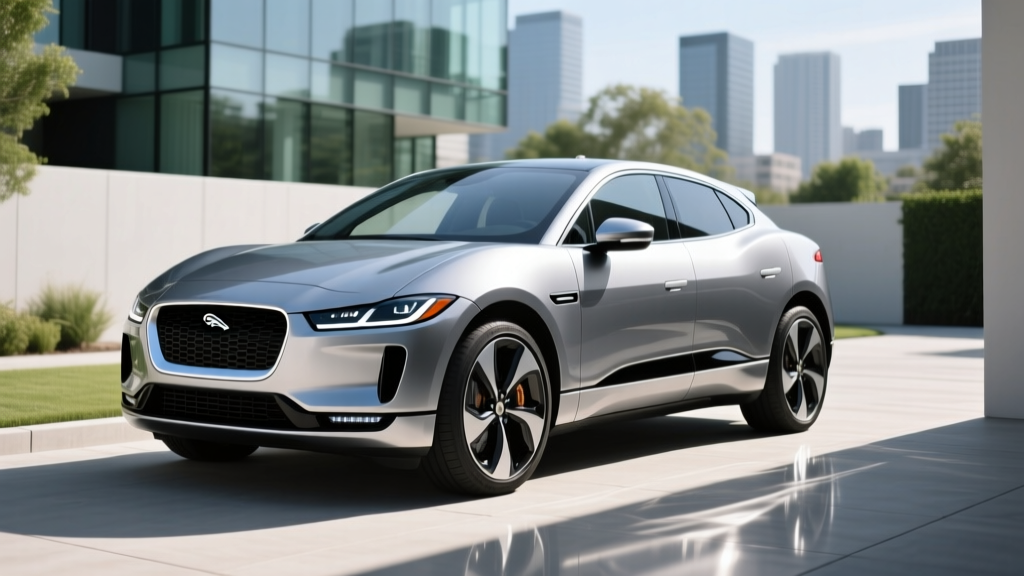
The Jaguar I-PACE delivers 246 miles of EPA range from its 90 kWh NMC battery, peaks at 100 kW DC fast charging (10–80% in roughly 40 minutes), and produces 394 hp with a 0–60 mph time of 4.5 seconds. Starting around $73,100 before incentives, it costs roughly $0.04–$0.06 per mile to charge at home versus $0.14–$0.18 per mile for a comparable gas luxury SUV. The I-PACE suits buyers with home Level 2 charging who prioritize driving dynamics and interior luxury over maximum range or ultra-fast charging. If you regularly drive more than 200 miles between charging stops, or lack reliable home charging access, a longer-range rival like the BMW iX or Tesla Model X may serve you better.
Jaguar I-PACE Specs at a Glance
Jaguar refreshed the I-PACE with updated infotainment (Pivi Pro on a curved 11.4-inch display) and improved ADAS features, but the core powertrain and battery architecture remain largely unchanged from the original 2019 launch. Here is what the current model delivers:
| Specification | Value |
|---|---|
| EPA Range | 246 miles |
| Real-World Highway Range | ~200–220 miles (70 mph, mild weather) |
| Cold-Weather Range (20°F) | ~170–190 miles |
| Battery Capacity | 90 kWh usable (NMC chemistry) |
| DC Fast Charge Peak | 100 kW |
| 10–80% DC Charge Time | ~40 minutes |
| Level 2 AC Charge Rate | 11 kW (7–8 hours, 0–100%) |
| Horsepower | 394 hp |
| Torque | 512 lb-ft |
| 0–60 mph | 4.5 seconds |
| EPA Efficiency | 76 MPGe combined (44 kWh/100 mi) |
| Base MSRP (R-Dynamic S) | ~$73,100 |
| Battery Warranty | 8 years / 100,000 miles (70% capacity retention) |
| Vehicle Warranty | 5 years / 60,000 miles |
kW vs. kWh refresher: kW (kilowatts) measures power — how fast energy flows into the battery during charging. kWh (kilowatt-hours) measures energy — the total capacity of the battery pack. The I-PACE stores 90 kWh and can accept up to 100 kW of charging power.
Real-World Range vs. EPA Sticker
The EPA rates the I-PACE at 246 miles, but real-world results vary significantly. On a 70-mph highway loop in 65°F weather, expect roughly 200–220 miles before needing a charge. In winter conditions (20°F or below), that drops to approximately 170–190 miles due to cabin heating demands and increased battery internal resistance. The I-PACE does not offer a heat pump — it uses resistive heating, which draws more energy from the 90 kWh pack in cold weather. City driving with heavy regenerative braking recovers more energy, and some owners report matching or exceeding the EPA figure in stop-and-go traffic in mild temperatures.
Charging Reality: Home, Public, and the 100 kW Limitation
The I-PACE's 100 kW peak DC fast-charging rate is its most discussed limitation in a market where competitors like the Hyundai Ioniq 5 and Porsche Taycan accept 230–320 kW. Here is what that means in practice:
| Charging Level | Power | Miles Added per Hour | Typical Use Case |
|---|---|---|---|
| Level 1 (120V household) | 1.4 kW | ~3–4 miles | Overnight top-up only; adds ~40 miles in 12 hours |
| Level 2 (240V home/public) | 11 kW | ~27 miles | Full overnight charge in 7–8 hours; primary charging method |
| DC Fast Charge | 100 kW peak | ~150 miles in 30 min | Road trips; 10–80% in ~40 minutes |
Home charging is essential for I-PACE ownership. With an 11 kW onboard charger, a full 0–100% charge takes roughly 8 hours on a Level 2 home station. If you only have access to a standard 120V outlet (Level 1), you will add just 3–4 miles of range per hour — making a full charge take over 24 hours. That is impractical for daily use.
DC fast-charging curve: The I-PACE peaks near 100 kW only between roughly 10–40% state of charge. Above 60%, the rate tapers to 50–60 kW, and above 80% it drops further to protect the battery. A 10–80% session takes about 40 minutes at a 150 kW or higher station. At a 50 kW CHAdeMO or CCS station, expect closer to 80 minutes.
The I-PACE uses the CCS1 connector for DC fast charging and the J1772 connector for Level 2 AC charging. It is not natively compatible with Tesla's NACS connector, though CCS-to-NACS adapters are increasingly available for access to Tesla Supercharger networks.
Cost Breakdown: Purchase, Charging, and Maintenance
Understanding the total cost of owning Jaguar I-PACE electric vehicles requires looking beyond the sticker price. Here is a realistic five-year cost projection compared to a similarly priced gas luxury SUV (e.g., BMW X5 xDrive40i at ~$68,000 MSRP, 23 mpg combined).
| Cost Category | Jaguar I-PACE (EV) | Gas Luxury SUV (23 mpg) |
|---|---|---|
| Purchase Price (base MSRP) | $73,100 | $68,000 |
| Federal Tax Credit (§30D) | Up to $7,500* (if eligible) | $0 |
| Home Charger Install (Level 2) | $800–$2,500 | $0 |
| Fuel/Energy (5 years, 60,000 mi) | $2,400–$3,600** | $9,000–$11,500*** |
| Maintenance (5 years) | $1,200–$1,800 | $3,500–$5,000 |
| Insurance (5 years) | $9,000–$12,000 | $7,500–$10,000 |
| Estimated 5-Year Total Cost | $83,000–$89,500 | $88,000–$94,500 |
*Federal EV tax credit eligibility under IRS §30D depends on buyer income caps ($150K single / $300K joint), vehicle MSRP caps ($80K for SUVs), and battery critical-mineral and component sourcing requirements that change annually. Consult a tax professional. The credit may be transferred to the dealer at point of sale as a purchase-price reduction.
**Based on $0.13–$0.17/kWh national average residential electricity and 44 kWh/100 mi efficiency.
***Based on $3.50–$4.50/gallon premium unleaded and 23 mpg combined.
The I-PACE recoups its higher purchase price through fuel and maintenance savings within roughly 4–5 years for most owners, especially those who charge at home on residential electricity rates. Public DC fast charging costs more — typically $0.30–$0.48/kWh at Electrify America or EVgo stations — which narrows the savings gap if you rely on it exclusively.
Maintenance Savings Explained
EVs eliminate oil changes, spark plugs, transmission fluid, and exhaust system repairs. The I-PACE's regenerative braking significantly reduces brake pad wear — many EV owners report original brake pads lasting 80,000+ miles. Remaining maintenance includes cabin air filter replacement, tire rotation (EVs tend to wear tires faster due to instant torque and heavier weight), windshield washer fluid, and periodic battery coolant checks.
Jaguar I-PACE vs. Gas SUVs and EV Rivals
Where does the I-PACE fit in the competitive landscape? Here is how it compares to key alternatives across the dimensions that matter most to buyers:
| Vehicle | EPA Range / MPG | 0–60 mph | Peak DC Charge | Base MSRP |
|---|---|---|---|---|
| Jaguar I-PACE | 246 mi / 76 MPGe | 4.5 sec | 100 kW | $73,100 |
| BMW iX xDrive50 | 324 mi / 86 MPGe | 4.4 sec | 195 kW | $87,250 |
| Tesla Model X LR | 335 mi / 102 MPGe | 3.8 sec | 250 kW | $79,990 |
| BMW X5 xDrive40i (gas) | 24 mpg combined | 5.2 sec | N/A | $68,000 |
| Porsche Cayenne (gas) | 21 mpg combined | 5.9 sec | N/A | $79,200 |
The I-PACE trades range and charging speed for something its rivals cannot match: a low-slung, sports-sedan driving feel in a crossover body. Its aluminum-intensive structure, double-wishbone front suspension, and torque-vectoring all-wheel drive deliver handling that feels closer to a performance sedan than a tall SUV. If driving engagement is your top priority in an electric luxury vehicle, the I-PACE still holds an edge. If range and fast-charging speed dominate your needs, the BMW iX or Tesla Model X are objectively stronger on those metrics.
First-Time EV Buyer: What You Must Know Before Purchasing
If the I-PACE is your first electric vehicle, these ownership realities will shape your daily experience:
| Common Misconception | Fact |
|---|---|
| "246 miles of range means I can drive 246 miles" | Expect 200–220 miles highway, less in cold weather or at sustained 80+ mph speeds. Plan charging stops at ~180 miles for comfort. |
| "I can charge anywhere in 15 minutes" | The I-PACE peaks at 100 kW. A 10–80% session takes ~40 minutes, not 15–20 minutes like 250+ kW-capable rivals. |
| "EV batteries need replacing every few years" | NMC batteries in liquid-cooled packs like the I-PACE typically lose 10–15% capacity over 8–10 years. Jaguar warrants 70% capacity retention for 8 years/100,000 miles. |
| "I don't need home charging — public stations are everywhere" | Public charging reliability varies widely. Broken stations, occupied stalls, and slower-than-advertised speeds are common. Home Level 2 charging is the foundation of convenient EV ownership. |
| "EVs are cheaper to insure" | EV insurance premiums are typically 15–25% higher than comparable gas vehicles due to higher repair costs and battery replacement risk. |
Home Charging Installation
Budget $800–$2,500 for a professional Level 2 home charger installation (240V, 40–48 amp circuit). If your electrical panel is near capacity or located far from your garage, costs can reach $3,000–$5,000 with a panel upgrade. Always hire a licensed electrician and pull permits — this protects your home warranty and insurance coverage. A quality Level 2 station like the ChargePoint Home Flex or Emporia Vue charges the I-PACE fully overnight and adds roughly 27 miles of range per hour. See our EPA EV technology guide for more on charging fundamentals.
Decision Framework: Should You Buy the Jaguar I-PACE?
Choose the Jaguar I-PACE If:
- You have reliable home Level 2 charging — this is non-negotiable for a satisfying ownership experience with any EV, and especially one with 246 miles of range.
- Your daily driving is under 120 miles round-trip — the I-PACE covers this easily with range to spare, even in winter.
- Driving dynamics matter to you — the I-PACE handles like a sports sedan with 394 hp, torque-vectoring AWD, and a low center of gravity.
- You value interior luxury and build quality — Windsor leather, Meridian audio, and Jaguar's design language compete with Porsche and BMW.
- You take road trips 2–4 times per year — the 40-minute 10–80% charge time is manageable with planned stops, though not class-leading.
Look Elsewhere If:
- You lack home charging access — relying on public 100 kW charging with a 246-mile range will become frustrating quickly.
- You regularly drive 250+ miles between stops — the BMW iX (324 mi) or Tesla Model X (335 mi) offer significantly more range buffer.
- Fast charging speed is a priority — vehicles on 800V architectures (Hyundai Ioniq 5, Porsche Taycan, Kia EV6) charge roughly twice as fast.
- You need three rows of seating — the I-PACE is strictly a five-passenger vehicle with 25.3 cu ft of cargo space behind the rear seats.
- You want the latest ADAS technology — Jaguar's driver-assist suite is competent but trails Tesla Autopilot, GM Super Cruise, and Ford BlueCruise in capability. All remain SAE Level 2 systems requiring full driver attention.
Federal Tax Credit and Incentive Eligibility
Under current IRS §30D rules, the Jaguar I-PACE may qualify for up to $7,500 in federal tax credits, but eligibility is not guaranteed and depends on multiple factors:
- MSRP Cap: The vehicle must have an MSRP at or below $80,000 (SUV classification). The I-PACE base trim qualifies; fully loaded trims may exceed the cap.
- Buyer Income Cap: Adjusted gross income must not exceed $150,000 (single), $225,000 (head of household), or $300,000 (married filing jointly).
- Battery Sourcing: Critical minerals and battery components must meet annually escalating domestic-content and free-trade-agreement thresholds. Jaguar sources from LG Energy Solution; check the latest fueleconomy.gov listings for current-year qualification status.
- Point-of-Sale Transfer: Eligible buyers can transfer the credit to the dealer at purchase, reducing the purchase price directly rather than waiting for a tax refund.
State and local incentives vary widely and change frequently. Check your state energy office or the Alternative Fuels Data Center for current programs in your area.
Frequently Asked Questions
How long does the Jaguar I-PACE battery last?
Jaguar warranties the 90 kWh NMC battery for 8 years or 100,000 miles, guaranteeing at least 70% capacity retention. Real-world data from early 2019–2021 I-PACE owners suggests 8–12% degradation over the first 5 years and 60,000–80,000 miles under normal use. A full battery replacement outside warranty is estimated at $15,000–$22,000, though individual module replacement may be possible at lower cost.
Can the Jaguar I-PACE use Tesla Superchargers?
Not natively. The I-PACE uses the CCS1 connector, while Tesla Superchargers use NACS. However, CCS-to-NACS adapters are available from third-party manufacturers and increasingly from automakers. Check adapter compatibility and Tesla's open Supercharger network access list before relying on this for travel.
What is the real-world efficiency of the I-PACE?
The EPA rates the I-PACE at 44 kWh per 100 miles (76 MPGe combined). In real-world highway driving at 70 mph, expect consumption closer to 48–52 kWh/100 mi. In city driving with regenerative braking, some owners achieve 38–42 kWh/100 mi. Cold weather increases consumption by 20–35% due to resistive cabin heating and battery conditioning demands.
How does the I-PACE compare to a gas Jaguar F-PACE?
The gas F-PACE (P250, ~$57,000 MSRP, 246 hp, 24 mpg combined) costs roughly $16,000 less upfront but $6,000–$8,000 more in fuel and maintenance over five years. The I-PACE delivers 60% more horsepower, instant torque, a lower center of gravity, and a quieter cabin. The F-PACE offers more cargo space (31.5 cu ft) and no range or charging considerations. For buyers with home charging and shorter commutes, the I-PACE's operating cost advantage is substantial.
Is the I-PACE good in snow and cold weather?
The I-PACE's all-wheel drive, low center of gravity, and 4,784-lb curb weight provide confident traction in snow. However, expect 25–35% range loss in sustained sub-freezing temperatures due to resistive heating and increased battery resistance. Preconditioning the battery while plugged in (via the Jaguar Remote app) mitigates some cold-weather range loss and improves charging speed.
What are the biggest I-PACE ownership complaints?
Owner forums and reliability surveys consistently cite three issues: slower-than-rival DC fast charging (100 kW peak), infotainment system responsiveness (improved with Pivi Pro updates but still trailing competitors), and limited rear-seat and cargo space compared to similarly priced luxury SUVs. Depreciation has also been steeper than some rivals, which benefits used buyers but hurts original purchasers.