The Short Answer on the Jaguar F-PACE Electric
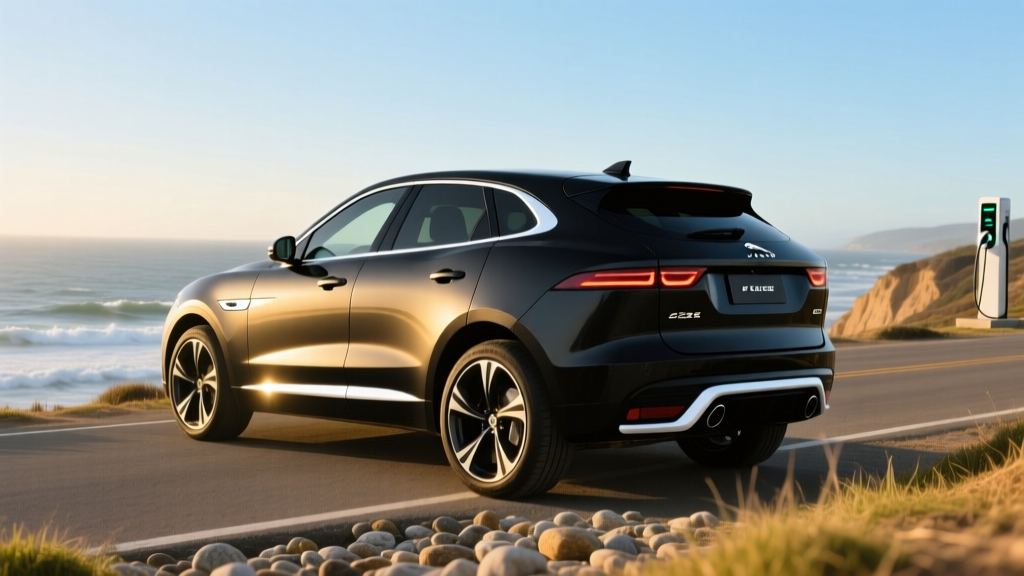
As of early 2026, Jaguar has not released a fully electric version of the F-PACE. The brand is pivoting to an all-electric lineup by 2025–2026 under its "Reimagine" strategy, with a new generation of EVs built on the bespoke Jaguar Electric Architecture (JEA). The current F-PACE (mild-hybrid and PHEV variants) continues in some markets, but a dedicated electric F-PACE successor — likely under a new nameplate — is expected to debut with an estimated 100+ kWh battery pack, 800-volt architecture, and a targeted EPA range exceeding 300 miles. Pricing is anticipated to start in the $70,000–$80,000 range before incentives. If you're shopping now for a luxury electric SUV, the closest alternatives include the BMW iX, Audi Q8 e-tron, and Tesla Model X.
Jaguar's Electric Transition: Where the F-PACE Fits
Jaguar committed to becoming an all-electric luxury brand by 2025, a timeline that has shifted slightly as the company restructures its entire product portfolio. The first vehicle from this reinvention is the Jaguar Type 00 concept, previewing a grand-tourer-style EV expected for the 2026 model year. The F-PACE, Jaguar's best-selling nameplate globally, is expected to receive an all-electric successor — though Jaguar has signaled it may retire legacy nameplates in favor of new identities aligned with its upmarket repositioning.
What we know from Jaguar's official statements and industry reporting:
- Platform: Jaguar Electric Architecture (JEA), an aluminum-intensive skateboard platform supporting 800V+ electrical systems
- Battery: Expected 100–120 kWh usable capacity, likely NMC chemistry for energy density
- Charging: 800V architecture should enable DC fast charging at 250–350 kW peak
- Target range: Jaguar has referenced up to 700 km WLTP (~435 miles WLTP), which typically translates to roughly 300–350 miles EPA
- Powertrain: Dual-motor AWD expected, with output likely exceeding 400 hp
These are preliminary, announced estimates — final EPA-certified figures will not be available until the vehicle enters production. Jaguar's new EV lineup is being positioned significantly upmarket, competing more directly with Porsche, Bentley, and high-trim BMW/Audi offerings than with its previous pricing bracket.
Current F-PACE PHEV vs. Going Fully Electric
For buyers considering the current-generation Jaguar F-PACE 400e PHEV (still available in select markets), here's how the plug-in hybrid stacks up against what a fully electric successor would offer:
| Specification | F-PACE 400e PHEV (Current) | F-PACE Electric (Estimated) |
|---|---|---|
| Powertrain | 2.0L turbo I-4 + electric motor | Dual-motor AWD (BEV) |
| Total Output | 398 hp / 472 lb-ft | ~400–550 hp (est.) |
| Battery (usable) | 17.1 kWh (NMC) | ~100–120 kWh (est., NMC) |
| Electric-Only Range | EPA 33 miles | ~300–350 miles (est. EPA) |
| Max DC Charge Rate | 7.4 kW (Level 2 only, no DCFC) | ~250–350 kW (est.) |
| 10–80% Charge Time | N/A (no DC fast charging) | ~18–25 minutes (est.) |
| Fuel Economy (hybrid mode) | ~25 MPG combined | ~90–100 MPGe (est.) |
| Base MSRP (approx.) | ~$68,000 | ~$70,000–$80,000 (est.) |
| Federal Tax Credit (§30D) | $3,750 (PHEV, subject to sourcing) | Up to $7,500 (if sourcing/MSRP/income rules met) |
The PHEV works well for drivers with short commutes (under 33 miles) who can charge nightly at home and want gasoline flexibility for road trips. But the PHEV's small battery means you'll burn gas on any drive over ~30 miles, and the lack of DC fast charging limits its electric utility on longer trips. A full BEV successor eliminates fuel costs entirely and, with 350 kW charging capability, adds roughly 100 miles of range in 10 minutes at a compatible station.
Real-World Ownership Costs: EV vs. Gas F-PACE
Let's model a realistic 5-year ownership scenario comparing the current gas-powered F-PACE P400 (mild-hybrid) against the anticipated electric successor. This assumes 12,000 miles/year, home Level 2 charging access, and national-average utility and fuel prices.
| Cost Category | F-PACE P400 (Gas MHEV) | F-PACE Electric (Est.) |
|---|---|---|
| Purchase Price (base MSRP) | $59,000 | $75,000 (est.) |
| Federal Tax Credit | $0 | Up to $7,500* |
| Effective Purchase Price | $59,000 | $67,500 (est.) |
| Fuel / Electricity (60k mi) | $10,800 (22 MPG avg, $3.96/gal) | $3,600 (3.0 mi/kWh, $0.18/kWh) |
| Maintenance (60k mi) | $3,200 (oil, filters, brakes, fluid) | $1,200 (cabin filter, wipers, tire rotation, brake fluid) |
| Insurance (5-yr avg) | $9,500 | $11,400 (EV premium ~20%) |
| Estimated Depreciation | $29,500 (50%) | $33,750 (45% — luxury EV retention improving) |
| Total 5-Year Cost | $112,000 | $113,850 (est.) |
*§30D credit eligibility depends on MSRP caps ($80,000 for SUVs), buyer income limits ($300k MFJ / $150k single), and battery critical-mineral and component sourcing requirements. Rules are subject to change — verify current eligibility at IRS.gov and consult a tax professional. The point-of-sale transfer option allows you to apply the credit as a down-payment reduction at the dealer.
The numbers are close. The EV's higher purchase price and insurance premiums are nearly offset by dramatically lower fuel and maintenance costs. Over 5 years, the EV saves roughly $7,200 in fuel and $2,000 in maintenance — a combined $9,200 operational advantage. Whether the EV "wins" on total cost depends heavily on depreciation, which remains the largest variable for luxury vehicles of any powertrain.
What a First-Time EV Buyer Must Know
If the Jaguar F-PACE electric (or its eventual nameplate) would be your first EV, these ownership realities matter more than the spec sheet:
Home Charging Is Non-Negotiable for Convenience
Level 2 home charging (240V, typically 11.5 kW / 48 amps) adds roughly 30–35 miles of range per hour. With a 100+ kWh battery, a full charge from 10% to 100% takes about 9–10 hours overnight. Installation costs range from $800 to $2,500 depending on your electrical panel's capacity — a 200-amp panel usually handles a Level 2 charger without upgrade, but older homes with 100-amp service may need a $2,000–$4,000 panel upgrade. Always get a quote from a licensed electrician before committing to a vehicle.
Real-World Range Is Less Than the EPA Sticker
EPA range estimates are generated under controlled laboratory conditions. In real-world driving, expect:
- Highway driving (75+ mph): 15–20% less than EPA due to aerodynamic drag
- Cold weather (below 30°F): 20–30% range reduction from battery chemistry limits and cabin heating demands
- Combined realistic expectation: If the EPA sticker says 340 miles, plan for ~270–290 miles in temperate mixed driving, and ~240 miles in winter highway conditions
A heat pump — which Jaguar's JEA platform is expected to include — reduces cold-weather losses by roughly 10 percentage points compared to resistive heating.
Charging Curves Are Not Linear
A "350 kW peak charge rate" is exactly that — a peak, sustained for only a portion of the session. Lithium-ion batteries accept charge fastest between roughly 10–40% State of Charge (SoC). Above 80%, the Battery Management System (BMS) dramatically tapers charge speed to protect cell longevity. A typical session from 10–80% at a 350 kW station might average 200–250 kW, then drop to under 50 kW from 80–100%. This is why manufacturers quote 10–80% times rather than 0–100%.
Common Misconceptions About the F-PACE Electric
| Myth | Fact |
|---|---|
| "The electric F-PACE is available to order now." | Jaguar has not opened orders for a production F-PACE EV. The current F-PACE lineup includes PHEV and mild-hybrid variants. The electric successor is expected to debut as a 2026 or 2027 model under a potentially new nameplate. |
| "EVs always save money versus gas cars." | EVs save on fuel and maintenance, but higher purchase prices, insurance premiums, and depreciation can offset those savings — especially in luxury segments. Total cost parity depends on your mileage, local electricity rates, and how long you hold the vehicle. |
| "I'll never need to visit a gas station again." | True if you have reliable home charging and your daily driving stays within range. For road trips exceeding ~250 miles between stops, you'll use DC fast chargers — which cost more per mile than home charging and require 20–30 minute stops. |
| "The battery will need replacement in a few years." | Modern NMC and LFP batteries are engineered for 200,000+ miles with less than 20% degradation. Federal law mandates a minimum 8-year / 100,000-mile battery warranty. Jaguar typically warrants its EV batteries for 8 years / 100,000 miles at 70% capacity retention. |
| "The $7,500 tax credit applies to everyone." | The §30D credit has strict eligibility rules: buyer income caps, MSRP caps ($80,000 for SUVs), and battery sourcing requirements. Many luxury EVs partially or fully lose eligibility depending on where battery minerals and components originate. Always verify on fueleconomy.gov before purchasing. |
How the F-PACE Electric Compares to Rivals You Can Buy Today
Since the Jaguar F-PACE electric is not yet available, here's how the anticipated specs compare against luxury electric SUVs currently on the market:
| Spec | Jaguar F-PACE EV (Est.) | BMW iX xDrive50 | Audi Q8 e-tron Prestige | Tesla Model X Long Range |
|---|---|---|---|---|
| EPA Range | ~300–350 mi | 324 mi | 285 mi | 335 mi |
| Battery (usable) | ~100–120 kWh | 105.2 kWh (NMC) | 106 kWh (NMC) | 100 kWh (NMC) |
| Peak DC Charge | ~250–350 kW | 195 kW | 170 kW | 250 kW |
| 10–80% Time | ~18–25 min (est.) | ~34 min | ~31 min | ~27 min |
| 0–60 mph | ~4.5 sec (est.) | 4.4 sec | 5.5 sec | 3.8 sec |
| HP | ~400–550 (est.) | 516 hp | 402 hp | 670 hp |
| Base MSRP | $70,000–$80,000 (est.) | $87,250 | $75,595 | $79,990 |
The BMW iX and Tesla Model X lead on charging infrastructure and proven real-world range. The Audi Q8 e-tron prioritizes ride comfort and interior refinement. Jaguar's JEA platform, with its expected 800V architecture, could leapfrog the Audi and BMW on charging speed — but only if Jaguar delivers on its preliminary targets and if compatible 350 kW chargers are accessible in your region. The IIHS and NHTSA safety ratings for the eventual production vehicle will also be critical evaluation points that aren't yet available.
Decision Framework: Should You Wait or Buy Now?
Wait for the Jaguar F-PACE Electric if:
- You're a current Jaguar owner or loyalist who values the brand's design language and driving dynamics
- Your current vehicle has 12–18+ months of useful life remaining, aligning with the expected 2026–2027 debut
- You want 800V charging architecture and are willing to pay a luxury premium for it
- Home Level 2 charging is already installed or feasible at your residence
- You prioritize interior materials and design differentiation over tech-first features
Buy a Rival EV Now if:
- You need a luxury electric SUV within the next 3–6 months
- Proven reliability data and established service networks matter more than brand novelty
- You want to lock in current §30D tax credit eligibility before potential rule changes
- Supercharger network access is important to you (Tesla) or you prefer BMW/Audi dealer proximity
- Your budget is firmly under $80,000 and you want a known, configurable vehicle today
Stick with the F-PACE PHEV if:
- You lack reliable home charging access (apartment, street parking, no garage)
- Your commute is under 30 miles but you take frequent 300+ mile road trips
- You want to stay within the Jaguar ecosystem without committing to full EV ownership logistics
Frequently Asked Questions
Is the Jaguar F-PACE available as a full electric vehicle?
Not as of early 2026. The F-PACE is currently offered as a mild-hybrid (P250, P400) and plug-in hybrid (400e) in various markets. Jaguar is developing an all-electric successor on its JEA platform, expected to debut for the 2026 or 2027 model year, potentially under a new nameplate.
What will the electric Jaguar F-PACE cost?
Based on Jaguar's upmarket repositioning and competitor pricing, expect a starting MSRP in the $70,000–$80,000 range. Higher-performance or longer-range trims could exceed $90,000. Federal §30D tax credit eligibility (up to $7,500) will depend on the vehicle's battery sourcing, your income, and the MSRP cap for SUVs ($80,000).
Will the F-PACE EV qualify for the $7,500 federal tax credit?
It depends. The §30D credit requires the vehicle to meet battery critical-mineral and component sourcing thresholds, the buyer's modified adjusted gross income must fall below caps ($300,000 married filing jointly / $150,000 single), and the SUV's MSRP must not exceed $80,000. Jaguar's sourcing decisions for the JEA battery pack will determine partial or full credit eligibility. Check fueleconomy.gov for the most current eligible vehicle list.
How long does it take to charge an EV like the F-PACE electric at home?
With a Level 2 home charger (11.5 kW / 48A), a 100+ kWh battery charges from 10% to 100% in roughly 9–10 hours — easily overnight. Level 1 charging (120V, 1.4 kW) would take 70+ hours and is impractical as a primary charging method for a large-battery EV.
What's the real-world range versus the EPA estimate?
Expect to achieve roughly 85–90% of the EPA estimate in temperate, mixed driving. Highway driving at 75+ mph drops this to 75–85%. In sub-freezing temperatures, plan for 70–80% of the EPA figure due to increased cabin heating demand and reduced battery efficiency. A heat pump, expected on JEA vehicles, mitigates some cold-weather loss.