The Quick Answer: There Is No Electric F-PACE (Yet)
Bottom line: Jaguar does not sell an electric version of the F-PACE. The gas-powered F-PACE remains in Jaguar's 2026 lineup as a mild-hybrid ICE SUV. If you want a Jaguar electric car in SUV form today, the model you're looking for is the Jaguar I-PACE — a dedicated battery-electric luxury crossover that competes with the Tesla Model X, BMW iX, and Audi Q8 e-tron. The I-PACE was recently discontinued in the U.S. market after the 2024 model year as Jaguar pivots toward its next-generation all-electric GT lineup (expected 2026–2027). For 2026, your options are certified pre-owned I-PACE models or waiting for Jaguar's new EV platform.
If you landed here searching for a "Jaguar F-PACE electric car," you're not alone — it's one of the most common cross-shops in the luxury EV space. Buyers love the F-PACE's styling and driving dynamics and assume an EV variant exists. This guide clarifies what Jaguar actually offers, breaks down the I-PACE's real-world ownership economics, and helps you decide whether to buy CPO, cross-shop a competitor, or wait for Jaguar's next electric chapter.
Jaguar I-PACE: The Electric SUV That Exists Today
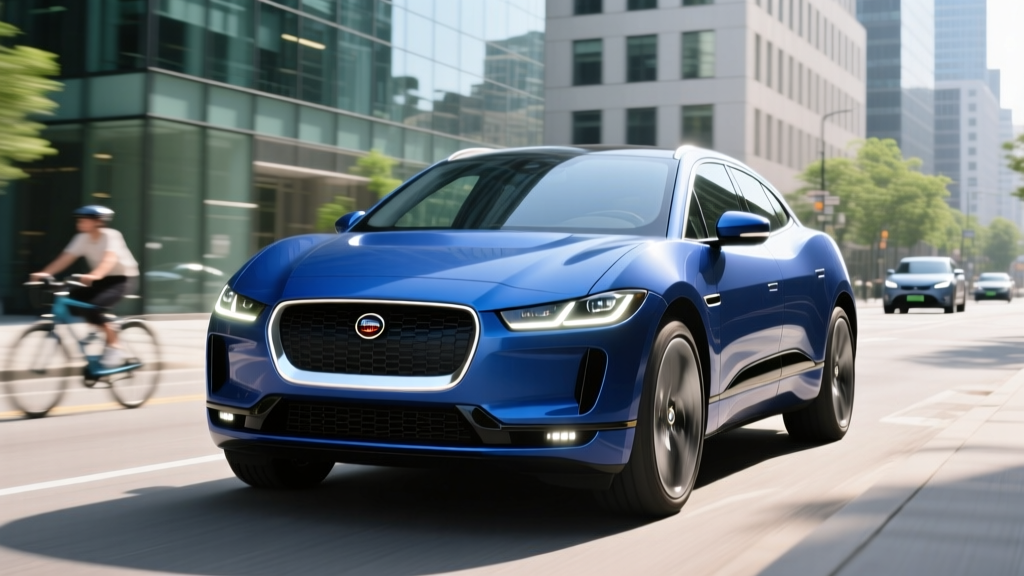
The Jaguar I-PACE launched for the 2019 model year as one of the first premium electric SUVs from a legacy automaker. While Jaguar has wound down new U.S. sales of the I-PACE to prepare for its next-generation EV platform (built on a new architecture shared with Land Rover), the I-PACE remains widely available on the certified pre-owned market and through remaining dealer inventory in some regions.
Here's what the final U.S.-spec I-PACE (2024 model year) delivers:
| Spec | 2024 Jaguar I-PACE (Final U.S. Spec) |
|---|---|
| EPA Range | 246 miles |
| Battery Capacity | 90 kWh usable (NMC chemistry) |
| Powertrain | Dual-motor AWD, 394 hp, 512 lb-ft torque |
| 0–60 mph | 4.5 seconds |
| DC Fast Charge (Peak) | 100 kW (CCS1) |
| 10–80% DC Charge Time | ~45 minutes |
| Level 2 Charge Rate | 11 kW (onboard charger) |
| Level 2 Full Charge Time | ~8.5 hours (0–100%) |
| MPGe (Combined) | 76 MPGe |
| Efficiency | 44 kWh/100 mi |
| Cargo Volume | 25.3 cu ft (rear seats up) / 51.0 cu ft (folded) |
| Battery Warranty | 8 years / 100,000 miles (70% capacity retention) |
| Original MSRP (2024) | $73,100 (base) – $83,600 (HSE) |
| CPO Price Range (2026) | $38,000 – $55,000 depending on year/mileage |
Real-World Range Reality: The EPA rates the I-PACE at 246 miles, but its 44 kWh/100 mi efficiency is among the worst in the luxury EV segment. Expect 200–220 miles in mixed highway driving at 70+ mph, and as low as 170–185 miles in freezing temperatures with cabin heating. The I-PACE's heavy curb weight (~4,800 lbs) and older powertrain architecture explain the gap. If your daily commute exceeds 150 miles round-trip, this range may feel tight without reliable home charging.
I-PACE vs. Gas F-PACE: Cost & Efficiency Comparison
Many shoppers cross-compare the I-PACE against the gas F-PACE. Here's how they stack up on the metrics that matter for ownership cost:
| Metric | 2024 I-PACE EV (CPO ~$45K) | 2026 F-PACE P250 AWD (~$57K) |
|---|---|---|
| Purchase Price | ~$45,000 (CPO 2022–2023) | $57,000 (new base MSRP) |
| Fuel/Energy Cost per Mile | $0.048 (at $0.13/kWh home rate) | $0.16 (at $3.80/gal, 24 MPG combined) |
| Annual Fuel/Energy (12,000 mi) | $576 | $1,900 |
| Annual Maintenance Estimate | $400–$600 | $900–$1,200 |
| 5-Year Fuel + Maintenance | $4,880 – $5,880 | $14,000 – $15,500 |
| Federal Tax Credit (§30D) | Not eligible (discontinued new; used credit up to $4,000 via §25E if income-qualified) | Not eligible |
| Estimated Insurance (Annual) | $2,400–$3,000 | $2,000–$2,600 |
| 5-Year Total Operating Cost | ~$19,880 – $23,880 | ~$24,000 – $28,500 |
The takeaway: A CPO I-PACE costs significantly less to operate than a new gas F-PACE over five years — roughly $5,000–$9,000 in savings on fuel and maintenance alone. However, the I-PACE carries higher insurance premiums (common for EVs) and its lower purchase price as a CPO is offset by steeper depreciation risk on an aging platform. The used EV tax credit (§25E) can knock up to $4,000 off a qualifying CPO purchase if you meet income caps ($75K single / $150K joint) and the vehicle is at least two model years old and priced under $25,000 from a dealer — though most I-PACE CPO units exceed that price cap, making the credit difficult to claim. Always verify current rules at IRS.gov.
Charging the I-PACE: The 100 kW Limitation Explained
The I-PACE's most significant real-world weakness is its DC fast-charging speed. At a peak of 100 kW, it charges considerably slower than modern competitors:
| Charge Level | Power | Miles Added per Hour | I-PACE Time |
|---|---|---|---|
| Level 1 (120V household) | 1.4 kW | ~3 mi/hr | ~64 hours (0–100%) |
| Level 2 (240V home) | 11 kW | ~25 mi/hr | ~8.5 hours (0–100%) |
| DC Fast (public CCS) | 100 kW peak | ~220 mi/hr (peak) | ~45 min (10–80%) |
For context, the BMW iX xDrive50 peaks at 150 kW (10–80% in ~31 min), and the Hyundai Ioniq 5 hits 240 kW (10–80% in ~18 min). The I-PACE's 100 kW ceiling — combined with a flat charge curve that sustains well below peak for much of the session — means road-trip charging stops will take 40–50 minutes at best.
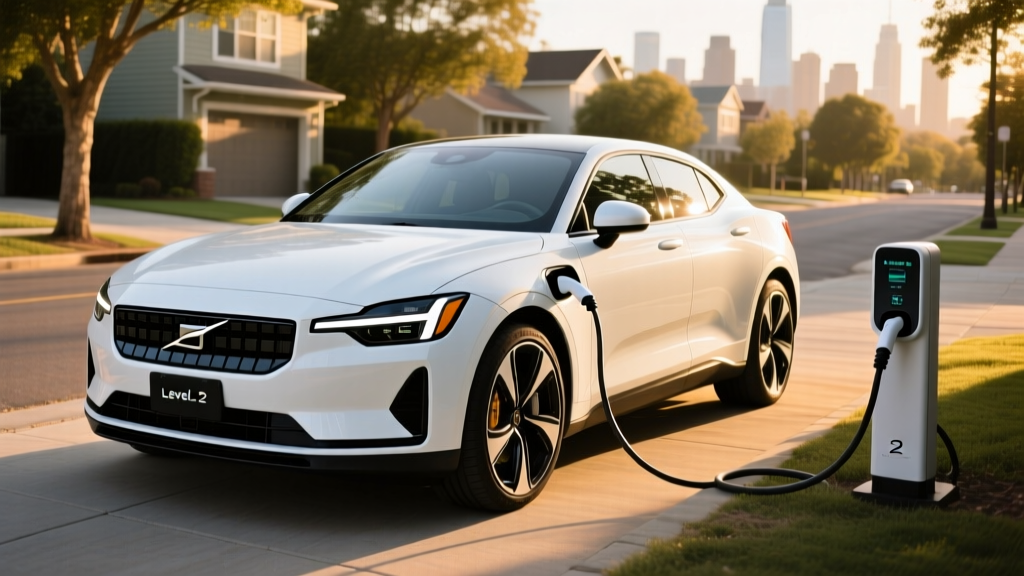
Home charging is where the I-PACE makes sense. With an 11 kW onboard charger (better than many rivals' 7.2–9.6 kW units), an overnight Level 2 session fully replenishes the battery. A typical 240V/48A home charger installation runs $800–$2,000 (equipment + electrician + permit) depending on your panel capacity and run length. If your home has a 200A panel with spare capacity, expect the lower end. A panel upgrade to 200A can add $1,500–$3,000.
Common I-PACE Misconceptions
| Myth | Fact |
|---|---|
| "The I-PACE qualifies for the $7,500 federal tax credit." | The §30D new-vehicle credit no longer applies — the I-PACE is discontinued for new U.S. sales. The used-vehicle credit (§25E, up to $4,000) has a $25,000 sale-price cap that most CPO I-PACE units exceed. |
| "It charges at 200+ kW like modern EVs." | The I-PACE peaks at 100 kW and uses a CCS1 connector. It cannot access Tesla Superchargers without a third-party adapter (and even then, only at NACS-equipped stalls with CCS compatibility). |
| "246 miles EPA means I'll get 246 miles." | Expect 200–220 miles in real-world highway driving. Cold weather (below 32°F) can drop range to 170–185 miles due to cabin heating demands and reduced battery efficiency. |
| "Jaguar will replace the battery for free if it degrades." | The warranty covers capacity below 70% within 8 years/100,000 miles. Out-of-warranty replacement is estimated at $15,000–$20,000+ — a significant risk on an aging platform. |
| "There's an electric F-PACE coming soon." | Jaguar has not announced an electric F-PACE. The brand is developing a new all-electric GT on a dedicated platform (expected 2026–2027 reveal), but it will be a different vehicle class — likely a grand tourer, not an F-PACE replacement. |
Real Ownership Considerations Before You Buy
Buying a CPO I-PACE in 2026 is a different calculus than buying a new EV with a full warranty. Here's what you need to evaluate honestly:
Home Charging Access
The I-PACE is a 90 kWh battery — that's a large pack. Without home Level 2 charging, you'll be dependent on public DC fast chargers at 100 kW, which means 45+ minute sessions multiple times per week. If you cannot install a Level 2 charger at home (apartment living, street parking, HOA restrictions), the I-PACE is a poor fit. Public charging at Electrify America or EVgo averages $0.35–$0.48/kWh, pushing your per-mile cost to $0.15–$0.21 — erasing most of the EV cost advantage over gas.
Climate Impact
The I-PACE uses a resistive cabin heater rather than a heat pump (standard on newer EVs like the BMW iX and Hyundai Ioniq 5). This means cold-weather range loss is significant — expect a 25–35% reduction in sub-freezing conditions. If you live in the Upper Midwest, Northeast, or Mountain states, your effective winter range could drop below 175 miles.
Depreciation Risk
The I-PACE has experienced steep depreciation — 2019 models that started at $70,000+ now sell for $25,000–$35,000 on the used market. This is great news for CPO buyers getting a luxury EV at a steep discount, but it also signals weak resale value going forward. As Jaguar transitions to its next-gen platform and parts support for the I-PACE potentially becomes less prioritized, further depreciation is likely.
Service & Parts Availability
Jaguar's U.S. dealer network is relatively small (~280 locations). With the I-PACE discontinued, confirm that your local Jaguar dealer has EV-certified technicians and access to I-PACE-specific parts — particularly for the battery management system, thermal management, and power electronics. Out-of-warranty repairs on these systems can be costly and slow.
Competitor Cross-Shop: What Else Should You Consider?
If the I-PACE's range, charging speed, or platform age gives you pause, here's how it stacks up against alternatives you can buy new or CPO in 2026:
| Model | EPA Range | Peak DC kW | 10–80% Time | CPO/New Price |
|---|---|---|---|---|
| Jaguar I-PACE (2022–2024 CPO) | 246 mi | 100 kW | ~45 min | $38K–$55K |
| BMW iX xDrive50 (2023+ CPO) | 324 mi | 150 kW | ~31 min | $55K–$72K |
| Audi Q8 e-tron (2024+ CPO) | 285 mi | 170 kW | ~28 min | $52K–$68K |
| Tesla Model Y Long Range (new) | 320 mi | 250 kW | ~18 min | $44,990 new |
| Genesis GV60 (2024+ CPO) | 248 mi | 240 kW | ~18 min | $40K–$52K |
The I-PACE offers the best value entry point for a luxury-badged electric SUV, but it trails every competitor on charging speed and most on range. If road trips are frequent, the BMW iX or Genesis GV60 are meaningfully better travel companions.
Decision Framework: Should You Buy the I-PACE or Wait?
Buy a CPO Jaguar I-PACE if:
- You have reliable home Level 2 charging (or can install it)
- Your daily driving is under 120 miles round-trip
- You want a luxury-badged electric SUV under $50,000
- You value driving dynamics and design over cutting-edge tech
- You rarely take road trips exceeding 200 miles without overnight stops
- You're comfortable with higher depreciation risk and an aging platform
Wait for Jaguar's next-gen EV or cross-shop competitors if:
- You need 300+ miles of real-world range
- You take frequent road trips and need sub-30-minute DC charging
- You want NACS/Supercharger network access
- You cannot install home Level 2 charging
- You live in a cold climate where the I-PACE's lack of a heat pump hurts range severely
- You want a full factory warranty and the latest ADAS technology
Frequently Asked Questions
Is Jaguar making an electric F-PACE?
No. Jaguar has not announced an electric F-PACE. The brand is developing a new generation of all-electric vehicles on a dedicated platform, with the first model expected to be a high-end grand tourer (revealed 2026–2027). An electric SUV successor may follow, but it will not carry the F-PACE nameplate based on Jaguar's current brand direction.
Can I still buy a new Jaguar I-PACE in 2026?
New I-PACE inventory in the U.S. is essentially depleted. Jaguar discontinued U.S. sales of the I-PACE after the 2024 model year. Your options are certified pre-owned models through Jaguar dealers or independent used-car retailers. Some markets outside the U.S. may still have remaining stock.
Does the I-PACE use Tesla's NACS connector?
No. The I-PACE uses the CCS1 connector standard. It cannot natively charge at Tesla Superchargers. While some third-party CCS-to-NACS adapters exist, compatibility with Tesla's Supercharger network is not guaranteed for non-Tesla vehicles and depends on Tesla's open-network rollout, which remains limited. For reliable fast charging, plan to use Electrify America, EVgo, or ChargePoint DC stations. You can check station availability at fueleconomy.gov or PlugShare.
What does an I-PACE battery replacement cost?
Out-of-warranty battery replacement for the I-PACE is estimated at $15,000–$20,000+ including parts and labor. The 90 kWh NMC pack is a large, complex unit. The factory warranty covers 8 years/100,000 miles with a 70% capacity retention threshold. If you're buying a 2019–2020 CPO model, much of the warranty window has already elapsed — factor this risk into your purchase decision.
How does the I-PACE compare to the gas F-PACE on driving feel?
The I-PACE is heavier (~4,800 lbs vs. ~4,100 lbs for the F-PACE P250) but delivers instant torque (512 lb-ft) and a lower center of gravity from the floor-mounted battery. 0–60 in 4.5 seconds outpaces the F-PACE P250 (6.8 seconds). Most reviewers note the I-PACE feels more planted in corners despite its weight, though the F-PACE is more nimble at lower speeds. The I-PACE's single-speed transmission means no shift drama — just linear, silent acceleration.
Is the I-PACE safe?
The I-PACE earned a 5-star Euro NCAP rating and was an IIHS Top Safety Pick in its early model years. It includes standard automatic emergency braking, lane-keeping assist, blind-spot monitoring, and adaptive cruise control. However, its ADAS suite is less sophisticated than Tesla's Autopilot, GM's Super Cruise, or Ford's BlueCruise — all of which are SAE Level 2 systems requiring active driver supervision, not self-driving capability.
Sources: EPA fuel economy data via fueleconomy.gov; IRS clean vehicle credit rules at irs.gov; Jaguar I-PACE specifications from Jaguar USA press archives; IIHS safety ratings at iihs.org.