The Quick Answer: Is a Jaguar EV Right for You?
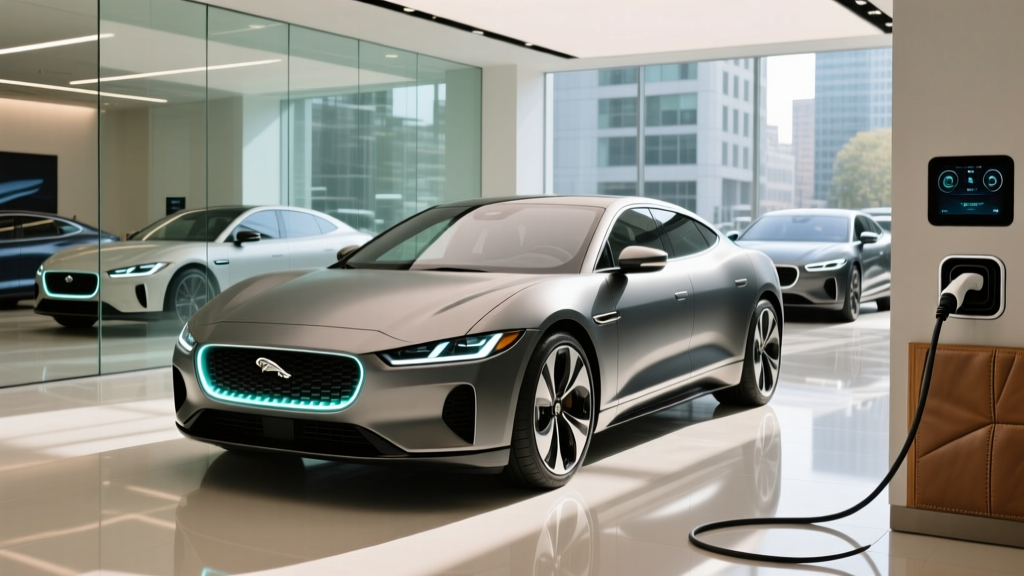
Bottom line: The 2026 Jaguar I-PACE remains the brand's sole battery-electric offering, starting at approximately $73,100 MSRP. It delivers an EPA-estimated 246 miles of range from a 90 kWh (usable) NMC battery, peaks at 105 kW DC fast charging (10–80% in ~45 minutes), and produces 394 horsepower with a 4.5-second 0–60 mph time. It does not currently qualify for the full $7,500 federal §30D tax credit due to battery-sourcing requirements, though point-of-sale lease incentives may apply. If you want a luxury electric crossover with distinctive styling and solid (if not class-leading) efficiency, the I-PACE delivers — but buyers should weigh its charging speed and range against rivals like the BMW iX, Audi Q8 e-tron, and Tesla Model X before committing.
Jaguar's electrification journey has been defined by the I-PACE since its 2019 launch. For 2026, the model receives minor infotainment updates and standard wireless Apple CarPlay/Android Auto, but the core powertrain remains the same dual-motor all-wheel-drive layout that made it an early luxury EV benchmark. With Jaguar's parent company JLR pivoting toward an all-electric lineup by 2030, the I-PACE represents both a proven product and a glimpse at where the brand is heading — even as newer competitors have surpassed it in charging speed and range.
2026 Jaguar I-PACE: Specs at a Glance
| Specification | 2026 Jaguar I-PACE (All Trims) |
|---|---|
| EPA Range | 246 miles |
| Real-World Range (highway/cold) | ~190–220 miles |
| Battery (Usable) | 90 kWh, NMC chemistry |
| DC Fast Charge (Peak) | 105 kW (CCS1) |
| 10–80% DC Charge Time | ~45 minutes |
| Level 2 AC Charge Rate | 11 kW (~7.5 hours 0–100%) |
| Powertrain | Dual motor AWD, 394 hp, 512 lb-ft |
| 0–60 mph | 4.5 seconds |
| Efficiency | 76 MPGe combined (44 kWh/100 mi) |
| Cargo Volume | 25.3 cu ft (rear seats up) / 51.0 cu ft (folded) |
| Base MSRP (R-Dynamic S) | $73,100 |
| Battery/Powertrain Warranty | 8 years / 100,000 miles (70% capacity retention) |
| Federal Tax Credit (§30D) | Partial or $0 — verify current sourcing rules at IRS.gov |
EPA vs. Reality: The I-PACE's 246-mile EPA rating is measured under controlled conditions. In real-world highway driving at 70–75 mph, expect roughly 210–220 miles in mild weather. In sub-freezing temperatures (below 32°F), range can drop to 180–200 miles due to cabin heating demands and reduced battery efficiency. The I-PACE lacks a heat pump (standard on rivals like the Hyundai Ioniq 5 and BMW iX), which means cold-weather efficiency suffers more than competitors equipped with one. Plan charging stops accordingly on road trips exceeding 180 miles in winter.
Charging the I-PACE: What to Expect at Home and on the Road
The I-PACE uses the CCS1 connector standard, which remains widely supported at Electrify America, EVgo, and ChargePoint DC fast-charging stations across the US. However, its 105 kW peak charge rate is notably behind the 2026 competition — the BMW iX xDrive50 peaks at 195 kW, and the Hyundai Ioniq 5 at 240 kW. That translates to real time lost at charging stops.
| Charging Level | Power | Miles Added Per Hour | Typical Use Case |
|---|---|---|---|
| Level 1 (120V household) | ~1.4 kW | ~3–4 miles/hr | Overnight trickle; emergency only |
| Level 2 (240V home) | 11 kW (max) | ~28–32 miles/hr | Daily home charging; full charge ~7.5 hrs |
| DC Fast Charge (CCS) | Up to 105 kW | ~140 miles in 30 min (10–50%) | Road trips; tapers heavily above 80% |
Charging curve reality: The I-PACE sustains close to its 105 kW peak only between roughly 10–50% state of charge. Above 60%, the rate tapers significantly — often dropping below 50 kW past 80%. This means that 10–80% charge takes approximately 45 minutes, but pushing from 80–100% can add another 40+ minutes. For road trips, plan to charge in the 10–70% sweet spot and skip topping off unless necessary.
Home charging cost: Installing a Level 2 home charger (like a ChargePoint Home Flex or Emporia Vue) typically costs $500–$800 for the unit plus $800–$2,500 for professional electrician installation, depending on panel capacity and run length. If your home has a 200-amp electrical panel with spare capacity, expect the lower end. Older homes with 100-amp panels may need a $1,500–$3,000 panel upgrade. At the US average electricity rate of ~$0.16/kWh, a full 90 kWh charge costs roughly $14.40 — delivering 246 EPA miles at about 5.9 cents per mile.
I-PACE vs. Gas: Real Cost of Ownership Over 5 Years
One of the most common questions from luxury SUV shoppers: does the I-PACE actually save money compared to a gas-powered rival like the Porsche Macan or BMW X5? Let's break it down with concrete numbers.
| Cost Factor (5 Years / 75,000 Miles) | Jaguar I-PACE | BMW X5 xDrive40i (Gas) |
|---|---|---|
| Purchase Price (base MSRP) | $73,100 | $67,200 |
| Estimated Federal Tax Credit | $0–$3,750* | $0 |
| Fuel/Energy Cost | ~$5,400** | ~$11,250*** |
| Maintenance (5 yrs) | ~$2,100 | ~$4,800 |
| Insurance (avg) | ~$12,500 | ~$10,800 |
| Estimated Depreciation | ~$32,000 | ~$28,000 |
| 5-Year Total Cost | ~$61,100–$64,850 | ~$65,250 |
* I-PACE §30D credit eligibility depends on battery critical-mineral and component sourcing, which has varied by model year. Verify at IRS.gov before purchase. Lease deals may pass through a separate commercial credit as a capitalized-cost reduction.
** Based on 90% home charging at $0.16/kWh, 10% DC fast charging at $0.40/kWh, and 44 kWh/100 mi efficiency.
*** Based on 22 MPG combined and $3.30/gallon national average.
The I-PACE breaks even or edges ahead on 5-year total cost primarily through fuel and maintenance savings — EVs eliminate oil changes, transmission fluid, and significantly reduce brake wear thanks to regenerative braking. However, higher insurance premiums (typically 15–25% more for EVs in the luxury segment) and steeper depreciation partially offset those gains. The math works best if you have home charging access and drive 12,000+ miles per year.
Key Misconceptions About the Jaguar I-PACE
| Myth | Fact |
|---|---|
| "The I-PACE qualifies for the full $7,500 federal tax credit." | As of 2026, the I-PACE's battery sourcing does not consistently meet the §30D critical-mineral and foreign-entity-of-concern requirements for the full credit. Partial credit ($3,750) or no credit may apply. Always check the latest fueleconomy.gov listings before purchasing. |
| "246 miles of range means I can drive 246 miles before charging." | The EPA figure assumes a mix of city and highway driving in moderate temperatures. Sustained highway driving at 75 mph, cold weather, or mountain terrain can reduce range by 15–25%. Plan for ~200 miles of comfortable real-world range on road trips. |
| "DC fast charging is always 105 kW." | Peak rate applies only in a narrow state-of-charge window (~10–50%). Average rate over a 10–80% session is closer to 65–75 kW. Charger ambient temperature and battery preconditioning also affect speed. |
| "I don't need home charging — public stations are everywhere." | Public DC charging costs 2–3× more per mile than home Level 2 charging. Relying exclusively on public charging erases much of the EV cost advantage and adds time inconvenience. Home charging is strongly recommended for daily ownership satisfaction. |
| "EV batteries need replacing every few years." | Jaguar warranties the I-PACE battery for 8 years / 100,000 miles with a 70% capacity-retention guarantee. Real-world data from NMC packs of this generation shows ~10–15% degradation over 100,000 miles with normal use. Full replacement (rare) costs approximately $15,000–$22,000. |
First-Time EV Buyer Checklist: What to Know Before You Buy
If the I-PACE is your first electric vehicle, these practical considerations will determine whether ownership is a pleasure or a frustration:
- Home charging access is critical. Can you install a 240V Level 2 charger in your garage or driveway? If you live in an apartment or condo without charging access, daily ownership becomes significantly harder and more expensive. Confirm your parking situation before committing.
- Check your electrical panel. A 200-amp panel with 50+ amps of spare capacity handles a Level 2 charger easily. A 100-amp panel may require an upgrade ($1,500–$3,000) or a smart load-management system like the Emporia Vue with automatic load balancing.
- Map your typical drives. If 90% of your driving is under 60 miles round-trip, the I-PACE's range is more than sufficient with nightly home charging. If you regularly drive 200+ miles one-way, you'll need to plan DC fast-charging stops — and accept the 45-minute sessions.
- Factor in your climate. Owners in northern states (Minnesota, Michigan, Maine) should budget for 15–25% winter range loss. The I-PACE's lack of a heat pump makes this more pronounced than in heat-pump-equipped competitors.
- Verify tax credit eligibility at point of sale. The §30D credit has buyer income caps ($150K single / $300K joint), MSRP caps ($80K for SUVs), and battery-sourcing requirements that change periodically. Ask the dealer for a written credit determination and cross-check with IRS guidance.
- Get insurance quotes before buying. Luxury EVs carry higher premiums due to repair costs and battery replacement risk. Get quotes from at least three insurers — some (like Progressive and State Farm) have narrowed the EV premium gap more than others.
Decision Framework: Should You Buy the Jaguar I-PACE?
Choose the Jaguar I-PACE if:
- You want a distinctive, design-forward luxury EV that stands apart from the Tesla-dominated landscape
- Your daily commute is under 80 miles round-trip with home charging available
- You value ride comfort, cabin quietness, and AWD traction over maximum range or fastest charging
- You're willing to accept 200–220 real-world miles of range and ~45-minute road-trip charging stops
- You can secure a favorable lease deal that includes a commercial-credit pass-through
Look elsewhere if:
- You need 300+ miles of EPA range for frequent long-distance travel (consider the BMW iX xDrive50 at 307 mi or Tesla Model X at 335 mi)
- Fastest possible DC charging is a priority (the Hyundai Ioniq 5, Kia EV6, or Lucid Air charge at 200–300+ kW)
- You live in a cold climate and want a heat pump for winter efficiency (BMW iX, Hyundai Ioniq 5, Volkswagen ID.4)
- Federal tax credit eligibility is a dealbreaker — the I-PACE's sourcing compliance is uncertain, while rivals like the Tesla Model Y and Ford Mustang Mach-E have more consistently qualified
- Budget is tight — at $73K+ base, the I-PACE competes in a segment where $5K–$10K more opens significantly more capable options
Frequently Asked Questions
Does the 2026 Jaguar I-PACE use NACS or CCS for charging?
The I-PACE uses the CCS1 connector for DC fast charging and the J1772 connector for Level 2 AC charging. Jaguar has not yet transitioned to the Tesla NACS standard on the I-PACE, though future Jaguar EVs (expected from 2025–2027 onward as part of JLR's "Reimagine" strategy) are anticipated to adopt NACS. CCS1 adapters for Tesla Supercharger access are available from third-party manufacturers, but compatibility varies — confirm before relying on Supercharger access.
How long does the I-PACE battery last before needing replacement?
Jaguar warranties the 90 kWh NMC battery pack for 8 years or 100,000 miles, guaranteeing at least 70% capacity retention. Industry data from similar NMC packs (LG Chem and Samsung SDI cells used in this generation) shows typical degradation of 10–15% over 100,000 miles with normal charging habits. To maximize longevity, avoid routinely charging to 100% or letting the pack sit at 0% — keeping daily charge between 20–80% reduces stress on NMC chemistry. Full battery replacement, while rare, costs approximately $15,000–$22,000 at a Jaguar dealer.
Can I tow with the Jaguar I-PACE?
Yes. The 2026 I-PACE is rated to tow up to 1,653 pounds (750 kg) with the optional towing package. This is sufficient for a small utility trailer or a pair of dirt bikes, but not for a full-size camper or boat. Keep in mind that towing significantly reduces range — expect a 30–40% reduction at highway speeds with a loaded trailer.
Is the I-PACE's all-wheel-drive system good in snow?
The I-PACE's dual-motor AWD system provides excellent traction in snow and ice, with instant torque vectoring between axles. Combined with proper winter tires (strongly recommended — the standard all-season tires are mediocre in deep snow), the I-PACE performs confidently in winter conditions. Ground clearance of 5.6 inches is adequate for plowed roads but may limit deeper snow traversal compared to taller SUVs.
What's the real cost to charge the I-PACE at home vs. public stations?
At home on Level 2 (using the US average rate of $0.16/kWh), a full 90 kWh charge costs about $14.40 for 246 EPA miles — roughly 5.9 cents per mile. At a public DC fast charger (averaging $0.35–$0.48/kWh on networks like Electrify America), that same charge costs $31.50–$43.20, or 12.8–17.6 cents per mile. For comparison, a 22 MPG gas SUV at $3.30/gallon costs about 15 cents per mile. Home charging is where the EV savings materialize; exclusive public charging can actually cost more than gasoline.