The Short Answer: Yes — Jaguar Is Now a Pure EV Brand
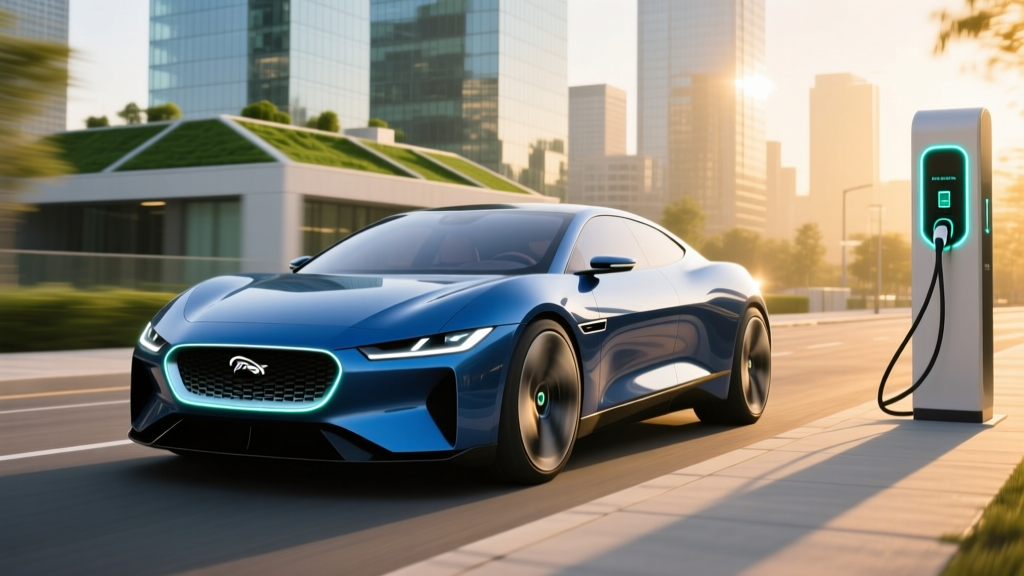
As of 2026, Jaguar has fully transitioned to an all-electric lineup. The brand retired every internal-combustion model (F-PACE, E-PACE, F-TYPE, XF) and relaunched as an ultra-luxury EV-only automaker built on its new Jaguar Type Architecture (JTA). The first production vehicle, the Jaguar I-TYPE GT (a grand-touring fastback), began deliveries in late 2025. The Type 00 GT and Type 01 large luxury SUV are rolling out through 2026. Every new Jaguar sold going forward is a battery-electric vehicle — no hybrids, no plug-in hybrids, no gas engines.
What's Actually in Jaguar's 2026 EV Lineup?
Jaguar's reinvention isn't a single model — it's a three-vehicle offensive targeting the ultra-luxury segment previously occupied by Bentley, Maserati, and high-end Porsche. Here's what's available or confirmed for 2026:
| Model | Body Style | Battery (kWh) | EPA Range | Peak DC Charge | 0-60 mph | Starting MSRP |
|---|---|---|---|---|---|---|
| I-TYPE GT | 4-door GT fastback | ~120 kWh (NMC) | ~370 mi (est.) | ~320 kW | ~3.5 sec | ~$100,000 |
| Type 00 | Grand tourer | ~120 kWh (NMC) | ~350 mi (est.) | ~320 kW | ~3.8 sec | ~$110,000 |
| Type 01 | Large luxury SUV | ~120 kWh (NMC) | ~340 mi (est.) | ~320 kW | ~4.0 sec | ~$115,000 |
Note: Specs above are based on Jaguar's announced JTA platform data and preliminary estimates. Final EPA certification figures may vary. The I-TYPE GT is the first to reach customers; Type 00 and Type 01 follow through 2026.
Real-World Range Reality Check
Jaguar targets an ambitious ~370-mile EPA estimate for the I-TYPE GT, but real-world expectations need context. On a 75-mph highway drive in moderate temperatures, expect ~300-320 miles before needing to stop. In freezing conditions (below 32°F), cabin heating and battery thermal management can reduce usable range by 20-30%, dropping effective range to ~250-280 miles. The 120 kWh battery pack provides a substantial buffer, but no EV delivers its EPA sticker in worst-case conditions.
Jaguar EV vs. the Gas Cars It Replaces: A Cost Comparison
If you cross-shopped a Jaguar F-PACE SVR or XF R before the brand's pivot, here's how the new EV lineup compares to the gas models that came before it — and to key luxury EV rivals.
| Metric | Jaguar F-PACE SVR (2024, Gas) | Jaguar I-TYPE GT (2026, EV) | Porsche Taycan 4S (2026) |
|---|---|---|---|
| MSRP (base) | ~$86,600 | ~$100,000 | ~$107,000 |
| EPA Range / MPG | 16/22/18 MPG | ~370 mi / ~95 MPGe (est.) | ~280 mi / ~83 MPGe |
| Annual Fuel/Energy Cost | ~$3,800 (premium, 12k mi/yr) | ~$650 (home charging, $0.15/kWh) | ~$780 |
| 0-60 mph | 3.8 sec | ~3.5 sec | 3.8 sec |
| Maintenance (5-yr est.) | ~$5,500 | ~$1,800 | ~$2,200 |
| Federal Tax Credit (§30D) | None | Potentially up to $7,500* | Up to $7,500* |
*The IRS §30D credit has strict eligibility requirements: buyer income caps ($300k joint / $150k single), MSRP caps ($80,000 for SUVs, $55,000 for sedans — which likely disqualifies most Jaguar EVs), and battery-critical-mineral sourcing rules. Consult a tax professional before assuming eligibility.
Charging Speed and Infrastructure: What Owners Need to Know
Jaguar's JTA platform uses an 800-volt architecture, enabling DC fast-charge peaks around 320 kW on compatible chargers. Here's what that means in practice:
| Charging Level | Power | Miles Added per Hour | Typical Use Case |
|---|---|---|---|
| Level 1 (120V household) | ~1.4 kW | ~4-5 mi/hr | Overnight trickle; emergency top-up |
| Level 2 (240V home/public) | 11-22 kW | ~35-70 mi/hr | Daily home charging; full overnight refill |
| DC Fast (800V capable) | Up to ~320 kW peak | ~180+ mi in 10 min (peak) | Road trips; 10-80% in ~20 min (est.) |
Charging Curve Reality
The 320 kW peak only holds between roughly 10-40% state of charge. Above 60%, the charge rate tapers significantly to protect the NMC battery chemistry. Expect a 10-80% session to take approximately 20-22 minutes at a 350 kW-capable station (like Electrify America or Ionity), but a 10-95% session could stretch past 40 minutes due to taper. This is physics, not a Jaguar flaw — every EV behaves this way.
Connector standard: Jaguar has adopted the NACS (Tesla-style) connector for North American models starting with the I-TYPE GT, granting access to Tesla Supercharger stalls via native plug (no adapter needed). This is a significant infrastructure advantage over legacy CCS1 vehicles.
5-Year Total Cost of Ownership: Jaguar EV vs. Gas Jaguar
Luxury buyers often focus on MSRP, but the 5-year picture tells a different story. Here's a realistic cost breakdown comparing a hypothetical 2026 I-TYPE GT to the last-generation F-PACE SVR it effectively replaces:
| Cost Category (5 Years) | I-TYPE GT (EV) | F-PACE SVR (Gas Baseline) |
|---|---|---|
| Purchase Price | $100,000 | $86,600 |
| Federal Tax Credit | $0 (exceeds MSRP cap)* | $0 |
| Energy/Fuel (60,000 mi) | $3,250 (home + public mix) | $19,000 (premium unleaded) |
| Maintenance | $1,800 | $5,500 |
| Insurance (est. avg) | $18,500 | $16,000 |
| Depreciation (est. 5-yr) | $52,000 | $48,000 |
| Total 5-Year Cost | $175,550 | $175,100 |
*At ~$100,000 MSRP, Jaguar's EVs exceed the §30D cap of $80,000 for SUVs and $55,000 for sedans. State incentives may still apply — check your local DMV or energy office.
The takeaway: despite zero federal tax credit and higher insurance premiums typical of luxury EVs, the I-TYPE GT's fuel and maintenance savings nearly close the gap with the gas Jaguar over five years. Beyond year five, EV savings compound further as gas prices remain volatile and EV drivetrain maintenance stays minimal.
Common Misconceptions About Jaguar's EV Pivot
| Myth | Fact |
|---|---|
| "Jaguar still sells gas cars in 2026." | All combustion Jaguar production ended in 2025. Only EVs remain. |
| "The new Jaguars are just rebadged EVs from other brands." | Jaguar developed the JTA platform in-house at JLR. The architecture, design language, and driving dynamics are bespoke. |
| "I can't charge a Jaguar at Tesla Superchargers." | The NACS connector is standard on 2026 Jaguars, enabling native Supercharger access across 25,000+ North American stalls. |
| "EV batteries need replacing every few years." | Jaguar provides an 8-year/100,000-mile battery warranty covering capacity below 70% of original. NMC batteries in liquid-cooled packs typically retain 85-90% capacity after 100,000 miles based on industry degradation data. |
| "The $7,500 tax credit applies to all EVs." | §30D has MSRP caps ($80k SUVs / $55k sedans), income limits, and battery-sourcing requirements. Most Jaguar EVs will likely exceed the MSRP cap. |
Real-World Ownership Considerations Before You Buy
Going all-electric with Jaguar means evaluating your daily reality honestly:
Home charging access is critical. Without a Level 2 home charger (240V, 40-48 amp circuit), owning a 120 kWh EV becomes tedious. A professional Level 2 installation typically costs $1,200-$3,500 (charger + electrician + permit), but may require a panel upgrade ($2,000-$4,000 additional) if your home has a 100-amp service. Confirm with a licensed electrician before purchasing.
Cold climate buyers: If you live where winters regularly drop below freezing, budget for 20-30% range loss. The I-TYPE GT's heat pump (standard) mitigates cabin-heating energy draw, but battery chemistry still loses efficiency in cold. Garage parking and preconditioning while plugged in help significantly.
Road-trip planning: With NACS access and ~320 kW peak charging, Jaguar owners can use the Tesla Supercharger network and Electrify America's 350 kW stations. On a 600-mile trip, expect two 20-minute charging stops — comparable to gas-car rest breaks.
Insurance costs are higher. Luxury EVs carry higher premiums due to repair complexity, battery replacement costs, and advanced sensor arrays. Budget 15-25% more than a comparable gas Jaguar for insurance. Get quotes before committing.
Decision Framework: Is a 2026 Jaguar EV Right for You?
Choose a Jaguar EV If:
- You want a $100,000+ ultra-luxury EV with distinctive design that stands apart from the Tesla/Porsche/Lucid crowd
- You have reliable Level 2 home charging and drive fewer than 300 miles per day
- You value 370+ mile range for road trips and NACS Supercharger access
- You're trading in a gas Jaguar and want to stay brand-loyal while eliminating fuel costs
- You want an 800V platform with sub-4-second 0-60 performance and grand-touring comfort
Look Elsewhere If:
- Your budget is under $80,000 — Jaguar's EV lineup starts at ~$100,000 with no federal credit
- You lack home charging access and rely entirely on public infrastructure in a charging-desert area
- You need a compact or midsize vehicle — Jaguar's 2026 models are all large-format luxury
- You want a proven platform with years of real-world reliability data — JTA is brand-new for 2026
- You prefer a plug-in hybrid bridge — Jaguar offers no PHEV options; it's all-EV or nothing
Frequently Asked Questions
When did Jaguar stop making gas cars?
Jaguar ceased all internal-combustion vehicle production in 2025 as part of JLR's "Reimagine" strategy. The last gas models (F-PACE, E-PACE, XF, F-TYPE) were phased out to make way for the all-electric JTA platform vehicles.
Will Jaguar's EVs qualify for the $7,500 federal tax credit?
Almost certainly not. The IRS §30D credit caps eligible MSRP at $80,000 for SUVs and $55,000 for sedans. Jaguar's 2026 EVs start around $100,000, exceeding these limits. State-level incentives may still apply — check AFDC's state incentive database for details.
What battery chemistry does Jaguar use?
The JTA platform uses NMC (nickel manganese cobalt) lithium-ion cells in a liquid-cooled pack. NMC offers higher energy density than LFP, which is why Jaguar can target 370 miles from a ~120 kWh pack. The trade-off is that NMC benefits from staying between 20-80% state of charge for daily use and avoiding prolonged 100% storage.
Can I get my Jaguar serviced at any shop?
EV-specific service (battery diagnostics, high-voltage systems, OTA software) requires Jaguar-certified technicians. Tire rotations, cabin air filters, and wiper service can be done at independent shops, but warranty-covered battery or drivetrain work must go through a Jaguar dealer.
How does Jaguar's EV warranty compare?
Jaguar provides a 4-year/50,000-mile basic vehicle warranty and an 8-year/100,000-mile battery warranty (covering capacity retention below 70%). This is competitive with Porsche and Mercedes-EQ but falls short of Hyundai/Kia's 10-year battery coverage.
Is the Jaguar I-TYPE GT a self-driving car?
No. Jaguar's driver-assistance suite is an SAE Level 2 system, meaning the driver must remain fully engaged with hands on or near the wheel and eyes on the road at all times. It includes adaptive cruise, lane centering, and automated parking — but it does not replace the driver. No production Jaguar offers Level 3 or Level 4 autonomy.
What We Don't Know Yet
As of early 2026, final EPA certification numbers for the Type 00 and Type 01 are not yet published. Real-world charging-curve data from independent testing is still emerging for the I-TYPE GT. Long-term reliability on the JTA platform is unknown — this is a first-generation architecture. We'll update this guide as verified data becomes available from fueleconomy.gov and manufacturer releases.