The "Tesla Tiny House" Rumor: Where It Started
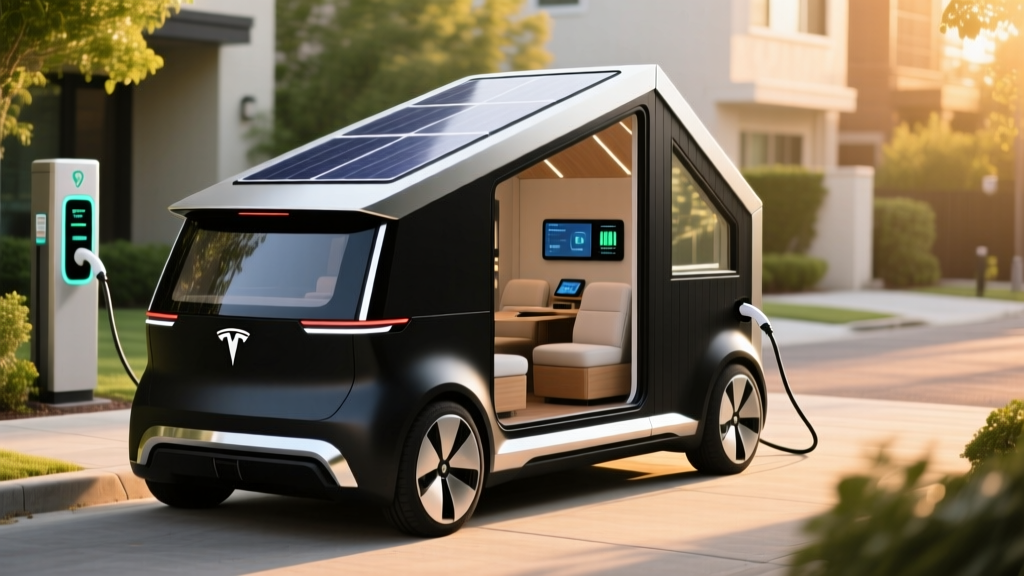
If you've spent any time on EV forums or TikTok's electric-car corners, you've likely encountered the question: is the Tesla tiny house real? The phrase has become shorthand for a long-promised, ultra-affordable Tesla EV — often pegged at around $25,000 — that would sit below the Model 3 in the lineup. Some posts show renderings of a compact hatchback; others conflate it with Tesla's actual product called the "Tiny House" (a promotional miniature house on wheels used to showcase Powerwall and solar products years ago).
Let's separate fact from internet folklore. As of early 2026, Tesla has not released, begun deliveries of, or opened orders for a sub-$30,000 compact EV that enthusiasts label the "Tesla tiny house." What does exist is the Tesla Model 3 — refreshed for the 2024–2026 model years with the "Highland" update — which currently serves as Tesla's most affordable vehicle and the closest proxy for what the rumored budget car might offer. Below, we review the 2026 Tesla Model 3 in full, because if you're searching for the cheapest way into a new Tesla today, this is it.
The 2026 Model 3 Long Range AWD carries an EPA-estimated 341 miles of range. In real-world highway driving at 70–75 mph, expect approximately 285–310 miles before needing a charge stop. In freezing temperatures (below 30°F), range can drop to 230–260 miles due to battery chemistry limitations and cabin heating demand, even with the standard heat pump.
2026 Tesla Model 3: Range, Battery, and Efficiency
The 2026 Model 3 is offered in three primary trims, each with distinct battery chemistry and range profiles:
| Spec | Model 3 RWD | Model 3 Long Range AWD | Model 3 Performance |
|---|---|---|---|
| EPA Range | 272 mi | 341 mi | 315 mi |
| Battery Capacity (usable) | ~60 kWh | ~75 kWh | ~75 kWh |
| Battery Chemistry | LFP (Lithium Iron Phosphate) | NMC (Nickel Manganese Cobalt) | NMC |
| MPGe (combined) | 132 MPGe | 134 MPGe | 124 MPGe |
| kWh / 100 mi | 25 kWh | 25 kWh | 27 kWh |
| Drivetrain | RWD, single motor | AWD, dual motor | AWD, dual motor |
| Horsepower | 271 hp | 346 hp | 510 hp |
| 0–60 mph | 5.8 sec | 4.2 sec | 2.9 sec |
| Base MSRP | $38,990 | $45,490 | $52,990 |
The RWD trim's LFP battery is a critical distinction. LFP chemistry sacrifices some energy density (hence the lower range) but offers superior cycle life, less degradation over time, and no cobalt in the supply chain. Tesla recommends charging LFP batteries to 100% regularly, unlike NMC, which benefits from staying between 20–80% for daily use to minimize long-term degradation. Source: Tesla Battery Care.
Efficiency across the lineup hovers around 25 kWh per 100 miles, making the Model 3 one of the most energy-efficient EVs on the market. For context, that translates to roughly $0.10–$0.14 per mile at the national average residential electricity rate of ~$0.16/kWh, versus $0.14–$0.18 per mile for a 30-MPG gas car at $3.50/gallon.
Charging Speed: DC Fast Charge and Home Level 2
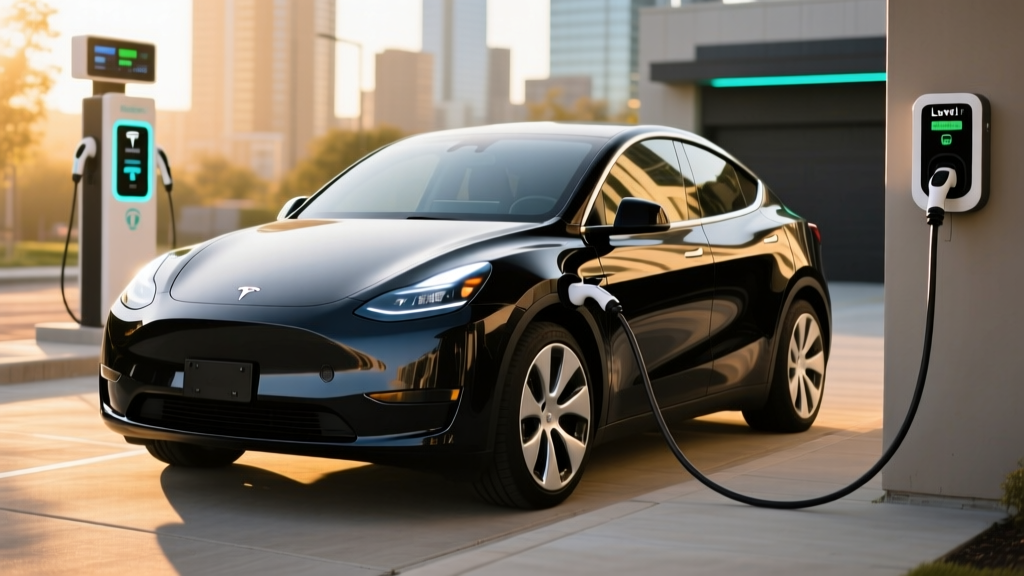
Charging speed remains one of the Model 3's strongest practical advantages, thanks to access to the Tesla Supercharger network — now increasingly open to other brands but still the most reliable DC fast-charging ecosystem in North America.
| Charging Level | Power / Rate | Speed | Notes |
|---|---|---|---|
| Level 1 (120V household) | ~1.4 kW | ~3–5 mi/hr | Emergency/trickle only |
| Level 2 (240V home, 48A) | 11.5 kW | ~44 mi/hr | Full charge overnight (~7–8 hrs) |
| Level 2 (Tesla Wall Connector, 80A) | ~19.2 kW (vehicle limited to ~11.5 kW) | ~44 mi/hr | Model 3 onboard charger caps at 11.5 kW |
| DC Fast Charge (Supercharger V3) | Peak 250 kW | 10–80% in ~25 min | Rate tapers above 50%; sustained avg ~120 kW |
| DC Fast Charge (V4 Supercharger) | Peak 250+ kW | 10–80% in ~22 min | Availability varies by station |
A critical nuance many spec sheets omit: peak kW is not sustained kW. The Model 3 Long Range may hit 250 kW briefly in the 10–20% state-of-charge window, but the charge curve tapers significantly past 50%. On a typical Supercharger session from 10% to 80%, expect an average rate closer to 110–130 kW. This is why the "10–80% in ~25 minutes" figure matters more than the peak number.
For home charging, the Model 3's onboard charger maxes at 11.5 kW (48 amps). Installing a 60-amp circuit with a Tesla Wall Connector ($475 for hardware) typically costs $800–$1,700 total with a licensed electrician, depending on panel proximity and local permit fees. If your home's electrical panel is at or near its capacity (common in older homes with 100-amp service), a panel upgrade to 200 amps can add $1,500–$3,000.
Interior Space, Tech, and Driver Assistance
The Highland refresh brought meaningful interior upgrades over the pre-2024 Model 3, though the cabin remains polarizing in its minimalism.
Cargo and passenger dimensions:
- Rear trunk: 23 cu ft (649 liters)
- Front trunk (frunk): 3.1 cu ft (88 liters)
- Total cargo: 26.1 cu ft
- Rear legroom: 35.2 inches
- Front headroom: 40.3 inches
- Seating: 5 passengers
The rear seat is tighter than a Model Y or Hyundai Ioniq 5, which matters if you regularly carry adults in back. The trunk is deep and practical but lacks the hatchback opening of competitors like the Ioniq 5 or Volkswagen ID.4, making bulky cargo loading more awkward.
Standout tech features:
- 15.4-inch center touchscreen with ventilated front seats (new for Highland)
- Ambient lighting and acoustic glass (significantly quieter cabin at highway speed)
- Rear 8-inch touchscreen for climate and entertainment
- Tesla Autopilot standard (adaptive cruise + lane centering — SAE Level 2)
- Full Self-Driving (Supervised) available as $8,000 add-on or $99/month subscription
- Over-the-air updates, Sentry Mode dashcam, Tesla app remote climate/preconditioning
Both Tesla Autopilot and FSD (Supervised) are SAE Level 2 driver-assistance systems. The driver must remain fully attentive, keep hands on the wheel (or demonstrate engagement via steering torque/camera monitoring), and be prepared to take over instantly. No Tesla vehicle sold to consumers is SAE Level 4 or Level 5 autonomous. Only dedicated robotaxi services like Waymo operate at Level 4 in geofenced areas.
Notable drawbacks: The turn-signal stalks have been eliminated in the Highland refresh — signals are now activated via buttons on the steering wheel, which many drivers find unintuitive, especially in roundabouts. There is no physical instrument cluster; all information lives on the center screen. No Apple CarPlay or Android Auto. And the absence of ultrasonic sensors (removed in 2022, replaced by Tesla Vision camera-only parking assist) means parking proximity warnings are less precise than radar-based competitors.
Pricing, Tax Credits, and Total Cost
Understanding the real cost of a 2026 Model 3 requires navigating the IRS §30D federal tax credit rules, which have tightened considerably since the Inflation Reduction Act took effect.
| Trim | Base MSRP | Destination | Federal Credit (est.) | Effective Price |
|---|---|---|---|---|
| Model 3 RWD | $38,990 | $1,390 | Up to $7,500* | ~$32,880 |
| Model 3 Long Range AWD | $45,490 | $1,390 | Up to $7,500* | ~$39,380 |
| Model 3 Performance | $52,990 | $1,390 | Up to $7,500* | ~$46,880 |
*Critical tax credit caveats for 2026:
- MSRP cap: Sedans must be under $55,000 MSRP. The Model 3 Performance at $52,990 qualifies; add-ons that push it above $55K may disqualify it.
- Buyer income cap: Modified AGI must not exceed $150,000 (single), $225,000 (head of household), or $300,000 (married filing jointly).
- Battery sourcing: The credit splits into two $3,750 halves — one for critical-mineral sourcing and one for battery-component manufacturing. As of 2026, the Model 3 RWD (built in Fremont with LFP cells that may originate from CATL in China) may receive only $3,750 if its battery components fail the domestic-content threshold. The Long Range and Performance, with more North American-sourced NMC cells, are more likely to qualify for the full $7,500.
- Point-of-sale transfer: Buyers can elect to transfer the credit to the dealer at purchase, reducing the out-of-pocket price immediately rather than waiting for a tax refund.
- Verify before buying: Use the IRS's official VIN-check tool at fueleconomy.gov to confirm eligibility for the specific vehicle you're purchasing.
How It Compares: Is the Model 3 Worth It vs. Competitors?
If the "Tesla tiny house" you're searching for is really a question about the cheapest, most efficient EV available, the Model 3 faces real competition in 2026:
| Attribute | Tesla Model 3 LR | Hyundai Ioniq 6 SEL | BMW i4 eDrive40 | Chevrolet Equinox EV RS |
|---|---|---|---|---|
| EPA Range | 341 mi | 305 mi | 307 mi | 319 mi |
| Base MSRP | $45,490 | $42,650 | $57,900 | $43,400 |
| DC Fast Peak | 250 kW | 235 kW | 205 kW | 150 kW |
| 10–80% Time | ~25 min | ~18 min (800V) | ~31 min | ~35 min |
| Charging Network | Supercharger (native) | NACS adapter or Supercharger | NACS adapter | NACS adapter |
| Full $7,500 Credit? | Likely | Likely | No (MSRP > $55K sedan cap) | Likely |
The Ioniq 6 charges faster in practice (its 800V architecture sustains higher rates longer), but the Model 3 still wins on total range and Supercharger convenience. The Equinox EV undercuts on price but charges far slower. The BMW i4 offers premium refinement but prices out of the tax credit.
- You want maximum range per dollar in a sedan
- Supercharger network access is a priority for road trips
- You value OTA updates and the Tesla software ecosystem
- You primarily commute solo or with one passenger
- You need spacious rear seats (Ioniq 5, Model Y)
- You want Apple CarPlay (Hyundai, BMW, Chevy)
- You prefer physical buttons and stalks (most competitors)
- You need hatchback cargo flexibility (Ioniq 5, VW ID.4)
Warranty and Long-Term Ownership
Tesla's warranty coverage is competitive but not class-leading:
- Basic vehicle: 4 years / 50,000 miles
- Battery & drive unit: 8 years / 100,000 miles (RWD); 8 years / 120,000 miles (Long Range & Performance)
- Battery capacity retention guarantee: Minimum 70% of original capacity over the warranty period
For LFP batteries (RWD trim), real-world degradation data suggests approximately 5–8% loss over 100,000 miles, well within the warranty threshold. NMC packs in the Long Range typically show 8–12% degradation over the same distance, with the steepest drop occurring in the first 20,000 miles before leveling off. These figures come from fleet data aggregated by sources like Recurrent Auto.
Insurance costs remain a Model 3 pain point. Average annual premiums run $2,200–$3,100 depending on state, age, and driving record — roughly 20–35% higher than comparable gas sedans, driven by Tesla's higher repair costs and proprietary parts. Always get an insurance quote before committing to a purchase.
So, Is the Tesla Tiny House Real?
To directly answer the question driving this search: No, the "Tesla tiny house" as a purchasable $25,000 EV does not exist as of 2026. Tesla CEO Elon Musk has referenced plans for a next-generation, lower-cost vehicle platform at various investor events, but no production date, pricing, or specifications have been confirmed. Tesla's current focus has shifted toward AI, robotics (Optimus), and the Cybertruck ramp rather than a budget compact.
What does exist is the 2026 Model 3, starting at $38,990 before incentives and potentially as low as ~$32,880 after the federal credit. It remains one of the most efficient, longest-range, and fastest-charging EVs you can buy — but it is not a $25K car, and it's not a tiny house on wheels.
- Class-leading range (341 mi LR) and efficiency (25 kWh/100 mi)
- Access to the Supercharger network — still the gold standard for reliability
- LFP battery option with excellent longevity and 100% daily charging
- Best-in-class software, OTA updates, and app integration
- Strong performance even in base RWD trim (5.8 sec 0–60)
- Stalkless steering wheel controls (turn signals, wipers) frustrate many drivers
- Tight rear seat vs. crossover competitors
- No Apple CarPlay / Android Auto
- Insurance premiums 20–35% above segment average
- Vision-only parking assist less precise than ultrasonic sensors
Frequently Asked Questions
What is the real-world range of the 2026 Tesla Model 3?
The Long Range AWD is EPA-rated at 341 miles. Expect 285–310 miles in real-world highway driving, and 230–260 miles in sub-freezing winter conditions. The RWD trim (EPA 272 mi) delivers roughly 220–245 miles on the highway.
How fast does the Model 3 charge at home and on the road?
At home on a 240V Level 2 charger, the Model 3 adds about 44 miles of range per hour (11.5 kW max onboard charger). On a V3 Supercharger, it peaks at 250 kW and charges from 10–80% in approximately 25 minutes, though sustained average rates are closer to 120 kW due to charge-curve tapering.
How much does the Model 3 cost after tax credits?
The RWD starts at $38,990 + $1,390 destination. If you qualify for the full $7,500 federal credit (meeting income, MSRP, and battery-sourcing requirements), the effective price drops to approximately $32,880. However, the RWD's LFP battery sourcing may limit the credit to $3,750, making the effective price ~$36,630. Always verify via the IRS VIN tool before purchase.
Does the Tesla Model 3 qualify for the $7,500 federal EV tax credit?
It can, but eligibility depends on three factors per IRS §30D rules: (1) your income must be below $150K/$225K/$300K thresholds, (2) the sedan MSRP must stay under $55,000, and (3) battery components and critical minerals must meet domestic-sourcing percentages that increase annually. The Long Range AWD is most likely to qualify for the full $7,500; the RWD may receive $3,750.
Is the Model 3 worth buying over the Hyundai Ioniq 6 or Chevy Equinox EV?
The Model 3 wins on total range and charging-network access. The Ioniq 6 charges faster (18-min 10–80% on 800V) and has CarPlay. The Equinox EV is cheaper but charges much slower (150 kW peak). If Supercharger access matters for road trips, the Model 3 retains an edge. If you want a lower price or traditional controls, shop the competition.
Will Tesla ever release a $25,000 compact EV?
Tesla has discussed a next-generation, lower-cost platform at investor events, but no official launch date, name, or confirmed specifications exist as of early 2026. Industry analysts expect any such vehicle would not reach production before late 2027 at the earliest. Until then, the Model 3 RWD at ~$38,990 remains Tesla's entry point.