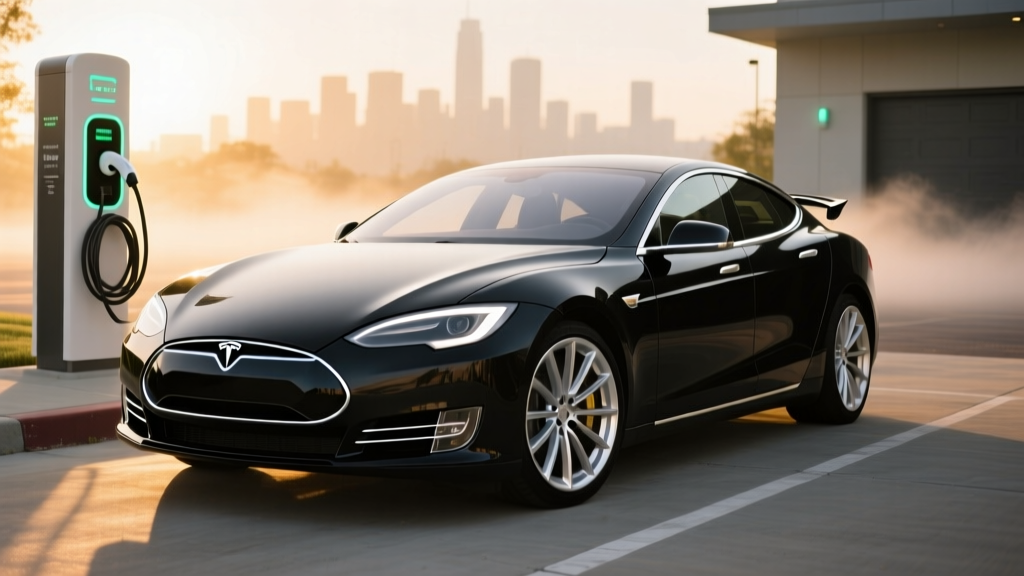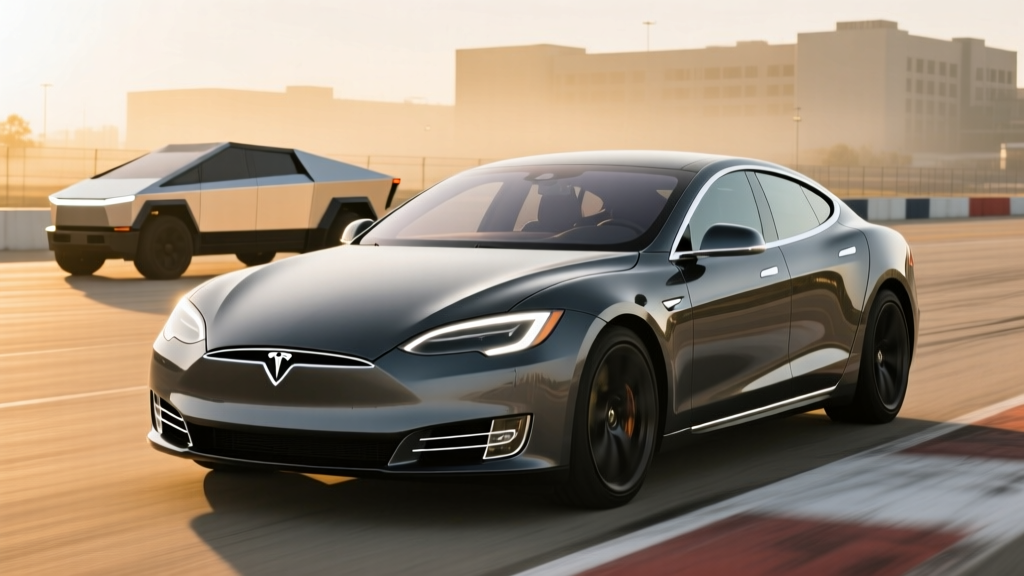
Safety is the number one priority for most car buyers, and Tesla has built much of its brand identity around the claim that its vehicles are the safest ever made. But does the data actually support the assertion? With the EV market now crowded with contenders from Hyundai, BMW, Ford, and Rivian — all earning top crash scores — the question "is Tesla the safest car" deserves a rigorous, numbers-driven answer rather than marketing repetition.
In this deep dive, we examine the 2026 Tesla lineup — Model 3, Model Y, Model S, Model X, and Cybertruck — against National Highway Traffic Safety Administration (NHTSA) star ratings, Insurance Institute for Highway Safety (IIHS) crash-test performance, real-world Autopilot and Full Self-Driving (Supervised) incident data, and structural engineering advantages unique to electric vehicles. We also compare Tesla's safety profile head-to-head against key competitors to determine where Tesla leads, where it falls short, and what the data actually says.
Tesla's Crash-Test Ratings: NHTSA and IIHS Scorecards
The most objective starting point for any vehicle safety discussion is standardized crash testing. Both NHTSA and IIHS subject vehicles to controlled collisions and rate their occupant protection. Here is how the current 2026 Tesla lineup stacks up:
| Model | NHTSA Overall | IIHS Rating | Frontal Crash | Side Crash | Rollover Risk |
|---|---|---|---|---|---|
| Model 3 (Highland refresh) | 5 Stars | IIHS Top Safety Pick+ | 5 Stars | 5 Stars | 6.6% (lowest in class) |
| Model Y (Juniper) | 5 Stars | IIHS Top Safety Pick+ | 5 Stars | 5 Stars | 7.9% |
| Model S (2026) | 5 Stars | Good (most categories) | 5 Stars | 5 Stars | 5.7% |
| Model X (2026) | 5 Stars | Good / Acceptable (varies) | 5 Stars | 5 Stars | 8.1% |
| Cybertruck | Not fully rated | Not yet tested (IIHS) | N/A | N/A | N/A |
Every Tesla sedan and crossover in the current lineup has earned NHTSA's maximum 5-star overall rating. The NHTSA vehicle safety ratings portal confirms that the Model 3 achieved 5 stars across frontal crash, side crash, and rollover categories — a rare sweep. The Model Y and Model S have similarly swept all categories.
The IIHS has awarded the refreshed Model 3 and Juniper Model Y its highest honor: Top Safety Pick+. This designation requires "Good" ratings in every crashworthiness test, "Good" or "Acceptable" headlight ratings, and advanced front crash prevention systems that earn "Superior" or "Advanced" marks. Tesla's automatic emergency braking consistently scores at the top of these evaluations.
Why Teslas Score Well: The Structural Advantages of EV Architecture
Tesla's strong crash ratings are not accidental — they stem from fundamental advantages in electric-vehicle platform design that benefit all EVs, not just Teslas:
- Ultra-low center of gravity: The battery pack sits flat along the floor, creating a skateboard architecture that dramatically reduces rollover risk. The Model S has a NHTSA rollover risk of just 5.7% — among the lowest of any vehicle ever tested.
- No engine block intrusion: Without a heavy internal-combustion engine in the front crumple zone, Tesla engineers can design a longer, more progressive crash-energy-absorption structure. The front trunk (frunk) area acts as an extended crush zone.
- Rigid battery enclosure: The structural battery pack contributes to exceptional torsional rigidity. The Model Y's body stiffness exceeds 20,000 Nm/degree, helping the safety cell resist deformation during side impacts.
- Distributed mass: Battery weight is spread across the full wheelbase rather than concentrated at the front, reducing the pendulum effect in offset collisions.
These advantages apply broadly across modern EVs. The Hyundai Ioniq 5, BMW iX, and Ford Mustang Mach-E all benefit from similar architecture and have earned comparable 5-star and Top Safety Pick+ ratings. Tesla does not hold a monopoly on EV structural safety.
Active Safety and Driver Assistance: Autopilot and FSD (Supervised) Under the Microscope
Crash protection is only half the safety equation. Active safety — systems that help prevent collisions from happening in the first place — is where Tesla differentiates itself with software-driven driver assistance. But this is also where the most scrutiny is warranted.
What Autopilot includes (standard on all 2026 Teslas):
- Traffic-Aware Cruise Control (adaptive cruise with stop-and-go)
- Autosteer (lane-centering on divided highways)
- Automatic Emergency Braking (AEB) with pedestrian and cyclist detection
- Forward Collision Warning, Side Collision Warning, Obstacle-Aware Speed Limiting
- Blind-spot monitoring with lane-departure avoidance
What FSD (Supervised) adds ($8,000 option or $99/month):
- Navigate on Autopilot (automatic highway interchange and exit routing)
- Auto Lane Change (initiated or suggested)
- Autopark (parallel and perpendicular)
- Summon and Smart Summon (vehicle navigates parking lots to the driver)
- Traffic Light and Stop Sign Control
- City street driving assistance (requires active supervision)
What the Safety Data Actually Shows
Tesla publishes a quarterly Vehicle Safety Report that tracks the rate of crashes per million miles driven with Autopilot engaged versus the U.S. national average. For Q3 2025, Tesla reported:
- 1 crash per 4.29 million miles with Autopilot engaged
- 1 crash per 1.41 million miles without Autopilot but with active safety features
- U.S. national average: 1 crash per ~670,000 miles (per NHTSA data)
These numbers are frequently cited to argue that Autopilot makes Teslas dramatically safer. However, the data requires important context that Tesla's reports do not emphasize:
- Highway vs. city mix: Autopilot is predominantly used on controlled-access highways, which are inherently safer than urban and rural roads with intersections, pedestrians, and cross-traffic. Comparing Autopilot highway miles to the national average (which includes far more dangerous road types) inflates the apparent benefit.
- Selection bias: Drivers who engage Autopilot may be more attentive or more cautious than average.
- Definition of "crash": Tesla counts any airbag deployment or significant impact, which may differ from NHTSA's reporting methodology.
Independent analyses by the IIHS and investigative reports have noted that Tesla's crash-rate advantage is real but likely smaller than the raw numbers suggest when road-type and driver-behavior variables are controlled.
2026 Tesla Lineup: Quick Specs for the Safety-Conscious Buyer
If safety is your primary motivation for considering a Tesla, here are the core specifications for each model in the current lineup — including range, charging, performance, and pricing — so you can evaluate the full ownership picture alongside the safety data.
| Spec | Model 3 LR AWD | Model Y LR AWD | Model S LR | Model X LR |
|---|---|---|---|---|
| EPA Range | 363 mi | 320 mi | 402 mi | 335 mi |
| Battery (usable) | ~75 kWh (NMC) | ~75 kWh (NMC) | ~95 kWh (NMC) | ~95 kWh (NMC) |
| Peak DC Fast Charge | 250 kW | 250 kW | 250 kW | 250 kW |
| 10-80% DC Time | ~28 min | ~28 min | ~32 min | ~32 min |
| Level 2 Home Charge | 11.5 kW (~44 mi/hr) | 11.5 kW (~44 mi/hr) | 11.5 kW (~44 mi/hr) | 11.5 kW (~44 mi/hr) |
| 0-60 mph | 4.2 sec | 4.8 sec | 3.1 sec | 3.8 sec |
| Horsepower | ~384 hp | ~384 hp | ~670 hp | ~670 hp |
| Drivetrain | Dual-Motor AWD | Dual-Motor AWD | Dual-Motor AWD | Dual-Motor AWD |
| MPGe (combined) | 132 MPGe | 122 MPGe | 120 MPGe | 105 MPGe |
| Efficiency (kWh/100mi) | 25 | 28 | 28 | 33 |
| Cargo (rear seats up) | 23 cu ft | 30 cu ft | 28 cu ft | 88 cu ft (seats folded) |
| Rear Legroom | 35.3 in | 41.6 in | 35.4 in | 41.1 in |
| Base MSRP | $47,740 | $52,490 | $84,990 | $94,990 |
| Battery Warranty | 8 yr / 120,000 mi | 8 yr / 120,000 mi | 8 yr / 150,000 mi | 8 yr / 150,000 mi |
Pricing, Tax Credits, and Total Cost of Ownership
Safety matters, but so does the budget. Here is how the 2026 Tesla lineup prices out — and what federal incentives may apply.
| Model | Base MSRP | As-Tested (typical config) | §30D Credit Eligible? | Effective Price (with credit) |
|---|---|---|---|---|
| Model 3 RWD | $39,740 | $39,740 | Up to $7,500 (if sourcing + income rules met) | ~$32,240 |
| Model 3 LR AWD | $47,740 | $49,740 (w/ paint + wheels) | Up to $7,500 | ~$42,240 |
| Model Y LR AWD | $52,490 | $54,490 | Up to $7,500 | ~$46,990 |
| Model S LR | $84,990 | $89,990 | Not eligible (exceeds $55K sedan MSRP cap) | $84,990+ |
| Model X LR | $94,990 | $99,990 | Not eligible (exceeds $80K SUV MSRP cap) | $94,990+ |
IRS §30D Federal Tax Credit — Eligibility Checklist (2026 rules):
- Vehicle MSRP must not exceed $55,000 for sedans (Model 3) or $80,000 for SUVs/trucks (Model Y qualifies; Model S/X do not)
- Buyer adjusted gross income must not exceed $150,000 (single), $225,000 (head of household), or $300,000 (joint)
- Battery must meet critical minerals and component sourcing thresholds (percentages increase annually under the Inflation Reduction Act)
- Credit can now be transferred at point of sale, reducing the purchase price directly rather than waiting for a tax refund
- Always verify current eligibility at IRS.gov §30D guidance — sourcing rules change annually and specific battery supply chain details may affect partial vs. full credit
Tesla vs. Competitors: How Does Safety Compare?
Claiming Tesla is "the safest car" requires comparing it against other vehicles with equivalent safety credentials. Here is how the competitive landscape looks in 2026:
| Vehicle | NHTSA | IIHS | Notable Active Safety |
|---|---|---|---|
| Tesla Model Y | 5 Stars | TSP+ | Autopilot, camera-based AEB |
| Hyundai Ioniq 5 | 5 Stars | TSP+ | Highway Driving Assist 2, LiDAR-assisted (Limited) |
| BMW iX | 5 Stars | TSP+ | Driving Assistant Professional, radar + camera fusion |
| Volvo EX90 | Pending (2026 launch) | Expected TSP+ | LiDAR standard, driver monitoring cameras, bi-directional AEB |
| Genesis Electrified GV70 | 5 Stars | TSP+ | Highway Driving Assist, remote smart parking |
| Ford Mustang Mach-E | 5 Stars | TSP+ | BlueCruise (hands-free on approved highways) |
The picture is clear: Tesla is not the only automaker achieving 5-star NHTSA ratings and IIHS Top Safety Pick+ designations. Multiple competitors match Tesla on crash-test performance while offering different active-safety philosophies — some using LiDAR or radar-camera sensor fusion where Tesla relies exclusively on its camera-only "Tesla Vision" approach.
The Volvo EX90, launching in 2026, is particularly notable: it comes with a roof-mounted LiDAR sensor as standard equipment, providing a depth-sensing layer that camera-only systems cannot match in low-visibility conditions. Volvo's long-standing safety reputation and sensor-rich approach make it a strong challenger to Tesla's safety crown.
Standout Tech, Drawbacks, and Who Should Buy a Tesla for Safety
Standout safety-relevant tech features:
- Tesla Vision: Eight-camera surround-view system providing 360° awareness with no blind spots in the sensor field
- Dashcam and Sentry Mode: Continuous recording from all cameras provides accident documentation and parking-lot surveillance
- Over-the-air safety updates: Tesla regularly deploys braking, steering, and detection improvements via software — a 2025 OTA update improved AEB performance at night
- Cabin camera driver monitoring: Ensures driver attention when Autopilot is engaged (though enforcement has been criticized as less stringent than GM Super Cruise's eye-tracking)
Notable safety-relevant drawbacks:
- No LiDAR or radar: Tesla removed all radar sensors in 2021 and ultrasonic sensors in 2022, relying entirely on cameras. This limits performance in heavy rain, fog, and direct sun glare — conditions where radar and LiDAR provide redundancy.
- Phantom braking: Numerous owner reports and NHTSA complaints document instances of Tesla vehicles braking unexpectedly on highways, a recurring issue with camera-only AEB systems.
- FSD supervision gaps: The "Supervised" label acknowledges that the system makes errors requiring driver intervention. Over-reliance on FSD has been a factor in documented collisions.
- Door handle design: The Model 3/Y flush electronic door handles have raised concerns about egress in crash scenarios where electrical systems fail, though Tesla includes a mechanical release.
Pros
- 5-star NHTSA across all tested models
- IIHS Top Safety Pick+ for Model 3 and Y
- Exceptional rollover resistance (low CoG)
- Industry-leading AEB performance in tests
- Continuous OTA safety improvements
- Extensive camera coverage for documentation
Cons
- Camera-only system lacks radar/LiDAR redundancy
- Phantom braking complaints persist
- FSD requires constant supervision despite its name
- Model S/X priced above §30D credit caps
- Cybertruck lacks comprehensive crash ratings
- Electronic door handles raise egress questions
Who This EV Suits Best
- Commuters on controlled-access highways: Autopilot excels in predictable, divided-highway environments where its lane-centering and adaptive cruise reduce fatigue.
- Safety-prioritizing families: The Model Y offers 5-star crash protection, excellent cargo space (30 cu ft), and low running costs — a compelling family hauler.
- Tech-forward buyers: If you value continuous software improvement and data-rich driving feedback, Tesla's ecosystem has no peer.
- Cold-climate buyers should note: Range loss in freezing temperatures is real (20-30%), and Tesla's heat pump — while efficient — cannot fully eliminate the physics penalty. Consider the Long Range trims for cold-weather buffer.
Frequently Asked Questions
Is Tesla the safest car overall?
Tesla's Model 3, Model Y, and Model S hold 5-star NHTSA ratings and IIHS Top Safety Pick+ designations, placing them among the safest vehicles available. However, competitors including the Hyundai Ioniq 5, BMW iX, and Ford Mustang Mach-E hold equivalent ratings. Tesla is among the safest — but not uniquely the safest.
Is Tesla Autopilot safer than a human driver?
Tesla's internal data shows fewer crashes per million miles with Autopilot engaged versus the national average. However, this comparison does not fully account for the fact that Autopilot is primarily used on safer highway environments. Independent researchers suggest the advantage is real but more modest than raw numbers imply. Autopilot is a Level 2 assist system — not a replacement for an attentive driver.
Does the Tesla Cybertruck have safety ratings?
As of early 2026, the Cybertruck has not received a complete NHTSA rating or IIHS evaluation. Its stainless-steel exoskeleton and unconventional geometry make standardized crash testing more complex. Buyers prioritizing verified safety data should look to the Model 3, Model Y, or Model S, which have comprehensive ratings.
What is the real-world range of a Tesla Model Y?
The 2026 Model Y Long Range AWD carries an EPA rating of 320 miles. In real-world highway driving at 70-75 mph, expect approximately 270-290 miles. In cold weather (below 30°F), range can drop to 220-250 miles. Preconditioning the battery while plugged in helps preserve range in winter conditions.
How fast does a Tesla charge at home and on the road?
At home on a Level 2 (240V) Wall Connector, Teslas charge at up to 11.5 kW, adding approximately 44 miles of range per hour — a full overnight charge. On DC fast charging, Tesla's V3 Superchargers deliver up to 250 kW peak, achieving a 10-80% charge in approximately 28 minutes for Model 3/Y. Charge speed tapers significantly above 80% to protect battery health.
Does Tesla qualify for the $7,500 federal EV tax credit?
The Model 3 and Model Y may qualify for up to $7,500 under IRS §30D, subject to buyer income limits ($150K single / $300K joint), MSRP caps ($55K sedan / $80K SUV), and battery-sourcing requirements. The Model S and Model X exceed MSRP caps and do not qualify. Always verify current-year eligibility at IRS.gov before purchasing.
Is Tesla Vision (camera-only) as safe as systems with LiDAR?
This is actively debated. Tesla argues that camera-based AI can match or exceed human vision. Critics note that cameras lack the depth-sensing redundancy of LiDAR and the all-weather reliability of radar. In controlled testing, Tesla's AEB performs excellently, but real-world phantom braking and low-visibility limitations remain concerns. Volvo, BMW, and Hyundai have all chosen to include LiDAR or radar as sensor redundancy — a design choice Tesla has rejected.