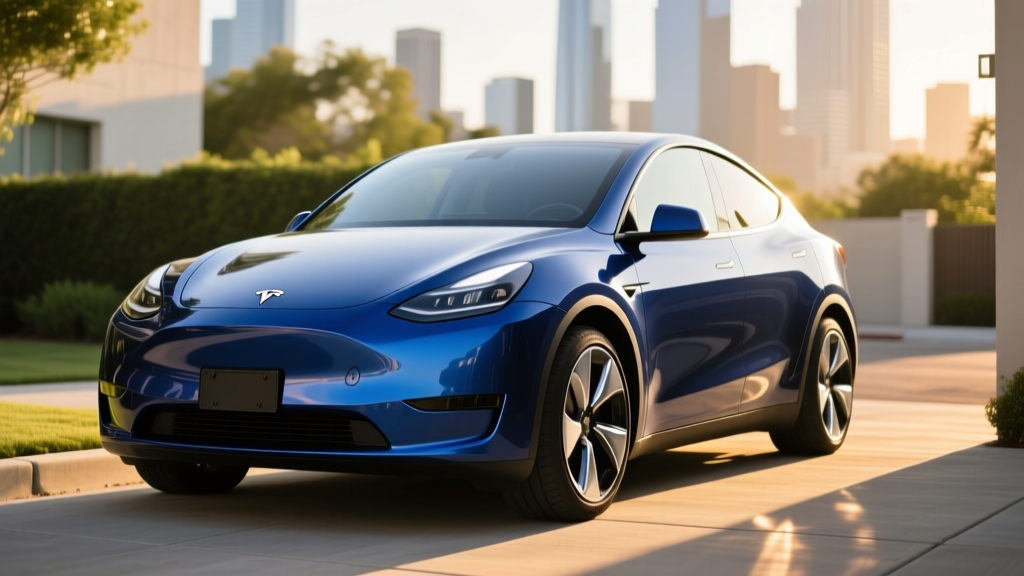
When shoppers ask "is Tesla a safe car?" they're really asking two distinct questions: Do Tesla vehicles protect occupants in a crash, and does Autopilot or Full Self-Driving (Supervised) make them safer — or riskier — on the road? The answer requires separating structural crash-test engineering from the realities of Level 2 driver-assistance software. This guide breaks down both dimensions across the current 2026 Tesla lineup — Model 3, Model Y, Model S, Model X, and Cybertruck — alongside the specs, range, charging, and ownership economics buyers actually need.
Crash-Test Ratings: How Tesla Scores With NHTSA and IIHS
Tesla's structural safety record is strong by objective metrics. The skateboard architecture — a rigid battery pack mounted low in the chassis — gives every Tesla model a low center of gravity and substantial crumple zones. Here's where each model stands with the two primary U.S. testing bodies:
| Model | NHTSA Overall | IIHS Rating | Key Notes |
|---|---|---|---|
| Model 3 (2024+ refresh) | 5 Stars | Top Safety Pick+ (when equipped with acceptable headlights) | Good in all IIHS crash tests; improved headlight rating post-refresh |
| Model Y (2025+) | 5 Stars | Top Safety Pick+ | Strong roof strength and small overlap scores |
| Model S (2025) | 5 Stars | Not recently IIHS-tested | Older platform; NHTSA 5-star across all categories |
| Model X (2025) | 5 Stars | Not recently IIHS-tested | Falcon-wing doors add complexity; strong occupant cell |
| Cybertruck (2025) | Not fully rated (partial) | Not IIHS-tested | Stainless exoskeleton; limited standardized data as of early 2026 |
Source: NHTSA and IIHS. Ratings reflect the most recent test cycles available as of early 2026. Always verify current model-year results on the agency sites, as testing protocols evolve.
The takeaway on crashworthiness: Tesla's core sedans and crossovers (Model 3, Model Y) earn top marks from both agencies. The larger, lower-volume Model S and Model X maintain 5-star NHTSA ratings but haven't been re-evaluated recently by IIHS. The Cybertruck's unconventional stainless-steel exoskeleton makes standardized comparison harder, and full ratings were still rolling out as of this writing.
Active Safety and Autopilot: What the Data Actually Shows
Tesla publishes a quarterly Vehicle Safety Report comparing miles driven between accidents for Tesla vehicles with Autopilot engaged versus those without, and versus the U.S. average. In recent reports, Tesla has claimed approximately 1 accident per 4–5 million miles with Autopilot active, compared to roughly 1 per 670,000 miles without Autopilot, and the U.S. average of ~1 per 670,000 miles (NHTSA data).
Those numbers require context:
- Selection bias: Autopilot is predominantly used on divided highways — the safest driving environment. Comparing highway Autopilot miles to all-driving U.S. averages is not apples-to-apples.
- Reporting methodology: Tesla's data is self-reported and not independently audited by NHTSA or a third party.
- NHTSA investigations: The National Highway Traffic Safety Administration has opened multiple investigations into Tesla's Autopilot/FSD systems, particularly regarding crashes involving stationary emergency vehicles and the adequacy of driver-engagement monitoring. Some of these investigations have resulted in recalls (over-the-air software updates) to strengthen driver attentiveness alerts.
Standard active safety features on every 2026 Tesla include automatic emergency braking (AEB), forward collision warning, lane departure warning, lane-keeping assist, and blind-spot monitoring. These background systems — distinct from Autopilot — have strong real-world effectiveness data across the industry. Tesla's AEB implementation generally scores well in IIHS evaluations.
2026 Tesla Lineup: Range, Charging, and Performance Specs
Safety matters in context of what you're actually buying. Here's the full spec breakdown for Tesla's current U.S. lineup. All range figures are EPA estimates; real-world notes follow the table.
| Spec | Model 3 LR AWD | Model Y LR AWD | Model S LR | Model X LR | Cybertruck AWD |
|---|---|---|---|---|---|
| EPA Range | 341 mi | 320 mi | 402 mi | 335 mi | 340 mi |
| Battery (usable, est.) | ~75 kWh (NMC) | ~75 kWh (NMC) | ~95 kWh (NMC) | ~95 kWh (NMC) | ~123 kWh (NMC, 4680 cells) |
| MPGe (combined) | 132 MPGe | 122 MPGe | 120 MPGe | 105 MPGe | ~75 MPGe |
| kWh/100 mi | 25 | 28 | 28 | 32 | ~45 |
| Max DC Fast Charge | 250 kW | 250 kW | 250 kW | 250 kW | 250 kW (350 kW capable) |
| 10–80% DCFC Time | ~25 min | ~25 min | ~30 min | ~32 min | ~28 min |
| Level 2 Home Rate | 11.5 kW (~44 mi/hr) | 11.5 kW (~44 mi/hr) | 11.5 kW (~44 mi/hr) | 11.5 kW (~35 mi/hr) | 11.5 kW (~26 mi/hr) |
| 0–60 mph | 4.2 sec | 4.8 sec | 3.1 sec | 3.8 sec | 3.9 sec |
| Horsepower | 346 hp | 384 hp | 670 hp | 670 hp | 600 hp |
| Drivetrain | Dual-Motor AWD | Dual-Motor AWD | Dual-Motor AWD | Dual-Motor AWD | Dual-Motor AWD |
| Cargo (rear + frunk) | 23 + 3.1 cu ft | 34 + 4.1 cu ft | 28 + 5.3 cu ft | 88 + 6.5 cu ft (seats folded) | ~55 + 7 cu ft (bed + frunk) |
| Rear Legroom | 35.3 in | 37.0 in | 35.4 in | 37.1 in | ~36 in |
Charging Speed Deep Dive: Supercharger vs. Home Level 2
Tesla's Supercharger network remains one of the most reliable DC fast-charging ecosystems in the U.S., with over 6,000 V2 (150 kW) and V3/V4 (250–350 kW) stalls nationwide. In 2024, Tesla opened the network to non-Tesla EVs via built-in adapters or Magic Dock connectors, but Tesla owners still benefit from native plug-and-charge simplicity and automatic battery preconditioning when navigating to a Supercharger.
| Level | Power (kW) | Miles Added per Hour | Typical Use Case |
|---|---|---|---|
| Level 1 (120V household) | ~1.4 kW | 3–5 mi/hr | Emergency trickle; overnight top-off for low-mileage drivers |
| Level 2 (240V home, 48A) | 11.5 kW | 26–44 mi/hr (varies by model efficiency) | Primary daily charging; full overnight recharge |
| DC Fast (V3 Supercharger) | Up to 250 kW peak | ~170 mi in 15 min (Model 3) | Road trips; 10–80% in ~25 min |
| DC Fast (V4 Supercharger) | Up to 350 kW (capable) | Future-proofed; current vehicles limited by onboard architecture | Next-gen; Cybertruck 4680 cells can accept higher rates |
Charging curve reality: Peak 250 kW is not sustained. Tesla's charge curve is aggressive in the 10–50% state-of-charge window, then tapers significantly above 60% and steeply above 80%. That's why 10–80% times (~25 min for Model 3/Y) are the useful metric — charging from 80–100% can add another 20+ minutes. For road-trip planning, Tesla's in-car navigation automatically routes through Superchargers and preconditions the battery for optimal charge speed on arrival.
Home charging note: Installing a Tesla Wall Connector on a 60A circuit (48A continuous) requires a NEMA 14-60 outlet or hardwired connection. Expect $500–$1,500 for installation if your electrical panel has capacity; panel upgrades can add $1,500–$3,000+. Always get a quote from a licensed electrician.
Pricing, Trims, and Federal Tax Credit Eligibility
Tesla's pricing has shifted frequently. Below are approximate 2026 base MSRPs before destination fees and any applicable incentives. Tesla sells direct — no dealer markups, but also no negotiation.
| Model / Trim | Base MSRP | Federal Credit (§30D) | Effective Price (if eligible) |
|---|---|---|---|
| Model 3 RWD | ~$38,990 | Up to $7,500 (if sourcing rules met) | ~$31,490 |
| Model 3 Long Range AWD | ~$44,990 | Up to $7,500 | ~$37,490 |
| Model Y Long Range AWD | ~$44,990 | Up to $7,500 | ~$37,490 |
| Model S Long Range | ~$79,990 | $0 (exceeds MSRP cap) | ~$79,990 |
| Model X Long Range | ~$84,990 | $0 (exceeds MSRP cap) | ~$84,990 |
| Cybertruck AWD | ~$79,990 | $0 (exceeds truck MSRP cap) | ~$79,990 |
- MSRP cap: Sedans (Model 3) must be ≤$55,000; SUVs/pickups (Model Y, Cybertruck) must be ≤$80,000. Model S, Model X, and most Cybertruck trims exceed these caps.
- Buyer income cap: Adjusted gross income ≤$150,000 (single), ≤$225,000 (head of household), ≤$300,000 (joint).
- Battery sourcing: The $7,500 credit splits into two halves — $3,750 for critical-minerals sourcing and $3,750 for battery-component manufacturing. Sourcing requirements tighten annually. Check the latest eligibility on fueleconomy.gov before purchasing.
- Point-of-sale transfer: Eligible buyers can transfer the credit to the dealer (Tesla) at purchase, reducing the purchase price directly rather than waiting for a tax refund.
- VIN verification: Confirm the specific vehicle's battery sourcing via the Tesla order page or the IRS eligible-vehicle list. Rules change — do not rely on last year's data.
Warranty, Battery Longevity, and Ownership Costs
Tesla's warranty structure is competitive but not class-leading:
- Basic vehicle: 4 years / 50,000 miles
- Battery & drive unit (Model 3/Y RWD): 8 years / 100,000 miles
- Battery & drive unit (Model 3/Y LR, Model S/X): 8 years / 120,000 miles
- Capacity retention guarantee: Tesla warrants that the battery will retain at least 70% of original capacity during the warranty period. Below that threshold, Tesla will repair or replace.
Real-world degradation data: Tesla's 2024 Impact Report indicated that Model 3/Y battery packs retain approximately 85% capacity after 200,000 miles. NMC chemistry (used in Long Range models) degrades slightly faster than LFP (used in some RWD Model 3 variants), but Tesla's thermal management system — liquid cooling and active heating — keeps degradation moderate. For buyers concerned about longevity, the 70% warranty floor at 100K–120K miles provides a reasonable safety net, though competitors like Hyundai/Kia offer 10-year/100,000-mile battery warranties.
Insurance costs for Teslas tend to run 15–30% higher than comparable non-electric sedans and SUVs, driven by repair costs (aluminum body panels, sensor recalibration, battery-pack proximity). Get quotes before ordering — the premium difference can offset some fuel savings.
Standout Tech and Notable Drawbacks
Pros
- Supercharger network: best-in-class reliability and coverage for road trips
- Over-the-air updates continuously add features and refine performance
- Industry-leading efficiency (kWh/mi) translates to lower charging costs
- Strong crash-test scores across Model 3 and Model Y
- Minimal maintenance: no oil changes, brake wear reduced by regen
- Point-of-sale tax credit transfer simplifies purchase
Cons
- Autopilot/FSD marketing can overstate capability — driver must stay engaged
- Higher insurance premiums than segment average
- No Apple CarPlay or Android Auto — Tesla's proprietary infotainment only
- Panel gaps and interior fit/finish inconsistent compared to legacy luxury brands
- Model S/X aging platforms; no major redesign since 2021 refresh
- Cybertruck: limited crash-test data; polarizing design limits resale predictability
- Service center wait times can stretch weeks in high-demand metro areas
Tech highlights include Tesla's 15.4-inch center touchscreen (Model 3/Y) or 17-inch (Model S/X), which handles navigation, media, climate, and vehicle settings. The Tesla app enables remote preconditioning, charging management, and vehicle location. Sentry Mode provides 360-degree dashcam recording when parked. FSD (Supervised) adds automatic lane changes, traffic-light recognition, and city-street navigation — impressive in capability but still firmly a Level 2 assist requiring your full attention.
Who Should Buy a Tesla — and Who Should Look Elsewhere?
Decision Framework
Choose Tesla if:
- You road-trip regularly and want the most mature fast-charging network (Supercharger advantage remains real, even as CCS/NACS competitors grow)
- You prioritize efficiency and low per-mile charging costs — Tesla's kWh/mi figures lead the industry
- You want continuous feature improvements via OTA updates
- You value strong crash-test ratings in a tech-forward package
Look at competitors if:
- You want Apple CarPlay/Android Auto (consider Hyundai Ioniq 5, BMW i4)
- You need a longer battery warranty (Hyundai/Kia: 10yr/100K mi)
- You prefer a traditional dealership experience with local service
- You want hands-free driving on mapped highways without steering-wheel touch (GM Super Cruise or Ford BlueCruise on approved roads)
- You need a luxury interior with premium materials rivaling Mercedes or BMW
Frequently Asked Questions
Is Tesla a safe car overall?
Structurally, yes — Model 3 and Model Y earn 5-star NHTSA ratings and IIHS Top Safety Pick+ awards, with strong crash-test performance across all categories. Active safety features like AEB are effective. The debate centers on Autopilot/FSD: these Level 2 systems are powerful but require constant driver supervision, and NHTSA has investigated incidents linked to driver over-reliance. Used as intended — with an attentive driver — Teslas are among the safest vehicles on the road.
What is the real-world range of a Tesla?
EPA estimates are a starting point. A Model 3 Long Range (EPA 341 mi) typically delivers 290–305 mi on a sustained highway trip at 70–75 mph, and 240–270 mi in sub-30°F cold weather. City driving with regenerative braking often matches or slightly exceeds the EPA figure. Model Y LR (EPA 320 mi) sees similar percentage reductions. The Cybertruck, with its heavy weight and poor aerodynamics, sees more dramatic real-world shortfalls — expect ~260–280 mi highway from its 340-mi sticker.
How fast does a Tesla charge at home and on the road?
On a home Level 2 Tesla Wall Connector (11.5 kW / 48A), a Model 3 adds ~44 miles of range per hour — enough for a full overnight charge from 20% to 100% in about 7 hours. On a V3 Supercharger (250 kW peak), 10–80% takes approximately 25 minutes for Model 3/Y, with charge speed tapering substantially above 80%. Never plan road trips around 0–100% DC fast charging — the 10–80% window is where the speed lives.
Does Tesla qualify for the $7,500 federal tax credit?
Model 3 and Model Y can qualify for up to $7,500 under IRS §30D, but only if the buyer meets income caps (≤$150K single / ≤$300K joint), the vehicle MSRP is within limits ($55K sedans / $80K SUVs), and battery sourcing requirements are met for the specific VIN. Model S, Model X, and most Cybertruck trims exceed the MSRP cap and do not qualify. Always check fueleconomy.gov and the IRS eligible-vehicle list for the exact vehicle you're ordering — sourcing rules tighten yearly.
Is Autopilot self-driving?
No. Autopilot and Full Self-Driving (Supervised) are SAE Level 2 driver-assistance systems. You must keep your eyes on the road and hands available to steer at all times. FSD adds capabilities like city-street navigation and traffic-light response, but it is not a Level 4 autonomous system. You are the driver, legally and practically. Misuse of these systems — treating them as self-driving — has been a factor in NHTSA-investigated crashes.
Is Tesla worth buying vs. competitors in 2026?
For efficiency, Supercharger access, and OTA improvement, Tesla remains hard to beat. The Model 3 and Model Y offer the best value in the lineup, especially after the §30D credit. However, the Hyundai Ioniq 5, Kia EV6, BMW i4, Ford Mustang Mach-E, and Chevrolet Blazer EV are all compelling alternatives — some with better interiors, longer warranties, CarPlay support, or competitive charging speeds on the growing NACS/CCS networks. Test-drive at least two competitors before committing.