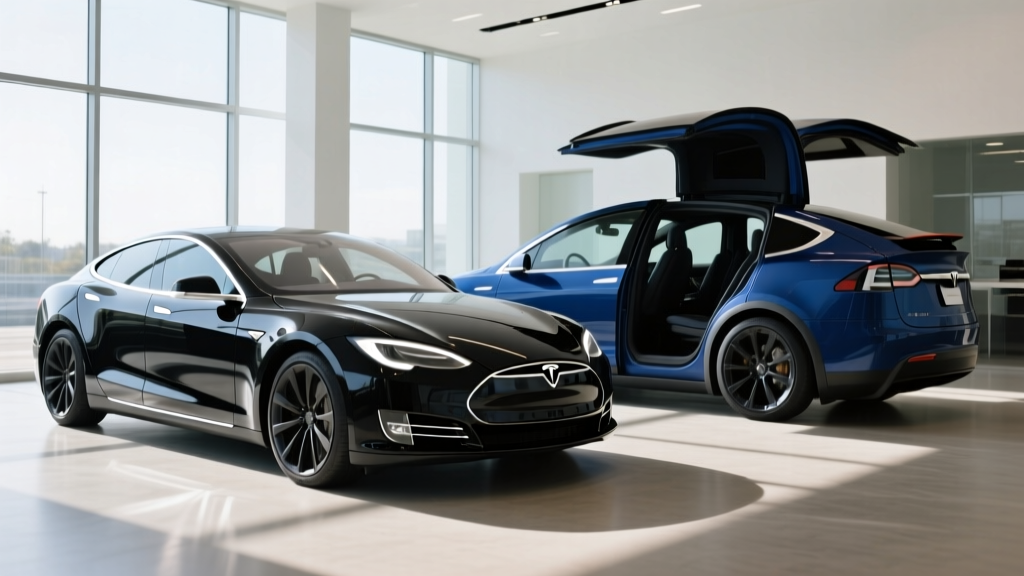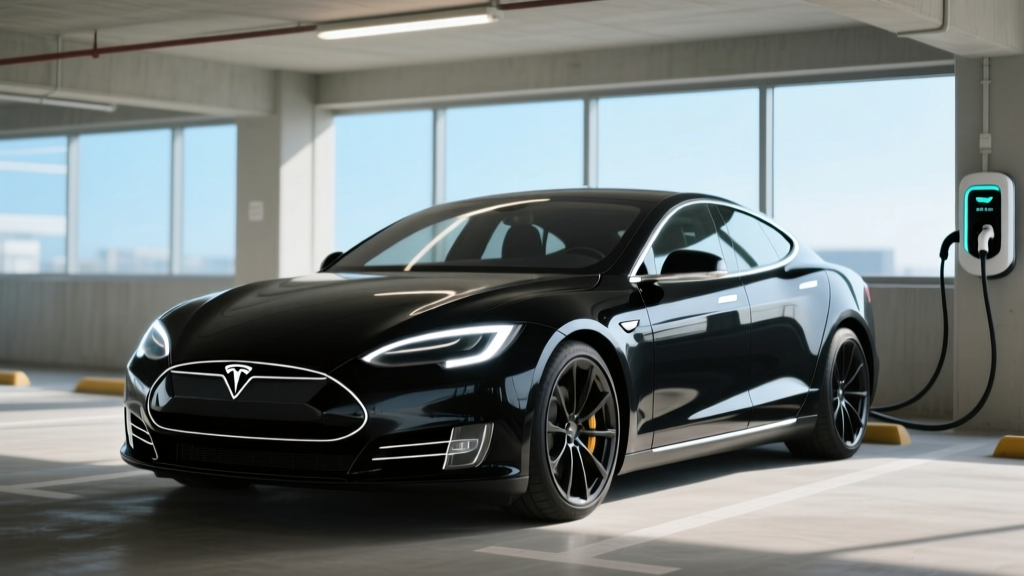
If you've been shopping for a luxury electric sedan and noticed the Tesla Model S seems harder to find on dealer lots — or spotted headlines speculating about its future — you're not alone. The question is the Tesla Model S discontinued has surged in search interest as Tesla reshuffles its lineup and production priorities. Here's the definitive answer, backed by current production data and a full spec breakdown.
The Short Answer: No, the Model S Is Not Discontinued (Yet)
As of early 2026, the Tesla Model S remains in production and available for order directly through Tesla's website. However, the nuance matters. Tesla has significantly scaled back Model S output at its Fremont, California factory, reallocating capacity toward higher-volume models like the Model Y and the next-generation platform vehicles. Delivery lead times for new Model S orders stretch 4–8 weeks in most U.S. markets — longer than the Model 3 or Model Y, but still firmly within active-production territory.
What's driving the discontinuation rumors? Three factors: Tesla's well-documented shift toward affordable mass-market EVs, declining global sedan demand in favor of crossovers, and the Model S's relatively low sales volume compared to its peak years around 2016–2018. Tesla does not break out Model S/X sales separately in quarterly reports, lumping them into "Other Models," which fuels speculation. But the order books are open, the configurator is live, and cars are being built and delivered.
2026 Tesla Model S: Full Specifications at a Glance
| Specification | Model S Long Range | Model S Plaid |
|---|---|---|
| Base MSRP | $74,990 | $89,990 |
| EPA Range | 402 miles | 396 miles |
| Battery (usable) | ~100 kWh (NMC) | ~100 kWh (NMC) |
| Drivetrain | Dual Motor AWD | Tri-Motor AWD |
| Horsepower | 670 hp | 1,020 hp |
| 0–60 mph | 3.1 seconds | 1.99 seconds |
| Top Speed | 155 mph | 200 mph |
| Max DC Fast Charge | 250 kW | 250 kW |
| 10–80% DC Charge | ~30 minutes | ~30 minutes |
| Level 2 Charge Rate | 11.5 kW (~41 mi/hr) | 11.5 kW (~41 mi/hr) |
| MPGe (combined) | 120 MPGe | 116 MPGe |
| Efficiency | 28 kWh/100 mi | 29 kWh/100 mi |
| Battery Warranty | 8 yr / 150,000 mi | 8 yr / 150,000 mi |
Source: Tesla Model S official specs and EPA fueleconomy.gov. Prices reflect 2026 model year before destination fees.
Real-World Range: What the EPA Sticker Doesn't Tell You
Real-world expectations: Plan for approximately 320–360 miles during sustained highway driving at 70–80 mph. In cold weather (below 32°F), expect a further 15–30% reduction, dropping effective range to roughly 250–300 miles depending on cabin heating use and whether you precondition the battery.
The Model S's ~100 kWh NMC (nickel manganese cobalt) battery pack remains one of the largest in any production EV, and that sheer capacity provides a meaningful buffer against range loss. In our experience, the Long Range variant achieves roughly 3.0–3.2 mi/kWh on the highway — impressive for a 4,500+ lb sedan. The heat pump, standard since the 2021 refresh, significantly mitigates cold-weather losses compared to earlier resistive-heating Model S variants.
One ownership tip: the Model S battery management system reserves a top and bottom buffer (roughly 2–3 kWh combined) to protect long-term cell health. The 100 kWh figure represents usable capacity, not total cell capacity. For daily driving, Tesla recommends charging to 90% on NMC packs and only going to 100% before long trips — this preserves battery longevity.
Charging Speed: Supercharger Network and Home Setup
Charging infrastructure remains a Tesla strong suit. The Model S uses the proprietary Tesla connector (now broadly compatible with the North American Charging Standard, or NACS) and accesses the Supercharger network — the most reliable DC fast-charging ecosystem in the U.S.
| Charging Level | Power (kW) | Speed (miles added/hr) | Use Case |
|---|---|---|---|
| Level 1 (120V household) | ~1.4 kW | ~4–5 mi/hr | Emergency / trickle |
| Level 2 (240V home Wall Connector) | 11.5 kW | ~41 mi/hr | Daily overnight charging |
| DC Fast (V3 Supercharger) | Up to 250 kW | ~200 mi in 15 min | Road trips |
| DC Fast (V4 Supercharger) | Up to 250 kW | ~200 mi in 15 min | Road trips (newer stations) |
Charging curve reality check: The Model S peaks at 250 kW only when the battery is preconditioned and at a low state of charge (roughly 10–25% SoC). Above 50% SoC, the charge rate tapers significantly — expect roughly 100–120 kW through the 50–80% window. This is why the 10–80% time is approximately 30 minutes, not the ~18 minutes some marketing materials imply for peak rate alone. Always precondition via the Tesla app or in-car navigation before arriving at a Supercharger to unlock maximum charge speeds.
For home charging, the Tesla Wall Connector on a 60-amp circuit (48-amp continuous) delivers the full 11.5 kW. A typical overnight session from 30% to 80% takes roughly 5–6 hours — more than adequate for daily use. Expect a home installation cost of $500–$1,500 for the Wall Connector plus electrician labor, assuming your electrical panel has sufficient capacity. Older homes may require a panel upgrade ($1,500–$3,000 additional).
Performance and Driving Dynamics
The Model S Plaid's 1.99-second 0–60 mph time remains one of the quickest acceleration figures of any production car, period. The tri-motor setup (one front, two rear) provides torque vectoring and relentless thrust well past 100 mph. Even the Long Range dual-motor variant at 3.1 seconds embarrasses most sports cars off the line.
Beyond straight-line speed, the 2021+ refresh brought a redesigned adaptive air suspension, a yoke-style steering wheel (a conventional round wheel is now available as a no-cost option), and substantially improved NVH (noise, vibration, harshness) levels. The cabin is genuinely quiet at highway speeds — a meaningful upgrade from pre-2021 Model S generations.
The Model S carries its ~4,560 lb curb weight with reasonable composure, though it's not a sports car in the corners. Think of it as a grand tourer: devastatingly fast in a straight line, comfortable on long highway stretches, and competent enough on twisty back roads without pretending to be a Porsche Taycan.
Pricing, Tax Credits, and Total Cost
| Trim | Base MSRP | Destination | Federal §30D Credit | Effective Price |
|---|---|---|---|---|
| Model S Long Range | $74,990 | $1,390 | $0 (exceeds MSRP cap) | $76,380 |
| Model S Plaid | $89,990 | $1,390 | $0 (exceeds MSRP cap) | $91,380 |
Critical tax credit detail: The Model S does not qualify for the federal §30D EV tax credit. Under current IRS rules, the credit is capped at sedans with an MSRP of $55,000 or less. At $74,990+, the Model S far exceeds this threshold. Buyers should not factor the $7,500 credit into their purchase math. Additionally, the credit has income caps ($150,000 single / $300,000 married filing jointly modified AGI) and battery critical-mineral sourcing requirements that further limit eligibility for any vehicle.
Some states offer their own rebates or tax incentives for EVs regardless of MSRP — check your state's energy or DMV website for specifics, as these vary widely by jurisdiction.
Interior, Cargo, and Technology
Passenger space: The Model S offers 42.7 inches of front legroom and 35.4 inches of rear legroom — generous for a full-size sedan. The rear seat comfortably fits two adults on longer trips, though the middle position is tight due to the transmission tunnel hump (a vestige of the platform's origins). Headroom is adequate, though the panoramic glass roof creates a slightly lower ceiling feel than competitors like the Lucid Air.
Cargo capacity: 28 cubic feet behind the rear seats (including the front trunk, or "frunk," which adds roughly 3.1 cu ft). Fold the rear seats and total cargo volume expands to approximately 79 cu ft — remarkably versatile for a sedan and one of the Model S's enduring practical advantages.
Tech highlights:
- 17-inch center touchscreen (cinema-grade, tilting "floating" display)
- 12.3-inch driver instrument cluster
- Rear-seat 8-inch touchscreen for climate and media
- 22-speaker 960-watt audio system
- Wireless Apple CarPlay and Android Auto (added in 2024 OTA update)
- Over-the-air software updates adding features post-purchase
- Tesla Autopilot standard; Full Self-Driving (Supervised) available as an $8,000 add-on
The driver must remain fully attentive, with hands on the wheel and eyes on the road, at all times. These are advanced driver-assistance features — not autonomous driving. Only Level 4 services like Waymo operate without a human driver, and those are limited to geofenced areas in select cities.
Competitor Comparison: Is the Model S Still Worth It?
The luxury EV sedan segment has grown considerably since the Model S first launched. Here's how it stacks up against key rivals:
| Attribute | Tesla Model S LR | Lucid Air Pure | Porsche Taycan 4S | BMW i5 M60 |
|---|---|---|---|---|
| Starting MSRP | $74,990 | $69,900 | $103,800 | $84,100 |
| EPA Range | 402 mi | 419 mi | 288 mi | 295 mi |
| 0–60 mph | 3.1 sec | 5.0 sec | 3.8 sec | 3.7 sec |
| Max DC Charge | 250 kW | 220 kW | 270 kW | 205 kW |
| Charging Network | Supercharger (NACS) | CCS (EA, etc.) | CCS (EA, etc.) | CCS (EA, etc.) |
| Federal Tax Credit | No | No | No | No |
Where the Model S wins: Supercharger access remains a tangible daily advantage for road-trippers. Range is exceptional, acceleration is supercar-tier, and Tesla's OTA update ecosystem is the most mature in the industry. The frunk + hatchback cargo versatility is unmatched in the segment.
Where competitors edge ahead: The Lucid Air Pure offers more range at a lower price, with a more luxurious interior. The Porsche Taycan delivers sharper handling dynamics and a more premium build quality, though at a steep price premium and with significantly less range. The BMW i5 provides a more traditional luxury sedan experience with better material quality and dealer service infrastructure.
Pros
- Class-leading 402-mile EPA range (Long Range)
- Access to Tesla Supercharger network — most reliable U.S. DC network
- Devastating acceleration (Plaid: 1.99s 0–60)
- Versatile cargo with hatchback + frunk (28 cu ft / 79 cu ft max)
- Mature OTA update ecosystem
- Strong battery warranty: 8 yr / 150,000 mi
Cons
- No federal tax credit (MSRP exceeds $55K sedan cap)
- Interior material quality lags Lucid, Porsche, BMW at this price
- Yoke steering remains divisive; round wheel is an option but not default
- Service center availability varies widely by region
- Declining resale values as sedan segment softens
- Production volumes low — long-term parts/support uncertainty
Who Should Buy the Model S in 2026?
Choose the Model S if: You want maximum range with Supercharger convenience, regularly take road trips over 300 miles, value blistering acceleration, and need hatchback cargo versatility in a sedan form factor.
Consider alternatives if: You prioritize interior luxury and material quality (Lucid Air, BMW i5), want sharper handling dynamics (Porsche Taycan), need the federal tax credit (look at vehicles under $55K MSRP), or are concerned about long-term model support given declining production volumes.
The Model S is best suited for high-mileage commuters and road-trippers who value Tesla's charging ecosystem above all else. It's less ideal for buyers who want a traditional luxury dealership experience or who are budget-conscious enough that the lack of a $7,500 federal credit meaningfully impacts their decision.
Frequently Asked Questions
Is the Tesla Model S being discontinued in 2026 or 2027?
Tesla has not announced any official discontinuation date. The Model S remains orderable and in production as of early 2026, though at reduced volumes. Industry analysts speculate that Tesla may eventually sunset the S/X platform to focus on next-generation vehicles, but no timeline has been confirmed. If you're considering one, ordering now avoids the risk of a future production halt.
Does the Tesla Model S qualify for the $7,500 federal EV tax credit?
No. Under IRS §30D rules, the new clean vehicle credit is limited to sedans with an MSRP at or below $55,000. The Model S starts at $74,990, well above this cap. Buyer income limits and battery sourcing requirements add further restrictions. Consult a tax professional and the IRS clean vehicle credit page for your specific situation.
What is the real-world highway range of the Model S?
Expect approximately 320–360 miles at sustained highway speeds (70–80 mph) in moderate temperatures. In cold weather (below freezing), effective range drops to roughly 250–300 miles. The EPA sticker of 402 miles reflects a mixed city/highway cycle — real-world highway-only driving is typically 10–20% lower.
How long does it take to charge the Model S at home?
On a Level 2 Tesla Wall Connector (11.5 kW / 48 amps), a full charge from 10% to 90% takes approximately 8–9 hours. Most owners charge overnight and wake up to a full battery daily. A standard 240V/32A outlet delivers roughly 7.7 kW (~28 mi/hr), adding about 220 miles overnight.
Is the Model S Plaid worth the $15,000 premium over Long Range?
For most buyers, no. The Long Range's 3.1-second 0–60 time is already extraordinarily fast, and it offers 6 more miles of EPA range. The Plaid's 1,020 hp and 1.99-second sprint are engineering marvels, but the real-world usability difference is marginal unless you regularly visit drag strips. The Plaid also uses more energy (29 vs 28 kWh/100 mi). Reserve the Plaid for enthusiasts who value the tri-motor experience and the halo-car factor.
Will Tesla still support the Model S with service and parts long-term?
Tesla is legally required to provide safety-related parts and service support for a defined period after production ends (typically 10+ years under federal and state lemon/warranty laws). However, Tesla's service infrastructure has historically been strained, and parts availability for low-volume models can be slower. The 8-year/150,000-mile battery and drive unit warranty remains in effect regardless of production status.