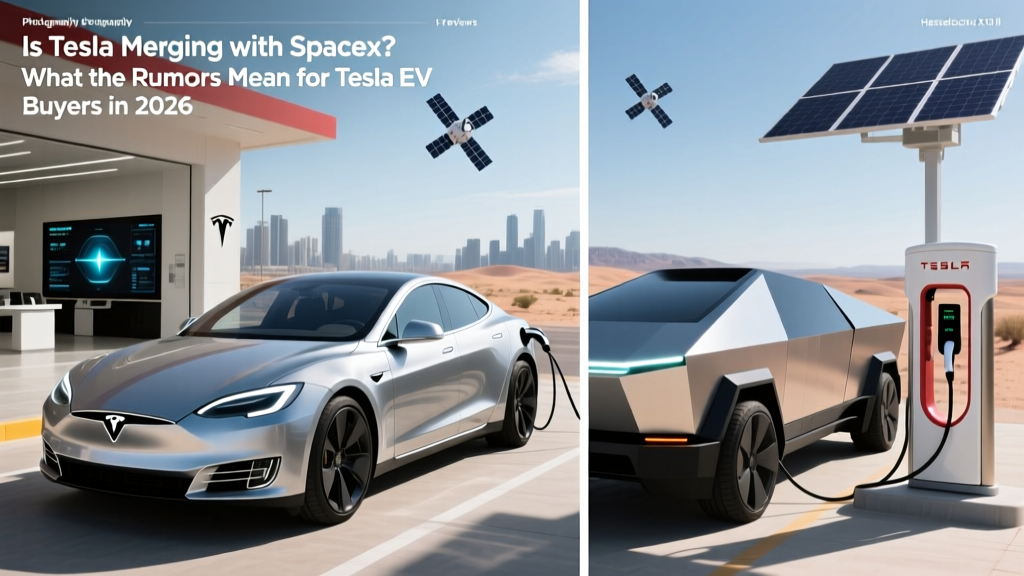
Rumors that Tesla and SpaceX might merge surface periodically in EV forums, financial media, and social feeds. The short answer as of early 2026: no, Tesla is not merging with SpaceX. They remain legally separate entities with distinct boards, investors, and regulatory frameworks. But because Elon Musk leads both companies, the question — "is Tesla merging with SpaceX?" — reflects real buyer concerns about corporate focus, brand direction, and whether Tesla's automotive division still gets the attention it needs.
This article separates fact from speculation, then gets to what actually matters for EV shoppers: how Tesla's 2026 vehicle lineup stacks up on range, charging, pricing, and tax-credit eligibility — regardless of what happens in the boardroom.
Why the "Tesla-SpaceX Merger" Question Keeps Coming Up
Tesla (NASDAQ: TSLA) is a publicly traded company bound by SEC disclosure rules and a fiduciary board. SpaceX is a private company funded largely by venture capital, private equity, and Musk himself. A full merger would require taking SpaceX public, unwinding complex private investor agreements, and navigating antitrust and national-security reviews (SpaceX holds significant defense and NASA contracts).
What has happened:
- Shared executive talent: Engineers occasionally move between the two companies, particularly in materials science, battery manufacturing, and AI.
- Supply-chain overlap: Tesla's Megapack grid-storage business and SpaceX's satellite power systems share some cell-format suppliers.
- Starlink integration: Tesla vehicles increasingly leverage satellite connectivity for navigation and over-the-air updates in remote areas — a SpaceX synergy that doesn't require a corporate merger.
- Musk's compensation package: The 2024-2025 board battle over Musk's $56 billion pay package fueled speculation that he might consolidate control by merging his companies. That did not happen.
For EV buyers, the practical takeaway: Tesla's automotive division continues to operate, release new trims, and update its Supercharger network independently of SpaceX's launch cadence.
2026 Tesla Lineup: The Models That Matter for Buyers
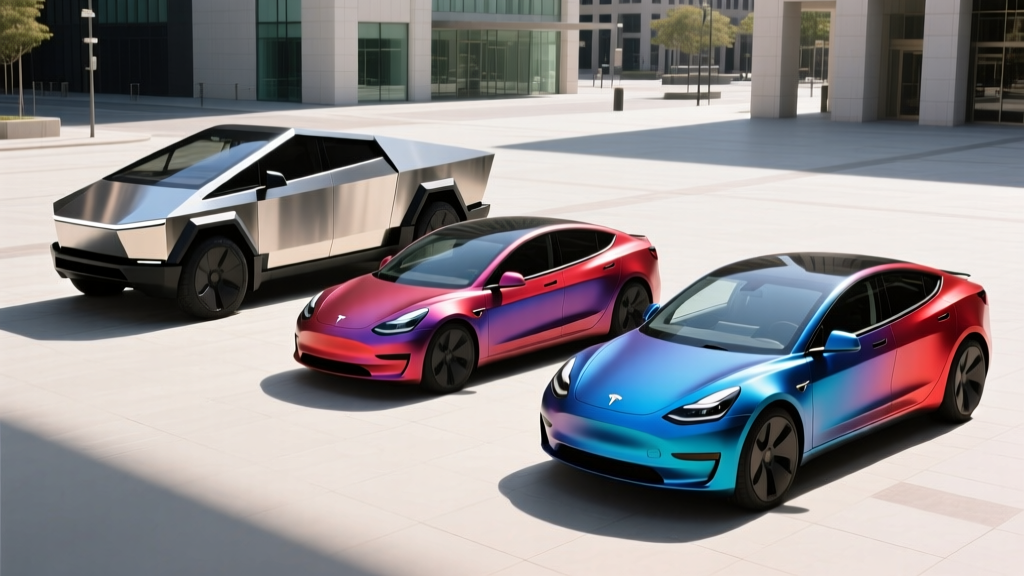
Regardless of corporate structure, Tesla's 2026 lineup is what you're actually shopping. Here are the core models with the numbers that drive purchase decisions.
| Model | EPA Range | Battery (kWh / Chem.) | 0-60 mph | Drivetrain | Base MSRP |
|---|---|---|---|---|---|
| Model 3 Long Range AWD | 363 mi | ~79 kWh / NMC | 4.2 sec | Dual-motor AWD | $47,740 |
| Model 3 RWD | 272 mi | ~60 kWh / LFP | 5.8 sec | RWD | $38,990 |
| Model Y Long Range AWD | 320 mi | ~78 kWh / NMC | 4.8 sec | Dual-motor AWD | $46,630 |
| Model Y RWD | 280 mi | ~60 kWh / LFP | 6.6 sec | RWD | $39,990 |
| Cybertruck AWD | 340 mi | ~123 kWh / NMC | 4.1 sec | Dual-motor AWD | $79,990 |
| Model S Long Range | 402 mi | ~100 kWh / NMC | 3.1 sec | Dual-motor AWD | $79,990 |
| Model X Long Range | 348 mi | ~100 kWh / NMC | 3.8 sec | Dual-motor AWD | $84,990 |
Charging Speed: Supercharger Network and Home Setup
Tesla's Supercharger network remains its strongest competitive moat — and one reason corporate rumors don't rattle owners as much as they might with a smaller automaker. As of 2026, Tesla has opened much of its North American network to NACS-equipped vehicles from Ford, Rivian, GM, and others via the Supercharger system, but Tesla owners still benefit from native plug-and-charge integration and the widest station density.
| Level | Power (kW) | Typical Miles Added per Hour | Notes |
|---|---|---|---|
| Level 1 (120V household) | ~1.4 kW | 3-5 mi/hr | Emergency/top-up only |
| Level 2 (240V home Wall Connector) | 11.5 kW (48A) | 35-44 mi/hr | Overnight full recharge |
| V3 Supercharger (DCFC) | Up to 250 kW | ~1,000 mi/hr peak | 10-80% in ~25-30 min |
| V4 Supercharger (DCFC) | Up to 350 kW* | Higher sustained rate | Model 3/Y refresh supports higher curves |
*V4 cabinet supports 350 kW; vehicle-side acceptance depends on model and battery temp. Most 2026 Model 3/Y peak around 250-270 kW with a preconditioned pack.
The charge curve matters more than peak kW. Tesla's NMC packs sustain strong power from 10-50% SoC, then taper progressively. Expect the 50-80% segment to take nearly as long as 10-50%. LFP packs (RWD trims) tolerate 100% daily charging better than NMC, which Tesla recommends holding at 80% for routine use.
Federal Tax Credit: Does a 2026 Tesla Qualify?
This is where many buyers get confused — and where a SpaceX merger would have zero impact. The IRS §30D clean vehicle credit is governed by battery-sourcing, MSRP caps, and buyer income limits, not corporate ownership.
- MSRP cap: $55,000 for sedans (Model 3); $80,000 for SUVs/trucks (Model Y, Cybertruck, Model X)
- Buyer AGI cap: $150K single / $225K head of household / $300K married filing jointly
- Battery components must be manufactured or assembled in North America (phased thresholds)
- Critical minerals must be sourced from the U.S. or FTA partners
- Point-of-sale transfer available — reduces purchase price at the dealer, not at tax filing
| Model / Trim | MSRP | Under Cap? | Likely Credit* |
|---|---|---|---|
| Model 3 RWD | $38,990 | Yes | Up to $7,500 |
| Model 3 Long Range | $47,740 | Yes | Up to $7,500 |
| Model Y RWD | $39,990 | Yes | Up to $7,500 |
| Model Y Long Range | $46,630 | Yes | Up to $7,500 |
| Cybertruck AWD | $79,990 | Yes (truck cap) | Up to $7,500 |
| Model S Long Range | $79,990 | No (sedan cap $55K) | $0 |
| Model X Long Range | $84,990 | No (SUV cap $80K) | $0 |
*Eligibility depends on battery sourcing, buyer income, and annual IRS updates. Always confirm at IRS.gov or with a tax professional before purchase.
Performance, Tech, and the FSD Question
Tesla's acceleration numbers remain class-leading in most segments — the Model S Plaid's sub-2-second 0-60 is a physics demonstration, not a daily need. More relevant for buyers: dual-motor AWD variants deliver confident all-weather traction, and the low center of gravity (battery pack under the floor) produces flat cornering.
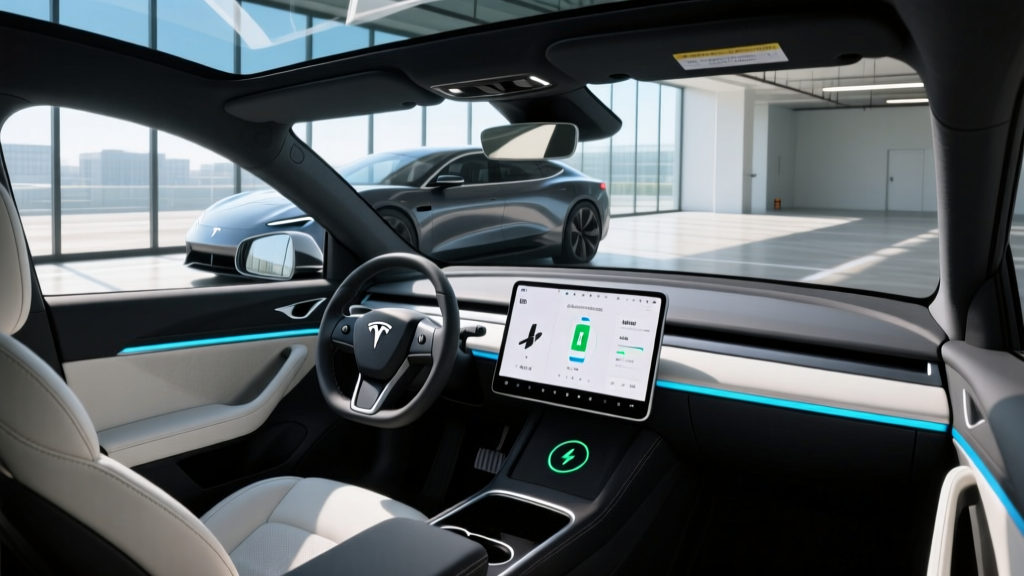
On the tech side, Tesla's minimalist interior centers on a 15.4-inch touchscreen (17-inch in S/X) that handles climate, navigation, media, and vehicle settings. No physical instrument cluster. This is polarizing — love it or hate it — but software updates continuously add features years after purchase.
Tesla's FSD (Supervised) costs $8,000 upfront or $99/month as of 2026. It handles highway lane changes, city intersections, and stop-sign recognition well in many scenarios, but real-world performance varies by region, weather, and road marking quality. Treat it as an advanced cruise-and-steering assist, not a chauffeur.
Space, Cargo, and Practical Ownership
The Model Y remains Tesla's volume leader for good reason: up to 76 cu ft of cargo space with the second row folded, plus a usable frunk. The refreshed Model 3 (Highland) improved rear-seat comfort and cabin quietness significantly over pre-2024 versions, with 23 cu ft of trunk space and an additional 3 cu ft frunk.
Cybertruck's 6-foot bed and ~3,500 lb payload target truck buyers, though its stainless-steel exoskeleton and polarizing design make it more of a lifestyle statement than a fleet workhorse. Towing capacity peaks at 11,000 lb for Cybertruck AWD — competitive with midsize gas trucks, but towing cuts EV range roughly in half, a physics reality no automaker escapes.
Warranty coverage across the 2026 lineup: 4 years / 50,000 miles basic; 8 years / 100,000 miles (Model 3/Y RWD) or 8 years / 120,000 miles (Long Range, S, X) on the battery and drive units, with a minimum 70% capacity retention threshold. This is competitive with Hyundai/Kia's 10-year/100,000-mile battery warranty on paper, though Tesla's track record of pack longevity in high-mileage fleets is well-documented.
Pros, Cons, and Who Should Buy
- Class-leading Supercharger network, now NACS-standard across the industry
- Strong EPA range across trims (272-402 mi)
- Over-the-air updates add features post-purchase
- Point-of-sale tax-credit transfer reduces upfront cost on eligible trims
- Resale value holds better than most EV competitors
- Minimalist interior not for everyone; no physical climate knobs
- FSD (Supervised) expensive and still Level 2, not autonomous
- Panel gaps and service-center wait times remain inconsistent by region
- Model S/X no longer qualify for §30D credit due to MSRP caps
- Brand sentiment has polarized, affecting some buyers' willingness
Look at Hyundai/Kia/Ford if: You prefer traditional interiors with physical controls, need a dealer service network nearby, or want a longer battery warranty on paper.
Skip the SpaceX rumors: Corporate structure doesn't change the electrons in the pack or the chargers on the highway. Buy based on the vehicle, not the headlines.
Frequently Asked Questions
Is Tesla merging with SpaceX in 2026?
No. As of early 2026, Tesla and SpaceX remain separate legal entities. A merger would face significant regulatory, financial, and governance hurdles, and no formal proposal has been filed with the SEC.
Would a Tesla-SpaceX merger affect my Supercharger access?
Unlikely in the short term. The Supercharger network is a regulated infrastructure asset with obligations to non-Tesla EVs under the NACS open-standard agreement and federal NEVI funding. Corporate ownership changes wouldn't dismantle that overnight.
Does Tesla's 2026 lineup qualify for the $7,500 federal tax credit?
Model 3 and Model Y trims under the $55K/$80K MSRP caps generally qualify, subject to buyer income limits and battery-sourcing rules. Model S and Model X do not qualify due to MSRP exceeding the sedan/SUV caps. Verify at IRS.gov before purchase.
What is the real-world range of a Tesla Model 3 Long Range?
EPA rates it at 363 miles. Expect roughly 310-325 miles on sustained highway driving, and 250-270 miles in freezing winter conditions without consistent preconditioning.
How fast does a Tesla charge at a Supercharger?
V3 Superchargers deliver up to 250 kW, adding ~200 miles in 15 minutes under ideal conditions. A 10-80% session typically takes 25-30 minutes with a preconditioned battery. Charging slows significantly above 80% SoC to protect the pack.
Is FSD (Supervised) worth the $8,000 cost?
For frequent highway commuters in well-mapped regions, it reduces fatigue. It is not autonomous — you must stay engaged. Buyers who expect self-driving should wait for true Level 4 services like Waymo, currently limited to specific cities.