The Short Answer: No, Tesla Is Not Making a Flying Car
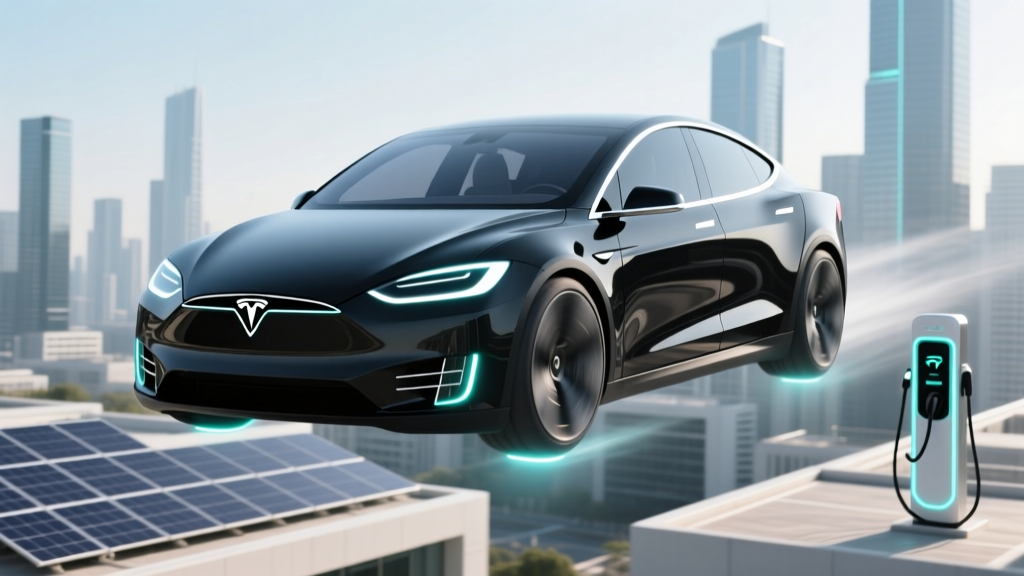
If you've seen headlines or social media posts asking is Tesla making a flying car, the answer is straightforward: no. Tesla has never announced, patented in any actionable way, or hinted at a production flying vehicle. The rumor tends to resurface every year or two, usually sparked by misread patent filings, satirical posts, or conflations with Elon Musk's other ventures — particularly SpaceX and the Boring Company.
What Tesla is making are some of the most efficient, best-selling electric vehicles on the planet. Rather than chase a speculative question, let's ground this in what actually matters for EV buyers in 2026: a rigorous, spec-driven look at Tesla's current lineup, starting with the vehicle most buyers cross-shop — the 2026 Tesla Model Y Long Range AWD.
2026 Tesla Model Y Long Range AWD: Full Spec Breakdown
| Spec | Value |
|---|---|
| EPA Estimated Range | 320 miles |
| Battery Capacity (usable) | ~78.1 kWh, NMC chemistry |
| Drivetrain | Dual-motor AWD |
| Horsepower | 384 hp (combined) |
| 0–60 mph | 4.8 seconds |
| Max DC Fast-Charge Rate | 250 kW (peak) |
| 10–80% DC Fast Charge | ~25 minutes |
| Level 2 Home Charge Rate | 11.5 kW (~44 mi/hr) |
| EPA Efficiency | 122 MPGe combined / 28 kWh/100 mi |
| Cargo Volume (rear seats up) | 30.2 cu ft |
| Cargo Volume (rear seats folded) | 72.1 cu ft |
| Rear Legroom | 38.4 inches |
| Base MSRP | $44,990 (before destination) |
| Battery & Drive Unit Warranty | 8 years / 120,000 miles |
Source: fueleconomy.gov and Tesla's official specifications page.
Real-World Range vs. the EPA Sticker
EPA Estimate: 320 miles
Real-World Highway (70 mph, moderate climate): ~270–290 miles
Real-World Highway (cold weather, 30°F / -1°C): ~220–250 miles
City/Commuter Driving (with regen): ~300–320 miles
The EPA's 320-mile estimate is achievable in mixed city driving where regenerative braking recaptures energy. But highway driving at sustained speeds — the scenario that matters for road trips — consistently yields 10–15% less range than the sticker. Cold weather compounds this: lithium-ion batteries lose efficiency below freezing, and cabin heating (even with Tesla's heat pump) draws significant power.
For a 300-mile road trip, you'll want to plan at least one DC fast-charge stop unless you're driving in ideal conditions. This isn't a flaw in the Model Y — it's physics that applies to every EV on the market.
Charging Speed: DC Fast Charging and Home Level 2
| Charging Level | Power (kW) | Miles Added per Hour | Notes |
|---|---|---|---|
| Level 1 (120V outlet) | ~1.4 kW | ~5 mi/hr | Emergency/trickle only |
| Level 2 (240V, 48A) | 11.5 kW | ~44 mi/hr | Home Wall Connector; full charge overnight |
| DC Fast Charge (V3 Supercharger) | 250 kW peak | Up to ~1,000 mi/hr (peak) | 10–80% in ~25 min; tapers sharply above 80% |
A critical concept many new EV buyers miss: kW (kilowatts) measures charging power — the rate of energy delivery, while kWh (kilowatt-hours) measures battery energy capacity. The Model Y's 78.1 kWh battery charged at a sustained 250 kW would theoretically fill in under 20 minutes, but real-world charge curves don't work that way.
Tesla's V3 Superchargers deliver peak 250 kW only between roughly 10–30% state of charge (SoC). Above 50%, the rate tapers to ~100 kW, and above 80%, it drops further to protect battery longevity. This is why the 10–80% time of ~25 minutes is the meaningful metric — charging from 80–100% can take nearly as long as the 10–80% session.
For home charging, Tesla's Wall Connector on a 60A circuit delivers 11.5 kW, adding roughly 44 miles of range per hour. A full charge from 10% takes about 7 hours — ideal for overnight charging. If your home electrical panel can't support a 60A circuit, a 40A setup (9.6 kW) still delivers ~37 mi/hr, which is sufficient for most daily needs.
Performance and Driving Dynamics
The 2026 Model Y Long Range AWD pairs dual permanent-magnet motors for 384 combined horsepower and a 4.8-second 0–60 mph time. That's genuinely quick for a family crossover — quicker than most V6 competitors in the segment. The instant torque delivery makes highway merging and passing effortless.
The dual-motor AWD system also provides excellent traction in rain and light snow, with torque vectoring between front and rear axles. However, the Model Y's ride quality remains firm — sportier than comfort-oriented competitors like the Hyundai Ioniq 5 or Kia EV6. Road noise at highway speeds is noticeable, and the lack of physical buttons for climate and mirror controls continues to divide owners.
Pricing, Trims, and Federal Tax Credit Eligibility
| Trim | Base MSRP | Est. After §30D Credit* |
|---|---|---|
| Long Range RWD | $42,990 | ~$35,490 |
| Long Range AWD | $44,990 | ~$37,490 |
| Performance AWD | $48,990 | ~$41,490 |
*Federal tax credit estimates; eligibility depends on buyer income, battery sourcing, and MSRP caps. See details below.
- MSRP Cap: SUVs/crossovers must be under $80,000 — all Model Y trims qualify.
- Buyer Income Cap: Modified AGI must not exceed $150,000 (single), $225,000 (head of household), or $300,000 (joint).
- Battery Sourcing: Critical minerals and battery components must meet phased-in domestic/free-trade-agreement sourcing thresholds (increasing annually through 2026+).
- Point-of-Sale Transfer: Buyers can transfer the credit to the dealer at purchase, reducing the purchase price directly — no need to wait for a tax refund.
- Assembly: Vehicle must undergo final assembly in North America (the Model Y is assembled in Fremont, CA and Austin, TX).
Source: IRS.gov — Clean Vehicle Credits. Consult a tax professional for your specific eligibility.
The Model Y's position under the $80,000 SUV MSRP cap makes it one of the more reliably credit-eligible premium EVs. However, battery sourcing requirements tighten each year under the Inflation Reduction Act. Tesla has made significant progress in domesticizing its supply chain, but always verify current-year eligibility on the fueleconomy.gov tax credit tool before purchasing.
Tech, Driver Assistance, and Interior
The Model Y's cabin is defined by its 15-inch center touchscreen, which handles everything from navigation and media to glove-box release and mirror adjustment. The minimalist approach maximizes perceived space but frustrates some buyers who prefer tactile controls.
Autopilot and Full Self-Driving (Supervised): Every Model Y ships with basic Autopilot (traffic-aware cruise control + lane centering). The optional FSD (Supervised) package adds automated lane changes, traffic-light recognition, and city-street navigation. Crucially, FSD remains an SAE Level 2 driver-assistance system — the driver must remain fully engaged, hands on the wheel, eyes on the road. It is not autonomous driving.
FSD does not make the Model Y self-driving. The system can make errors in construction zones, with obscured lane markings, in heavy rain, and at complex unprotected intersections. The driver is legally and practically responsible for all vehicle operation at all times. Only SAE Level 4 services (like Waymo's robotaxis in designated zones) operate without a human driver.
Other standout tech includes over-the-air software updates that periodically add features, a built-in dashcam and Sentry Mode surveillance system, and Tesla's proprietary navigation with real-time Supercharger routing and battery preconditioning — which warms the battery en route to a charger to enable peak charging speeds on arrival.
Pros, Cons, and Who Should Buy
- Class-leading efficiency (122 MPGe combined)
- Access to Tesla's Supercharger network — the most reliable DC fast-charging network in North America
- Strong real-world range (320 mi EPA)
- Spacious cargo area (72.1 cu ft seats folded)
- OTA updates continuously improve the vehicle
- Qualifies for up to $7,500 federal tax credit
- Firm ride quality; more road noise than competitors
- All controls routed through touchscreen — no physical buttons
- FSD costs $8,000 extra and remains Level 2 (not autonomous)
- Rear visibility is limited; relies heavily on cameras
- Service center wait times can be long in some metro areas
- Insurance premiums tend to run higher than segment average
Who the Model Y Suits Best
Daily commuters: Excellent. The 320-mile range covers weeks of typical commuting without charging, and home Level 2 charging means you start every morning with a full battery.
Families: Very good. The cargo space rivals midsize SUVs, rear-seat room accommodates child seats, and the safety ratings (NHTSA 5-star overall) provide peace of mind. The lack of rear-seat entertainment screens is a gap some families feel.
Road trippers: Good, with planning. The Supercharger network makes long-distance travel straightforward — Tesla's nav routes you through chargers automatically and preconditions the battery. Expect 25-minute stops every ~250 highway miles.
Towing: Limited. The Model Y is rated for 3,500 lbs — adequate for a small trailer or bike rack, but not a camper. Towing cuts range by 30–50%.
Frequently Asked Questions
Is Tesla making a flying car?
No. Tesla has no announced plans, prototypes, or production timeline for any flying or eVTOL vehicle. The rumor cycles through social media periodically but has no basis in Tesla's product roadmap. Elon Musk's aerospace work is confined to SpaceX, a separate company.
What is the real-world range of the 2026 Tesla Model Y?
The EPA rates the Long Range AWD at 320 miles. In real-world highway driving at 70 mph, expect 270–290 miles. In cold weather (below freezing), that drops to approximately 220–250 miles. City driving with regenerative braking can match or approach the EPA figure.
How fast does the Model Y charge at home and on the road?
On a Tesla Wall Connector (Level 2, 11.5 kW), the Model Y adds ~44 miles of range per hour — a full overnight charge. On a V3 Supercharger (DC fast charge, 250 kW peak), it charges from 10–80% in approximately 25 minutes, though charging speed tapers significantly above 80%.
Does the Tesla Model Y qualify for the $7,500 federal EV tax credit?
The Model Y qualifies for up to $7,500 under IRS §30D, provided the buyer meets income caps ($150K single / $300K joint), the vehicle MSRP is under $80,000 (all trims qualify), and battery sourcing requirements are met for the current year. The credit can be transferred at point of sale. Always verify eligibility on IRS.gov and with a tax professional.
Is the Model Y worth buying vs. the Hyundai Ioniq 5 or Ford Mustang Mach-E?
The Model Y wins on efficiency, Supercharger network access, and cargo space. The Ioniq 5 offers faster peak charging (up to 350 kW on 800V architecture), a more comfortable ride, and physical controls. The Mach-E offers a more traditional interior layout and strong performance in the GT trim. If reliable public charging access is your top priority, Tesla's network advantage remains significant in 2026, though the opening of Superchargers to NACS-equipped competitors is narrowing this gap.
Will Tesla ever make a flying car?
There's no indication they will. Tesla's publicly stated roadmap focuses on ground vehicles (sedans, SUVs, trucks, and the next-generation platform), energy storage, and solar. eVTOL (electric vertical takeoff and landing) aircraft are being developed by companies like Joby Aviation, Archer, and Beta Technologies — none of which are affiliated with Tesla.