If you've spent any time researching electric vehicles, you've inevitably asked: is Tesla a good car? The answer in 2026 depends entirely on which model you choose, how you plan to charge, and what you value in a daily driver. Tesla still leads in charging infrastructure and software, but rivals like the Hyundai Ioniq 5, Ford Mustang Mach-E, and Chevrolet Equinox EV have narrowed the gap significantly on build quality, ride comfort, and pricing.
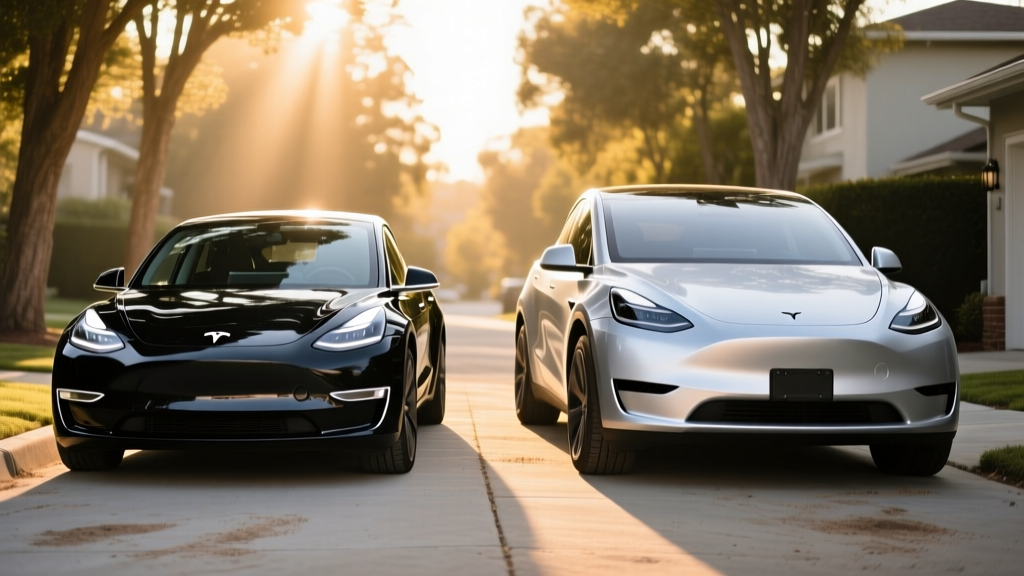
This review breaks down the two highest-volume Tesla vehicles — the 2026 Model 3 (sedan) and 2026 Model Y (compact SUV) — with exact EPA range figures, real-world charging data, tax-credit math, and the ownership realities that spec sheets don't show.
2026 Tesla Model 3: Quick Verdict
The refreshed Model 3 (internally called "Highland") carries into 2026 with the same sharper styling, improved cabin insulation, and revised suspension introduced for the 2024 model year. It remains one of the most efficient EVs on the market, delivering class-leading EPA range per kWh of battery. The Long Range AWD variant is the sweet spot: 341 miles of EPA range, dual-motor grip, and a sub-$48,000 price before incentives.
EPA estimate: 341 miles. In mixed highway driving at 70 mph, expect 280–305 miles. In sub-freezing winter conditions (30°F or below), plan for 240–270 miles depending on cabin heat usage and whether you precondition. The RWD base model (EPA 272 mi) drops to roughly 220–240 miles on cold highway runs.
| Spec | RWD (Base) | Long Range AWD | Performance |
|---|---|---|---|
| EPA Range | 272 mi | 341 mi | 315 mi |
| Battery (usable) | ~60 kWh (LFP) | ~79 kWh (NMC) | ~79 kWh (NMC) |
| Efficiency | 132 MPGe / 25 kWh/100mi | 134 MPGe / 25 kWh/100mi | 121 MPGe / 28 kWh/100mi |
| 0-60 mph | 5.8 sec | 4.2 sec | 2.9 sec |
| Horsepower | 271 hp | 346 hp | 510 hp |
| Drivetrain | RWD (single motor) | AWD (dual motor) | AWD (dual motor) |
| Peak DC Charge Rate | 170 kW | 250 kW | 250 kW |
| 10–80% DC Fast Charge | ~25 min | ~18 min | ~18 min |
| Level 2 Home Charging | ~30 mi/hr (11.5 kW) | ~44 mi/hr (11.5 kW) | ~44 mi/hr (11.5 kW) |
| Cargo Volume | 23 cu ft (rear trunk + frunk combined) | ||
| Rear Legroom | 35.2 in | ||
| Base MSRP | $38,990 | $47,740 | $54,990 |
2026 Tesla Model Y: Quick Verdict
The Model Y continues as America's best-selling EV in 2026, though the fully refreshed "Juniper" redesign is now in full production. The updated model brings a front light bar, ventilated seats, a rear touchscreen for passengers, and significantly improved ride quality thanks to retuned dampers and additional sound deadening. Cargo space remains best-in-class for the segment.
EPA estimate: 320 miles. Real-world highway driving at 70 mph yields 265–290 miles. Cold-weather highway range (sub-30°F) drops to 230–255 miles. The RWD base Model Y (EPA 260 mi) realistically delivers 210–230 miles in winter highway conditions.
| Spec | RWD (Base) | Long Range AWD | Performance |
|---|---|---|---|
| EPA Range | 260 mi | 320 mi | 285 mi |
| Battery (usable) | ~60 kWh (LFP) | ~79 kWh (NMC) | ~79 kWh (NMC) |
| Efficiency | 127 MPGe / 26 kWh/100mi | 122 MPGe / 27 kWh/100mi | 111 MPGe / 30 kWh/100mi |
| 0-60 mph | 6.6 sec | 4.8 sec | 3.5 sec |
| Horsepower | 295 hp | 384 hp | 510 hp |
| Drivetrain | RWD (single motor) | AWD (dual motor) | AWD (dual motor) |
| Peak DC Charge Rate | 170 kW | 250 kW | 250 kW |
| 10–80% DC Fast Charge | ~25 min | ~20 min | ~20 min |
| Level 2 Home Charging | ~30 mi/hr (11.5 kW) | ~44 mi/hr (11.5 kW) | ~44 mi/hr (11.5 kW) |
| Cargo Volume (rear seats up) | 34 cu ft | ||
| Cargo Volume (rear seats folded) | 72 cu ft | ||
| Rear Legroom | 38.7 in | ||
| Base MSRP | $44,990 | $49,990 | $57,490 |
Charging Speed: Where Tesla Still Leads
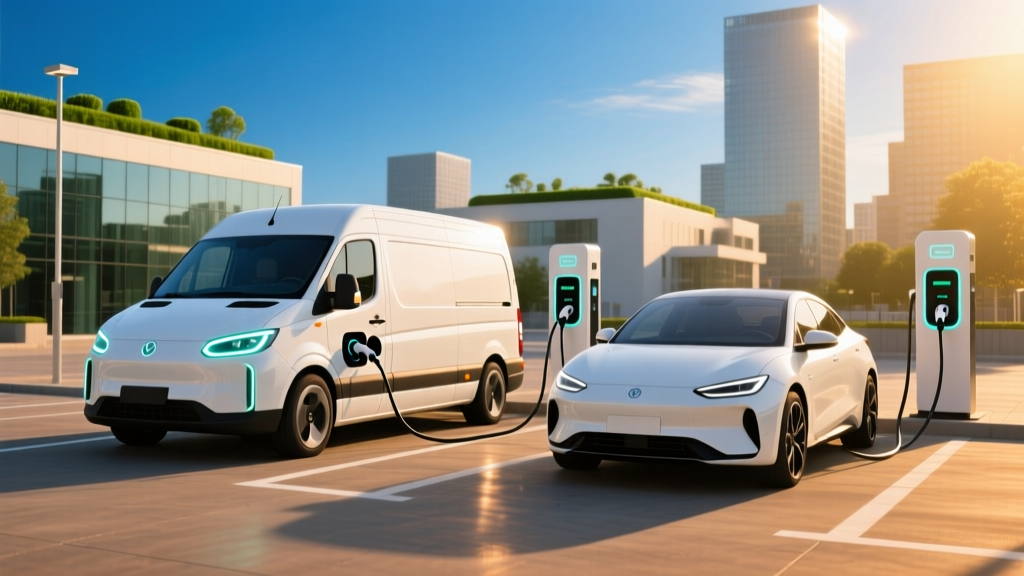
The single strongest argument for Tesla in 2026 remains the Supercharger network. With over 20,000 stalls across North America, it is the most reliable and widely available DC fast-charging ecosystem — a fact that matters enormously on road trips. While other networks (Electrify America, EVgo, ChargePoint) have improved uptime, Tesla Superchargers consistently deliver near-peak charge rates with minimal downtime.
Both the Model 3 and Model Y Long Range variants peak at 250 kW on V3 Superchargers, sustaining roughly 200+ kW through 40% SoC before tapering. A 10–80% session takes approximately 18–20 minutes under optimal conditions (battery preconditioned via navigation routing to the charger). The base RWD models with LFP batteries peak at 170 kW, adding roughly 5–7 minutes to the same session.
Home charging on a Level 2 Tesla Wall Connector (48A / 11.5 kW on a 60A circuit) replenishes roughly 44 miles of range per hour for Long Range models — enough to fully recharge overnight for virtually any daily commute. Installation costs for a 240V/60A circuit typically run $800–$2,000 depending on panel proximity and local permit fees, assuming your electrical panel has sufficient capacity. If a panel upgrade to 200A is needed, add $1,500–$3,000.
With the industry-wide shift to the NACS (North American Charging Standard) connector — which Tesla designed — Model 3 and Model Y owners charge natively at every Supercharger without adapters. Non-Tesla EVs now access Superchargers via NACS ports or CCS-to-NACS adapters, but Tesla owners still enjoy the most seamless plug-and-charge experience.
Federal Tax Credit: What You'll Actually Pay
Under the IRS §30D rules effective for 2026, the federal EV tax credit provides up to $7,500 for qualifying new EVs — but eligibility hinges on three interlocking requirements that catch many buyers off guard:
- MSRP cap: Sedans (Model 3) must be priced at or below $55,000; SUVs (Model Y) at or below $80,000.
- Buyer income cap: Modified AGI must not exceed $150,000 (single), $225,000 (head of household), or $300,000 (joint filers).
- Battery sourcing: A percentage of critical minerals and battery components must be sourced from the US or free-trade-agreement partners. This threshold increases annually and affects which trims qualify in a given year.
- Point-of-sale transfer: As of 2024, you can transfer the credit to the dealer at purchase, reducing your out-of-pocket cost immediately rather than waiting until tax filing.
As of early 2026, the Model 3 RWD and Model 3 Long Range AWD both qualify for the full $7,500 credit (MSRP under $55K, battery sourcing compliant). The Model Y Long Range AWD also qualifies (MSRP under $80K SUV cap). The Model 3 Performance ($54,990) sits right at the sedan cap — confirm with your dealer that the specific configuration doesn't push over via mandatory fees. Always verify current eligibility at IRS.gov's clean vehicle credit page, as battery-sourcing compliance can shift mid-year.
| Model & Trim | Base MSRP | Est. Federal Credit | Effective Price |
|---|---|---|---|
| Model 3 RWD | $38,990 | $7,500 | $31,490 |
| Model 3 Long Range AWD | $47,740 | $7,500 | $40,240 |
| Model 3 Performance | $54,990 | $7,500* | $47,490* |
| Model Y RWD | $44,990 | $7,500 | $37,490 |
| Model Y Long Range AWD | $49,990 | $7,500 | $42,490 |
| Model Y Performance | $57,490 | $7,500 | $49,990 |
*Model 3 Performance eligibility depends on final MSRP including destination fees; verify at point of sale. State and local incentives may stack on top — check AFDC's state incentive database.
Battery Chemistry, Degradation & Warranty
Tesla uses two distinct battery chemistries across its lineup, and the choice affects how you should charge and maintain the vehicle:
| Attribute | LFP (Lithium Iron Phosphate) | NMC (Nickel Manganese Cobalt) |
|---|---|---|
| Used In | Model 3/Y RWD (base) | Model 3/Y Long Range & Performance |
| Energy Density | Lower (heavier pack for same range) | Higher (more range per kg) |
| Cycle Life | 3,000+ cycles (longer lifespan) | 1,500–2,000 cycles |
| Daily Charge Recommendation | Charge to 100% regularly — Tesla recommends it | Charge to 80% daily; 100% only for trips |
| Cold-Weather Performance | Slightly worse range retention in cold | Better cold-weather range retention |
| Cost | Less expensive (no cobalt/nickel) | More expensive |
Both chemistries are covered by Tesla's battery warranty: 8 years or 100,000 miles (RWD) and 8 years or 120,000 miles (Long Range/Performance), whichever comes first. The warranty guarantees the battery will retain at least 70% of its original capacity during the warranty period. Real-world data from fleet operators and owner surveys suggests most Tesla batteries lose roughly 5–10% capacity in the first 50,000 miles, then degradation slows considerably. According to fueleconomy.gov, Tesla's thermal management system — which actively heats and cools the battery pack — is a key factor in its longevity.
Technology, Driver Assistance & Drawbacks
Tesla's tech stack is simultaneously its biggest draw and its most polarizing feature. The 15.4-inch center touchscreen handles virtually every vehicle function — climate, mirrors, glovebox, speedometer — with no physical instrument cluster or stalks in the 2026 Model 3. The Model Y Juniper refresh retains a similar minimalist approach, adding a small rear passenger display.
Autopilot comes standard on every Tesla and includes adaptive cruise control, lane-centering, and automatic emergency braking. Full Self-Driving (Supervised) is a $8,000 add-on (or $99/month subscription) that adds automated lane changes, traffic-light recognition, and city-street navigation. However, it is critical to understand:
Tesla Autopilot and FSD (Supervised) are SAE Level 2 driver-assistance systems. You must keep your hands on the wheel and eyes on the road at all times. The system does not make the vehicle "self-driving." Only SAE Level 4 robotaxi services (Waymo, Zoox) operate without a human driver in defined service areas. Misuse of Level 2 systems has resulted in NHTSA-documented crashes — never treat Autopilot or FSD as a substitute for active driving.
Notable drawbacks that owners consistently report:
- Phantom braking: Autopilot occasionally brakes hard for no visible obstacle, particularly in highway driving with overhead gantries or shadows.
- No Apple CarPlay / Android Auto: Tesla's proprietary infotainment is robust but closed — no smartphone projection.
- Service center wait times: In high-density EV markets, Tesla service appointments can stretch 2–4 weeks for non-critical repairs.
- Build consistency: While improved since the Fremont early days, panel-gap variance and minor interior trim issues still surface more often than on Hyundai or BMW rivals.
- Turn signals on steering wheel: The 2026 Model 3 moved turn-signal controls to buttons on the steering wheel — a divisive change that some owners find unintuitive at roundabouts and intersections.
How Does Tesla Compare to Key Competitors?
The EV market in 2026 is genuinely competitive. Here's how the Model 3 and Model Y stack up against their most direct rivals on the specs that matter most:
| Spec | Tesla Model 3 LR AWD | Hyundai Ioniq 6 SE LR | BMW i4 eDrive40 |
|---|---|---|---|
| EPA Range | 341 mi | 361 mi | 307 mi |
| Battery | ~79 kWh (NMC) | 77.4 kWh (NMC) | 81.5 kWh (NMC) |
| Peak DC Charge | 250 kW | 233 kW (800V) | 200 kW |
| 10–80% Time | ~18 min | ~18 min | ~31 min |
| 0-60 mph | 4.2 sec | 5.1 sec | 5.5 sec |
| Base MSRP | $47,740 | $46,500 | $57,900 |
| Federal Credit | $7,500 | $7,500 | $7,500 |
| Charging Network Edge | Native NACS / Supercharger | CCS → NACS adapter needed | CCS → NACS adapter needed |
- You road-trip frequently and want the most reliable DC fast-charging network
- You value over-the-air updates that add features post-purchase
- You want the highest performance-per-dollar in the segment
- You prefer a minimalist cabin with minimal physical controls
- Maximum EPA range is your top priority (361 mi on the SE Long Range)
- You want 800V ultra-fast charging architecture with comparable 10–80% times
- You prefer physical buttons, a traditional instrument display, and Apple CarPlay
- Build quality consistency and dealer service access matter to you
- Premium interior materials and driving dynamics are your priority
- You're cross-shopping luxury sedans and want a traditional cockpit layout
Who Should Buy a Tesla in 2026?
The Tesla Model 3 is ideal for: Tech-forward commuters and couples who want an efficient, fast-charging sedan with strong real-world range. The Long Range AWD at ~$40,240 after the federal credit is arguably the best value in the entire EV market for a 341-mile, dual-motor sedan.
The Tesla Model Y is ideal for: Families of 3–5 who need SUV cargo space (72 cu ft with seats folded), all-wheel-drive capability, and road-trip charging confidence. At ~$42,490 after the credit for the Long Range AWD, it undercuts most competing electric SUVs while offering more range and faster charging.
Tesla is NOT ideal for: Buyers who prioritize luxury interior fit-and-finish, physical controls, Apple CarPlay, or the reassurance of a nearby dealer service department. If you can't charge at home and rely entirely on public charging, the Supercharger advantage is significant — but if your local public infrastructure is already robust (ChargePoint, EA, EVgo), that advantage shrinks.
- Class-leading Supercharger network access (native NACS, no adapter)
- Best-in-class efficiency — more EPA miles per kWh than most rivals
- Over-the-air updates continuously add features and improvements
- Strong resale value relative to non-Tesla EVs
- Competitive pricing after $7,500 federal tax credit
- Extensive Sentry Mode / dashcam / security features
- No Apple CarPlay or Android Auto
- Phantom braking on Autopilot remains an unresolved concern
- Turn-signal buttons on steering wheel (Model 3) are divisive
- Service center wait times can be lengthy in metro areas
- Minimalist interior isn't for everyone — no physical gauges or knobs
- FSD (Supervised) is expensive and still requires full driver attention
Frequently Asked Questions
Is Tesla a good car for daily commuting?
Yes. Both the Model 3 and Model Y are exceptionally efficient commuters. The Model 3 RWD uses roughly 25 kWh per 100 miles — translating to about $0.04–$0.06 per mile on average US electricity rates ($0.16/kWh). Home Level 2 charging fully replenishes any daily commute overnight, and the LFP battery in the RWD model is designed for daily 100% charging without accelerated degradation.
How long do Tesla batteries last?
Tesla's battery warranty covers 8 years / 100,000 miles (RWD) or 8 years / 120,000 miles (Long Range/Performance) with a 70% capacity retention guarantee. Real-world fleet data shows most packs retain 85–90% capacity at 100,000 miles. LFP batteries in base models have higher cycle-life ratings (3,000+ cycles) and may outlast the vehicle itself under normal use. According to NHTSA safety data, Tesla's battery packs have strong crash-protection ratings as well.
Does the Tesla Model Y qualify for the $7,500 tax credit?
As of early 2026, yes — the Model Y RWD ($44,990) and Model Y Long Range AWD ($49,990) both fall under the $80,000 SUV MSRP cap and meet current battery-sourcing requirements. The buyer must also meet IRS income caps ($150K single / $300K joint). The credit can be transferred at point of sale to reduce your purchase price immediately. Verify at IRS.gov before purchasing, as sourcing rules can change.
Is Tesla's Autopilot actually self-driving?
No. Autopilot and FSD (Supervised) are SAE Level 2 driver-assistance systems. You must remain fully attentive, keep your hands on the steering wheel, and be prepared to take over at any moment. These systems assist with lane-keeping, adaptive cruise, and navigation-guided lane changes, but they do not replace the driver. Only Level 4 services like Waymo operate without human supervision in geofenced areas.
What is the biggest complaint from Tesla owners?
The most common complaints center on phantom braking (sudden, unexplained deceleration while on Autopilot), service wait times in densely populated areas, and the lack of Apple CarPlay. Build quality has improved significantly with the Highland Model 3 and Juniper Model Y refreshes, but minor panel-gap inconsistencies still appear more frequently than on established luxury competitors.
Is it worth buying a Tesla over a Hyundai Ioniq 5 or Ford Mach-E?
If Supercharger network access and software are your top priorities, Tesla still holds the edge. If you prefer physical controls, a traditional dealership experience, Apple CarPlay, or a more comfortable ride on rough roads, the Ioniq 5 and Mach-E are compelling alternatives with comparable range and increasingly competitive charging speeds. The gap has narrowed substantially in 2026 — there is no single "best" EV, only the best EV for your specific needs.