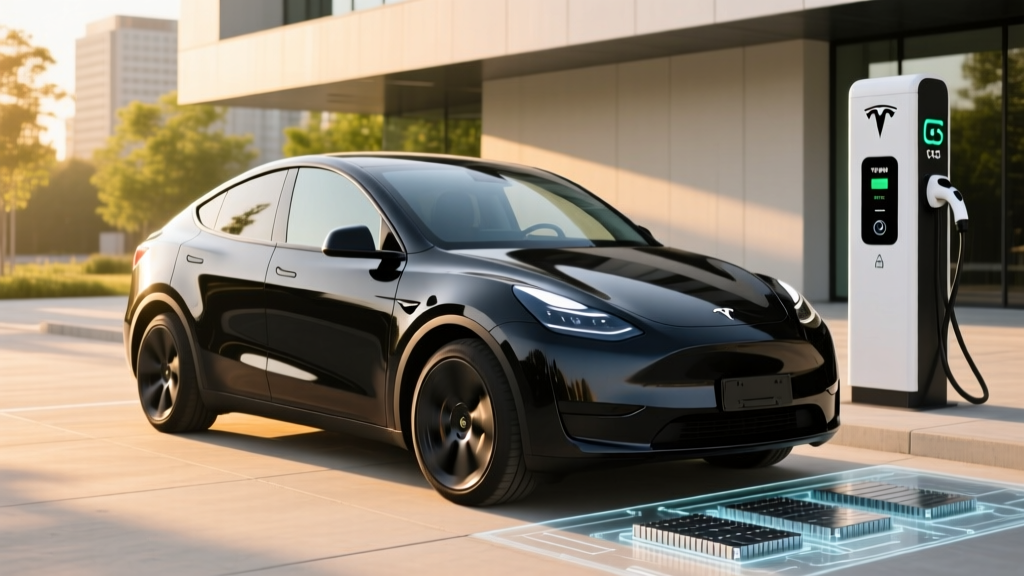
If you have seen the search queries and forum threads asking "is Tesla going bankrupt?" you are not alone. Between CEO distractions, increased global competition from BYD and Hyundai, and headline-grabbing price cuts, the question has surfaced repeatedly in 2025 and 2026. Before we get to the financials, let's be direct: Tesla is not going bankrupt. The company holds roughly $33 billion in cash and equivalents, operates six gigafactories across three continents, and remains the best-selling EV brand in the United States. But the competitive moat has narrowed, and for buyers, the real question is whether the 2026 Tesla Model Y still justifies its price against a field of capable rivals.
This review puts the financial fear-mongering aside and focuses on what actually matters to an EV buyer: the 2026 Model Y's real-world range, charging speed, ownership cost, tax-credit eligibility, and how it stacks up against the Hyundai Ioniq 5, Ford Mustang Mach-E, and Chevrolet Equinox EV. All figures reflect the current 2026 model year.
Tesla's Financial Snapshot: Why Bankruptcy Isn't on the Table
Tesla's Q4 2025 earnings reported $33.6 billion in cash and cash equivalents, with positive free cash flow for the sixth consecutive fiscal year. Revenue for FY2025 was approximately $97 billion. The company carries roughly $5.4 billion in total debt — a debt-to-equity ratio well below legacy automakers like Ford and Stellantis. Tesla's operating margin has compressed (down to around 7-8% from a peak of ~16% in 2022), driven by aggressive price cuts to defend market share, but compressed margins are not insolvency.
The real risk factors are competitive, not financial. BYD surpassed Tesla in global BEV deliveries briefly in late 2023, and Chinese-market competitors continue to pressure margins. In the U.S., Hyundai's Ioniq 5 and the Chevrolet Equinox EV have captured meaningful share among cost-conscious buyers. But from a balance-sheet perspective, Tesla is one of the most liquid automakers on the planet. Bankruptcy requires an inability to meet obligations — Tesla is nowhere near that threshold.
For buyers, the takeaway is simple: Tesla will be around to honor your warranty and maintain Supercharger access. The more relevant analysis is whether the 2026 Model Y is the best use of your $45,000–$55,000.
2026 Model Y: Range, Battery, and Real-World Efficiency
| Spec | Long Range AWD | Performance AWD |
|---|---|---|
| EPA Range | 320 miles | 295 miles |
| Battery (usable) | 75 kWh (NMC) | 75 kWh (NMC) |
| MPGe (combined) | 117 MPGe | 111 MPGe |
| kWh/100 mi | 29 kWh | 30 kWh |
| Drivetrain | Dual-motor AWD | Dual-motor AWD |
| Horsepower | 384 hp | 456 hp |
| 0–60 mph | 4.8 sec | 3.5 sec |
| Base MSRP | $46,630 | $51,630 |
Tesla uses NMC (nickel manganese cobalt) chemistry in the Long Range and Performance Model Y, which offers higher energy density than LFP but requires more careful state-of-charge management for long-term health. Tesla recommends daily charging to 80% for NMC packs and 100% only before long trips. The standard-range RWD Model Y (if available in your market) uses LFP chemistry and can be charged to 100% daily without degradation concerns — a meaningful ownership difference.
Charging Speed: DC Fast Charge and Home Level 2
| Charging Method | Power / Rate | Time or Miles Added |
|---|---|---|
| DC Fast Charge (peak) | 250 kW (Supercharger V3/V4) | 10–80% in ~25 min |
| DC Sustained (avg 10–80%) | ~150 kW average | ~200 miles in 25 min |
| Level 2 Home (48A / 11.5 kW) | 11.5 kW | ~37 miles per hour |
| Level 2 Home (32A / 7.7 kW) | 7.7 kW | ~25 miles per hour |
| Level 1 (120V / 12A) | 1.4 kW | ~4–5 miles per hour |
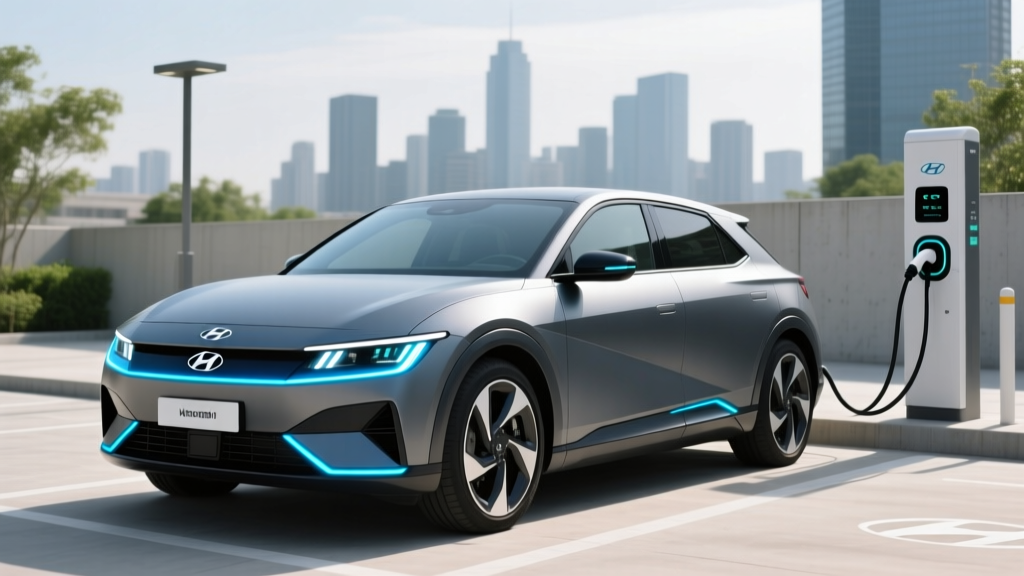
Tesla's peak 250 kW DC fast-charge rate is competitive but no longer class-leading — the Hyundai Ioniq 5 peaks at 240 kW on an 800V architecture and can match or slightly beat the Model Y's 10–80% time (~18 minutes vs. ~25 minutes) thanks to a flatter charge curve. The Model Y's charge curve tapers significantly above 60% SoC, meaning the last 20% takes disproportionately longer. On a road trip, plan your stops to charge from 10–80% and move on.
For home charging, Tesla's Wall Connector at 48 amps (11.5 kW on a 240V/60A circuit) adds roughly 37 miles of range per hour — enough to fully replenish overnight. Installation costs typically range from $800–$2,000 depending on panel capacity and run length. If your electrical panel is at capacity, a panel upgrade ($1,500–$3,000) may be required — budget accordingly.
Tesla's NACS connector is now the North American standard. Ford, GM, Rivian, Hyundai, and others have adopted NACS, meaning Supercharger access is expanding to non-Tesla vehicles. For Tesla owners, this means the Supercharger network — already the most reliable public charging network in the U.S. — will see more vehicles, but also more revenue supporting expansion.
Pricing, Tax Credits, and Total Cost of Ownership
| Trim | MSRP | Est. §30D Credit | Effective Price |
|---|---|---|---|
| Long Range AWD | $46,630 | Up to $7,500* | ~$39,130 |
| Performance AWD | $51,630 | Up to $7,500* | ~$44,130 |
*Federal §30D credit eligibility requires meeting ALL of the following: buyer AGI below $150K (single) / $300K (joint), vehicle MSRP under $80,000 (SUVs), and battery critical-mineral + component sourcing thresholds that phase in annually. As of 2026, sourcing requirements are strict — verify current eligibility at IRS.gov or through Tesla's point-of-sale transfer process at purchase. Credit amounts may be partial if sourcing thresholds are only partially met.
The point-of-sale transfer option (available since 2024) lets you apply the credit as an instant discount at purchase rather than waiting for a tax refund. This effectively lowers your financed amount and monthly payment.
For total cost of ownership, the Model Y Long Range at ~$39,130 after credit compares favorably to a loaded Toyota RAV4 Hybrid (~$38,000–$42,000 with no federal credit) when you factor in fuel savings. At $0.13/kWh national average electricity cost and 29 kWh/100 mi, the Model Y costs roughly $0.038 per mile to "fuel" vs. $0.12–$0.14/mile for a 30 MPG gas SUV at $3.50/gallon. Over 5 years and 60,000 miles, that is approximately $5,000–$6,000 in fuel savings.
Interior, Cargo, and Technology
The 2026 Model Y's minimalist interior centers on a 15.4-inch touchscreen controlling virtually all vehicle functions. There is no traditional instrument cluster — speed and navigation appear in the upper-left corner of the main display. Build quality has improved meaningfully since the 2024 "Juniper" refresh, with soft-touch materials, ventilated front seats, and a rear-seat entertainment screen on higher trims.
Cargo and passenger space:
- Cargo behind rear seats: 30.2 cu ft
- Cargo with rear seats folded: 72.1 cu ft
- Front trunk (frunk): 4.1 cu ft
- Rear legroom: 41.6 inches
- Front headroom: 41.0 inches
Compared to the Hyundai Ioniq 5 (27.2 cu ft cargo, 56.2 cu ft folded), the Model Y offers meaningfully more utility — a key reason it remains the default family EV. The frunk is small but useful for charging cables.
Tech highlights:
- Tesla Autopilot (standard): adaptive cruise + lane centering — SAE Level 2, requires active driver supervision
- Full Self-Driving (Supervised): optional at ~$8,000 or $99/month — still Level 2 despite the name
- Over-the-air updates, Sentry Mode, Dog Mode, theater mode
- Native Supercharger routing with battery preconditioning
Warranty, Reliability, and Long-Term Ownership
Tesla's warranty structure is competitive but not class-leading:
- Basic vehicle: 4 years / 50,000 miles
- Battery & drive unit: 8 years / 120,000 miles (Long Range/Performance)
- Battery capacity retention threshold: 70% of original capacity during warranty period
Hyundai offers a more generous 10-year/100,000-mile battery warranty on the Ioniq 5, which may matter to buyers planning long-term ownership. Tesla's battery degradation data from fleet analytics suggests most NMC Model Y packs retain approximately 88–92% capacity at 100,000 miles — well above the warranty threshold. Full pack replacement out of warranty runs approximately $12,000–$16,000, though this is rare within the first 150,000 miles for liquid-cooled packs.
For reliability, Tesla's panel gaps and minor trim issues have improved post-Juniper refresh, but IIHS and owner surveys still note occasional panel alignment variability. The powertrain itself is proven — Tesla's electric motors have very few failure points compared to internal combustion engines.
Model Y vs. Key Competitors: Is It Still the Best Buy?
| Spec | 2026 Tesla Model Y LR | 2026 Hyundai Ioniq 5 LR AWD | 2026 Ford Mach-E ER AWD |
|---|---|---|---|
| EPA Range | 320 mi | 310 mi | 312 mi |
| Battery | 75 kWh NMC | 84 kWh NMC | 91 kWh NMC |
| Peak DC Charge | 250 kW | 240 kW (800V) | 150 kW |
| 10–80% Time | ~25 min | ~18 min | ~38 min |
| 0–60 mph | 4.8 sec | 5.1 sec | 5.5 sec |
| Cargo (rear up) | 30.2 cu ft | 27.2 cu ft | 29.7 cu ft |
| Base MSRP | $46,630 | $48,350 | $47,995 |
| Battery Warranty | 8yr/120K mi | 10yr/100K mi | 8yr/100K mi |
- Best-in-class cargo volume (30.2 cu ft)
- Supercharger network access (most reliable U.S. DC network)
- Strongest software ecosystem and OTA updates
- Lowest kWh/100mi efficiency in the segment
- Highest resale value among EVs historically
- No physical buttons — all controls via touchscreen
- Ride firmness noticeable on rough pavement
- FSD subscription cost ($99/mo) adds up with no Level 3/4 payoff yet
- Battery warranty shorter than Hyundai's 10-year coverage
- Increasing competition narrows value advantage
- Choose the Model Y if: you prioritize cargo space, Supercharger access, and software integration, and you drive in regions with reliable Supercharger coverage.
- Choose the Ioniq 5 if: faster DC charging (800V architecture), a longer battery warranty, and physical buttons matter to you.
- Choose the Mach-E if: you prefer a more traditional driving feel, a Ford dealer network for service, and don't mind slower DC charging.
Frequently Asked Questions
Is Tesla going bankrupt in 2026?
No. Tesla holds over $33 billion in cash, operates profitably, and carries manageable debt. The bankruptcy narrative is driven by competitive pressure and margin compression, not solvency risk. Tesla remains one of the most financially stable automakers globally.
What is the real-world range of the 2026 Model Y Long Range?
EPA-rated at 320 miles, expect approximately 260–280 miles at highway speeds in moderate weather, and 220–250 miles in sub-freezing temperatures. City driving with regen braking can approach or slightly exceed the EPA figure.
How fast does the Model Y charge at home and on the road?
On a 250 kW Supercharger, the Model Y charges from 10–80% in approximately 25 minutes. At home on a 48A Level 2 Wall Connector (11.5 kW), it adds roughly 37 miles of range per hour, achieving a full charge overnight in about 8 hours.
Does the 2026 Model Y qualify for the $7,500 federal EV tax credit?
It can, but eligibility depends on your income (AGI under $150K single / $300K joint), the vehicle's MSRP (under $80K for SUVs — the Model Y qualifies), and battery sourcing requirements under IRS §30D. Verify current eligibility at IRS.gov. The credit can be applied at point of sale as an instant discount.
How much does the Model Y cost after tax credits?
The Long Range AWD starts at $46,630. With the full $7,500 federal credit applied at purchase, the effective price drops to approximately $39,130 — before any state incentives. The Performance trim drops from $51,630 to approximately $44,130.
Is the Model Y worth buying over the Hyundai Ioniq 5 or Ford Mach-E?
For families needing maximum cargo space (30.2 cu ft) and reliable road-trip charging via Superchargers, the Model Y remains the strongest choice. If faster DC charging (18 min vs. 25 min, 10–80%) and a longer battery warranty (10 years vs. 8) are priorities, the Ioniq 5 is the stronger value. The Mach-E suits buyers who prefer a traditional crossover feel and Ford dealer service access.
How long will the Model Y battery last?
Tesla's NMC packs typically retain 88–92% capacity at 100,000 miles based on fleet data. The battery is warrantied for 8 years / 120,000 miles at a 70% capacity retention threshold. Full pack replacement costs $12,000–$16,000 out of warranty but is rarely needed within the first 150,000 miles. Daily charging to 80% (not 100%) extends NMC pack life significantly.
For the latest EPA efficiency data, see the Model Y listing at fueleconomy.gov. For safety ratings, check NHTSA.gov.