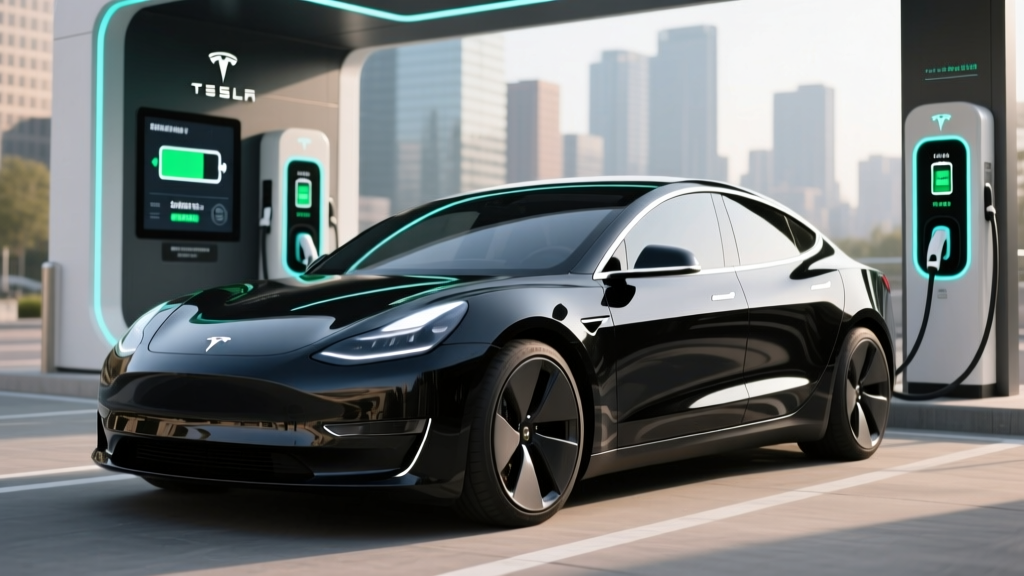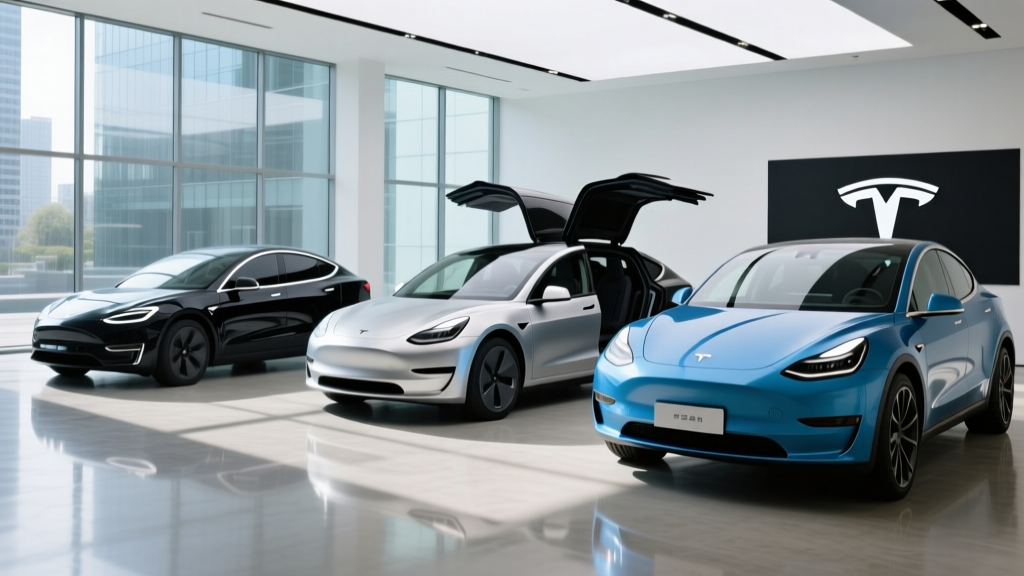
Headlines about Tesla pivoting to robotaxis, Optimus robots, and energy storage have shoppers asking a blunt question: is Tesla getting out of the car business? The short answer is no. Tesla still manufactures and sells four core consumer vehicles in the U.S. for the 2026 model year — the Model 3 sedan, Model Y crossover, Model S luxury sedan, and Model X luxury SUV — alongside the Cybertruck. What has changed is the company's strategic emphasis, with CEO Elon Musk increasingly directing capital and engineering toward autonomous ride-hailing (the Cybercab concept), humanoid robotics, and grid-scale energy.
For buyers shopping today, the real question is whether Tesla's 2026 consumer lineup still holds up against a field that now includes the Hyundai Ioniq 5, Ford Mustang Mach-E, BMW i4, Rivian R1S, and dozens more. Below, we break down the four mainstream Tesla models with the exact EPA range, battery chemistry, charging curves, pricing, and §30D tax-credit eligibility you need to decide.
The 2026 Tesla Consumer Lineup at a Glance
| Spec | Model 3 Long Range AWD | Model Y Long Range AWD | Model S Long Range | Model X Long Range |
|---|---|---|---|---|
| EPA Range | 341 mi | 320 mi | 402 mi | 335 mi |
| Battery (usable, est.) | ~75 kWh (NMC) | ~75 kWh (NMC) | ~95 kWh (NMC) | ~95 kWh (NMC) |
| Peak DC Fast Charge | 250 kW | 250 kW | 250 kW | 250 kW |
| 10–80% DCFC Time | ~27 min | ~27 min | ~32 min | ~34 min |
| Level 2 Home Rate | 11.5 kW (~44 mi/hr) | 11.5 kW (~44 mi/hr) | 11.5 kW (~38 mi/hr) | 11.5 kW (~34 mi/hr) |
| 0–60 mph | 4.2 sec | 4.8 sec | 3.1 sec | 3.8 sec |
| Horsepower | 346 hp | 384 hp | 670 hp | 670 hp |
| Drivetrain | Dual-Motor AWD | Dual-Motor AWD | Dual-Motor AWD | Dual-Motor AWD |
| Combined MPGe | 132 MPGe | 122 MPGe | 120 MPGe | 104 MPGe |
| Efficiency (kWh/100 mi) | 25 | 28 | 28 | 33 |
| Cargo (rear seats up) | 23 cu ft | 30 cu ft | 28 cu ft | 41 cu ft (5-seat) |
| Base MSRP (2026 est.) | $47,740 | $48,630 | $79,990 | $84,990 |
| Battery Warranty | 8 yr / 120,000 mi | 8 yr / 120,000 mi | 8 yr / 150,000 mi | 8 yr / 150,000 mi |
Sources: fueleconomy.gov, Tesla Model S specs, Tesla Model 3 specs. 2026 model-year pricing and EPA data reflect the most recent filings available; always confirm at point of sale.
Real-World Range: What the EPA Sticker Doesn't Tell You
EPA vs. reality: Tesla's EPA numbers are among the most achievable in the industry under mixed city/highway driving, but physics still applies.
- Highway-only at 75 mph: Expect 10–15% below the EPA sticker. A Model 3 Long Range rated at 341 mi typically delivers ~290–305 mi on flat interstate at 70–75 mph.
- Cold weather (below 32°F / 0°C): Plan for 20–30% reduction due to battery heating and cabin HVAC demand. A Model Y LR may return 225–255 mi in a 20°F January commute.
- Cold + highway combined: The worst case. A Model S LR at 402 mi EPA could drop to ~280–310 mi on a 75-mph winter road trip.
Tesla's heat pump (standard on all current models) mitigates cabin-draw losses significantly versus older resistive-heater EVs, but the traction battery still needs energy to stay in its optimal temperature window.
The Model S remains the range king of Tesla's lineup — and one of the longest-range EVs sold in the U.S. at any price. The Model 3's efficiency (25 kWh/100 mi) is genuinely best-in-class for a premium sedan, helped by its low drag coefficient (~0.219 Cd) and relatively light curb weight.
Charging Speed: Supercharger Network Still the Benchmark
| Charging Level | Power | Typical Miles Added per Hour | Notes |
|---|---|---|---|
| Level 1 (120V household) | ~1.4 kW | ~4–5 mi/hr | Emergency/trickle only |
| Level 2 (240V home, 48A) | 11.5 kW | ~34–44 mi/hr | Full overnight recharge; requires NEMA 14-50 or hardwired Wall Connector |
| DC Fast Charge (Supercharger V3) | Peak 250 kW | ~1,000+ mi/hr at peak | 10–80% in 27–34 min; taper above 80% is steep |
| DC Fast Charge (Supercharger V4) | Up to 350 kW (cabinet) | Varies by vehicle | Current Tesla vehicles cap at ~250–270 kW onboard; V4 future-proofs the network |
Charging-curve reality: Tesla's 250 kW peak only holds between roughly 10–30% State of Charge. From 30–60%, the rate tapers to ~175–200 kW. From 60–80%, expect ~100–130 kW. Above 80%, the rate drops sharply to protect the NMC cathode — charging from 80–100% can take as long as 10–80%. For road-trip efficiency, plan stops at 10–80% and move on.
NACS advantage: All Tesla vehicles use the North American Charging Standard (NACS) connector natively. With Ford, GM, Rivian, Hyundai, and most other automakers adopting NACS for 2025–2026, Tesla's Supercharger network — over 28,000 stalls in North America — is now the de facto national fast-charging standard. This is a significant ownership advantage that is not going away regardless of Tesla's strategic direction.
Pricing, Trim Levels, and Federal Tax Credit Eligibility
| Model / Trim | Base MSRP | As-Tested (typical config) | §30D Credit Eligibility (2026) | Effective Price After Credit |
|---|---|---|---|---|
| Model 3 Long Range AWD | $47,740 | $50,240 (w/ FSD transfer) | Likely $0–$3,750* | ~$47,740–$50,240 |
| Model 3 RWD (LFP) | $38,990 | $39,990 | Likely $0–$3,750* | ~$38,990–$39,990 |
| Model Y Long Range AWD | $48,630 | $52,130 | Likely $0–$3,750* | ~$48,630–$52,130 |
| Model S Long Range | $79,990 | $85,490 | $0 (MSRP cap exceeded) | $79,990+ |
| Model X Long Range | $84,990 | $92,490 | $0 (MSRP cap exceeded) | $84,990+ |
§30D tax credit caveat (2026 rules): The IRS caps the new-vehicle credit at $7,500, split into two halves — $3,750 for critical-mineral sourcing and $3,750 for battery-component sourcing. As of 2026, the battery-component phase-out rules under the Inflation Reduction Act have tightened further, disqualifying vehicles with battery components from Foreign Entities of Concern (FEOC). Tesla's U.S.-assembled vehicles meet the MSRP cap (sedans ≤$55,000; SUVs/trucks ≤$80,000) and income cap ($150K single / $300K joint), but the critical-minerals and component sourcing requirements mean most Tesla models currently qualify for $0–$3,750 of the $7,500. Always verify current eligibility on fueleconomy.gov and consult a tax professional. Point-of-sale transfer is available if eligible.
Key takeaway: The Model S and X exceed the §30D MSRP cap entirely ($55K for sedans, $80K for SUVs) and receive no federal credit. The Model 3 and Y may receive partial credit depending on the exact battery supply chain for the build month — do not assume the full $7,500.
Performance, Efficiency, and Daily Livability
Tesla's dual-motor powertrains remain some of the quickest in their respective segments. The Model S Long Range at 3.1 seconds 0–60 mph is supercar territory in a five-seat sedan with a 402-mile range — a combination no competitor matches. The Model 3 LR at 4.2 seconds is quicker than a BMW 330i and uses half the fuel-equivalent energy.
Cargo and space:
- Model 3: 23 cu ft trunk (plus a small frunk). Rear legroom is 35.2 inches — adequate for adults but tighter than a Hyundai Ioniq 6.
- Model Y: 30 cu ft behind the second row; 72 cu ft with seats folded. Optional third row (small children only). This is where the Model Y wins family buyers — it fits a double stroller and groceries simultaneously.
- Model S: 28 cu ft trunk with a liftback; generous rear legroom (35.4 in). The frunk is usable for a carry-on.
- Model X: 41 cu ft (5-seat config) or 88 cu ft with second row folded. Falcon Wing doors are dramatic but add complexity and slow entry/exit in tight garages.
Standout tech: Tesla's software ecosystem remains unmatched — over-the-air updates, native route planning with battery preconditioning for Superchargers, Sentry Mode, Dog Mode, and the best DC-charging reliability in the industry. The 15.4-inch center touchscreen runs everything (no physical buttons, which some buyers love and others find distracting).
Notable drawbacks: No Apple CarPlay or Android Auto. Build quality has improved but still trails BMW/Mercedes on panel gaps and interior materials at the S/X price point. FSD (Supervised) remains a SAE Level 2 driver-assist system — the driver must remain engaged at all times. It is not self-driving.
SAE Level 2 — not autonomous: Tesla Autopilot and FSD (Supervised) are Level 2 driver-assistance systems. The vehicle can steer, accelerate, and brake under certain conditions, but the driver is legally and practically responsible for all vehicle operation. Only Waymo and Zoox currently operate Level 4 driverless services in limited geofenced areas.
So — Is Tesla Getting Out of the Car Business?
No. But the company's center of gravity is visibly shifting. Consider the evidence:
- Robotaxi pivot: Tesla unveiled the Cybercab concept (a two-seat, no-steering-wheel robotaxi) in late 2024 with a promised 2026 production start. Musk has repeatedly stated that autonomous ride-hailing could eventually dwarf Tesla's consumer vehicle revenue.
- Slowed new consumer models: The "next-generation" compact Tesla (long rumored at ~$25,000) has been deprioritized in favor of autonomy investment. The Model S and X have not received major refreshes since 2021.
- Energy and AI growth: Tesla's Megapack grid-storage business and Dojo supercomputer / Optimus robot programs are consuming an increasing share of R&D spend.
- But: Tesla still produced over 1.7 million vehicles globally in 2024 and continues to expand factory capacity in Texas, Berlin, and Shanghai. The Model Y was the best-selling vehicle on Earth (any powertrain) in 2023.
For buyers, the practical implication is this: Tesla's existing vehicles will continue to be sold, serviced, and updated for years. The Supercharger network is expanding, not contracting. But if you're hoping for a flood of new Tesla body styles, a budget EV, or a minivan — those are unlikely to materialize on the timeline traditional automakers deliver new models.
Pros and Cons of Buying a Tesla in 2026
Pros
- Supercharger network access — the most reliable, most numerous DC fast-charging network in North America
- Best-in-class energy efficiency (Model 3: 25 kWh/100 mi)
- OTA software updates that add features years after purchase
- Strong resale value relative to most EV competitors
- Native NACS connector — future-proof as the industry standard
- Route planning with automatic battery preconditioning for fast charging
Cons
- No Apple CarPlay / Android Auto
- Model S/X pricing exceeds §30D tax-credit MSRP caps entirely
- FSD (Supervised) costs $8,000 or $99/mo and remains Level 2 — not autonomous
- Interior quality at S/X price point trails German luxury competitors
- Minimal physical controls — everything routed through touchscreen
- Uncertain long-term corporate focus as Musk prioritizes robotaxi/AI ventures
- Insurance costs can be 15–30% higher than comparable non-Tesla EVs
Who Should Buy a Tesla in 2026?
Choose the Model 3 if: You want an efficient daily commuter sedan with 300+ real-world miles of range, fast Supercharger road-trip capability, and the lowest cost-per-mile in Tesla's lineup. Best for singles, couples, and urban commuters.
Choose the Model Y if: You need family-friendly cargo space, optional (small) third-row seating, and crossover ride height. The Model Y is the default pick for households with kids, dogs, or frequent gear hauling.
Choose the Model S if: You want 400+ miles of range, supercar acceleration, and premium sedan comfort — and the $80K+ price (with no federal credit) fits your budget. Competes with the BMW i5, Mercedes EQE, and Lucid Air.
Choose the Model X if: You need a three-row electric SUV with genuine towing capacity (5,000 lb) and want the Supercharger network for family road trips. Competes with the Rivian R1S and Kia EV9 but at a higher price.
Look elsewhere if: You need Apple CarPlay, you want the lowest possible purchase price after tax credits (Hyundai Ioniq 5 and Chevy Equinox EV may net more §30D credit), or you prefer physical controls and traditional luxury materials.
Frequently Asked Questions
Is Tesla discontinuing the Model S or Model X in 2026?
Tesla has not announced discontinuation of the Model S or Model X as of early 2026. Both remain in production at the Fremont, California factory. However, sales volumes for both models have declined significantly, and Tesla has not committed to a next-generation refresh.
Does the 2026 Tesla Model 3 qualify for the $7,500 federal EV tax credit?
Likely not the full amount. Under current IRS §30D rules, the Model 3 qualifies on MSRP ($38,990–$47,740, under the $55K sedan cap) and most buyers meet income limits. However, battery critical-mineral and component sourcing requirements mean the credit is typically $0–$3,750 depending on the build month and supply chain. Verify on IRS.gov before purchasing.
How long does a Tesla battery last?
Tesla warranties its Long Range (NMC) batteries at 8 years / 120,000 miles (Model 3/Y) or 8 years / 150,000 miles (Model S/X) with a minimum 70% capacity retention threshold. Real-world data from high-mileage owners and fleet studies show NMC packs typically retain 85–90% capacity at 100,000 miles when charged primarily to 80–90% daily. LFP-equipped Model 3 RWD batteries can be charged to 100% daily and show even slower degradation.
Is the Supercharger network still a Tesla-only advantage?
Partially. As of 2025–2026, Ford, GM, Rivian, Hyundai, and other NACS-equipped EVs can access Supercharger stalls using the NACS connector (often with an adapter for CCS-native vehicles). However, Tesla owners still benefit from seamless plug-and-charge billing, native navigation integration, and the largest stall count. The exclusivity gap is narrowing, but the integration advantage remains.
Is it worth buying a Tesla vs. a Hyundai Ioniq 5 or BMW i4?
It depends on your priorities. The Ioniq 5 charges faster on non-Tesla DC networks (up to 350 kW on 800V architecture), offers Apple CarPlay, and may qualify for a larger §30D credit. The BMW i4 offers superior interior materials and physical controls. Tesla wins on Supercharger network access, energy efficiency, software integration, and (for the Model 3) real-world range. Cross-shop all three and test-drive before deciding.
Will Tesla still service my car if the company pivots to robotaxis?
Tesla operates over 1,200 service centers and mobile service vans globally. Even under a robotaxi-focused strategy, the company has a legal and financial obligation to support vehicles under warranty (8 years on battery/powertrain). Third-party EV service networks are also expanding. The risk is not abandonment — it's whether service quality and parts availability keep pace as corporate attention shifts.
Bottom line: Tesla is not getting out of the car business in 2026, but it is no longer only a car company. For buyers, the 2026 Model 3 and Model Y remain compelling, efficient, and well-supported EVs — particularly if you value Supercharger access and OTA software. The Model S and X serve niche luxury buyers who prioritize range and acceleration over tax-credit savings. Shop with eyes open about credit eligibility, FSD limitations, and the competitive alternatives that have matured significantly since Tesla's early dominance.