If you have spent any time in EV forums or scrolling through financial news, you have probably seen the question: is SpaceX part of Tesla? The short answer is no. SpaceX and Tesla are entirely separate legal entities with distinct investors, boards of directors, and balance sheets. But the longer answer — especially for EV shoppers and tech-followers in 2026 — is more nuanced. The two companies share a CEO, overlapping supply-chain interests, and an increasingly intertwined technology roadmap.
This guide cuts through the noise. We will explain the corporate structure, the real technology crossovers, what Musk's dual-CEO role means for Tesla's product direction, and — most importantly — what Tesla's current 2026 lineup actually delivers for buyers who care more about range, charging, and price than corporate org charts.
SpaceX and Tesla: Separate Companies, Shared CEO
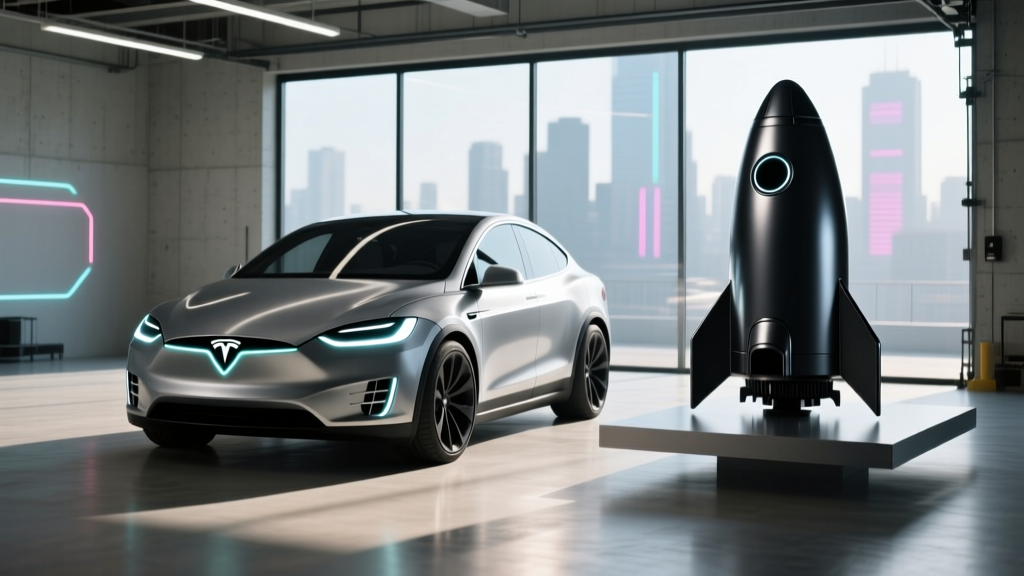
Tesla, Inc. (NASDAQ: TSLA) is a publicly traded automaker and energy company headquartered in Austin, Texas. SpaceX (Space Exploration Technologies Corp.) is a privately held aerospace manufacturer headquartered in Hawthorne, California. They have never merged, and neither is a subsidiary of the other.
Elon Musk serves as CEO of both companies, and he is Tesla's largest individual shareholder. However, Tesla's institutional investors — including Vanguard, BlackRock, and State Street — have no ownership stake in SpaceX, and SpaceX's private investors (including Founders Fund, Google, and Fidelity) do not automatically hold Tesla shares. The two companies file separate taxes, maintain separate workforces, and operate under separate regulatory frameworks.
Key distinction: Tesla is bound by SEC reporting requirements as a public company. SpaceX is not. When Musk tweets about rockets, he is not speaking on behalf of Tesla shareholders, and vice versa — though the market sometimes reacts as if he were.
Where the Confusion Comes From
Several factors fuel the misconception that SpaceX and Tesla are the same entity:
- Shared leadership. Musk's high-profile role at both companies — plus X (formerly Twitter), Neuralink, and The Boring Company — creates a perception of a single conglomerate.
- Engineering crossover. Tesla has recruited aerospace engineers from SpaceX, and SpaceX has adopted Tesla-style manufacturing approaches. In 2024-2025, Tesla's Optimus humanoid robot program reportedly benefited from SpaceX robotics talent.
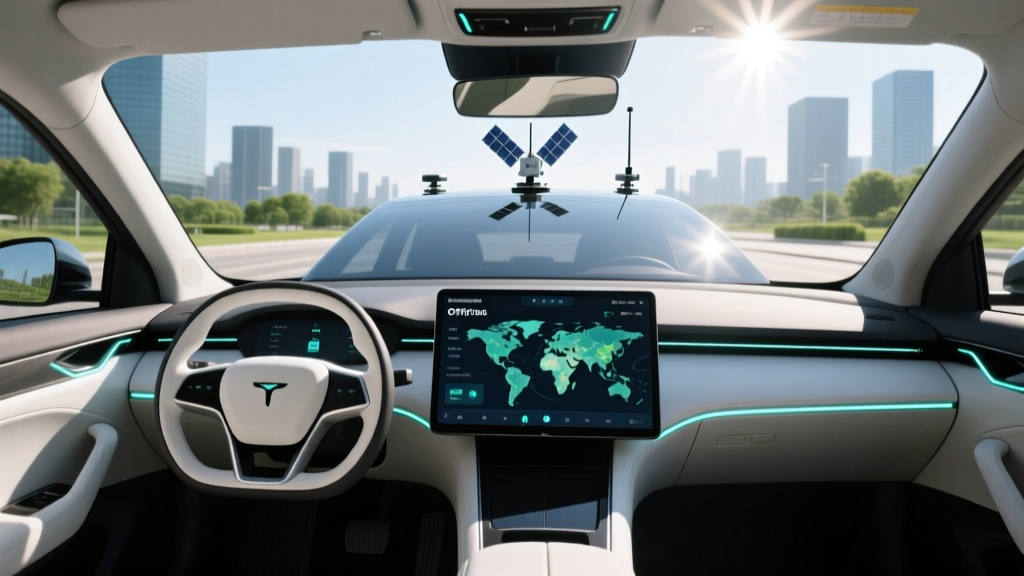
- Starlink integration rumors. Speculation that future Tesla vehicles could include SpaceX's Starlink satellite internet has persisted since 2022. As of 2026, no production Tesla includes native Starlink, though aftermarket solutions exist.
- Brand overlap in media. Financial media often discusses "Musk companies" as a bloc, especially during earnings seasons or when Tesla's stock price moves on SpaceX-related news.
Real Technology Crossovers in 2026
While the companies are legally separate, legitimate technology exchange exists:
Materials and Manufacturing
Tesla's Gigafactory casting techniques — particularly the mega-casting process used for the Model Y and Cybertruck — drew on metallurgical expertise that SpaceX developed for rocket engine components. The alloy formulations used in Tesla's structural battery packs have roots in aerospace-grade materials science.
Software and AI Infrastructure
Tesla's Dojo supercomputer, used to train neural networks for Full Self-Driving (Supervised), shares architectural DNA with the compute clusters SpaceX uses for flight simulation and autonomous landing systems. However, the hardware and codebases remain separate.
Battery Supply Chain
Both companies consume significant quantities of lithium and advanced battery cells. Tesla's 4680 cell production at its Texas and Nevada facilities has at times competed with SpaceX's satellite battery procurement for similar chemistries, though Tesla's volume dwarfs SpaceX's by orders of magnitude.
What This Means for Tesla EV Buyers in 2026
Corporate structure matters less to most buyers than what Tesla actually sells. Here is where Tesla's 2026 lineup stands on the metrics that drive purchase decisions: range, charging, price, and tax-credit eligibility.
2026 Tesla Model Y Long Range AWD — Quick Spec Profile
Because many readers asking about Tesla's corporate structure are actually evaluating whether to buy a Tesla, here is a data-dense snapshot of the 2026 Model Y Long Range AWD — Tesla's best-selling vehicle and a common cross-shopping target against the Hyundai Ioniq 5, Ford Mustang Mach-E, and Chevrolet Equinox EV.
| Spec | Value |
|---|---|
| EPA Estimated Range | 320 miles |
| Battery Capacity (usable) | ~78 kWh, NMC chemistry |
| Max DC Fast-Charge Rate | 250 kW peak (Supercharger V3) |
| 10–80% DC Fast-Charge Time | ~25 minutes |
| Level 2 Home Charge Rate | 11.5 kW (~44 mi/hr) |
| 0–60 mph | 4.8 seconds |
| Horsepower | 384 hp (dual-motor AWD) |
| MPGe (combined) | 122 MPGe |
| Efficiency | 28 kWh/100 mi |
| Cargo Volume (rear seats up / down) | 30.2 / 72.0 cu ft |
| Rear Legroom | 38.0 inches |
| Base MSRP | $47,990 (before delivery) |
| Battery Warranty | 8 years / 120,000 miles (min 70% retention) |
| Drivetrain | Dual-motor AWD |
Source: fueleconomy.gov and Tesla Model Y specs.
Tesla 2026 Lineup: Range, Charging, and Pricing at a Glance
| Model | EPA Range | Battery (kWh) | DC Peak kW | 10–80% Time | 0–60 mph | Base MSRP |
|---|---|---|---|---|---|---|
| Model 3 RWD | 272 mi | ~60 (LFP) | 170 kW | ~30 min | 5.8s | $38,990 |
| Model 3 Long Range AWD | 363 mi | ~78 (NMC) | 250 kW | ~25 min | 4.2s | $45,490 |
| Model Y Long Range AWD | 320 mi | ~78 (NMC) | 250 kW | ~25 min | 4.8s | $47,990 |
| Cybertruck AWD | 318 mi | ~123 (NMC) | 250 kW | ~35 min | 4.1s | $79,990 |
Note: All range and pricing figures reflect the latest available EPA data and Tesla's published MSRPs as of early 2026. Destination charges add approximately $1,390–$1,990 depending on model.
Federal Tax Credit: Does Tesla Qualify in 2026?
This is where many buyers get tripped up. Under IRS §30D Clean Vehicle Credit rules, eligibility depends on three moving targets: buyer income, vehicle MSRP, and battery-component/critical-mineral sourcing.
- Income caps: Modified AGI ≤ $150,000 (single), $225,000 (head of household), $300,000 (married filing jointly)
- MSRP cap: ≤ $55,000 for sedans (Model 3); ≤ $80,000 for SUVs/trucks (Model Y, Cybertruck)
- Battery sourcing: Must meet escalating critical-mineral and battery-component requirements — these tighten each year through 2032
- Point-of-sale transfer: Eligible buyers can transfer the credit to the dealer at purchase, reducing the out-of-pocket price immediately
- Assembly: Vehicle must undergo final assembly in North America (all US-market Teslas qualify)
Consult a tax professional before relying on credit eligibility. Rules change and individual circumstances vary. See IRS.gov for current guidance.
| Model | Base MSRP | Max §30D Credit | Effective Price (if eligible) |
|---|---|---|---|
| Model 3 RWD | $38,990 | Up to $7,500* | ~$31,490 |
| Model 3 Long Range | $45,490 | Up to $7,500* | ~$37,990 |
| Model Y LR AWD | $47,990 | Up to $7,500* | ~$40,490 |
| Cybertruck AWD | $79,990 | Up to $7,500* | ~$72,490 |
*Credit amount depends on battery-sourcing compliance. Some Tesla trims may qualify for the full $7,500, a partial $3,750, or $0 depending on the model year's critical-mineral and component sourcing percentages. Verify at purchase.
Who Should Buy a Tesla in 2026 — And Who Shouldn't
Whether SpaceX is part of Tesla is a corporate trivia question. Whether a Tesla is the right EV for you is a practical one.
✓ Tesla Suits You If:
- You want access to the Supercharger network — still the most reliable DC fast-charging ecosystem in North America, with over 6,500 V3/V4 stalls as of 2026
- You value over-the-air updates that meaningfully add features post-purchase
- You prefer a minimalist interior with strong software integration
- You drive a route with good Supercharger coverage (most interstate corridors)
- You want strong resale value — Teslas historically depreciate less than many EV competitors
✗ Look Elsewhere If:
- You need physical buttons and knobs — Tesla's touchscreen-centric controls frustrate some drivers
- You want a traditional dealership experience with in-person service (Tesla's mobile-ranger model works well for some, poorly for others)
- You live in an area with sparse Supercharger coverage and lack reliable home charging
- You need third-row seating — the Model X exists but starts above $80,000; the Kia EV9 or Rivian R1S may be better family haulers
- You want Apple CarPlay or Android Auto — Tesla still does not support either
Tesla's Autopilot and FSD: Not Self-Driving
Tesla's Autopilot and Full Self-Driving (Supervised) are Level 2 driver-assistance systems, not autonomous driving. The driver must remain engaged, keep hands available, and monitor the road at all times. Tesla's own documentation and NHTSA guidance confirm this. Only Level 4 services like Waymo operate without a human driver — and those are limited to geofenced urban areas.
Tesla's FSD (Supervised) costs $8,000 as a one-time purchase or $99/month as of 2026. It handles highway lane changes, city-street navigation, and traffic-light recognition with increasing competence, but it still requires active supervision. For many buyers, the included Basic Autopilot (standard on all Teslas) provides sufficient highway cruise and lane-keeping assistance without the FSD premium.
Charging Reality: What Owners Actually Experience
Tesla's Supercharger network remains a decisive advantage. Here is what charging looks like in practice:
| Charging Level | Power | Miles Added per Hour | Typical Use Case |
|---|---|---|---|
| Level 1 (120V household) | ~1.4 kW | ~4–5 mi/hr | Emergency / overnight trickle |
| Level 2 (240V home wall connector) | 11.5 kW | ~44 mi/hr | Daily home charging |
| DC Fast (Supercharger V3) | Up to 250 kW | ~200+ mi in 15 min | Road trips |
| DC Fast (Supercharger V4) | Up to 350 kW (capable) | Model-dependent | Newer installations, compatible models |
Charging-curve reality check: The Model Y Long Range peaks at 250 kW but only sustains that rate between roughly 10–30% State of Charge (SoC). Above 50% SoC, the rate tapers to approximately 100–120 kW. Above 80%, it drops further to around 40–60 kW. This is why Tesla (and most EV makers) quote 10–80% times rather than 0–100%. Charging from 80–100% at a DC fast charger is painfully slow and generally not worth the wait — charge to 80% and get back on the road.
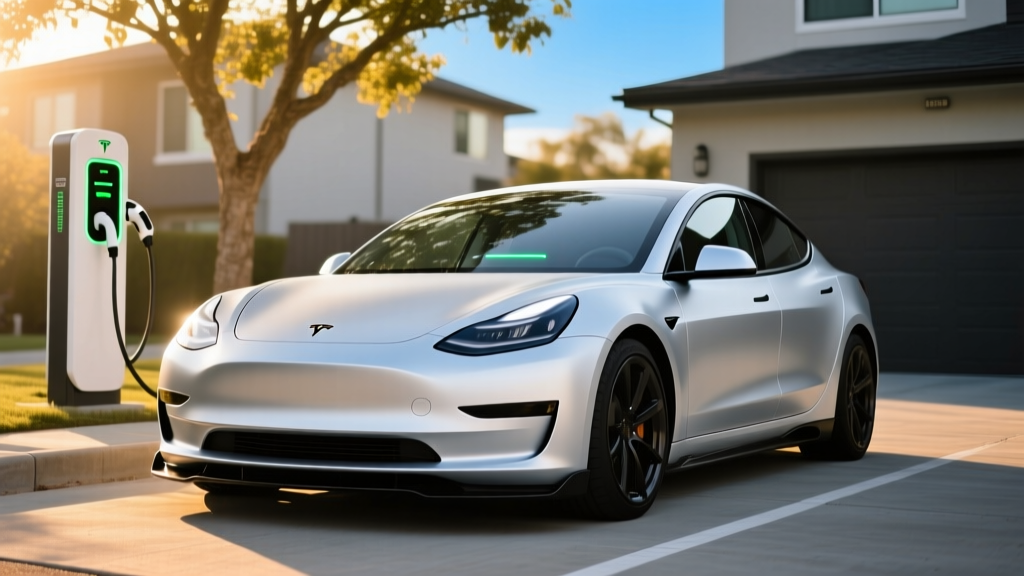
For home charging, Tesla's Wall Connector ($420 for the unit) on a 60-amp circuit delivers the full 11.5 kW / 44 mi/hr. Most owners charge overnight and start each morning with a full battery. Installation by a licensed electrician typically costs $500–$2,000 depending on panel capacity and run length. A 200-amp electrical panel is usually sufficient; older homes with 100-amp panels may need a $1,500–$3,000 upgrade.
Frequently Asked Questions
Is SpaceX part of Tesla?
No. SpaceX and Tesla are completely separate companies. Tesla is publicly traded (NASDAQ: TSLA); SpaceX is privately held. They share CEO Elon Musk but have different investors, boards, financials, and operations.
Does Tesla use SpaceX technology in its cars?
Not directly. There is engineering knowledge transfer — particularly in materials science, casting techniques, and AI compute architecture — but no SpaceX components appear in Tesla vehicles. The companies' technology teams collaborate informally but maintain separate R&D pipelines.
Will Tesla vehicles get Starlink satellite internet?
As of 2026, no production Tesla includes native Starlink connectivity. Tesla vehicles use cellular (LTE/5G) for navigation, streaming, and OTA updates. Aftermarket Starlink terminals can be installed, but Tesla has not announced an integrated satellite-connectivity feature. If this changes, it would likely be an optional premium feature.
Does buying a Tesla support SpaceX financially?
No. Tesla and SpaceX have separate revenue streams. Buying a Tesla sends money to Tesla, Inc. — not to SpaceX. Elon Musk's personal wealth is tied to both companies, but a Tesla purchase does not fund rocket launches.
What is the real-world range of the 2026 Tesla Model Y?
The EPA rates it at 320 miles. In real-world highway driving (70–75 mph, moderate temperatures), expect approximately 270–290 miles. In cold weather (below 30°F), plan for 240–270 miles. Tesla's heat pump and battery preconditioning help, but range loss in winter is a physical reality for all EVs.
How fast does the Tesla Model Y charge at home?
On a Tesla Wall Connector with a 60-amp / 240V circuit, the Model Y charges at 11.5 kW, adding approximately 44 miles of range per hour. A full overnight charge (8 hours) adds roughly 350 miles — more than enough to replenish the battery for most daily driving.
Does the 2026 Tesla Model Y qualify for the $7,500 federal tax credit?
It can, but eligibility depends on your income (≤ $300,000 married filing jointly), the vehicle's MSRP (≤ $80,000 for SUVs — the Model Y qualifies), and the battery's critical-mineral and component sourcing percentages, which tighten annually. Some Model Y configurations may qualify for the full $7,500, a partial credit, or none at all depending on the specific battery pack. Verify at point of sale and consult IRS.gov for current rules.
Is Tesla worth buying over the Hyundai Ioniq 5 or Ford Mustang Mach-E?
It depends on your priorities. The Tesla Model Y wins on Supercharger network access, software integration, and cargo space (72.0 cu ft with seats folded). The Hyundai Ioniq 5 offers faster 10–80% DC charging (~18 min at 350 kW-capable chargers), a more conventional interior with physical controls, and Apple CarPlay. The Ford Mustang Mach-E provides a sportier driving feel and broader dealership service access. All three are strong choices — your decision should hinge on charging access, interior preference, and which tax-credit bracket you fall into.
The Bottom Line
SpaceX is not part of Tesla. They are separate companies that happen to share a CEO. For EV buyers, the relevant question is not corporate structure but product merit: does the 2026 Tesla lineup deliver the range, charging speed, price, and ownership experience you need?
For many buyers — especially those with reliable home charging and regular access to Superchargers — the answer is yes. The Model Y Long Range at ~$40,490 (after a potential $7,500 credit) offers 320 miles of EPA range, best-in-class cargo space, and the most reliable public charging network available. The Model 3 RWD at ~$31,490 after credit remains one of the most affordable long-range EVs on the market.
But Tesla is not the only strong option in 2026. Cross-shop the Ioniq 5, Mach-E, Chevrolet Equinox EV, and Volkswagen ID.4. Test-drive with your actual daily route in mind. And base your decision on specs, charging access, and total cost of ownership — not on whether a rocket company shares a CEO with a car company.