The Short Answer: Yes — But With Major Caveats for US Buyers
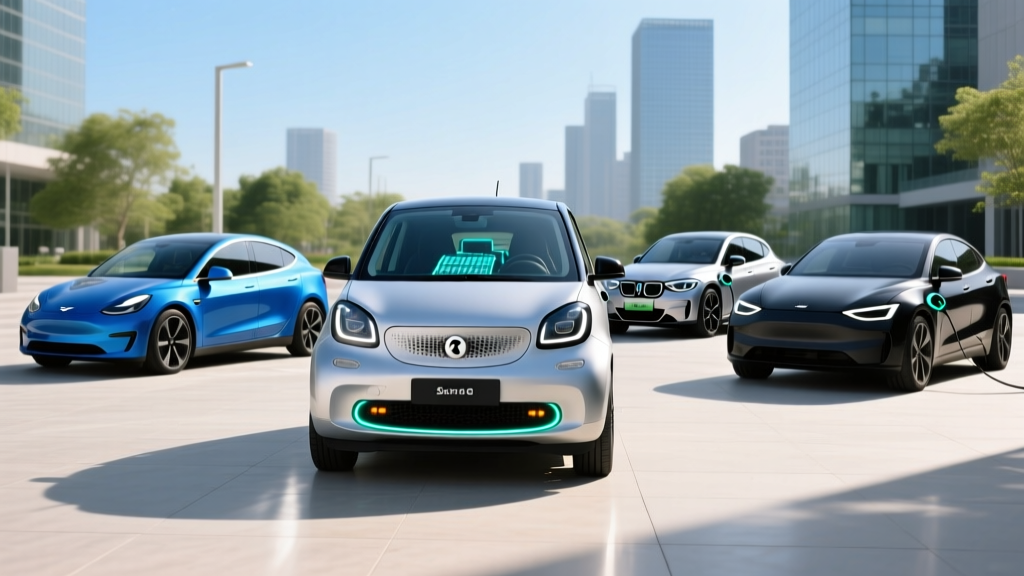
Is a Smart car electric? Yes. Since 2020, every new Smart vehicle produced is a battery-electric vehicle (BEV). Smart abandoned its gasoline and mild-hybrid powertrains entirely after the 2019 model year, pivoting to a fully electric lineup developed in partnership with Geely. The current global lineup includes the Smart #1 (compact crossover) and Smart #3 (coupe-style crossover), both built on the Sustainable Experience Architecture (SEA) platform.
However, Smart does not currently sell vehicles in the United States as of the 2026 model year. Smart exited the US market after the 2019 model year, and while there has been ongoing speculation about a North American return, no official US launch date or pricing has been confirmed. If you're a US-based shopper asking "is a Smart car electric," the practical answer is: the brand is fully electric, but you can't buy one new in America right now.
The Smart EV Lineup: What's Actually Available Globally
Smart's current product range consists of two production models, both co-developed with Geely and manufactured in China. Here's how they stack up on paper:
| Spec | Smart #1 (2026) | Smart #3 (2026) |
|---|---|---|
| Body Style | Compact Crossover (5-door) | Coupe Crossover (5-door) |
| Battery (usable) | 66 kWh (NMC) | 66 kWh (NMC) |
| WLTP Range | ~261 mi (420 km) | ~273 mi (440 km) |
| Estimated EPA Range | ~210-225 mi (projected) | ~225-240 mi (projected) |
| Motor Output | 268 hp (200 kW) RWD / 422 hp AWD (Brabus) | 268 hp (200 kW) RWD / 422 hp AWD (Brabus) |
| 0-62 mph (0-100 km/h) | 6.7s (RWD) / 4.5s (Brabus AWD) | 5.8s (RWD) / 3.7s (Brabus AWD) |
| Peak DC Fast Charge | 150 kW | 150 kW |
| 10-80% DC Charge Time | ~30 min | ~30 min |
| Level 2 AC Charge Rate | 22 kW (3-phase) / 7.4 kW (1-phase) | 22 kW (3-phase) / 7.4 kW (1-phase) |
| Length | 168.5 in (4,270 mm) | 174.4 in (4,430 mm) |
| Cargo Volume | ~14.5 cu ft (rear seats up) | ~13.0 cu ft (rear seats up) |
| Global Starting Price | ~€38,000 / £33,000 | ~€40,000 / £36,000 |
Important context on range: Smart publishes WLTP figures, which are the European testing standard and typically run 10-15% higher than US EPA estimates. If Smart were to certify these vehicles for the US market, expect EPA range figures closer to 210-240 miles depending on trim and wheel size. That's competitive with vehicles like the Hyundai Kona Electric (EPA 261 mi) but trails segment leaders like the Chevrolet Equinox EV (EPA 319 mi).
Real-World Range Reality: The Smart #1's WLTP-rated 261 miles translates to roughly 210-225 EPA miles. In real-world highway driving at 70 mph, expect 185-200 miles. In cold weather (below 32°F), NMC battery chemistry without a heat pump standard on all trims means you could see 155-175 miles of practical range. Plan charging stops accordingly.
Why Smart Went Fully Electric — And Why They Left America
Smart's transformation is one of the more dramatic brand pivots in modern automotive history. The original Smart Fortwo — the tiny, two-seat gas-powered city car — was iconic but commercially troubled in the US. Here's what happened:
The Gas Era (2008-2019)
Smart sold the Fortwo in the US from 2008 through 2019. The gasoline Fortwo used a turbocharged 1.0L three-cylinder engine making 89 hp, achieving an EPA-rated 34 mpg combined (fueleconomy.gov). It was also offered briefly as the Fortwo Electric Drive (later called Smart EQ Fortwo) with a 17.6 kWh battery and just 63 miles of EPA range. Sales were dismal — fewer than 100 units per month by the end — and Smart pulled out of the US entirely after 2019.
The Electric Rebirth (2020-Present)
Mercedes-Benz (then Daimler) formed a 50/50 joint venture with China's Geely in 2019 to reinvent Smart as a premium electric brand. The result: the Smart #1 launched in 2022, followed by the Smart #3 in 2023. Both vehicles are dramatically larger and more capable than the old Fortwo, targeting the premium compact crossover segment. Production is handled by Geely in China, with design input from Mercedes-Benz.
As of early 2026, Smart sells in Europe, China, Southeast Asia, the Middle East, and select other markets. A US return has been discussed in industry reports but remains unconfirmed. Smart's current CEO has indicated North America is under evaluation, but regulatory certification, dealer network setup, and competitive pricing against established US-market EVs present significant hurdles.
How a Smart EV Would Compare to US-Market Alternatives
Since you can't buy a Smart in the US today, let's put the Smart #1's specs against the EVs you can actually purchase. This comparison helps answer the practical question behind the search: if I want a small, stylish, affordable electric crossover, what are my real options?
| Spec | Smart #1 (Global) | Hyundai Kona Electric | Chevy Equinox EV | Volvo EX30 |
|---|---|---|---|---|
| EPA Range (est./actual) | ~210-225 mi (est.) | 261 mi | 319 mi | 261 mi |
| Battery | 66 kWh NMC | 65.4 kWh NMC | 85 kWh NMC | 69 kWh NMC |
| Horsepower | 268 (RWD) | 201 | 213 | 272 (Single Motor) |
| 0-60 mph | ~6.5s (est.) | 7.6s | 7.9s | 6.3s |
| Peak DC Charge | 150 kW | 100+ kW | 150 kW | 153 kW |
| 10-80% Time | ~30 min | ~43 min | ~28 min | ~27 min |
| Starting MSRP (US) | N/A (not sold) | $32,975 | $33,600 | $34,950 |
| Federal Tax Credit (§30D) | N/A | Up to $7,500* | Up to $7,500* | Up to $7,500* |
| Battery Warranty | 8 yr / 100,000 mi (global) | 10 yr / 100,000 mi | 8 yr / 100,000 mi | 8 yr / 100,000 mi |
*§30D federal tax credit eligibility depends on buyer income limits, vehicle MSRP caps, and battery critical-mineral sourcing requirements. Verify current eligibility at IRS.gov. Credit may be applied at point of sale.
The comparison reveals a tough challenge for Smart if it re-enters the US: the Kona Electric, Equinox EV, and Volvo EX30 all offer competitive or superior range at similar or lower prices, with established US dealer networks and confirmed federal tax credit eligibility. The Smart #1's main differentiator would be its Mercedes-Benz design DNA and Brabus performance variant, but brand cachet alone rarely overcomes a 40-100 mile range deficit in the US market.
EV Ownership Costs: What Smart Buyers Should Budget For
Whether you're considering a future Smart EV or one of the US-market alternatives above, understanding the real cost of electric ownership is essential. Here's a breakdown based on current US data for a typical compact EV in the $33,000-$40,000 range:
| Cost Category | Compact EV (e.g., Kona Electric) | Gas Compact Crossover (e.g., Kona Gas) |
|---|---|---|
| Purchase Price (MSRP) | $32,975 | $24,250 |
| Federal Tax Credit (§30D) | -$7,500 (if eligible) | $0 |
| Effective Purchase Price | ~$25,475 | $24,250 |
| Annual Fuel/Energy (12,000 mi) | ~$540 (home charging at $0.16/kWh) | ~$1,680 (gas at $3.50/gal, 28 mpg) |
| Annual Maintenance | ~$300 | ~$800 |
| Annual Insurance (avg.) | ~$1,800 | ~$1,400 |
| 5-Year Total Operating Cost | ~$13,200 | ~$19,400 |
| 5-Year Total Cost of Ownership | ~$38,675 | ~$43,650 |
Key takeaways:
- Upfront cost parity is achievable when the $7,500 federal tax credit applies, bringing a $33,000 EV down to roughly the same effective price as a $24,000 gas car.
- Annual fuel savings of ~$1,140 assume predominantly home Level 2 charging at residential electricity rates. Public DC fast charging at $0.40-$0.60/kWh significantly narrows the gap — frequent road-trippers relying on public chargers may only save $400-$600/year.
- Insurance premiums are typically 15-30% higher for EVs due to higher repair costs and battery replacement risk. Get quotes before purchasing.
- Home charging installation adds $500-$2,500 upfront for a Level 2 (240V, 32-48 amp) wallbox, depending on your electrical panel capacity and run length. A panel upgrade from 100A to 200A service can add $1,500-$3,500.
Common Misconceptions About Smart and Electric Cars
| Myth | Fact |
|---|---|
| "Smart cars have always been electric." | False. The Smart Fortwo was primarily a gasoline vehicle from 1998-2019. The electric variant (Smart EQ Fortwo) was a low-volume offering with only 63 miles of EPA range. Smart only went fully electric with the Geely partnership starting in 2022. |
| "I can buy a new Smart car in the US." | Not as of 2026. Smart exited the US market after the 2019 model year. Used Smart Fortwo and EQ Fortwo models are available on the secondary market, but no new Smart vehicles are currently sold through US dealers. |
| "Smart cars are still tiny two-seaters." | The current Smart #1 and #3 are five-seat compact crossovers comparable in size to a Hyundai Kona or Volvo EX30. The classic two-seat Fortwo is discontinued globally. |
| "Electric Smart cars have great range." | The old Smart EQ Fortwo had just 63 EPA miles of range. The current Smart #1 offers an estimated 210-225 EPA miles — adequate for commuting but below the 260-320 mile range of leading US-market compact EVs. |
| "EVs need no maintenance at all." | EVs eliminate oil changes, spark plugs, and transmission fluid, but still require tire rotations, brake fluid checks, cabin air filter replacement, and wiper fluid. Budget ~$200-$400/year for basic maintenance. Tire wear can be 15-20% faster on EVs due to higher vehicle weight and instant torque. |
| "The battery will need replacing in a few years." | Modern NMC batteries like those in the Smart #1 typically retain 85-90% capacity after 100,000 miles based on industry degradation data. Smart provides an 8-year/100,000-mile battery warranty covering capacity below a specified threshold (typically 70% SoH). Full battery replacement costs $8,000-$15,000 but is rarely needed within the warranty period. |
Charging a Smart EV: What You'd Need at Home
If Smart does return to the US, or if you're evaluating similar compact EVs, here's what home charging looks like in practice:
| Charging Level | Power (kW) | Miles Added Per Hour | Full Charge Time (0-100%) | Setup |
|---|---|---|---|---|
| Level 1 (120V household) | 1.4 kW | ~4-5 mi/hr | ~48-55 hours | Standard outlet, no install needed |
| Level 2 (240V, 32A) | 7.7 kW | ~25-30 mi/hr | ~8-9 hours | Wallbox + electrician ($500-$2,500) |
| Level 2 (240V, 48A) | 11.5 kW | ~35-40 mi/hr | ~6 hours | Wallbox + 60A circuit ($800-$2,500) |
| DC Fast Charge | Up to 150 kW | ~500+ mi/hr (peak) | 10-80% in ~30 min | Public stations only |
Charging curve reality: The Smart #1's 150 kW peak DC charge rate is not sustained for the full session. Like all EVs, charging speed tapers significantly above 80% State of Charge (SoC) to protect battery health. Expect peak speeds between 10-50% SoC, dropping to roughly 50-70 kW between 50-80%, and further tapering above 80%. A 10-80% session takes approximately 30 minutes; an 80-100% top-off adds another 25-35 minutes. For daily driving, charging to 80% is recommended for NMC battery longevity.
Connector note: Smart vehicles in Europe use CCS2 (the European standard) and will need to adopt NACS (the North American Charging Standard, now used by Tesla, Ford, GM, and most major automakers) for any US market return. This is a non-trivial certification requirement that may factor into Smart's US timeline.
Decision Framework: Should You Wait for Smart or Buy Now?
Choose a US-Market EV Now If:
- You need a vehicle in the next 6-12 months
- You want confirmed §30D federal tax credit eligibility with point-of-sale transfer
- You prioritize EPA-certified range data and established dealer service networks
- You want 260+ miles of EPA range for highway road trips
- Home Level 2 charging is available and you drive under 60 miles daily
Consider Waiting for Smart's US Return If:
- You specifically want the Smart/Mercedes-Benz design aesthetic and Brabus performance options
- Your daily commute is under 40 miles and you rarely road-trip
- You live in an urban area with robust public charging infrastructure
- You're not in a rush — a US launch, if it happens, is likely 2027 or later
Consider a Used Smart EQ Fortwo If:
- You want the cheapest possible EV for short urban commutes (used prices often $8,000-$14,000)
- You understand the 63-mile EPA range limitation and have home charging
- You accept limited parts availability and no new-vehicle warranty
- You qualify for the used EV tax credit (up to $4,000 or 30% of sale price, whichever is less, for vehicles under $25,000)
What First-Time EV Buyers Should Know
Whether you're eyeing a Smart or any other EV, these fundamentals apply universally:
- kW vs. kWh — know the difference. kW (kilowatts) measures power — how fast energy flows, like the flow rate of a water hose. kWh (kilowatt-hours) measures energy — how much the battery holds, like the size of a water tank. A 66 kWh battery charged at 7.7 kW takes roughly 8.5 hours from empty. Mixing these up is the most common EV beginner mistake.
- EPA range is a best-case estimate. Highway driving at 75+ mph reduces range by 10-20%. Cold weather (below freezing) can cut range by 20-35% due to battery chemistry limitations and cabin heating demands. Always plan trips assuming 75-80% of the EPA sticker in adverse conditions.
- Home charging is non-negotiable for most owners. Over 80% of EV charging happens at home. If you can't install a Level 2 charger (apartment dwellers, street parkers), evaluate your access to reliable workplace or public Level 2 charging before buying. DC fast charging exclusively is expensive and accelerates battery degradation.
- Tax credits have strings attached. The §30D new EV credit requires the vehicle's MSRP to be under $55,000 (cars) or $80,000 (SUVs/trucks), your modified adjusted gross income to be below $150,000 (single) or $300,000 (joint), and the vehicle to meet battery critical-mineral and component sourcing requirements. These rules change — always verify at IRS.gov before purchasing.
- Precondition your battery for fast charging. Most modern EVs (including Smart) can warm the battery to optimal temperature before arriving at a DC fast charger. This is called preconditioning and can reduce your 10-80% charge time by 5-10 minutes in cold weather. Use your navigation system to route to the charger, which triggers preconditioning automatically.
Frequently Asked Questions
Are all Smart cars electric now?
All new Smart vehicles produced since 2022 are fully electric (BEV). The gasoline Smart Fortwo was discontinued after 2019. The current lineup — the Smart #1 and Smart #3 — uses a 66 kWh NMC battery with no internal combustion engine option. Used gas-powered Smart Fortwo models remain on the secondary market.
Can I buy a Smart #1 or Smart #3 in the United States?
No. Smart does not sell vehicles in the US as of 2026. The brand exited the American market after 2019 and has not announced a return date. The Smart #1 and #3 are available in Europe, China, and select Asian and Middle Eastern markets. If you're in the US, the closest alternatives in size and positioning are the Volvo EX30, Hyundai Kona Electric, and Chevrolet Equinox EV.
How much would a Smart EV cost if it came to the US?
Based on European pricing, a US-spec Smart #1 would likely start between $35,000-$40,000 before incentives, with the Brabus performance variant reaching $48,000-$52,000. This would place it in a highly competitive segment where the Kona Electric starts at $32,975 and the Chevy Equinox EV at $33,600 — both with confirmed §30D tax credit eligibility. Smart would need aggressive pricing to compete.
What's the real-world range of the Smart #1?
The Smart #1 is rated at approximately 261 miles under the WLTP testing cycle used in Europe. WLTP figures run 10-15% higher than US EPA estimates, so an EPA-equivalent figure would be roughly 210-225 miles. In real-world highway driving, expect 185-200 miles. In cold weather with cabin heating, practical range drops to 155-175 miles. This is adequate for daily commuting but below the 260+ mile threshold many US buyers prefer for road trips.
Is the old Smart EQ Fortwo worth buying used?
The used Smart EQ Fortwo (2017-2019) offers 63 miles of EPA range and a 17.6 kWh battery — enough for short urban commutes with home charging. Prices typically range from $8,000-$14,000, potentially qualifying for the used clean vehicle credit of up to $4,000. However, parts availability is declining, the 22 kW DC charge rate is very slow by modern standards, and the two-seat layout limits practicality. It's a niche choice for a second car in a city environment.
How long do Smart EV batteries last?
Smart provides an 8-year/100,000-mile battery warranty on the #1 and #3, covering capacity retention below a specified threshold (typically 70% State of Health). Industry data on NMC batteries suggests most will retain 85-90% capacity at 100,000 miles with normal use. Best practices for longevity include avoiding frequent DC fast charging, keeping State of Charge between 20-80% for daily use, and using preconditioning in extreme temperatures. Full battery replacement, if ever needed outside warranty, would likely cost $8,000-$15,000.