Quick Answer: Is Smart Car Electric?
Yes — but with major caveats. The Smart Fortwo transitioned to an all-electric lineup branded as the Smart EQ Fortwo starting with the 2018 model year in the U.S., and Smart officially discontinued the gasoline-powered Fortwo in North America after the 2017 model year. However, Smart ceased U.S. sales entirely after the 2019 model year. If you're asking "is Smart car electric" in 2026, the answer is: the only Smart cars you'll find are used EQ Fortwo models with just 58 miles of EPA range — far below modern EV standards. Smart's parent company Mercedes-Benz has relaunched the brand globally with the Smart #1 and #3 electric crossovers, but as of 2026, these are not officially sold in the United States.
The Smart EQ Fortwo: Full Electric Specs at a Glance
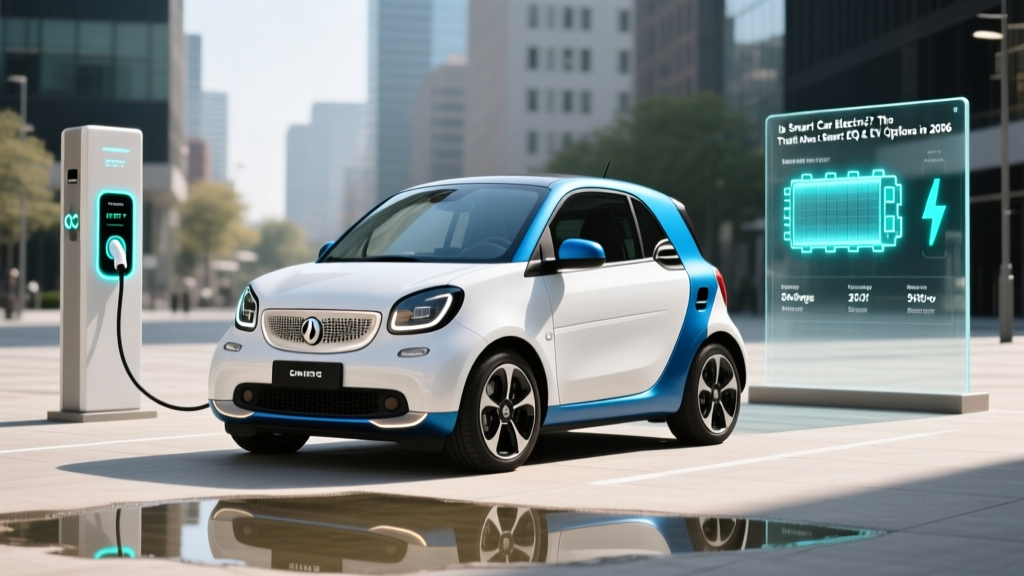
The Smart EQ Fortwo (sold in the U.S. for the 2018 and 2019 model years) is a battery electric vehicle — a BEV, not a hybrid or plug-in hybrid. It was designed as a pure urban commuter. Here are the exact numbers that define this car's capabilities:
| Specification | Smart EQ Fortwo (2018–2019) |
|---|---|
| Powertrain | All-electric (BEV) |
| Battery Capacity | 17.6 kWh (usable) |
| Battery Chemistry | NMC (Nickel Manganese Cobalt) |
| EPA Range | 58 miles |
| Real-World Range (city) | ~50–60 miles |
| Real-World Range (highway) | ~40–48 miles |
| Motor Output | 80 hp / 118 lb-ft torque |
| 0–60 mph | |
| Top Speed | 81 mph (electronically limited) |
| Level 2 Charging (AC) | 7.2 kW onboard charger |
| DC Fast Charging | Not available |
| Level 2 Charge Time (0–100%) | ~2.5 hours |
| Level 1 Charge Time (120V) | ~14–17 hours |
| EPA Efficiency | 108 MPGe combined |
| Original MSRP (2019) | $24,550 (Pure) – $28,100 (Prime) |
| Used Price Range (2026) | $8,000 – $14,000 |
| Battery Warranty | 8 years / 100,000 miles (original) |
Source: EPA Fuel Economy — Smart EQ Fortwo
Real-World Range: What 58 EPA Miles Actually Means
EPA Sticker: 58 miles
Real-World Expectation: 45–60 miles depending on conditions
In moderate city driving at 25–40 mph with regenerative braking active, you can squeeze close to 60 miles from a full charge. On the highway at 70 mph, expect that to drop to roughly 42–48 miles. In cold weather (below 35°F), battery chemistry and cabin heating demands can cut range by 25–35%, leaving you with as few as 35–40 usable miles. This makes the EQ Fortwo strictly a fair-weather, short-commute vehicle.
The Smart EQ Fortwo also lacks DC fast charging entirely. There is no CCS, NACS, or CHAdeMO port — only a J1772 connector for Level 1 and Level 2 AC charging. This means road trips are impractical. You cannot add range quickly at a public fast-charging station; you're limited to the 7.2 kW onboard charger, which takes about 2.5 hours for a full charge.
Smart EQ Fortwo vs. Gas Cars and Modern EVs: The Numbers
To put the Smart EQ in context, here's how it stacks up against a comparable gas-powered subcompact and a modern entry-level EV available in 2026:
| Metric | Smart EQ Fortwo (Used) | Honda Fit (Gas, 2020) | Nissan Leaf S (2026) |
|---|---|---|---|
| Powertrain | BEV | Gasoline | BEV |
| EPA Range / Tank Range | 58 mi | ~330 mi (10.6 gal) | 212 mi |
| Fuel/Energy Cost per Mile | ~$0.04 (home charging) | ~$0.12 (gas at $3.50/gal) | ~$0.04 (home charging) |
| Annual Fuel/Energy Cost (12k mi) | ~$480 | ~$1,440 | ~$480 |
| DC Fast Charging | No | N/A | Yes (up to 100 kW) |
| Purchase Price (2026) | $8,000–$14,000 | $14,000–$18,000 (used) | ~$29,000 (new MSRP) |
| Annual Maintenance | ~$300 | ~$600 | ~$300 |
| Seating | 2 | 5 | 5 |
| Cargo (rear seats up) | 9.2 cu ft | 16.6 cu ft | 23.6 cu ft |
The Smart EQ's energy cost per mile is competitive with any modern EV when charged at home — electricity is cheap. But the range limitation is the dealbreaker. A Nissan Leaf at 212 miles of EPA range or a Chevrolet Equinox EV at 319 miles gives you genuine daily flexibility. The Smart EQ does not.
Ownership Costs: The Full Financial Picture
If you're considering a used Smart EQ Fortwo, here's a realistic 5-year cost projection assuming 8,000 miles per year (appropriate given its range limits) and home Level 2 charging:
| Cost Category | Smart EQ Fortwo (Used) | Comparable Gas Subcompact |
|---|---|---|
| Purchase Price | $11,000 (avg used) | $16,000 (avg used) |
| Home Charger Install (Level 2) | $800–$1,500 | $0 |
| Energy/Fuel (5 years) | $1,920 | $6,000 |
| Maintenance (5 years) | $1,500 | $3,000 |
| Insurance (5 years avg) | $5,500 | $5,000 |
| Battery Replacement Risk | $6,000–$10,000 (if needed) | $0 |
| Estimated 5-Year Total | $15,220–$25,920 | $30,000 |
The Smart EQ can be cheaper to own than a gas subcompact — but only if the 17.6 kWh battery holds up. Battery degradation on these small NMC packs is a real concern. After 6–8 years, expect 10–20% capacity loss, which on a 58-mile car means potentially dropping to 46–52 miles of usable range. If the battery needs replacement outside warranty, the $6,000–$10,000 cost can exceed the car's value.
Regarding federal tax credits: the IRS §30D Clean Vehicle Credit applies only to new EV purchases and has specific MSRP caps, buyer income limits, and battery-sourcing requirements. Since the Smart EQ is only available used, you would need to check eligibility for the Used Clean Vehicle Credit (up to $4,000 or 30% of sale price, whichever is less) — which has its own income caps and dealer-reporting requirements.
Common Misconceptions About Smart Cars and EVs
| Myth | Fact |
|---|---|
| "Smart cars have always been electric." | False. The Smart Fortwo launched in the U.S. in 2008 with a gasoline engine. The electric version (EQ) arrived for the 2018 model year, and gas models were discontinued after 2017. |
| "You can still buy a new Smart car in the U.S." | False. Mercedes-Benz ended U.S. Smart sales after the 2019 model year. No new Smart vehicles are currently sold in the American market. |
| "Smart EQ can fast-charge on road trips." | False. The EQ Fortwo has no DC fast charging capability. It is limited to 7.2 kW Level 2 AC charging only. |
| "The Smart #1 and #3 are available in the U.S." | False as of 2026. These Geely/Mercedes joint-venture EVs are sold in Europe and Asia but have not launched in North America. |
| "All small EVs have the same short range." | False. The Mini Cooper SE (2026) offers 137 miles EPA; the Fiat 500e offers 149 miles. The Smart EQ's 58 miles is among the lowest of any modern EV. |
What First-Time EV Buyers Should Know Instead
If your search for "is Smart car electric" is really about finding a small, affordable EV for city driving, there are far more capable options available in 2026 that won't leave you stranded:
- Nissan Leaf S (2026): 212 miles EPA, DC fast charging available, ~$29,000 MSRP, eligible for up to $7,500 federal credit depending on sourcing and income.
- Chevrolet Equinox EV (2026): 319 miles EPA, 150 kW DC fast charging, ~$34,900 MSRP — a practical crossover with genuine road-trip ability.
- Hyundai Kona Electric (2026): 261 miles EPA, 100+ kW DC charging, ~$33,000 MSRP.
- Used Tesla Model 3 (2021–2023): 272–333 miles EPA, Supercharger access, $18,000–$25,000 on the used market, potentially eligible for the $4,000 used-EV credit.
Each of these gives you 4–6× the range of a Smart EQ, access to DC fast charging, and practical seating for 4–5 passengers.
Decision Framework: Should You Buy a Smart EQ Fortwo?
Choose the Smart EQ Fortwo if:
- You need a dedicated city runabout for trips under 25 miles round-trip
- You have reliable home Level 2 charging and never need public fast charging
- Parking space is extremely limited (the Fortwo is just 8.8 feet long)
- You can find one under $10,000 with a healthy battery (request a battery health report)
- You have a second vehicle for longer trips
Choose a modern EV (Leaf, Kona, Equinox EV) if:
- You need more than 60 miles of daily range
- You ever drive on highways or in cold weather
- You want DC fast charging for occasional road trips
- You need seating for more than two people
- You want current manufacturer support and warranty coverage
- You want eligibility for the full $7,500 federal tax credit on a new purchase
Avoid the Smart EQ Fortwo if:
- You live in a cold climate (range drops to ~35–40 miles in winter)
- Your commute exceeds 30 miles one way
- You lack home charging access (Level 1 charging takes 14+ hours)
- You're concerned about parts availability — Smart's U.S. service network has largely dissolved
Frequently Asked Questions
Is the Smart Fortwo still made?
Smart continues to exist as a brand under a Mercedes-Benz and Geely joint venture, producing the Smart #1 and #3 electric crossovers for European and Asian markets. However, the original Fortwo body style has been discontinued globally, and no Smart vehicles are sold in the U.S. as of 2026.
Can I charge a Smart EQ at a Tesla Supercharger?
No. The Smart EQ Fortwo uses a J1772 connector for AC charging only and has no DC fast charging port. Tesla Superchargers (whether NACS or CCS-equipped) provide DC fast charging, which the Smart EQ cannot accept. You can charge at any public Level 2 station with a J1772 connector.
How long will the Smart EQ battery last?
The 17.6 kWh NMC battery was warranted for 8 years or 100,000 miles against defects and excessive degradation (below 70% capacity). For 2018–2019 models, the original warranty may still be in effect through 2026–2027. Real-world degradation on small NMC packs typically runs 2–3% per year, meaning a 2019 model might retain 82–88% of original capacity by 2026 — translating to roughly 48–51 miles of range.
Does the Smart EQ qualify for any tax credits?
The Smart EQ is not eligible for the new-vehicle §30D credit since it's no longer sold new. If purchased from a licensed dealer as a used EV for $25,000 or less, it could qualify for the Used Clean Vehicle Credit (up to $4,000 or 30% of sale price). Income caps apply: $75,000 single / $150,000 married filing jointly. Consult a tax professional and review IRS guidelines on the used EV credit for your specific situation.
What is the Smart #1, and can I buy it in the U.S.?
The Smart #1 is a compact electric crossover built on Geely's SEA platform with up to 273 miles of WLTP range (roughly 230 miles EPA-equivalent) and a 66 kWh battery. It is sold in Europe and China. As of 2026, there is no confirmed U.S. launch timeline, and it cannot be purchased through any American dealership.
Is a Smart car a good first EV?
Only in a very narrow use case: a single person in a warm climate with a short city commute, home charging, and a second car for longer trips. For most first-time EV buyers, a used Nissan Leaf, Chevrolet Bolt EV, or Tesla Model 3 offers dramatically more range, practicality, and long-term support for a similar or modestly higher price.
Sources: EPA Fuel Economy (fueleconomy.gov), IRS Clean Vehicle Credits, NHTSA