Is Rivian Owned by Tesla? The Short Answer
No, Rivian is not owned by Tesla. Rivian Automotive, Inc. is a publicly traded, independent American electric vehicle manufacturer headquartered in Irvine, California. It was founded in 2009 by RJ Scaringe and went public in November 2021 under the ticker RIVN. Tesla has no ownership stake, board representation, or corporate control over Rivian. The two companies are direct competitors in the electric truck and SUV space.
The confusion likely stems from the fact that both companies were early movers in the premium EV truck segment, both operate US-based manufacturing plants, and both have outspoken founders who dominate EV headlines. But structurally, financially, and technologically, Rivian and Tesla are entirely separate entities. Amazon holds a significant minority stake in Rivian (roughly 17% as of early 2026), and Ford previously held a stake it has since largely divested — but Tesla has never been an investor.
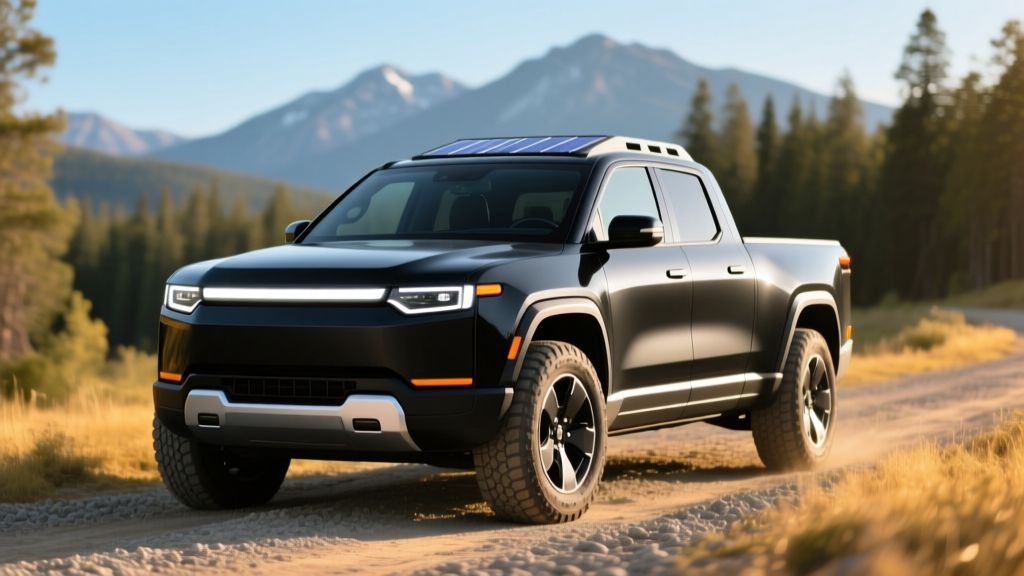
With that cleared up, let's look at what Rivian actually builds. The 2026 Rivian R1T is the company's flagship electric pickup, and after a major Gen 2 platform update, it's one of the most capable and tech-forward trucks on the market. Here's everything you need to know.
2026 Rivian R1T: Quick Specs at a Glance
| Spec | Dual-Motor AWD (Standard) | Dual-Motor AWD (Max Pack) |
|---|---|---|
| EPA Range | 342 miles | 420 miles |
| Battery Capacity | 106 kWh usable (NMC) | 141 kWh usable (NMC) |
| Horsepower | 533 hp | 533 hp |
| 0–60 mph | 4.5 seconds | 4.5 seconds |
| Drivetrain | Dual-Motor AWD | Dual-Motor AWD |
| Max DC Fast Charge | 200 kW (peak) | 220 kW (peak) |
| 10–80% DC Charge Time | ~21 minutes | ~27 minutes |
| Level 2 Home Charging | 11.5 kW (~25 mi/hr) | 11.5 kW (~25 mi/hr) |
| MPGe (Combined) | 70 MPGe | 65 MPGe |
| Towing Capacity | 11,000 lbs | 11,000 lbs |
| Base MSRP | $69,900 | $83,900 |
| Battery Warranty | 8 years / 175,000 miles | |
Note: Tri-Motor and Quad-Motor performance trims are also available for 2026 with up to 1,025 hp and a 0–60 time under 3.0 seconds. Specs above reflect the highest-volume configurations.
Real-World Range: What the EPA Number Doesn't Tell You
EPA Estimated Range: 342 miles (Standard Pack) / 420 miles (Max Pack)
Real-World Expectation: On a 75 mph highway loop in moderate temperatures (65–75°F), expect roughly 285–310 miles from the Standard Pack and 350–380 miles from the Max Pack. In cold weather (below 30°F), range drops an additional 20–30%, bringing the Standard Pack down to approximately 230–250 miles on the highway.
The R1T's boxy, pickup-truck aerodynamics are the primary culprit for highway range loss versus the EPA sticker. Electric vehicles are most efficient at city speeds where regenerative braking recaptures energy; sustained 75–80 mph driving pushes the R1T's consumption to roughly 48–52 kWh/100mi, compared to its EPA-rated 48 kWh/100mi combined. The Max Pack's larger battery absorbs this penalty more gracefully, which is why it's the recommended configuration for anyone planning regular road trips over 250 miles.
For comparison, the EPA's fueleconomy.gov listing shows the R1T Dual-Motor at 70 MPGe combined — competitive with the GMC Hummer EV but below the more aerodynamic Tesla Cybertruck AWD at 123 MPGe.
Charging Speed: DC Fast, Home Level 2, and the Rivian Adventure Network
Rivian's Gen 2 platform brought meaningful charging improvements, though the R1T still trails the 800V architectures of the Hyundai Ioniq 5 and Porsche Macan EV in peak charge rate.
| Charging Level | Power / Rate | Miles Added per Hour | Notes |
|---|---|---|---|
| Level 1 (120V outlet) | 1.4 kW | ~3 mi/hr | Emergency/trickle only |
| Level 2 (240V, 48A) | 11.5 kW | ~25 mi/hr | Full charge overnight (~10–14 hrs) |
| DC Fast Charge (Standard) | 200 kW peak | ~140 mi in 20 min | 10–80% in ~21 min; tapers sharply above 85% |
| DC Fast Charge (Max Pack) | 220 kW peak | ~155 mi in 20 min | 10–80% in ~27 min; larger battery = longer session |
The charge curve is the important detail most spec sheets omit. The R1T holds near-peak charging speed between roughly 10% and 40% State of Charge, then gradually tapers. Above 80%, charging slows dramatically — a session from 80–100% can add another 25–30 minutes. For road trips, plan your stops around the 10–80% window to minimize time at the charger.
Rivian operates its own Rivian Adventure Network of DC fast chargers at destinations near national parks and outdoor recreation areas, alongside access to the broader Electrify America and (via adapter) Tesla Supercharger networks. As of 2026, Rivian vehicles ship with a NACS charge port adapter enabling access to Tesla's 20,000+ Supercharger stalls — a significant infrastructure advantage that didn't exist at the R1T's launch.
Performance, Drivetrain, and the Quad-Motor Option
The standard Dual-Motor R1T produces 533 horsepower and 610 lb-ft of torque, delivering a 4.5-second 0–60 mph time that outpaces most gas-powered half-ton trucks by a wide margin. The dual-motor setup provides true all-wheel drive with independent torque management front and rear, and the R1T's air suspension enables adjustable ride height — up to 14.9 inches of ground clearance in Off-Road mode.
For buyers who want absurd performance, the available Tri-Motor configuration (one front, two rear) pushes output to 850 hp, while the Quad-Motor (one motor per wheel) reaches 1,025 hp and a sub-3.0-second 0–60 time. The Quad-Motor also enables Tank Turns, where the left and right wheels spin in opposite directions to pivot the truck in place — a genuinely useful feature on tight off-road trails, not just a party trick.
Towing capacity is rated at 11,000 pounds across all configurations. However, towing at or near max capacity cuts range roughly in half — expect 160–180 miles from the Standard Pack when pulling a heavy trailer. This is physics, not a Rivian-specific flaw; every electric truck experiences similar towing range loss.
Interior, Cargo, and the Gear Tunnel Advantage
The R1T is a crew-cab pickup with seating for five. Interior dimensions are generous:
- Front legroom: 41.3 inches
- Rear legroom: 40.4 inches
- Bed length: 54.2 inches (4.5 feet) with the tailgate up; extends to ~6.5 feet with the multi-position tailgate down
- Bed payload: 1,760 lbs
- Frunk (front trunk): 11.1 cu ft — large enough for a full carry-on suitcase or charging cables
The R1T's signature feature is the Gear Tunnel — a lockable, pass-through storage compartment that runs the full width of the truck between the cab and the bed. It offers roughly 11.7 cu ft of enclosed storage, ideal for camping gear, skis, or tools you want to keep out of sight and weather. No other production pickup offers anything comparable, and it's the single most cited reason R1T owners give for choosing Rivian over the Cybertruck or F-150 Lightning.
The infotainment system runs on a 15.6-inch center touchscreen with Rivian's proprietary OS. It's responsive and well-organized, with native navigation that integrates charger routing and battery preconditioning. Wireless Apple CarPlay and Android Auto are supported. The driver-assist suite, branded Rivian Driver+, includes adaptive cruise control, lane-centering steering, and automated lane changes — this is a Level 2 SAE system, meaning the driver must remain attentive and keep hands on the wheel at all times. It is not self-driving.
Pricing, Trims, and Federal Tax Credit Eligibility
| Trim / Configuration | Base MSRP | Estimated As-Tested | §30D Federal Credit Eligible? |
|---|---|---|---|
| R1T Dual-Motor (Standard Pack) | $69,900 | $73,000–$78,000 | Yes — up to $7,500 if buyer meets income caps |
| R1T Dual-Motor (Max Pack) | $83,900 | $88,000–$95,000 | No — exceeds $80,000 MSRP cap for trucks |
| R1T Tri-Motor (Max Pack) | $99,900 | $105,000+ | No — exceeds $80,000 MSRP cap |
| R1T Quad-Motor | $119,000 | $125,000+ | No — exceeds $80,000 MSRP cap |
Under current IRS §30D rules, the federal EV tax credit provides up to $7,500 for qualifying new EVs, but several conditions apply:
- MSRP cap: Pickup trucks must have a base MSRP of $80,000 or less. Only the R1T Dual-Motor Standard Pack qualifies.
- Buyer income cap: Adjusted gross income must not exceed $150,000 (single), $225,000 (head of household), or $300,000 (joint).
- Battery sourcing: A percentage of critical minerals and battery components must be sourced from the US or free-trade-agreement countries. Rivian's supply chain has been evolving; confirm current-year eligibility on the IRS clean vehicle credit page before purchase.
- Point-of-sale transfer: As of 2024, buyers can transfer the credit to the dealer at purchase, reducing the out-of-pocket price directly rather than waiting for a tax refund.
In practice, this means the R1T Dual-Motor Standard Pack can effectively drop to around $62,400 after the full credit — a compelling price for a 533-hp electric truck with 342 miles of range. Higher trims receive no federal credit, though some states offer additional rebates that are not subject to the same MSRP caps.
Pros and Cons: The Honest Scorecard
Pros
- Class-leading Gear Tunnel storage is uniquely practical
- 342–420 miles of EPA range beats the F-150 Lightning and most electric trucks
- 11,000-lb towing with genuine off-road capability (14.9" ground clearance)
- Quad-Motor Tank Turns are functionally useful off-road
- NACS adapter included — full Tesla Supercharger network access
- Over-the-air updates continuously add features post-purchase
- 8-year/175,000-mile battery warranty exceeds the industry-standard 100,000 miles
Cons
- 200–220 kW peak DC charging trails 800V competitors (Ioniq 5, Macan EV)
- Tax credit eligibility limited to the base Standard Pack trim only
- Boxy shape means significant highway range loss vs. EPA estimate
- Service center network still sparse outside major metro areas
- 4.5-foot bed is shorter than most full-size gas trucks
- Insurance premiums run 15–25% higher than comparable gas trucks
Who Should Buy the Rivian R1T?
Choose the R1T if: You want an electric truck that's equally capable on a campsite trail and a suburban school run, you value the Gear Tunnel and frunk for gear-heavy lifestyles, and you primarily charge at home. The Max Pack is ideal if you road-trip frequently and can absorb the higher price without a tax credit.
Look elsewhere if: You need a full 6.5-foot bed for work use (the F-150 Lightning or Silverado EV may fit better), you need the fastest possible DC charging for high-mileage daily routes, or your budget requires the $7,500 credit and you want more than the base configuration.
Frequently Asked Questions
Is Rivian owned by Tesla?
No. Rivian is an independent, publicly traded company (NASDAQ: RIVN). Tesla has no ownership stake. Amazon is Rivian's largest external shareholder.
What is the real-world range of the 2026 Rivian R1T?
The EPA rates the Standard Pack at 342 miles and the Max Pack at 420 miles. In real-world highway driving at 75 mph, expect 285–310 miles (Standard) and 350–380 miles (Max). Cold weather below 30°F reduces range an additional 20–30%.
How fast does the R1T charge?
On a DC fast charger, the Standard Pack peaks at 200 kW (10–80% in ~21 minutes) and the Max Pack at 220 kW (10–80% in ~27 minutes). At home on a Level 2 charger (240V, 48A), both charge at 11.5 kW, adding about 25 miles of range per hour.
Does the Rivian R1T qualify for the $7,500 federal EV tax credit?
Only the Dual-Motor Standard Pack (MSRP $69,900) qualifies, and only if the buyer's income falls below IRS caps ($300,000 joint / $150,000 single). Max Pack and Tri/Quad-Motor trims exceed the $80,000 MSRP cap for trucks and are ineligible. Always verify current sourcing requirements on irs.gov before purchasing.
Is the Rivian R1T worth buying over the Ford F-150 Lightning or Tesla Cybertruck?
The R1T wins on off-road capability, unique storage (Gear Tunnel), and premium interior quality. The F-150 Lightning offers a longer bed and lower starting price. The Cybertruck leads in aerodynamic efficiency and charging speed. For outdoor-lifestyle buyers who tow and explore, the R1T remains the most well-rounded choice in 2026.
What is Rivian's battery warranty?
Rivian covers the R1T's battery and drive system for 8 years or 175,000 miles, whichever comes first. The battery is warranted to retain at least 70% of its original capacity during that period. This 175,000-mile threshold exceeds the more common 100,000-mile coverage from most competitors.