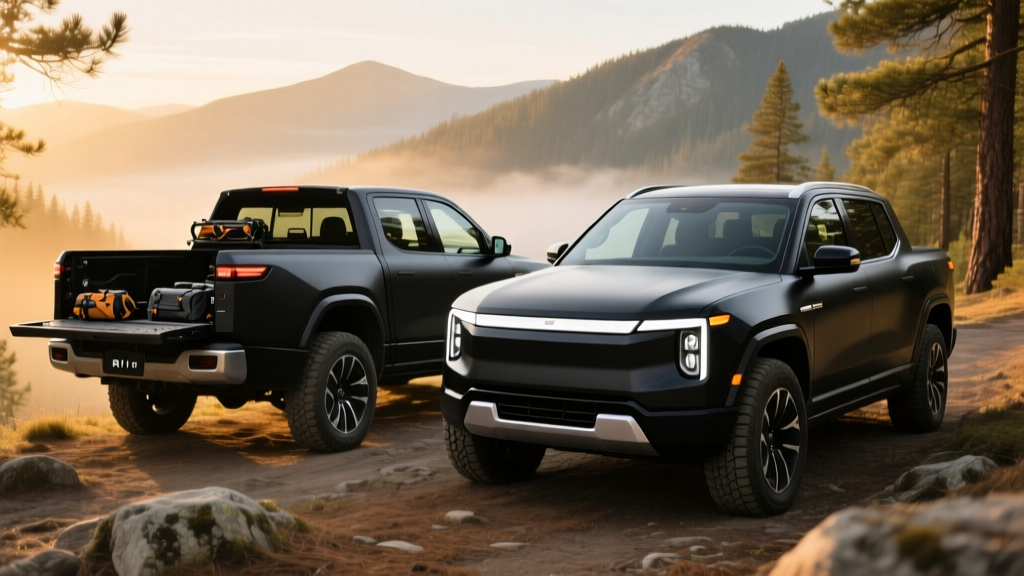
When Rivian launched the R1T pickup and R1S SUV in 2022, the EV startup positioned itself as an adventure-focused brand — think Subaru meets Tesla, with a side of Patagonia cred. But as the lineup has matured through the 2025 and 2026 model years, with interior upgrades, new tri-motor powertrains, and price tags climbing well past $80,000, a question keeps surfacing in forums and showrooms alike: Is Rivian a luxury brand?
The answer isn't a simple yes or no. Rivian doesn't sell itself the way Mercedes-Benz or BMW does — there's no heritage of opulence, no leather-stitched dashboard legacy. Instead, Rivian competes on capability, technology, and design ethos. In this deep-dive review, we'll break down the full 2026 Rivian R1T and R1S lineup by the numbers that matter — range, charging speed, performance, pricing, tax credit eligibility — and decide where Rivian actually fits in the EV landscape.
2026 Rivian R1T and R1S: Quick Specs at a Glance
| Spec | R1T Dual-Motor (Standard) | R1T Tri-Motor | R1S Dual-Motor | R1S Tri-Motor |
|---|---|---|---|---|
| EPA Range | 330 mi (Large Pack) | 315 mi (Max Pack) | 321 mi (Large Pack) | 308 mi (Max Pack) |
| Battery (usable) | ~106 kWh (NMC) | ~141 kWh (NMC) | ~106 kWh (NMC) | ~141 kWh (NMC) |
| Horsepower | 533 hp | 850 hp | 533 hp | 850 hp |
| 0–60 mph | 4.5 sec | 2.9 sec | 4.6 sec | 3.0 sec |
| Max DC Fast Charge | 220 kW | 220 kW | 220 kW | 220 kW |
| 10–80% DC Time | ~27 min | ~42 min | ~27 min | ~42 min |
| Level 2 Home Rate | 11.5 kW (~25 mi/hr) | 11.5 kW (~21 mi/hr) | 11.5 kW (~25 mi/hr) | 11.5 kW (~21 mi/hr) |
| Towing Capacity | 11,000 lbs | 11,000 lbs | 7,700 lbs | 7,700 lbs |
| Base MSRP | $69,900 | $99,900 | $75,900 | $104,900 |
| Federal Tax Credit | Partial (see below) | $0 (MSRP cap) | $0 (MSRP cap) | $0 (MSRP cap) |
Rivian uses NMC (nickel manganese cobalt) lithium-ion cells across both battery packs. NMC chemistry offers higher energy density than LFP, which matters in a heavy truck platform, but it also means Rivian recommends a daily charge limit of 80–90% for longevity — only charging to 100% when you need the full range for a trip. The Standard Pack uses a smaller ~92 kWh usable battery (not listed above for brevity) with roughly 270 miles of range on the R1T.
Real-World Range: What the EPA Sticker Doesn't Tell You
The EPA rates the R1T Dual-Motor Large Pack at 330 miles. In real-world mixed driving, expect 280–310 miles. On sustained highway driving at 75+ mph, that drops to roughly 250–270 miles due to aerodynamic drag on the tall, boxy body. In cold weather (below 30°F), plan for 220–250 miles of usable range — a 20–30% reduction typical of NMC packs without preconditioning.
The Tri-Motor with Max Pack rates at 315 miles EPA, but the additional motor and weight mean real-world highway range hovers around 240–265 miles.
Rivian's efficiency is respectable for a vehicle this heavy (over 7,000 lbs curb weight for the R1T), but it's no Model Y. The R1T Dual-Motor achieves roughly 73 MPGe combined (about 46 kWh/100 mi) according to fueleconomy.gov. That means every mile costs more in electricity than a lighter, sleeker EV — but you're paying that efficiency tax for ground clearance, payload, and towing capability that a sedan or crossover simply can't match.
Charging Speed and Infrastructure
| Level | Power | Connector | Miles Added per Hour | Use Case |
|---|---|---|---|---|
| Level 1 (120V) | ~1.4 kW | J1772 / NACS adapter | ~3 mi/hr | Emergency / trickle |
| Level 2 (240V) | 11.5 kW | J1772 / NACS adapter | ~25 mi/hr | Home overnight |
| DC Fast Charge | Peak 220 kW | CCS / NACS adapter | ~140+ mi in 20 min | Road trips |
Rivian's peak DC fast-charge rate of 220 kW on the Large Pack is competitive with most large-platform EVs. The charge curve holds above 175 kW through roughly 50% state of charge before tapering. The 10–80% time of ~27 minutes on the Large Pack is solid — though the Max Pack's larger 141 kWh battery means that same 10–80% session takes closer to 42 minutes because there's simply more energy to push.
For home charging, Rivian supports up to 11.5 kW on Level 2, which requires a 60-amp dedicated circuit (hardwired Wall Connector or equivalent). A full overnight charge from 20% to 80% takes about 6 hours on the Large Pack. Most owners will find a 48-amp circuit (11.5 kW capable) sufficient for daily replenishment.
Starting with the 2025 model year, Rivian transitioned to the NACS (North American Charging Standard) port, giving native access to Tesla's Supercharger network — a significant infrastructure advantage over CCS-only competitors. Older CCS-port Rivians can use a NACS adapter for Supercharger access.
Performance: Where the Luxury Argument Gets Stronger
The Dual-Motor R1T puts down 533 horsepower and hits 60 mph in 4.5 seconds — numbers that would have been supercar territory a decade ago, delivered in a 7,100-pound pickup with a bed full of camping gear. The Tri-Motor variant is absurd by any measure: 850 hp and a 2.9-second 0–60 time, making it one of the quickest production pickups ever built.
But performance in a luxury context isn't just about straight-line speed. Rivian's quad-corner air suspension delivers a ride quality that rivals the Mercedes EQS SUV and BMW iX on pavement, while offering up to 14.9 inches of ground clearance off-road. The tank-turn capability (on quad-motor models) and genuine off-road crawl modes set it apart from every luxury SUV competitor. This duality — autobahn-quick and trail-capable — is Rivian's strongest argument for premium positioning.
Driver assistance comes via Rivian's Driver+ system, which is a SAE Level 2 hands-on system combining adaptive cruise control and lane centering on highways. It is not autonomous driving. The system is competent but not class-leading — it doesn't match GM's Super Cruise or Ford's BlueCruise for hands-free capability on mapped highways. Rivian has been developing a more advanced hands-free system, but as of the 2026 model year, full hands-off driving is not available.
Pricing, Tax Credits, and the Luxury Question
| Model / Trim | Base MSRP | As-Tested Typical | §30D Credit Eligible? | Notes |
|---|---|---|---|---|
| R1T Dual-Motor (Standard Pack) | $69,900 | $74,000–$78,000 | Potentially partial | Under $80K truck cap; income & sourcing rules apply |
| R1T Dual-Motor (Large Pack) | $75,900 | $80,000–$86,000 | Unlikely | Options often push above $80K MSRP cap for trucks |
| R1T Tri-Motor | $99,900 | $105,000+ | No | Exceeds $80K truck MSRP cap |
| R1S Dual-Motor (Large Pack) | $75,900 | $82,000–$90,000 | No | Exceeds $80K SUV MSRP cap |
| R1S Tri-Motor | $104,900 | $110,000+ | No | Exceeds $80K SUV MSRP cap |
Here's where the luxury-brand question meets hard economics. Under current IRS §30D rules, the federal EV tax credit offers up to $7,500 — but with strict caps. For trucks (R1T), the MSRP cap is $80,000; for SUVs (R1S), it's $80,000 as well. Buyer income limits ($150K single / $300K joint AGI) and battery critical-mineral sourcing requirements further narrow eligibility.
In practice, most Rivian configurations — especially anything with the Large or Max Pack, or the Tri-Motor — push past the MSRP ceiling once options are added. The base R1T Dual-Motor Standard Pack at $69,900 is the most credit-eligible variant, but even then, battery sourcing rules may reduce or eliminate the credit. Always verify current eligibility on the IRS site or with a tax professional before counting on the credit in your purchase decision.
The §30D credit is non-refundable (you need tax liability to use it), subject to annual income caps, and requires that the vehicle's battery meets critical-mineral and component sourcing thresholds that shift each year. Rivian's US-built vehicles benefit from domestic assembly, but cell sourcing may not satisfy all requirements for the full $7,500 in every model year. The credit can now be transferred to the dealer as a point-of-sale discount if eligible — but confirm with your Rivian advisor before signing.
Interior, Tech, and Cargo: Premium but Not Traditional Luxury
Step inside a 2026 R1S or R1T, and the cabin makes a compelling case for premium status — just not in the way a Mercedes or Bentley would. Rivian uses sustainably sourced materials: vegan leather, reclaimed wood accents, and recycled textiles. The fit and finish on 2025+ models has improved markedly over early-production vehicles, with tighter panel gaps and more refined stitching.
Cargo and passenger dimensions:
- R1S (SUV, 3-row): 105.8 cu ft total cargo (behind front seats), 46.7 cu ft behind second row. Third-row legroom is 32.1 inches — tight for adults on long trips but functional for kids.
- R1T (Pickup): 4.5-foot bed with a lockable Gear Tunnel (11.7 cu ft) unique to Rivian. Crew cab rear-seat legroom is generous at 38.2 inches.
- Frunk (both): 11.1 cu ft front trunk, large enough for charging cables and a carry-on.
The infotainment runs on a custom 15.6-inch center display with a responsive, phone-like UI. There's no Apple CarPlay or Android Auto — a deliberate choice by Rivian that remains divisive. The native system handles navigation, media, and vehicle controls well, but the lack of phone projection frustrates some buyers who prefer their familiar interface. A 12.3-inch driver display and optional head-up display round out the cockpit.
Standout features include the built-in air compressor, the Gear Tunnel with slide-out kitchen accessory (R1T), integrated camp kitchen options, and over-the-air updates that have meaningfully improved the vehicle since launch — including suspension tuning, range optimization, and new driver-assist features.
Warranty and Long-Term Ownership
Rivian covers the R1T and R1S with the following warranties:
- Battery & Drive Units: 8 years / 175,000 miles (whichever comes first), with a capacity retention threshold of 70%.
- Bumper-to-Bumper: 5 years / 60,000 miles.
- Roadside Assistance: 5 years / 60,000 miles.
The 175,000-mile powertrain warranty is among the best in the EV segment and signals confidence in Rivian's in-house motor and battery pack design. For context, Tesla offers 8 years / 150,000 miles on the Model X drivetrain, and BMW provides 8 years / 100,000 miles on the iX battery.
Service remains a consideration. Rivian has been expanding its service center network and mobile service fleet, but coverage in rural areas still lags legacy automakers. If you live outside a major metro area, factor in potential service logistics before committing.
How Rivian Compares to the Competition
| Attribute | Rivian R1S (Dual-Motor) | Tesla Model X | BMW iX xDrive50 | Mercedes EQS 580 SUV |
|---|---|---|---|---|
| Base MSRP | $75,900 | $79,990 | $87,250 | $105,550 |
| EPA Range | 321 mi | 335 mi | 307 mi | 305 mi |
| 0–60 mph | 4.6 sec | 3.8 sec | 4.4 sec | 4.4 sec |
| Off-Road Capable | Yes (air susp., 14.9" clearance) | No | Limited | No |
| 3-Row Seating | Yes | Yes (optional) | No | Yes (optional) |
| Towing | 7,700 lbs | 5,000 lbs | 3,500 lbs | 7,500 lbs |
| NACS Native | Yes (2025+) | Yes | CCS (adapter avail.) | CCS (adapter avail.) |
Rivian's competitive moat is capability breadth. No other EV at any price point combines genuine off-road hardware, three-row seating, 7,700+ lb towing, and sub-5-second 0–60 times. The Model X is quicker and has Supercharger access, but it can't tackle a rocky trail. The BMW iX is more refined on pavement and has a superior interior by traditional luxury standards, but it seats only five and can't tow meaningfully. The EQS SUV is the most traditionally luxurious, but it costs $30K more and lacks any off-road pretense.
So — Is Rivian a Luxury Brand?
Rivian is a premium-capability brand, not a traditional luxury brand. If your definition of luxury is hand-stitched Nappa leather, a 64-color ambient lighting suite, and a century of prestige badge heritage — Rivian isn't that. But if luxury means exceptional breadth of capability wrapped in thoughtful, modern design with top-tier performance, then Rivian earns the label on its own terms.
The pricing — $70K to $110K+ — places Rivian firmly in premium territory. The ownership experience, build quality improvements, and technology stack compete with vehicles costing significantly more. Rivian's buyers aren't chasing a badge; they're buying the most capable all-electric adventure vehicle on the market, and they're willing to pay luxury prices for it.
Who Should Buy a Rivian?
- You need a 3-row electric SUV or electric pickup with real towing capacity
- Off-road capability matters (ski trips, trails, camping)
- You value NACS/Supercharger access for road trips
- You want sub-4-second performance in a truck/SUV
- You prefer sustainable materials over traditional luxury trim
- Traditional luxury prestige and heritage matter to you
- You require Apple CarPlay / Android Auto
- You want hands-free Level 2+ driving (Super Cruise, BlueCruise)
- You're on a budget under $65K
- You live far from a Rivian service center and need dealer-network convenience
Frequently Asked Questions
What is the real-world range of the Rivian R1T and R1S?
The EPA rates the R1T Dual-Motor Large Pack at 330 miles and the R1S at 321 miles. In real-world driving, expect 280–310 miles in mixed conditions, 250–270 on sustained highway trips, and 220–250 in cold weather. The Max Pack extends EPA range to 420 miles (R1T), with real-world highway expectations around 330–350 miles.
How fast does a Rivian charge at home and on the road?
On a Level 2 home charger at 11.5 kW, the Large Pack adds about 25 miles per hour and fully replenishes overnight in ~6–7 hours. On DC fast charging, the Large Pack peaks at 220 kW and charges from 10–80% in approximately 27 minutes. The Max Pack takes about 42 minutes for the same session due to its larger capacity.
Does the Rivian R1T or R1S qualify for the federal EV tax credit?
Most configurations do not qualify for the full $7,500 §30D credit. The MSRP cap for trucks and SUVs is $80,000, and many Rivian builds exceed that once options are added. Even the base R1T Standard Pack at $69,900 must satisfy battery critical-mineral sourcing requirements and buyer income limits ($150K single / $300K joint). Always check current rules at IRS.gov.
Is Rivian worth buying over a Tesla Model X or BMW iX?
If you need off-road capability, genuine towing, or a pickup bed, Rivian is the only serious option. The Model X is quicker and has a larger Supercharger-native network, but it can't off-road. The BMW iX has a more refined luxury interior but lacks a third row and meaningful towing. Choose Rivian for capability; choose the iX or EQS SUV for traditional luxury refinement.
What are the biggest pros and cons of owning a Rivian?
Pros: unmatched capability breadth, strong performance, NACS access, excellent air suspension, thoughtful design, competitive warranty. Cons: high starting price, limited tax credit eligibility, no CarPlay/Android Auto, service network still growing, efficiency lower than lighter EVs, hands-free driver assist not yet available.
How does Rivian's warranty compare to competitors?
Rivian offers 8 years / 175,000 miles on the battery and drive units with a 70% capacity retention threshold. That's more generous than BMW (8yr/100K mi) and comparable to Tesla (8yr/150K mi). The bumper-to-bumper coverage of 5 years / 60,000 miles is standard for the segment.