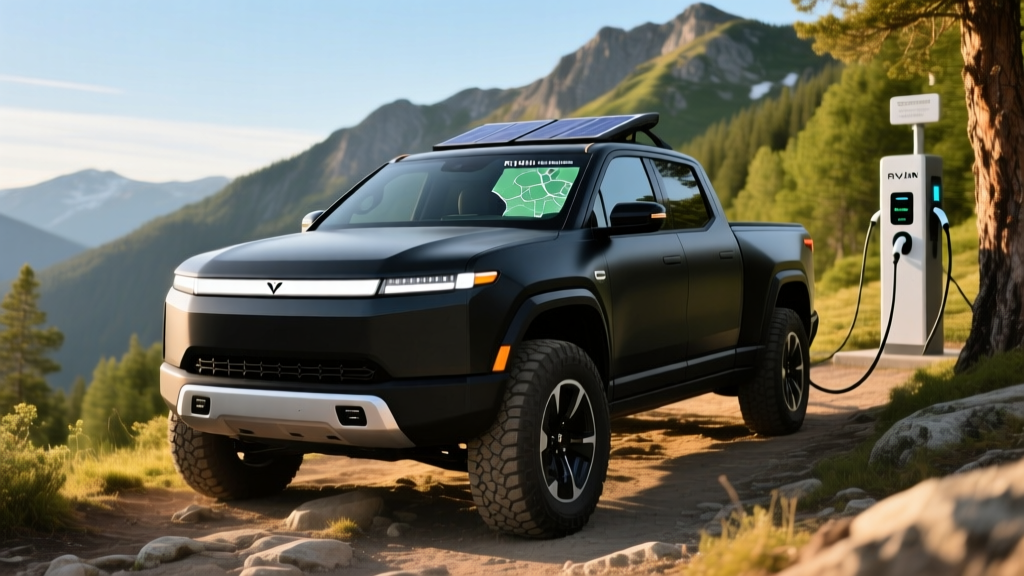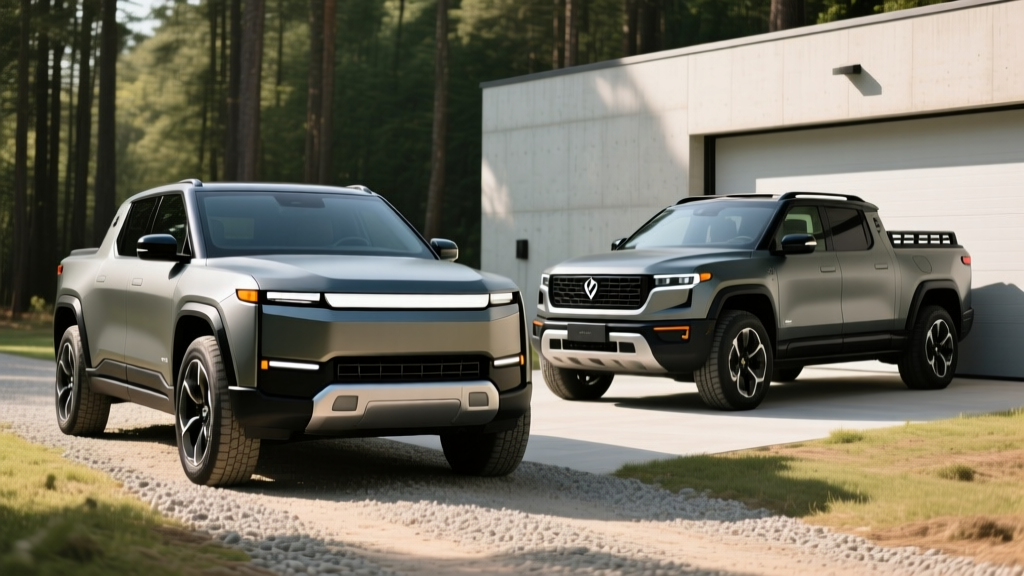
If you've been researching electric trucks and SUVs, you've likely asked: is Rivian American made? The short answer is yes — Rivian designs, engineers, and assembles its vehicles in the United States. But the deeper question for EV buyers is whether the R1S SUV and R1T pickup deliver where it counts: real-world range, charging speed, daily usability, and federal tax credit eligibility. This profile breaks down everything you need to know about Rivian's current lineup from a practical ownership perspective.
Where Rivian Builds Its Vehicles: The Normal, Illinois Factory
Rivian's manufacturing home is a repurposed Mitsubishi plant in Normal, Illinois — a 3.3-million-square-foot facility that the company purchased in 2017 and retooled for EV production. Every R1S and R1T that rolls off the line is assembled there. Rivian also manufactures its own battery packs and drive units on-site, which is significant for federal tax credit sourcing requirements under IRS §30D.
The company has announced a second factory in Stanton, Georgia, intended to produce its more affordable R2 platform (expected 2026–2027), but as of now, Normal remains the sole production site for all consumer Rivian vehicles. Rivian also operates a battery development facility in Irvine, California, and an engineering center in Palo Alto.
On the supply chain side, Rivian sources battery cells from Samsung SDI (2170 cylindrical cells for its Standard and Large packs) and has begun integrating LFP (lithium iron phosphate) prismatic cells from CATL for its Standard battery pack. While the cell sourcing is international — as it is for every automaker — final assembly, pack integration, and vehicle manufacturing are all U.S.-based.
2026 Rivian R1S and R1T: Range, Battery, and Real-World Efficiency
Rivian offers three battery configurations across the R1S (three-row SUV) and R1T (crew-cab pickup). For the 2025–2026 model years, the lineup was significantly updated with a new Gen 2 platform featuring dual-motor and tri-motor powertrains, a redesigned electrical architecture, and a switch to NACS (Tesla-style) charge ports as standard.
| Spec | Standard (LFP) | Large (NMC) | Max (NMC) |
|---|---|---|---|
| Battery Capacity (usable) | ~92 kWh | ~109 kWh | ~141 kWh |
| Cell Chemistry | LFP (prismatic) | NMC (2170 cylindrical) | NMC (2170 cylindrical) |
| EPA Range (R1S Dual-Motor) | ~270 mi | ~352 mi | ~410 mi |
| EPA Range (R1T Dual-Motor) | ~270 mi | ~352 mi | ~420 mi |
| EPA Range (Tri-Motor) | N/A | ~330 mi | ~390 mi |
| Efficiency (R1S Dual-Motor Large) | ~74 MPGe combined / ~45 kWh/100 mi | ||
| 0-60 mph (Dual-Motor) | ~3.4 seconds (Performance Dual-Motor) | ||
| 0-60 mph (Tri-Motor) | ~2.9 seconds | ||
| Horsepower (Dual-Motor) | 533 hp (Adventure) / 665 hp (Performance) | ||
| Horsepower (Tri-Motor) | 850 hp | ||
| Drivetrain | AWD (dual- or tri-motor) | ||
| Max Tow Capacity (R1T) | 11,000 lbs | ||
The EPA numbers above assume mixed driving. Expect ~290–310 miles highway in the Large pack R1S at 70 mph in moderate temperatures. In cold weather (below 30°F), plan for a 20–30% reduction — putting a Large pack R1S at roughly 245–280 real-world miles on a winter road trip. The Max pack helps absorb this penalty, but its added weight (~600 lbs more than the Large) slightly hurts efficiency. Tri-motor models sacrifice roughly 20–30 miles of range versus their dual-motor equivalents due to the additional front motor's mass and drag.
The LFP chemistry in the Standard pack is worth noting: LFP cells tolerate daily charging to 100% without the degradation concerns of NMC, making the Standard pack a smart choice for commuters who can charge at home nightly. The trade-off is less total range and slightly slower DC fast-charging speeds.
Charging Speed: DC Fast, Level 2, and the NACS Advantage
Starting with the Gen 2 platform, Rivian adopted the NACS (North American Charging Standard) connector, giving R1S and R1T owners native access to Tesla's Supercharger network — currently the most reliable DC fast-charging infrastructure in the U.S.
| Charge Level | Standard (LFP) | Large (NMC) | Max (NMC) |
|---|---|---|---|
| DC Fast Charge (Peak kW) | ~200 kW | ~220 kW | ~220 kW |
| 10-80% DCFC Time | ~28 min | ~24 min | ~38 min |
| Level 2 Home (kW) | 11.5 kW | 11.5 kW | 11.5 kW |
| Level 2 Miles per Hour | ~20 mi/hr | ~25 mi/hr | ~25 mi/hr |
| Full Level 2 Charge (0-100%) | ~9 hrs | ~11 hrs | ~14 hrs |
On a 250 kW Supercharger V4 stall, the Large pack R1S sustains roughly 180–200 kW through the 20–60% state-of-charge window before tapering. The Max pack charges at a similar peak rate but takes longer overall because there's more total energy to push. Above 80% SoC, charging slows dramatically — plan to unplug at 80% on road trips unless you need the final stretch.
At home on a 48-amp Level 2 circuit (the common Rivian Wall Connector setup), you'll add about 25 miles of range per hour of charging for the Large pack. Overnight charging from 20% to 80% takes roughly 7 hours — perfectly aligned with a normal sleep schedule. Standard pack owners benefit from LFP's ability to charge to 100% daily without accelerated degradation.
Performance, Cargo, and Daily Livability
Rivian's dual-motor and tri-motor powertrains deliver sports-car acceleration in vehicles that weigh over 6,500 pounds. The Performance Dual-Motor R1T hits 60 mph in approximately 3.4 seconds; the Tri-Motor drops that to roughly 2.9 seconds. Air suspension is standard, offering 6.2 inches of ride-height adjustability — from a low aero mode for highway efficiency to a high clearance mode for off-road trails.
R1S (SUV) interior dimensions:
- Seating: 7 passengers across three rows
- Third-row legroom: ~30.2 inches (tight for adults on long trips)
- Cargo behind 3rd row: ~10.5 cu ft
- Cargo behind 2nd row (3rd row folded): ~46.7 cu ft
- Cargo behind 1st row (all rear rows folded): ~88.2 cu ft
- Front trunk (frunk): ~11.0 cu ft — a genuine advantage over body-on-frame competitors
R1T (Pickup) utility:
- Bed length: 4'6" (54 inches) — shorter than a full-size truck bed
- Gear Tunnel: 11.7 cu ft lockable pass-through storage behind the rear seats (R1T-exclusive)
- Frunk: ~11.0 cu ft
- Max towing: 11,000 lbs (best-in-class for electric pickups)
- Payload capacity: ~1,760 lbs
The 15.6-inch center touchscreen runs Rivian's proprietary software, which has improved substantially through over-the-air updates. Wireless Apple CarPlay and Android Auto are supported. The digital driver display is a 12.3-inch cluster. Rivian's Driver+ ADAS suite provides highway lane-centering and adaptive cruise — this is an SAE Level 2 system requiring active driver supervision, not autonomous driving.
Pricing, Trims, and Federal Tax Credit Eligibility
| Model / Trim | Battery | Base MSRP | Est. After §30D Credit |
|---|---|---|---|
| R1S Dual-Motor Adventure | Standard (LFP) | ~$75,900 | ~$68,400* |
| R1S Dual-Motor Adventure | Large (NMC) | ~$82,400 | ~$74,900* |
| R1S Tri-Motor Ascend | Large (NMC) | ~$100,900 | ~$93,400* |
| R1T Dual-Motor Adventure | Standard (LFP) | ~$69,900 | ~$62,400* |
| R1T Dual-Motor Adventure | Large (NMC) | ~$76,400 | ~$68,900* |
| R1T Tri-Motor Ascend | Max (NMC) | ~$99,900 | ~$92,400* |
*Federal EV tax credit estimates assume eligibility. Actual credit amount and availability depend on current-year IRS rules.
Under current IRS §30D rules, qualifying for the full $7,500 federal tax credit requires meeting several conditions simultaneously:
- MSRP cap: SUVs (R1S) must be under $80,000 MSRP; pickups (R1T) must be under $80,000 MSRP. This eliminates most Tri-Motor and Max pack configurations from credit eligibility.
- Buyer income cap: Modified AGI must not exceed $300,000 (joint), $225,000 (head of household), or $150,000 (single).
- Battery sourcing: A percentage of critical minerals and battery components must be sourced from the U.S. or free-trade-agreement countries. Rivian's LFP Standard pack (CATL cells) faces the most scrutiny here due to Chinese cell sourcing, which may limit or eliminate credit eligibility for that specific configuration.
- Point-of-sale transfer: Eligible buyers can transfer the credit to the dealer at purchase, reducing the upfront price rather than waiting for a tax refund.
Bottom line: the R1T Dual-Motor with the Large pack (under $80K MSRP) is the sweet spot for tax credit qualification. Consult a tax professional and check the latest IRS eligible-vehicle list before purchasing, as battery-sourcing compliance changes periodically.
Warranty and Long-Term Ownership
Rivian provides competitive warranty coverage for the EV segment:
- Battery & Drive Units: 8 years / 175,000 miles (whichever comes first), with a capacity retention threshold of 70%
- Bumper-to-Bumper (Limited): 5 years / 60,000 miles
- Corrosion Perforation: 5 years / unlimited miles
- Roadside Assistance: 5 years / 60,000 miles
The 175,000-mile battery warranty is above the industry-standard 100,000 miles and reflects confidence in both the Samsung SDI NMC cells and the LFP chemistry's long cycle life. LFP cells in the Standard pack are rated for 3,000+ full charge cycles before reaching 80% capacity — equivalent to over 800,000 miles at the Standard pack's range.
Rivian vs. the Competition: Is It Worth Buying?
- U.S.-assembled with strong domestic manufacturing footprint
- Class-leading 11,000-lb towing (R1T) and genuine off-road capability
- NACS port = native Supercharger access, no adapter needed
- Frunk + Gear Tunnel (R1T) offer storage gas trucks can't match
- Tri-Motor performance is legitimately supercar-fast in a 6,500-lb vehicle
- LFP Standard pack option for daily 100% charging without degradation worry
- Over-the-air updates continuously improve the vehicle post-purchase
- Pricing starts high — tax credit eligibility is trim-dependent
- R1S third row is cramped for adults (30.2" legroom)
- R1T bed is only 4'6" — shorter than most midsize gas pickups
- Efficiency (~45 kWh/100 mi) lags lighter EVs like the Ioniq 5 or Model Y
- Service center network still expanding — rural owners may face long tow distances
- Driver+ is Level 2 only — no hands-free highway driving like GM Super Cruise
- Max pack adds significant weight, reducing efficiency and increasing tire wear
Against the Tesla Cybertruck, the Rivian R1T offers a more conventional (and more practical) pickup layout, better interior materials, and a more mature software experience — but less rear bed length and a higher starting price. Against the Ford F-150 Lightning, the R1T is more expensive but delivers substantially more range, faster charging, better off-road hardware, and a more premium cabin. The Chevrolet Silverado EV undercuts on price and offers a longer bed, but its charging speed and efficiency trail Rivian's Gen 2 architecture.
For the R1S, the closest competitor is the Kia EV9, which offers three rows at a significantly lower price (~$55K–$70K) but with less range, slower charging, no frunk, and no serious off-road capability. The Tesla Model X matches Rivian on performance and tech but has polarizing styling, panel-gap quality issues, and no genuine off-road pretensions.
Who Should Buy a Rivian?
- You need a genuine multi-purpose vehicle: daily commuter, weekend trail rig, and family hauler in one
- You tow a boat, camper, or horse trailer and want electric without range-compromised competitors
- You value U.S. manufacturing and want a vehicle assembled domestically with strong supply-chain transparency
- You want native Supercharger access without relying on adapters or third-party networks
- Off-road capability matters (Rivian's quad-motor air suspension and tank turns are best-in-class)
- Budget is your top priority — the Kia EV9 or Ford F-150 Lightning deliver similar utility at lower prices
- You need a full-size truck bed (6.5–8 ft) for work — the R1T's 4'6" bed won't cut it
- You want hands-free highway driving — GM's Super Cruise or Ford's BlueCruise offer that today
- You live far from a Rivian service center and can't tolerate potential multi-day repair logistics
Frequently Asked Questions
Is Rivian American made?
Yes. Rivian assembles all R1S and R1T vehicles at its factory in Normal, Illinois. Battery packs and drive units are also manufactured on-site. While some battery cells are sourced internationally (Samsung SDI for NMC, CATL for LFP), final vehicle production is entirely U.S.-based.
What is the real-world range of a Rivian R1S or R1T?
The EPA rates the Large pack Dual-Motor R1S at approximately 352 miles. In real-world highway driving at 70 mph, expect roughly 290–310 miles. In cold weather (below 30°F), plan for 245–280 miles. The Max pack pushes EPA estimates above 400 miles, offering a larger buffer for road trips and winter driving.
How fast does the Rivian charge at home and on the road?
On DC fast charging (NACS, Supercharger V4), the Large pack charges from 10-80% in approximately 24 minutes at a peak rate of ~220 kW. At home on a 48-amp Level 2 charger (11.5 kW), you'll add roughly 25 miles of range per hour, fully replenishing overnight.
Does Rivian qualify for the $7,500 federal EV tax credit?
Some configurations do. The R1T and R1S Dual-Motor models with MSRP under $80,000 may qualify, provided the buyer meets IRS income caps and the vehicle's battery meets critical-mineral and component sourcing requirements. Tri-Motor and Max pack configurations exceed the $80,000 MSRP cap and do not qualify. Always verify current eligibility on IRS.gov before purchasing.
Is Rivian's Driver+ system self-driving?
No. Rivian Driver+ is an SAE Level 2 driver-assistance system that provides adaptive cruise control and lane-centering on highways. The driver must remain fully engaged, with hands on or near the wheel at all times. It is not autonomous driving.
How does Rivian's warranty compare to other EV makers?
Rivian's 8-year/175,000-mile battery warranty exceeds the industry standard of 8 years/100,000 miles (used by Tesla, Ford, and Hyundai). The 70% capacity retention threshold is typical. The 5-year/60,000-mile bumper-to-bumper coverage is competitive with luxury EV brands.
Can I tow with a Rivian without destroying my range?
Towing at max capacity (11,000 lbs) will roughly halve your range. Expect 150–180 miles from a Large pack R1T when towing a 7,000–8,000 lb trailer at highway speeds. Plan charging stops accordingly — DC fast charging while towing is feasible on Superchargers with pull-through stalls, which are becoming more common.
Rivian's answer to "is it American made?" is backed by a real factory, real U.S. jobs, and a vehicle that competes on specs — not just patriotism. The R1S and R1T are among the most capable electric vehicles on the market for buyers who need range, towing, and off-road ability in a premium package. The question isn't whether Rivian is American — it's whether the price, charging logistics, and service footprint work for your specific situation.