Is Polestar Owned by Volvo? The Corporate Relationship Explained
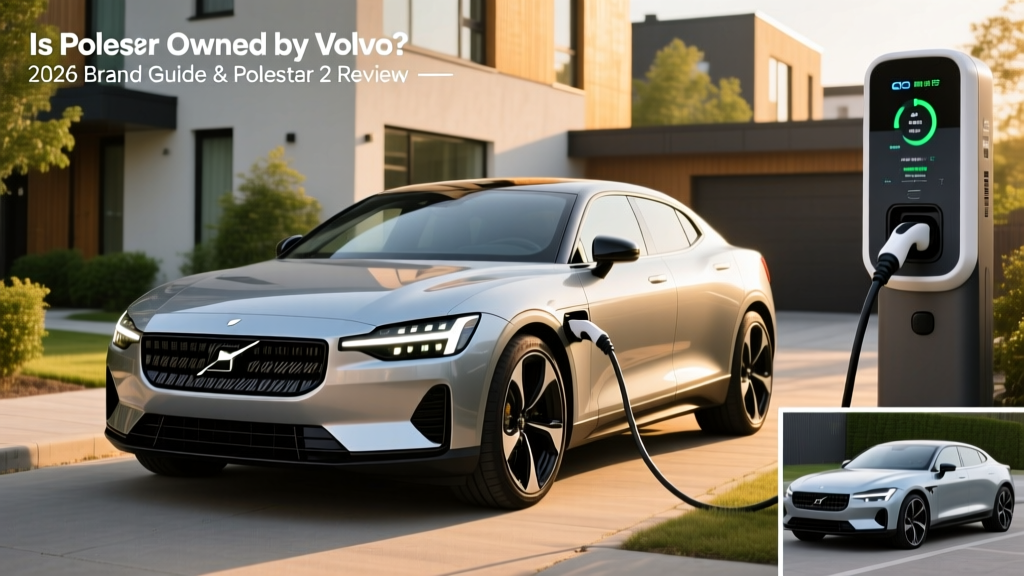
If you've shopped for a premium electric vehicle, you've likely asked: is Polestar owned by Volvo? The short answer is that Polestar and Volvo share the same parent company — Zhejiang Geely Holding Group, a Chinese multinational automotive conglomerate — but Polestar operates as a separate, publicly traded entity (NASDAQ: PSNY). Volvo Cars holds a significant ownership stake in Polestar, and the two brands share platforms, powertrain components, and manufacturing facilities, but Polestar functions with its own design studio, engineering team, and brand identity focused exclusively on electric performance vehicles.
The relationship traces back to Polestar's origins as Volvo's in-house performance tuning division (similar to AMG's relationship with Mercedes-Benz). In 2017, Geely and Volvo spun Polestar out as a standalone electrified performance brand. By 2022, Polestar went public via a SPAC merger. As of the 2026 model year, Geely retains majority voting control, Volvo Cars holds roughly 49% economic interest, and Polestar operates with increasing independence — though platform sharing with Volvo remains a core advantage.
This shared DNA matters for buyers: Polestar vehicles benefit from Volvo's safety engineering legacy, parts network, and service infrastructure, while offering a sportier, more minimalist design language and an EV-only lineup. Let's examine what that translates to in practice with the brand's volume seller — the 2026 Polestar 2.
2026 Polestar 2: Quick Verdict
The 2026 Polestar 2 is a compact luxury electric sedan/fastback that competes directly with the Tesla Model 3, BMW i4, and Hyundai Ioniq 6. After a major refresh for the 2024 model year (switching from front-wheel to rear-wheel-drive on the base model and adopting a new generation of electric motors), the 2026 Polestar 2 continues with minor trim and software updates. It offers up to 320 miles of EPA-estimated range, DC fast charging up to 205 kW, and a starting price that — when combined with the federal tax credit — makes it one of the more compelling premium EV sedans on the market.
The Polestar 2's strengths are build quality, ride refinement, and a driver-centric interior that feels more substantial than some competitors. Its main limitation is rear-seat and cargo space that falls short of the Model 3 and Ioniq 6, plus a charging curve that tapers noticeably above 80% state of charge (SoC).
| Spec | Standard Range (Single Motor) | Long Range (Single Motor) | Long Range (Dual Motor AWD) |
|---|---|---|---|
| EPA Range | 276 mi | 320 mi | 298 mi |
| Battery (Usable) | 69 kWh (LFP) | 82 kWh (NMC) | 82 kWh (NMC) |
| Drivetrain | RWD | RWD | AWD (Dual Motor) |
| Horsepower | 299 hp | 299 hp | 421 hp |
| 0–60 mph | 5.9 sec | 5.9 sec | 4.2 sec |
| Peak DC Charge Rate | 135 kW | 205 kW | 205 kW |
| 10–80% DC Fast Charge | ~30 min | ~26 min | ~26 min |
| Level 2 Home Charge (11 kW) | ~28 mi/hr | ~34 mi/hr | ~34 mi/hr |
| EPA Efficiency (Combined) | 115 MPGe | 107 MPGe | 99 MPGe |
| Base MSRP | $49,900 | $53,400 | $58,900 |
Source: fueleconomy.gov and Polestar USA specifications. Pricing excludes destination fee ($1,400).
Range and Efficiency: EPA vs. Real World
EPA Estimated: 320 miles (Long Range Single Motor)
Real-World Expectation: ~270–290 miles in mixed driving; ~250–265 miles sustained highway at 75 mph; ~220–245 miles in freezing temperatures with cabin heating
Efficiency: 107 MPGe combined / 31 kWh per 100 miles (Long Range RWD)
The Long Range Single Motor variant is the range champion of the lineup. Its 82 kWh usable battery (sourced from CATL, using nickel-manganese-cobalt chemistry) delivers strong real-world results in moderate temperatures and city-heavy driving. On a 70°F day with mixed suburban and highway driving, expect to see 280–295 miles from a full charge — close to the EPA sticker.
However, highway efficiency is where the Polestar 2's fastback shape (less aerodynamic than the teardrop Ioniq 6) shows its limits. At sustained 75 mph on flat interstate, real-world range drops to roughly 250–265 miles. In cold weather (below 32°F), expect a 15–25% range reduction depending on whether you use the standard heat pump (included on all 2026 trims) or resistive heating. The heat pump significantly mitigates cold-weather loss compared to older EVs, but physics still applies — battery chemistry becomes less efficient in the cold, and cabin heating draws substantial energy.
The Standard Range model uses a 69 kWh lithium iron phosphate (LFP) battery. LFP chemistry offers excellent cycle life (thousands of charge cycles with minimal degradation) and can be charged to 100% regularly without concern, but its lower energy density means less range in a smaller package. For warm-climate commuters who can charge at home nightly, 276 miles is more than sufficient. For cold-climate road trippers, the Long Range NMC variant is the better choice.
Charging Speed and Infrastructure
Charging capability is where ownership practicality lives or dies. The 2026 Polestar 2 uses the CCS1 connector standard (Polestar has announced NACS adoption for future models, but the 2026 Polestar 2 retains CCS1). Adapters for Tesla Supercharger access are available, expanding the usable fast-charging network considerably.
| Charging Level | Power / Voltage | Miles Added per Hour | Typical Use Case |
|---|---|---|---|
| Level 1 (120V household) | 1.4 kW | ~4–5 mi/hr | Emergency/overnight trickle |
| Level 2 (240V home, 48A) | 11 kW | ~28–34 mi/hr | Daily home charging (7–10 hr full charge) |
| DC Fast Charge (Long Range) | Peak 205 kW | Up to ~450 mi/hr (peak) | Road trips; 10–80% in ~26 min |
| DC Fast Charge (Standard Range) | Peak 135 kW | Up to ~300 mi/hr (peak) | Road trips; 10–80% in ~30 min |
Charging curve reality: The Long Range models peak at 205 kW only at low states of charge (roughly 10–30% SoC). From 30–60%, expect sustained rates around 150–170 kW. Above 80%, charging tapers sharply to protect the battery — from 80–100% can take as long as the 10–80% portion. For road trips, plan to charge from 10–80% and move on rather than waiting for a full charge. This taper behavior is common across NMC battery EVs and is managed by the vehicle's thermal management system.
At home, the 11 kW onboard charger is competitive. A full Level 2 charge from empty takes roughly 8–10 hours for the Long Range, meaning you'll wake up to a full battery every morning with a properly installed 240V/48A home charger. Installation costs typically range from $800–$2,500 depending on your electrical panel capacity and run length — budget for a potential panel upgrade if your home has a 100A service.
Performance and Driving Dynamics
The 2024 model year's switch to rear-wheel drive for the Single Motor transformed the Polestar 2's character. Where the original FWD layout felt nose-heavy under hard acceleration, the RWD configuration delivers balanced, engaging dynamics that match the car's sporty aspirations. The 299 hp single-motor setup provides confident highway merging and passing, with the 5.9-second 0–60 mph time feeling quicker in practice thanks to instant electric torque delivery.
The Dual Motor AWD variant (421 hp, 4.2 seconds to 60 mph) adds a Performance Pack option ($5,000) that includes Öhlins dampers, Brembo brakes, and forged wheels — transforming the car into a legitimate sports sedan competitor. However, the Performance Pack reduces range to approximately 276 miles (EPA) due to stickier tires and added unsprung weight.
Ride quality on the standard suspension is firm but well-damped — noticeably more composed over broken pavement than the Tesla Model 3, though less plush than a BMW i4. The steering is precise but somewhat light on feedback. Regenerative braking offers adjustable levels through the infotainment system but does not provide true one-pedal driving in the strongest sense — you'll still need the friction brakes for final stops.
Interior, Tech, and Practicality
The Polestar 2's interior is where the Volvo connection is most visible. Materials quality is excellent — vegan upholstery (a Polestar brand pillar), real aluminum or wood trim options, and tight panel gaps that exceed most competitors. The minimalist Scandinavian design feels premium without the screen-overload trend plaguing some rivals.
The 11.2-inch center touchscreen runs a Google Automotive OS-based infotainment system with native Google Maps navigation (which factors in battery state, elevation, and temperature for range-aware route planning), Google Assistant voice control, and access to the Google Play Store for apps. Apple CarPlay is wireless; Android Auto is integrated at the OS level. Over-the-air (OTA) updates add features and refine performance periodically.
Driver assistance: The Polestar 2 comes standard with Pilot Pack, which includes adaptive cruise control with stop-and-go, lane centering, blind-spot monitoring, and rear cross-traffic alert. This is an SAE Level 2 driver-assist system — it supports the driver on highways but requires continuous hands-on-wheel attention and does not constitute autonomous driving. An optional Pilot Pack with Pixel LED headlights and a 360-degree camera adds $3,200.
Rear cargo (behind rear seats): 14.4 cu ft (fastback hatch, not a traditional trunk)
Cargo with rear seats folded: 38.7 cu ft
Rear legroom: 33.4 inches (tight for adults over 6'0" on longer trips)
Front headroom: 40.1 inches
Frunk: 1.4 cu ft (small — fits a charging cable bag, not much else)
Compared to Tesla Model 3: 23 cu ft cargo, 35.2" rear legroom — the Model 3 is meaningfully roomier.
Pricing, Trims, and Federal Tax Credit Eligibility
The 2026 Polestar 2 is offered in three core configurations. Pricing below reflects base MSRP before destination ($1,400) and before any incentives:
| Trim | Base MSRP | MSRP + Destination | §30D Credit Eligible? | Effective Price (w/ max credit) |
|---|---|---|---|---|
| Standard Range Single Motor | $49,900 | $51,300 | Yes (under $55K sedan cap) | ~$43,800* |
| Long Range Single Motor | $53,400 | $54,800 | Yes (under $55K sedan cap) | ~$47,300* |
| Long Range Dual Motor AWD | $58,900 | $60,300 | No (exceeds $55K sedan cap) | $60,300 |
*Effective price assumes buyer qualifies for the full $7,500 federal tax credit under IRS §30D. Eligibility requires: buyer AGI under $150K (single) / $300K (joint), vehicle MSRP under $55,000 (sedans), and compliance with battery critical-mineral and component sourcing requirements that change annually. The credit can be transferred to the dealer at point of sale as a purchase-price reduction. Always verify current-year eligibility with a tax professional before purchase.
The Dual Motor's MSRP exceeding the $55,000 sedan cap is a significant disadvantage for credit-seeking buyers. If the $7,500 credit is important to your budget, the Long Range Single Motor at ~$47,300 effective price is the sweet spot — it's the longest-range variant and undercuts a comparably equipped Tesla Model 3 Long Range.
Popular options that push pricing higher: Plus Pack ($4,000 — Harman Kardon audio, panoramic roof, heated rear seats, wireless phone charging), Pilot Pack ($3,200 — Pixel LED headlights, 360° camera, enhanced driver assist), and 20-inch alloy wheels ($1,200, reduces range by ~10 miles). A well-optioned Long Range Single Motor with Plus and Pilot packs lands around $61,000–$62,000 before credits.
Warranty and Long-Term Ownership
Polestar provides a warranty package in line with premium competitors:
- Basic vehicle warranty: 4 years / 50,000 miles
- Battery and drive unit warranty: 8 years / 100,000 miles (covers battery capacity retention below 70% of original)
- Corrosion warranty: 12 years, unlimited miles
- Roadside assistance: 4 years / unlimited miles
The 70% capacity retention threshold at 8 years/100,000 miles is standard for the industry (Tesla uses the same benchmark). Real-world degradation data from 2021–2024 Polestar 2 owners suggests NMC batteries lose roughly 5–8% capacity in the first 60,000 miles before stabilizing. The LFP battery in the Standard Range model is expected to degrade even more slowly, given LFP's superior cycle life — though long-term fleet data for this specific pack is still accumulating.
Service is handled through Volvo's dealer network, which is an advantage for parts availability and geographic coverage compared to startup EV brands. However, Polestar-specific diagnostic tools and training can mean longer wait times at some Volvo service departments. Routine maintenance is minimal (cabin air filter, brake fluid, tire rotation) and typically costs $200–$400 annually — significantly less than a comparable gas-powered luxury sedan.
Polestar 2 vs. Key Competitors
✅ Polestar 2 Pros
- Superior build quality and materials vs. Model 3
- Standard heat pump (cold-weather efficiency)
- Volvo dealer service network
- RWD dynamics are genuinely engaging
- LFP battery option for longevity-focused buyers
- Google Maps native navigation with range planning
❌ Polestar 2 Cons
- Less cargo and rear-seat space than Model 3/Ioniq 6
- Dual Motor exceeds tax-credit MSRP cap
- CCS1 connector (NACS not yet adopted)
- Charging tapers sharply above 80% SoC
- No true one-pedal driving mode
- Smaller dealer/service footprint than Tesla or Hyundai
Decision Framework: Choose the Polestar 2 If…
- Choose Polestar 2 if you value build quality, Scandinavian design, and a premium interior over maximum interior space, and you want access to Volvo's service network.
- Choose Tesla Model 3 if you need more cargo room, want Supercharger-native access, prefer the most energy-efficient sedan in the class, or want the Dual Motor AWD option while still qualifying for the tax credit (Model 3 LR AWD starts under $55K).
- Choose Hyundai Ioniq 6 if maximum highway range (360+ mi EPA) and aerodynamic efficiency are your top priorities, and you prefer a lower starting price.
- Choose BMW i4 if you want a traditional luxury badge, more rear-seat space, and don't mind a higher starting price (~$57K base).
Who Should Buy the 2026 Polestar 2?
The Polestar 2 is best suited for:
- Premium commuters who drive 30–80 miles daily, can charge at home, and want a refined, well-built sedan that feels more substantial than a tech-forward minimalist alternative.
- Volvo loyalists transitioning to electric who want familiar service infrastructure and Scandinavian design language without the larger XC-style SUV.
- Cold-climate buyers who benefit from the standard heat pump and well-managed thermal system — the Polestar 2 performs more predictably in winter than many competitors.
- Driving enthusiasts (Dual Motor with Performance Pack) who want Öhlins suspension tuning and Brembo brakes in an electric package.
It is not ideal for: families needing frequent rear-seat passenger space, buyers who regularly take 300+ mile road trips without stopping, or budget-focused shoppers who need every available tax credit dollar (the Dual Motor's MSRP cap issue is real).
Frequently Asked Questions
Is Polestar owned by Volvo?
Polestar is not directly owned by Volvo Cars, but Volvo holds approximately 49% economic interest in Polestar, and both brands are majority-controlled by Geely Holding Group. Polestar is a separate, publicly traded company (NASDAQ: PSNY) with its own design, engineering, and brand identity, but it shares platforms, components, and service infrastructure with Volvo.
What is the real-world range of the 2026 Polestar 2?
The EPA rates the Long Range Single Motor at 320 miles. In real-world mixed driving at moderate temperatures, expect 270–290 miles. Sustained highway driving at 75 mph reduces this to roughly 250–265 miles. In freezing weather, expect 220–245 miles depending on heat pump usage and driving style.
How fast does the Polestar 2 charge?
The Long Range models peak at 205 kW DC fast charging, achieving 10–80% in approximately 26 minutes under ideal conditions. The Standard Range peaks at 135 kW (10–80% in ~30 minutes). At home on a 240V/48A Level 2 charger, expect a full charge in 8–10 hours. Note that charging tapers significantly above 80% — plan road-trip stops around 10–80% charges for efficiency.
Does the 2026 Polestar 2 qualify for the federal EV tax credit?
The Standard Range ($49,900 MSRP) and Long Range Single Motor ($53,400 MSRP) both fall under the $55,000 sedan MSRP cap and are eligible for the §30D credit — up to $7,500 — provided the buyer meets income limits ($150K single / $300K joint AGI) and the vehicle meets battery critical-mineral and component sourcing requirements. The Dual Motor AWD ($58,900 MSRP) exceeds the sedan cap and does not qualify. The credit can be applied as a point-of-sale price reduction at participating dealers. Always confirm current-year eligibility on irs.gov and with a tax professional.
Is the Polestar 2 worth buying over a Tesla Model 3?
It depends on priorities. The Polestar 2 offers better interior materials, a more composed ride, standard heat pump, and Volvo service infrastructure. The Tesla Model 3 offers more interior and cargo space, slightly better efficiency, Supercharger-native access, and a lower effective price on AWD variants that still qualify for the tax credit. If build quality and refinement matter most, the Polestar 2 wins. If space, efficiency, and charging convenience are paramount, the Model 3 has the edge.
Can I service a Polestar at any Volvo dealer?
Most Volvo dealers can handle basic Polestar service (tire rotation, cabin filter, brake fluid), but warranty and high-voltage system work may require Polestar-certified technicians. Check with your local Volvo dealer about their Polestar service capability before purchasing, especially in smaller markets.
Sources: EPA fueleconomy.gov, IRS Clean Vehicle Credit, Polestar USA.