Quick Answer: Is Mercedes Going All Electric?
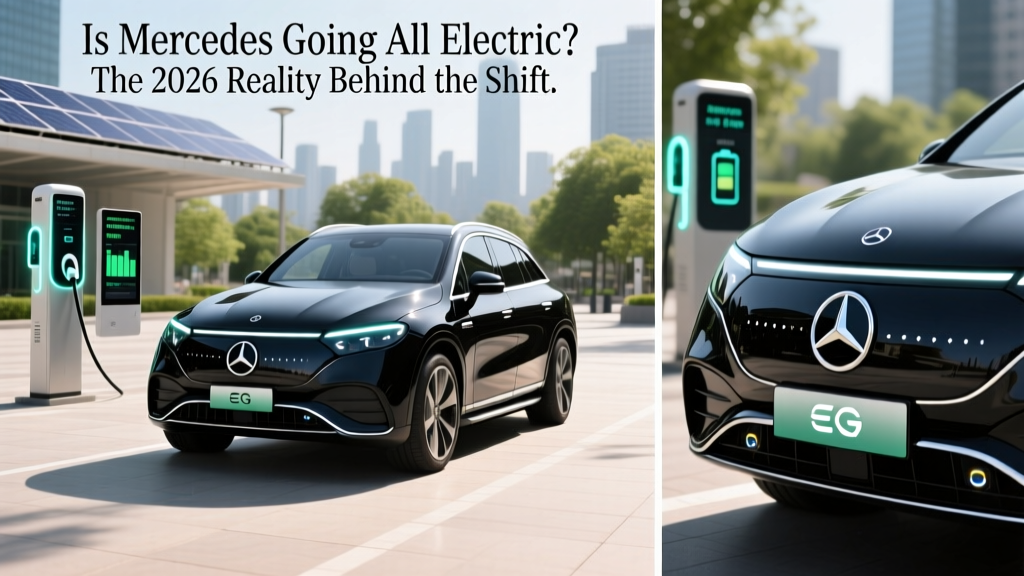
No — Mercedes-Benz is not going fully electric by a fixed date anymore. The company originally pledged to go "all-electric by 2030 where market conditions allow," but in early 2024 it revised that strategy, committing to continue producing internal-combustion and plug-in hybrid vehicles well into the 2030s. As of 2026, Mercedes sells a growing but incomplete EV lineup (the EQ family and newer MMA-based models) alongside updated gas and hybrid vehicles. The transition is real, but it's gradual, market-dependent, and far from total.
What Actually Happened to the "All-Electric by 2030" Pledge?
In July 2021, Mercedes-Benz announced an ambitious plan: prepare to go fully electric by 2030, investing over €40 billion in battery-electric vehicles. That headline generated enormous press. But by February 2024, the company publicly walked it back, citing slower-than-expected EV adoption in key markets, persistent charging infrastructure gaps, and strong consumer demand for hybrids.
The revised position, confirmed by CEO Ola Källenius, is that Mercedes will continue offering combustion-engine vehicles — including new generations — through the 2030s. The company now targets up to 50% of sales being electrified (BEV + PHEV) by 2030, not 100% BEV. This isn't unique to Mercedes; Ford, GM, and Volkswagen have all similarly delayed or softened their full-EV timelines.
For buyers, this means Mercedes will continue offering gas, hybrid, and electric options side by side for at least another decade. You won't be forced into an EV — but the EV lineup will keep expanding.
The 2026 Mercedes EV Lineup: What You Can Actually Buy
As of the 2026 model year, Mercedes-Benz offers several battery-electric models in the U.S. market, built on dedicated EV architectures (EVA2 and the newer MMA platform). Here's a snapshot of the core lineup with real numbers:
| Model | EPA Range | Battery (kWh) | Peak DC Charge | 10–80% Time | 0–60 mph | Base MSRP |
|---|---|---|---|---|---|---|
| EQS 450+ Sedan | 352 mi | 118 kWh (NMC) | 200 kW | ~31 min | 5.9 sec | $105,550 |
| EQE 350+ Sedan | 305 mi | 90.6 kWh (NMC) | 170 kW | ~32 min | 6.2 sec | $76,050 |
| EQB 300 4MATIC | 243 mi | 66.5 kWh (NMC) | 100 kW | ~32 min | 7.7 sec | $54,500 |
| EQS 580 SUV | 305 mi | 108.4 kWh (NMC) | 200 kW | ~31 min | 4.5 sec | $128,350 |
| CLA EV (MMA, 2026) | ~380 mi (est.) | 85 kWh (NMC) | 250 kW | ~20 min | ~5.5 sec | ~$52,000 (est.) |
Real-world range note: EPA estimates assume mixed driving. Expect 15–25% less range on sustained highway trips at 75+ mph, and 20–30% loss in sub-freezing temperatures. The EQS 450+'s 352-mile EPA figure translates to roughly 275–290 real-world highway miles in moderate weather, per independent testing by fueleconomy.gov.
The headline model for 2026 is the new CLA EV, built on Mercedes' modular MMA architecture with an 800-volt electrical system enabling faster DC charging. It's the brand's most accessible long-range EV yet and signals where Mercedes is actually investing — compact and midsize EVs with competitive range and faster charge speeds, not just flagship luxury sedans.
Mercedes EV vs. Gas vs. Hybrid: The Cost Comparison
Understanding whether a Mercedes EV makes financial sense requires comparing total costs, not just sticker price. Here's a 5-year ownership estimate comparing the EQE 350+ against its closest gas sibling, the E 350 sedan, using 15,000 miles/year:
| Cost Factor (5 Years) | EQE 350+ (EV) | E 350 (Gas) |
|---|---|---|
| Base MSRP | $76,050 | $62,900 |
| Federal Tax Credit (§30D) | $0 (MSRP/income/sourcing limits apply) | N/A |
| Fuel/Energy Cost | $4,950 (home charging, $0.15/kWh avg) | $13,125 (premium gas, $3.50/gal, 26 MPG) |
| Maintenance | ~$2,200 | ~$4,800 |
| Insurance (avg.) | $14,500 | $11,200 |
| Estimated Depreciation | $34,200 | $25,100 |
| 5-Year Total (est.) | $127,700 | $117,125 |
The EV saves significantly on fuel and maintenance — roughly $10,800 over five years — but faces a higher purchase price, steeper depreciation (EV resale values remain volatile), and higher insurance premiums. The gap narrows if you qualify for state incentives or if gas prices rise, but at current pricing, the gas E 350 still wins on pure 5-year cost for most buyers.
Mercedes does not currently have any U.S.-assembled EVs that qualify for the full §30D federal tax credit of up to $7,500, due to battery component and critical mineral sourcing requirements. Always verify current-year eligibility on IRS.gov before purchase, as these rules change annually.
Common Misconceptions About Mercedes' EV Plans
| Myth | Fact |
|---|---|
| "Mercedes is going 100% electric by 2030." | The company revised this in 2024. Combustion and hybrid vehicles will continue through the 2030s. |
| "All Mercedes EVs qualify for the $7,500 tax credit." | Most current Mercedes EVs are built outside the U.S. with battery sourcing that doesn't meet §30D requirements. Check IRS rules per model year. |
| "Mercedes EVs charge as fast as Teslas." | Current EQ models peak at 170–200 kW (10–80% in ~31 min). The 2026 CLA EV reaches 250 kW (~20 min), closer to Tesla's pace, but older models lag behind. |
| "Mercedes is abandoning gas cars." | New combustion-engine generations are in development. The company is hedging, not exiting. |
| "You'll always need a CCS adapter for Mercedes." | Mercedes has confirmed a transition to NACS (Tesla-style) connectors for future models, but 2024–2025 models still use CCS1. Adapters are available for Supercharger access. |
Real-World Ownership Considerations Before You Buy
If you're weighing a Mercedes EV, the decision comes down to your specific situation — not the company's long-term corporate strategy. Here are the factors that actually matter:
Home Charging Access
Mercedes EVs make the most sense when you can charge at home. A Level 2 home charger (240V, 48A / 11.5 kW) adds roughly 30–40 miles of range per hour, meaning a full overnight charge covers daily driving easily. Installation costs typically range from $800–$2,500 depending on panel capacity and wiring distance. Without home charging, public DC fast charging at $0.35–$0.50/kWh eliminates much of the fuel-cost advantage.
Climate and Range Reality
If you live in a cold-weather region (sustained temps below 32°F), expect 20–30% range loss due to battery chemistry and cabin heating demands. The EQS 450+ drops from 352 EPA miles to roughly 245–280 real-world miles in winter. Mercedes includes a heat pump on most 2025+ models, which mitigates this somewhat, but the physics of lithium-ion in cold remains unavoidable.
Driving Patterns
For daily commutes under 60 miles round-trip, any current Mercedes EV works well with home charging. For frequent 300+ mile road trips, the EQS sedan's range and 200 kW charging are adequate (plan one 25-minute stop), but the EQB's 243-mile range and slower 100 kW charging make it better suited as a second car or city driver.
Charging Network Access
Mercedes is building its own high-power charging network (Mercedes-Benz HPC) with 400+ kW chargers at select locations, but coverage is limited as of 2026. For broader access, a CCS-to-NACS adapter unlocks Tesla's Supercharger network (15,000+ U.S. stations), which remains the most reliable public option. Electrify America and EVgo also support CCS natively.
Decision Framework: Should You Buy a Mercedes EV in 2026?
- Choose a Mercedes EV if: You have home Level 2 charging, your daily driving is under 100 miles, you value the brand's interior quality and ride comfort, and you're comfortable with a $55,000–$130,000 purchase price.
- Choose a Mercedes PHEV (like the S 580e) if: You want electric commuting (30–40 miles EV range) but need gas flexibility for long trips, lack reliable home charging, or live in a charging-desert region.
- Wait if: You want the faster-charging MMA-platform models (CLA EV, future C-Class EV) at lower price points, or you need the §30D tax credit — which may become available if Mercedes shifts battery sourcing or U.S. assembly.
- Consider a competitor if: You prioritize maximum range-per-dollar (Hyundai Ioniq 6, Tesla Model S), the fastest public charging (Hyundai/Kia E-GMP at 350 kW), or guaranteed tax credit eligibility (U.S.-built options from Tesla, GM, Ford).
Frequently Asked Questions
Will Mercedes stop making gas cars entirely?
Not in the foreseeable future. Mercedes has confirmed it will develop and sell new combustion-engine vehicles through the 2030s. The "all-electric by 2030" goal has been replaced with a more flexible, market-dependent approach.
Does Mercedes use NACS or CCS connectors?
Current 2024–2025 Mercedes EVs use CCS1 connectors. Mercedes has announced a transition to NACS (the Tesla-style connector) for future models, but the timeline varies by market. A CCS-to-NACS adapter is available for Supercharger access today.
Are Mercedes EV batteries reliable long-term?
Mercedes warranties its EV batteries for 10 years or 155,000 miles, guaranteeing at least 70% capacity retention. NMC chemistry used in current models typically sees 10–15% degradation over 100,000 miles based on industry data. Replacement costs, if needed out of warranty, range from $15,000–$30,000+ depending on the model.
What's the cheapest Mercedes EV available?
The EQB 300 4MATIC starts at $54,500 for the 2026 model year, offering 243 miles of EPA range. The upcoming CLA EV (MMA platform) is expected around $52,000 with significantly more range (~380 miles estimated) and faster charging.
Can I charge a Mercedes EV at a Tesla Supercharger?
Yes, with a CCS-to-NACS adapter. Mercedes has approved specific adapters for use on Tesla's Supercharger network. Native NACS ports will appear on future Mercedes models.