Quick Verdict: Is Lucid a Good Car in 2026?
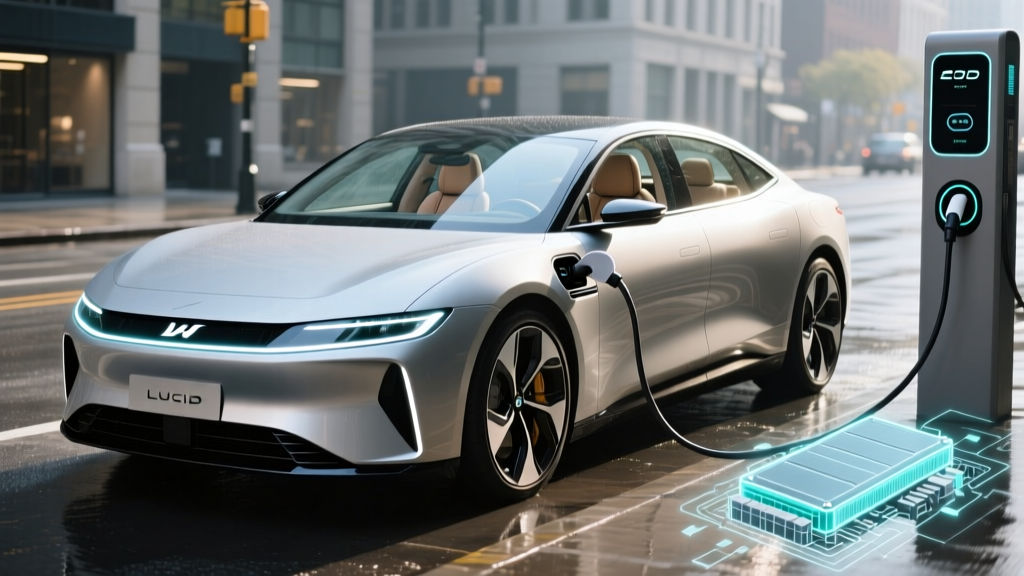
If you define "good" by engineering excellence, efficiency, and real-world range, the Lucid Air is arguably the best-executed luxury electric sedan on the market. Its miniaturized powertrain technology delivers class-leading efficiency — over 5 miles per kWh in certain trims — and the Air Grand Touring holds the highest EPA-estimated range of any production EV sold in the United States at 516 miles. But "good" also means ownership experience, software polish, service accessibility, and value. Here, the picture gets more nuanced. Lucid is still a young automaker scaling production, and the Air's six-figure price for top trims, limited service center footprint, and evolving software stack mean it's not the right choice for every buyer.
This review covers the full 2026 Lucid Air lineup — Pure, Touring, Grand Touring, and Sapphire — with exact specs, real-world range data, charging performance, pricing, and a frank assessment of who should (and shouldn't) buy one.
2026 Lucid Air: Full Specification Table
| Spec | Air Pure | Air Touring | Air Grand Touring | Air Sapphire |
|---|---|---|---|---|
| EPA Range | 419 mi | 425 mi | 516 mi | 427 mi |
| Battery (usable) | 88 kWh (NMC) | 92 kWh (NMC) | 112 kWh (NMC) | 118 kWh (NMC) |
| Drivetrain | RWD (single motor) | AWD (dual motor) | AWD (dual motor) | AWD (tri-motor) |
| Horsepower | 430 hp | 620 hp | 819 hp | 1,234 hp |
| 0-60 mph | 5.0 sec | 3.4 sec | 3.0 sec | 1.89 sec |
| Efficiency (MPGe) | 146 MPGe | 140 MPGe | 131 MPGe | 110 MPGe |
| Max DC Charge Rate | 200 kW | 250 kW | 300 kW | 300 kW |
| 10-80% DCFC Time | ~25 min | ~22 min | ~20 min | ~20 min |
| Level 2 (home) | 19.2 kW / ~82 mi/hr | 19.2 kW / ~82 mi/hr | 19.2 kW / ~82 mi/hr | 19.2 kW / ~82 mi/hr |
| Base MSRP | $69,900 | $77,900 | $110,900 | $249,000 |
Sources: EPA / fueleconomy.gov, Lucid Motors official specifications. Prices exclude destination fee. Specs reflect 2026 model year.
Real-World Range: What the EPA Sticker Doesn't Tell You
EPA Estimate: Up to 516 miles (Grand Touring) / 419 miles (Pure)
Real-World Highway (70-80 mph): Expect ~370-430 mi (GT) / ~310-350 mi (Pure)
Cold Weather (below 32°F): Subtract 20-30% — roughly 290-360 mi (GT)
Mixed Commute (city + suburban): Often meets or exceeds EPA thanks to regen efficiency
The Lucid Air's EPA numbers are extraordinary, and in our experience, they're more achievable than most EVs — but only under the right conditions. Lucid's miniaturized motor design and exceptional aerodynamic drag coefficient (0.197 Cd for the Air) mean the car sips energy at low-to-moderate speeds. In city and suburban driving with regenerative braking active, owners regularly report matching or even exceeding the EPA figure.
Highway driving at sustained 75-80 mph changes the math. Aerodynamic drag scales with the square of speed, and while the Air is slippery, it's still a large sedan pushing through air. In independent real-world highway range testing, the Air Grand Touring delivered approximately 380-420 miles at 70 mph — impressive, but roughly 19-26% below the 516-mile sticker. The Air Pure, with its smaller battery and RWD configuration, typically yields 310-350 highway miles.
Cold weather is the universal EV tax. Lithium-ion chemistry becomes less efficient below freezing, and cabin heating draws substantial energy (the Air uses a heat pump, which mitigates but doesn't eliminate the loss). Expect a 20-30% range reduction in sustained sub-freezing temperatures. For the Grand Touring, that means roughly 290-360 usable miles in winter — still more than most EVs offer in ideal conditions.
Charging Speed: DC Fast Charging and Home Setup
Lucid equips the Air with a 900-volt electrical architecture — the same voltage class used by Porsche and Hyundai/Kia — which enables faster charging at lower current, reducing heat and improving efficiency. The Grand Touring and Sapphire can accept up to 300 kW at a compatible DC fast charger, while the Pure peaks at 200 kW and the Touring at 250 kW.
| Charging Level | Power | Air Pure | Air Touring | Air Grand Touring |
|---|---|---|---|---|
| Level 1 (120V outlet) | ~1.4 kW | ~3 mi/hr | ~3 mi/hr | ~3 mi/hr |
| Level 2 (240V home) | 19.2 kW max | ~82 mi/hr | ~82 mi/hr | ~82 mi/hr |
| DC Fast Charge | 200-300 kW peak | ~25 min (10-80%) | ~22 min (10-80%) | ~20 min (10-80%) |
Key distinction — kW vs kWh: kW (kilowatts) measures the rate of energy flow, like water pressure in a hose. kWh (kilowatt-hours) measures total energy stored, like the size of a tank. The Air Grand Touring's 112 kWh battery is the tank; the 300 kW charge rate is how fast you can fill it.
The charging curve reality: Peak charge rates are just that — peaks, not sustained averages. The Air Grand Touring will pull close to 300 kW only when the battery is warm (preconditioned), at a low state of charge (10-20%), and at a charger capable of delivering that power. As the battery fills past 50-60%, the rate tapers significantly to protect cell health. A 10-80% session takes roughly 20 minutes, but an 80-100% top-off can add another 25-30 minutes. For road trips, plan to charge to 80% and move on — that's where the math favors speed.
Home charging: The Air's onboard charger supports up to 19.2 kW on Level 2, which is among the fastest in any production EV. This requires a 100-amp dedicated circuit and a hardwired Wall Connector or equivalent EVSE. Most homes with a 200-amp electrical panel can accommodate this, but older homes with 100-amp service will likely need a panel upgrade — budget $1,500-$3,000 for that work. On a standard 48-amp Level 2 circuit (the most common home install), expect about 11.5 kW, yielding roughly 49 miles of range per hour of charging — enough to fully replenish even the Grand Touring overnight.
Connector note: The 2026 Lucid Air ships with a CCS1 charge port. Lucid has confirmed NACS (Tesla-style) adoption for future models, and CCS-to-NACS adapters are available for access to Tesla Supercharger networks where supported. Verify adapter compatibility with your specific model year before purchase.
Performance and Driving Dynamics
The Lucid Air lineup spans from sensible luxury cruiser to hypercar-rivaling performance machine. The Air Pure's 430-hp rear motor delivers brisk, effortless acceleration (0-60 in 5.0 seconds) that's more than adequate for any real-world merging or passing scenario. The Touring's 620-hp dual-motor AWD setup drops that to 3.4 seconds with all-weather traction.
The Grand Touring is the sweet spot for enthusiasts who also want maximum range: 819 hp, 0-60 in 3.0 seconds, and 516 EPA miles. The tri-motor Sapphire exists in a different universe — 1,234 hp and a 1.89-second 0-60 time that rivals a Bugatti Chiron, though at a $249,000 MSRP that places it firmly in hypercar territory.
Ride quality across the lineup is excellent. The Air uses a multi-link front and rear suspension with available air springs (standard on Grand Touring and Sapphire). The cabin is remarkably quiet at highway speeds — among the quietest in any luxury sedan, electric or otherwise. Steering is precise but light, tuned more for comfort than sportscar feedback. If you want a track-focused driving experience, the Porsche Taycan is the sharper instrument. If you want a luxury sedan that happens to be brutally fast, the Air delivers.
Interior, Cargo, and Technology
The Air's interior reflects its California roots: minimalist, airy, and material-forward. The glass canopy roof (standard on most trims) floods the cabin with light and creates an expansive feel. A 34-inch curved glass cockpit display spans the driver's area, combining instrument cluster and infotainment into a single panel. Below it, a retractable lower touchscreen handles secondary controls and can stow flush into the dashboard.
Passenger space: Rear legroom measures 37.4 inches — competitive with a BMW 5 Series but less than a Mercedes S-Class. The Air is a full-size luxury sedan in exterior footprint, but its skateboard platform and compact motors prioritize interior volume differently than a traditional luxury flagship. Four adults fit comfortably; five is tight on long trips.
Cargo: The trunk offers 32.1 cubic feet (including the under-floor storage area), which is generous for a sedan. The front trunk (frunk) adds approximately 3.0 cubic feet — useful for charging cables or a small bag. Total cargo capacity trails a Tesla Model S (which offers a hatchback design) but exceeds most traditional luxury sedans.
Tech highlights:
- DreamDrive Pro ADAS suite (SAE Level 2) with 32 sensors including lidar — requires active driver supervision at all times
- Over-the-air software updates for powertrain, infotainment, and ADAS features
- Wireless Apple CarPlay and Android Auto
- Available Surreal Sound Pro 21-speaker audio system
- Phone-as-key with NFC backup
Notable drawbacks: Early Lucid software was criticized for sluggishness and occasional bugs. OTA updates through 2025-2026 have substantially improved responsiveness and feature completeness, but the infotainment ecosystem still lacks the app depth of Tesla's platform. The absence of a traditional knob for volume or climate controls (everything is touch or voice) frustrates some buyers. Lucid's service center network remains limited outside major metro areas — a real consideration if you live in a region without a nearby facility.
Pricing, Trims, and Federal Tax Credit Eligibility
| Trim | Base MSRP | Federal §30D Credit | Effective Price (if eligible) |
|---|---|---|---|
| Air Pure | $69,900 | Up to $7,500 | ~$62,400 |
| Air Touring | $77,900 | Up to $7,500 | ~$70,400 |
| Air Grand Touring | $110,900 | Not eligible (MSRP cap) | $110,900 |
| Air Sapphire | $249,000 | Not eligible (MSRP cap) | $249,000 |
IRS §30D tax credit rules (2026): The federal EV tax credit offers up to $7,500 for qualifying new EVs, but eligibility is constrained by three overlapping requirements:
- MSRP cap: Sedans must have an MSRP at or below $55,000 to qualify. SUVs, vans, and trucks have an $80,000 cap. The Air Pure ($69,900) and Touring ($77,900) are classified as sedans and exceed the $55,000 threshold — meaning they do NOT qualify for the federal credit under current rules. The Grand Touring and Sapphire are far above any cap.
- Buyer income cap: Modified adjusted gross income must not exceed $150,000 (single), $225,000 (head of household), or $300,000 (joint).
- Battery sourcing requirements: A percentage of critical minerals and battery components must be sourced from the U.S. or free-trade-agreement countries. These thresholds tighten annually.
Important clarification: As of the 2026 tax year, the Lucid Air lineup does not qualify for the §30D federal new-vehicle tax credit due to the MSRP cap on sedans. Buyers should consult the IRS clean vehicle credit page and a qualified tax professional before making purchase decisions based on incentive expectations. Some state-level incentives (California, Colorado, and others) may still apply — check your state's energy office for current programs.
The Air Pure remains compelling at ~$69,900 even without the federal credit, undercutting a comparably equipped Tesla Model S Long Range and offering substantially more range. The Touring at $77,900 is the value sweet spot if you want AWD and strong performance.
Lucid Air vs. Key Competitors
| Attribute | Lucid Air GT | Tesla Model S LR | Porsche Taycan 4S | BMW i5 M60 |
|---|---|---|---|---|
| EPA Range | 516 mi | 402 mi | 246 mi | 295 mi |
| Battery | 112 kWh NMC | ~100 kWh | 93.4 kWh | 81.2 kWh |
| 0-60 mph | 3.0 sec | 3.1 sec | 3.8 sec | 3.7 sec |
| Peak DC Charge | 300 kW | 250 kW | 270 kW | 205 kW |
| Starting MSRP | $110,900 | $74,990 | $90,900 | $84,100 |
| Efficiency | 131 MPGe | 124 MPGe | 87 MPGe | 91 MPGe |
Choose the Lucid Air if: Maximum range is your top priority, you value efficiency and engineering innovation, you want a luxury sedan that doesn't look like every other EV, and you're comfortable with a newer brand's growing service network.
Choose the Tesla Model S if: You need access to the Supercharger network natively, want the most mature software and OTA ecosystem, and value a proven service infrastructure across all 50 states.
Choose the Porsche Taycan if: Driving dynamics and brand prestige matter most, you prioritize handling precision over range, and you're willing to trade 250+ miles of range for a sports-car chassis.
Choose the BMW i5 if: You want a traditional luxury dealer experience, proven build quality, and a more conservative design — and you don't need 400+ miles of range.
Warranty, Ownership Costs, and Long-Term Outlook
Lucid provides a competitive warranty package:
- Basic vehicle: 4 years / 50,000 miles
- Battery and powertrain: 8 years / 100,000 miles (with a capacity retention threshold of 70% — if the battery degrades below 70% of original capacity within the warranty period, Lucid will repair or replace it)
- Roadside assistance: 4 years / 50,000 miles
The 8-year/100,000-mile battery warranty is industry-standard for luxury EVs (matching Tesla, BMW, and Mercedes). The 70% retention threshold is also standard, though some buyers wish for the 70% benchmark to be higher given the Air's premium positioning.
Battery chemistry: Lucid uses NMC (nickel manganese cobalt) lithium-ion cells sourced from LG Energy Solution. NMC offers higher energy density than LFP (lithium iron phosphate), which is essential for fitting 112 kWh into a sedan platform. The trade-off is that NMC cells are more sensitive to sustained high-state-of-charge storage and extreme temperatures. Best practice: charge to 80% for daily use, 100% only before long trips, and avoid leaving the car at 100% for extended periods.
Insurance: Expect premiums 15-25% higher than a comparable gas luxury sedan. The Air's high repair costs (aluminum body, specialized components) and limited collision-repair network contribute. Get quotes before ordering.
Depreciation: Lucid's resale values are still establishing themselves. Early data suggests higher depreciation than Tesla in the first two years, typical for a new brand. If you plan to keep the car 5+ years, this matters less. If you trade frequently, factor this into your total cost.
Pros and Cons
- Class-leading EPA range (516 mi on Grand Touring)
- Best-in-class efficiency (5+ mi/kWh)
- Exceptionally spacious and quiet cabin
- Up to 300 kW DC fast charging
- 19.2 kW onboard charger (fastest home charging available)
- Smooth, refined ride quality
- Striking, non-derivative design
- No federal tax credit (MSRP exceeds sedan cap)
- Limited service center network outside major metros
- Infotainment still maturing vs. Tesla
- Insurance costs above segment average
- Depreciation data still limited
- No native NACS port (adapter required for Superchargers)
- Touch-only climate/volume controls frustrate some users
Who Should Buy the Lucid Air?
Ideal buyer: You want a luxury electric sedan with maximum range for road trips, you value engineering innovation and efficiency, you have reliable home charging (or access to DC fast chargers), and you live within reasonable distance of a Lucid service facility. The Air Grand Touring is particularly compelling for high-mileage drivers who regularly cover 300+ miles between charges and want to minimize charging stops.
Look elsewhere if: You need a proven dealer/service network in a rural area, you want native Tesla Supercharger access without adapters, you're budget-sensitive and need the federal tax credit, or you prefer a hatchback/wagon form factor for cargo flexibility. The Air Pure at $69,900 is also in a tricky spot — excellent value for the range, but close enough in price to a Model S that the Tesla's service network and software maturity become significant factors.
Frequently Asked Questions
What is the real-world range of the Lucid Air?
In mixed driving, the Air Grand Touring delivers approximately 380-450 real-world miles depending on speed, temperature, and terrain. City-heavy commutes can match or exceed the 516-mile EPA figure thanks to regenerative braking efficiency. Sustained highway driving at 75-80 mph yields roughly 370-420 miles. In freezing temperatures, expect a 20-30% reduction. The Air Pure delivers approximately 310-380 real-world miles in similar conditions.
How fast does the Lucid Air charge?
On a 350 kW-capable DC fast charger, the Air Grand Touring peaks at 300 kW and charges from 10-80% in approximately 20 minutes. The Pure peaks at 200 kW (~25 minutes) and the Touring at 250 kW (~22 minutes). At home on a 19.2 kW Level 2 charger, all trims add roughly 82 miles of range per hour — a full overnight charge replenishes even the 112 kWh Grand Touring battery. On a more common 48-amp (11.5 kW) home charger, expect ~49 miles per hour.
Does the Lucid Air qualify for the federal EV tax credit?
No. Under current IRS §30D rules, the Lucid Air does not qualify for the $7,500 federal new-vehicle tax credit. The Air is classified as a sedan, and the MSRP cap for sedans is $55,000. Even the base Air Pure ($69,900) exceeds this threshold. State-level incentives may still apply depending on your location. Always verify current eligibility with a tax professional before purchasing.
Is Lucid a reliable car brand?
Lucid is a young automaker (first deliveries in late 2021), so long-term reliability data spanning 5-10 years does not yet exist. Early build-quality reports have been mixed but improving — initial panel-gap and software complaints have been addressed through manufacturing refinements and OTA updates. Lucid's powertrain engineering is widely praised by industry analysts, but the ownership experience (service access, parts availability) remains a variable that depends heavily on your proximity to a Lucid Service Center. As of 2026, Lucid operates approximately 25 service centers and is expanding mobile service capabilities.
Is the Lucid Air worth buying vs. a Tesla Model S?
It depends on your priorities. The Air Grand Touring offers 114 more miles of EPA range, higher efficiency, a quieter cabin, and a more distinctive design. The Model S offers native Supercharger access, a more mature software platform, a broader service network, and a lower starting price ($74,990 vs. $110,900 for the Air GT). If range and luxury refinement are paramount, the Air wins. If charging infrastructure access and software polish matter more, the Model S is the safer bet. The Air Pure ($69,900) vs. Model S ($74,990) is a closer comparison, and the Air's superior range gives it an edge for road-trippers.
What is the battery replacement cost for a Lucid Air?
Lucid has not published an official out-of-warranty battery replacement price, but industry estimates for a 112 kWh NMC pack place the cost between $18,000 and $25,000 (parts and labor) based on current cell pricing and labor rates. This is comparable to other large-battery luxury EVs. The 8-year/100,000-mile warranty (70% capacity retention threshold) provides substantial protection. Most EV batteries are lasting well beyond their warranty periods — data from Recurrent Auto shows average degradation of only 5-10% over the first 5 years for liquid-cooled packs like the Air's.