The Quick Answer: Yes, It's Safe to Charge an EV in the Rain
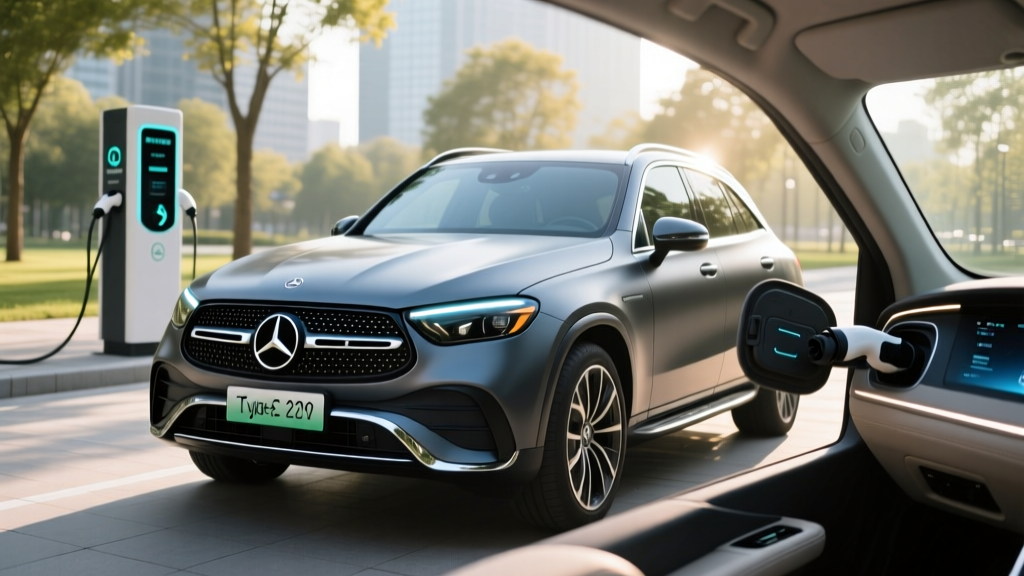
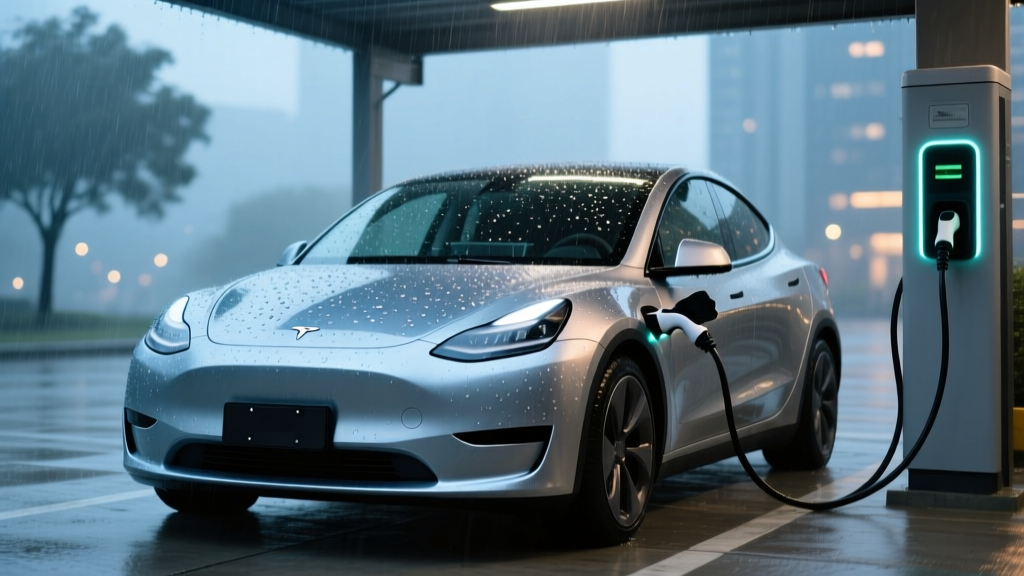
Short answer: Yes, it is completely safe to charge an electric vehicle in the rain, snow, or even during a thunderstorm. Every EV charging port, cable, and public connector sold in the United States is engineered and tested to withstand water ingress far beyond what any weather event can produce. You can plug in and unplug in a downpour without risk of electric shock or equipment damage.
The charging port on modern EVs carries an IP67 rating (Ingress Protection), meaning it is sealed against dust and can withstand submersion in up to 1 meter of water for 30 minutes. Rain doesn't even come close to that threshold. The moment you connect the plug, the system runs a digital handshake protocol that verifies a sealed, safe connection before any current flows.
Yet this remains one of the most-searched questions among first-time EV buyers — and understandably so. You're handling a high-voltage cable in wet conditions, something you'd never do with household wiring. The difference is that EV charging equipment is purpose-built for outdoor, all-weather use. Let's break down exactly why, what the engineering looks like, and what this means for your broader EV ownership decision.
The Engineering Behind Weatherproof EV Charging
EV charging systems use multiple layers of protection to prevent any electrical hazard in wet conditions. Here's how each component handles water exposure:
| Component | Protection Rating | What That Means in Practice |
|---|---|---|
| Vehicle charge port | IP67 | Sealed against dust; withstands 1m submersion for 30 min |
| Charging cable & connector (J1772/NACS/CCS) | IP55 to IP67 | Protected against water jets from any direction |
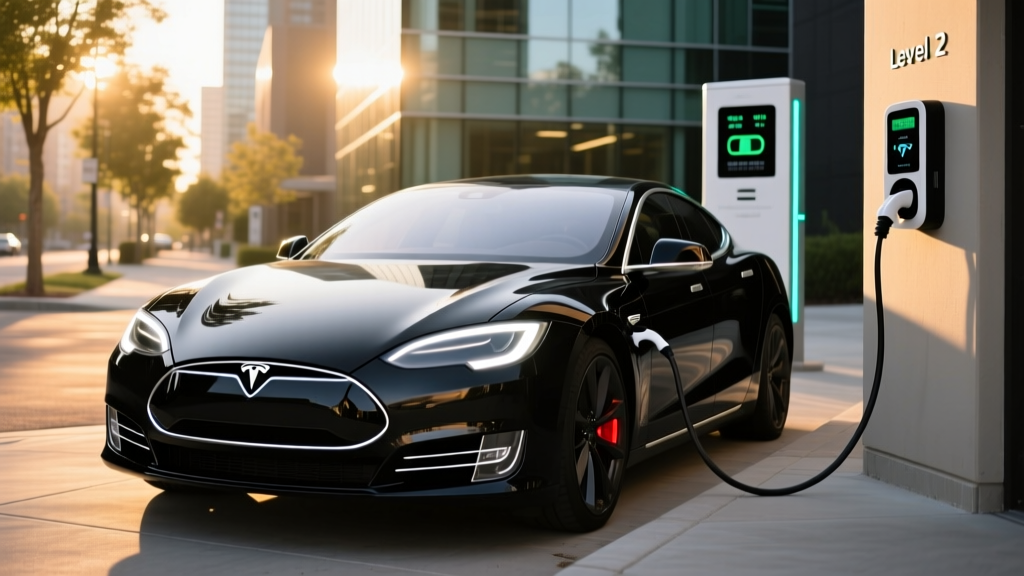
| Level 2 home wallbox (outdoor-rated) | IP54 to IP65 | Splash-proof; safe for exterior wall mounting |
| DC fast charger pedestal | NEMA 3R / IP54+ | Rain, sleet, and ice resistant for public installations |
The SAE J1772 standard (which governs Level 1 and Level 2 AC charging connectors in North America) and the CCS/NACS DC fast-charging standards all require that no current flows until the connector is fully seated and a control pilot signal confirms a secure connection. If water breaches any seal, the system detects a ground fault and cuts power in milliseconds — the same ground-fault circuit interrupter (GFCI) principle that protects your bathroom outlets, but far more sophisticated.
The National Highway Traffic Safety Administration (NHTSA) regulates EV electrical safety under Federal Motor Vehicle Safety Standards, and all vehicles sold in the U.S. must pass rigorous electrical isolation and water-exposure testing before certification.
Myth vs. Fact: Common EV Rain-Charging Misconceptions
| Myth | Fact |
|---|---|
| "Water and electricity don't mix — I'll get shocked" | The connector and port are sealed; current only flows after a verified digital handshake confirms a dry, mated connection. GFCI protection cuts power in milliseconds if any fault is detected. |
| "Lightning could travel through the charger into my car" | EV chargers, like all outdoor electrical equipment, should be on a properly grounded circuit. Lightning risk is the same as any hardwired outdoor appliance — extremely low, and mitigated by grounding and surge protection. |
| "I shouldn't charge during a thunderstorm" | There's no evidence of increased risk. If lightning struck your home's electrical system, surge protectors and breakers would respond the same as for any appliance. The car itself acts as a Faraday cage. |
| "Rain will reduce charging speed" | Rain has zero effect on charging speed. Temperature does — very cold or very hot batteries charge slower due to thermal management, but precipitation is irrelevant to the electrical connection. |
| "Public chargers in the rain are more dangerous than home charging" | Public DC fast chargers carry the same or higher IP ratings and identical safety protocols. Networks like Electrify America and Tesla Superchargers are installed to outdoor electrical codes. |
Real-World Charging in Rain: What Owners Actually Experience
After years of owning multiple EVs and charging in Pacific Northwest drizzle, Midwestern thunderstorms, and New England nor'easters, the practical reality is straightforward: you plug in, the car starts charging, and nothing unusual happens. The connector clicks into place with a firm mechanical seal, the vehicle's dashboard confirms the connection, and current flows normally.
There are, however, a few practical tips that make wet-weather charging smoother:
- Keep the connector pointed downward when unplugging to prevent water from pooling inside the plug head before you close the port door.
- Shake off excess water from the cable before re-holstering it at a public station — this prevents ice buildup in freezing temperatures.
- Close the charge port door promptly after unplugging. The port is sealed, but leaving it open invites debris and standing water over time.
- In freezing rain, the charge port door or connector latch can ice over. Many EVs (Tesla, Hyundai/Kia E-GMP models, Ford) include charge port heaters or preconditioning routines that thaw the latch when you activate them via the app before heading to the charger.
The bigger real-world weather concern isn't rain — it's cold temperatures. At 20°F, expect 20–30% range loss compared to the EPA sticker due to battery chemistry slowdown and cabin heating demands. A vehicle rated at 310 miles EPA may deliver 220–250 miles in deep winter highway driving. Charging speed also tapers in cold weather unless the battery is preconditioned.
EV vs. Gas: Weather-Related Ownership Comparison
Understanding rain-safe charging is one piece of the broader EV ownership picture. Here's how EVs stack up against gas vehicles across weather-affected ownership factors:
| Factor | Electric Vehicle (BEV) | Gasoline Vehicle |
|---|---|---|
| Refueling/charging in rain | Fully safe; sealed connectors, IP67 rated | Fully safe; gas pumps rated for outdoor use |
| Cold-weather range/efficiency loss | 20–30% range reduction at 20°F (battery + cabin heat) | ~12% fuel economy reduction at 20°F (EPA data) |
| Home refueling convenience | Level 2 home charger adds ~30–44 mi/hr overnight; ~$0.04–$0.06/mi on avg residential rate | No home refueling (except rare CNG); gas station required |
| Flood/water exposure risk | Battery sealed to IP67; no engine hydro-lock risk; but total-loss if water breaches cabin electronics | Engine hydro-lock risk in deep water; similar electronics vulnerability |
| Maintenance in wet climates | No oil changes, fewer moving parts; brake life extended by regen | Regular oil, filters, exhaust system corrosion risk |
Total Ownership Cost: EV vs. Gas in 2026
Whether rain-safe charging convinces you or you're still weighing the full ownership equation, here's what the numbers look like over a 5-year period for a mainstream crossover EV versus a comparable gas model. This comparison uses a 2026 Tesla Model Y Long Range (base MSRP ~$44,990, EPA 320 miles, 75 kWh usable NMC battery) versus a 2026 Toyota RAV4 AWD (base MSRP ~$31,500, EPA 29 MPG combined).
| Cost Category (5 Years / 75,000 mi) | 2026 Tesla Model Y LR AWD | 2026 Toyota RAV4 AWD |
|---|---|---|
| Purchase price (base MSRP) | $44,990 | $31,500 |
| Federal §30D tax credit (if eligible) | −$7,500 (subject to IRS income, MSRP, and battery sourcing rules) | $0 |
| Effective purchase price | $37,490 | $31,500 |
| Fuel/energy (75,000 mi) | ~$3,750 (home L2 at $0.13/kWh avg, ~28 kWh/100mi) | ~$9,225 (29 MPG at $3.57/gal avg) |
| Maintenance (5 yr) | ~$1,500 (cabin filter, tires, wipers, brake fluid) | ~$3,800 (oil, filters, brakes, spark plugs) |
| Insurance (5 yr avg) | ~$10,500 (~$2,100/yr; EV premiums run 15–25% higher) | ~$8,250 (~$1,650/yr) |
| Total 5-year cost | ~$53,240 | ~$52,775 |
The gap narrows to roughly $465 over five years — essentially a wash — when the full §30D credit applies. Without the credit (due to income caps above $150K single / $300K joint, or battery-sourcing disqualification), the EV costs roughly $8,000 more. However, the EV delivers dramatically lower per-mile energy cost, near-zero scheduled maintenance, and the convenience of home charging. The RAV4 wins on upfront affordability and proven long-term depreciation data.
Decision Framework: Should You Buy an EV in 2026?
Choose an EV if:
- You have access to Level 2 home charging (a 240V outlet or installed wallbox — expect $500–$2,000 for installation depending on panel capacity and run length)
- Your daily commute is under 200 miles round-trip, well within any modern EV's EPA range
- You qualify for the §30D federal credit (check IRS eligibility rules for income caps, MSRP limits of $55K cars / $80K SUVs/trucks, and battery sourcing requirements)
- You value low running costs, instant torque, and minimal maintenance over lowest possible purchase price
- You take 1–3 road trips per year and can plan DC fast-charging stops (10–80% in 18–25 minutes on most 2026 models at 150–350 kW chargers)
Choose a hybrid (HEV) or plug-in hybrid (PHEV) if:
- You lack reliable home charging access (apartment, street parking, no garage)
- You regularly drive 300+ miles between stops in areas with sparse DC fast-charging infrastructure
- You want EV-like city efficiency without range anxiety — a PHEV like the Toyota RAV4 Prime delivers 42 miles EPA electric-only, then 38 MPG combined on gas
- You live in an extreme-cold climate (below 0°F regularly) where BEV range loss becomes a genuine hardship
Stick with gas for now if:
- Your budget is firmly under $30,000 and you need a new vehicle (the used EV market offers better value at this tier)
- You tow heavy loads frequently (over 5,000 lbs) — EV towing range drops 40–50%
- You drive professionally in rural areas with no public charging infrastructure
What First-Time EV Buyers Should Know About Charging
If rain-safe charging has been your main hesitation, you can cross it off the worry list. Here are the factors that actually matter when you're making the switch:
- Home charging is essential. Over 80% of EV charging happens at home. A Level 2 wallbox (7.2–11.5 kW) adds 25–44 miles of range per hour. Budget $500–$2,000 for professional installation by a licensed electrician; older homes may need a panel upgrade ($1,500–$3,000 additional) if you don't have 200-amp service.
- Understand kW vs. kWh. Kilowatts (kW) measure charging power — how fast energy flows. Kilowatt-hours (kWh) measure battery capacity — how much energy is stored. A 75 kWh battery charged at 11.5 kW takes roughly 6.5 hours from empty to full on Level 2.
- Public DC fast charging is for road trips. Most 2026 EVs peak at 150–350 kW on DC fast chargers, adding 10–80% in 18–25 minutes. But peak rate isn't sustained — the charge curve tapers significantly above 80% to protect battery health. Plan stops around the 10–80% window for fastest sessions.
- Battery degradation is real but manageable. Most 2026 EVs use NMC or LFP chemistry. Expect 8–12% capacity loss over 100,000 miles for NMC; LFP batteries degrade slower (5–8%) and can be charged to 100% daily without harm. Federal warranty mandates require 8 years / 100,000 miles with at least 70% capacity retention.
- Insurance costs more. EV insurance premiums average 15–25% higher than comparable gas vehicles due to higher repair costs and total-loss thresholds. Get quotes before purchasing — the difference can be $400–$800/year depending on your state and driving record.
Frequently Asked Questions
Can I charge my EV during a thunderstorm?
Yes. There is no elevated risk of charging during a thunderstorm versus operating any other hardwired outdoor electrical equipment. Your home's grounding and circuit breakers provide the same protection they do for your HVAC system. The car's metal body also acts as a Faraday cage. That said, if a direct lightning strike hit your home's electrical service, it could damage any connected device — a whole-home surge protector ($200–$400 installed) mitigates this rare risk for all appliances, not just your EV charger.
Is it safe to touch the charging cable or connector when it's wet?
Yes. The exterior of the cable and connector handle are insulated and rated for wet conditions. The electrical contacts are recessed inside the connector and only energize after the plug is fully inserted and the control pilot signal confirms a proper connection. You can handle the cable with wet hands in the rain without any risk.
Should I cover my outdoor Level 2 charger to protect it from rain?
Outdoor-rated Level 2 chargers (IP54 or higher) do not need a cover or shelter. They're designed for permanent outdoor exposure. However, a simple awning or charger cover ($30–$80) can reduce UV degradation of the cable jacket over many years and prevent ice accumulation on the connector in freezing climates. It's a convenience upgrade, not a safety requirement.
Does rain or humidity affect charging speed?
No. Rain, humidity, and precipitation have zero measurable effect on charging speed or efficiency. What does affect charging speed is battery temperature: a cold battery (below 50°F) will charge slower until the thermal management system warms it. Most EVs precondition the battery when you navigate to a charger, optimizing the charge curve before you arrive.
What about charging in a flood or standing water?
This is the one scenario where caution is warranted. Do not wade through standing water to reach a charger, and do not plug in if the charge port or connector is submerged. While the port is IP67-rated, you should never deliberately expose high-voltage connections to submersion conditions. If your home charger's base is in standing floodwater, wait for it to recede and have an electrician inspect the unit before use.
Are Tesla Superchargers safe to use in the rain?
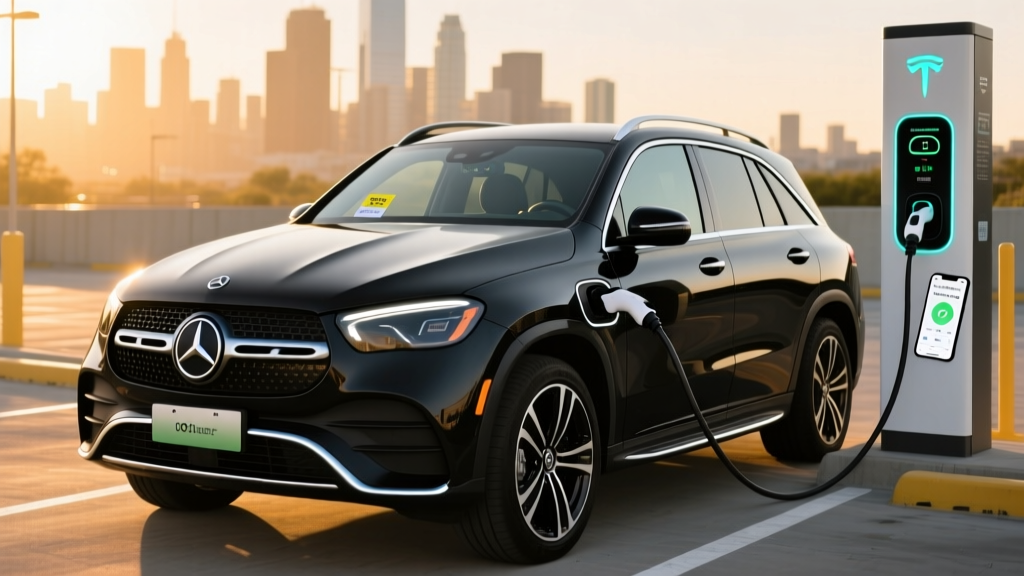
Yes. Tesla Superchargers use the same sealed-connector, digital-handshake safety protocol as all other DC fast chargers. The NACS connector (now adopted as the industry standard by Ford, GM, Rivian, Hyundai, and others for 2025+ models) carries equivalent IP ratings to CCS. Rain, snow, and ice do not affect Supercharger safety or performance.