The Quick Answer: Is the Honda Prelude Electric?
No, the Honda Prelude is not an electric vehicle. The production-spec Honda Prelude, arriving in US dealerships for the 2026 model year, is a two-motor hybrid coupe — not a battery-electric vehicle (BEV) and not a plug-in hybrid (PHEV). It cannot be plugged in to charge, has no electric-only driving range, and does not qualify for the federal §30D EV tax credit.
Honda has confirmed the Prelude uses a hybrid powertrain built around a 2.0-liter Atkinson-cycle four-cylinder engine paired with two electric motors — a system conceptually similar to the setup in the Accord Hybrid and CR-V Hybrid, but tuned for sportier performance in a lighter, two-door package. Think of it as Honda's answer to the enthusiast coupe segment, prioritizing driving engagement and fuel efficiency over electrification.
Why the Confusion? Honda's Electrification Strategy Explained
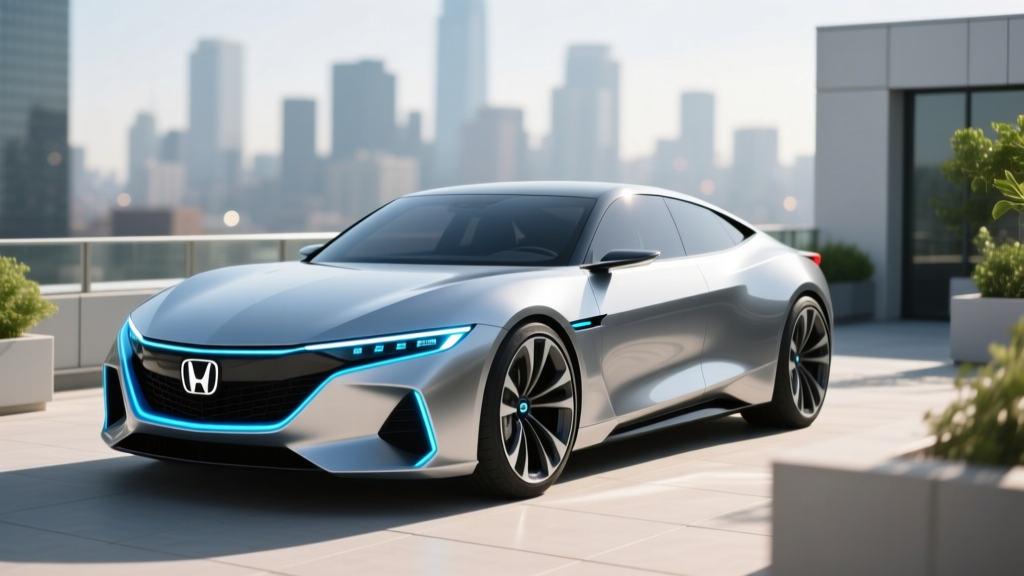
The question "is Honda Prelude electric" trends for a reason. Honda showed the Prelude Concept at the 2023 Japan Mobility Show, and the sleek, futuristic design led many to assume it would be a battery-electric halo car. Honda's broader messaging around its "e:HEV" hybrid branding and its long-term EV ambitions (including the Prologue SUV and the upcoming 0 Series EVs) added to the ambiguity.
But Honda's production plans have been consistent: the Prelude is a hybrid. Here's why that matters for your buying decision:
- No plug, no EV credit: Since the Prelude is a standard hybrid (HEV), not a PHEV or BEV, it is ineligible for the federal §30D clean vehicle credit (up to $7,500). The IRS restricts that credit to plug-in vehicles with battery capacity ≥7 kWh that meet critical-mineral and battery-component sourcing requirements (IRS §30D rules).
- No electric-only range: The hybrid system uses its small battery (estimated under 2 kWh usable) for brief electric assist and low-speed crawling, not for sustained zero-emission driving.
- No range anxiety, no charging infrastructure dependency: You fuel it like any gas car — roughly 350-400+ miles per tank depending on final EPA ratings.
2026 Honda Prelude: Powertrain, Performance, and Efficiency Specs
Full EPA figures for the 2026 Prelude have not been finalized at the time of this writing, but based on Honda's confirmed powertrain architecture and comparable models in the lineup, here is what we know and what we can reasonably project:
| Specification | 2026 Honda Prelude (Confirmed / Projected) |
|---|---|
| Powertrain | 2.0L Atkinson-cycle I4 + two-motor hybrid (e:HEV-style) |
| Combined Horsepower | ~200 hp (projected; Accord Hybrid produces 204 hp) |
| Combined Torque | ~247 lb-ft (projected) |
| Transmission | e-CVT (direct-drive, no traditional gearbox) |
| Drivetrain | Front-wheel drive |
| EPA Fuel Economy (est.) | ~45-50 MPG combined (projected based on Accord Hybrid at 48 MPG combined) |
| Battery Type | Lithium-ion, <2 kWh usable (hybrid buffer) |
| Plug-In Capable? | No — standard HEV only |
| Electric-Only Range | N/A (brief EV assist only at low speeds) |
| 0-60 mph (est.) | ~7.0 seconds (projected) |
| Fuel Tank Capacity | ~12.8 gallons (estimated) |
| Estimated Driving Range | ~575-640 miles per tank (projected) |
| Federal Tax Credit Eligible? | No (HEV, not PHEV/BEV) |
| Base MSRP (est.) | $33,000–$38,000 (projected; Honda has not confirmed pricing) |
Real-world note: Honda's two-motor hybrid system is one of the best in the industry. The Accord Hybrid achieves an EPA-verified 48 MPG combined (fueleconomy.gov), and the Prelude's lighter coupe body and sport tuning could push it slightly higher or trade a few MPG for more aggressive throttle mapping. Expect real-world highway driving to return 42-46 MPG, with city driving potentially exceeding 50 MPG thanks to the hybrid system's regenerative braking and engine-off coasting.
Prelude Hybrid vs. a Comparable EV: Cost and Ownership Breakdown
If you were hoping the Prelude would be electric, you're likely cross-shopping it against compact EVs like the Hyundai Ioniq 6, Tesla Model 3, or Toyota bZ4X. Here's how the Prelude hybrid stacks up on ownership economics over five years:
| Ownership Factor | 2026 Honda Prelude (HEV, projected) | Comparable EV (e.g., Tesla Model 3 RWD) |
|---|---|---|
| Base MSRP | ~$35,000 (est.) | $38,990 (2025 Model 3 RWD) |
| Federal Tax Credit | $0 (HEV ineligible) | Up to $7,500 (if §30D sourcing/income rules met) |
| Effective Net Price | ~$35,000 | ~$31,490 (with full credit, point-of-sale transfer) |
| Annual Fuel/Energy Cost | ~$1,050/yr (gas at $3.50/gal, 12k mi/yr, 48 MPG) | ~$540/yr (electricity at $0.15/kWh, 12k mi/yr, 25 kWh/100mi) |
| 5-Year Fuel/Energy Total | ~$5,250 | ~$2,700 |
| Annual Maintenance | ~$400/yr (oil changes, filters, brakes) | ~$150/yr (no oil, less brake wear from regen) |
| 5-Year Maintenance Total | ~$2,000 | ~$750 |
| Insurance (avg.) | ~$1,500/yr | ~$1,900/yr (EVs carry higher premiums on average) |
| 5-Year Insurance Total | ~$7,500 | ~$9,500 |
| Estimated 5-Year Depreciation | ~$14,000 (40%) | ~$16,000 (42%, EV depreciation historically steeper) |
| 5-Year Total Cost of Ownership | ~$35,750 | ~$35,940 |
The takeaway: When the tax credit applies, the EV and the hybrid are nearly cost-identical over five years. The EV wins on energy and maintenance costs; the hybrid wins on insurance, depreciation stability, and zero charging-infrastructure dependency. If you don't qualify for the full §30D credit (due to income caps, MSRP caps, or battery-sourcing rules), the Prelude's TCO advantage grows.
Who Should Buy the Honda Prelude (and Who Should Look at an EV Instead)?
The Prelude isn't trying to be an EV. It's trying to be an engaging, efficient, affordable coupe for drivers who want something sportier than a Civic but aren't ready to commit to plug-in life. Here's a practical decision framework:
Choose the Honda Prelude Hybrid If:
- You lack home charging access. Apartment dwellers, street-parkers, and anyone without a garage or dedicated 240V circuit will find the Prelude far simpler to live with than any EV. No Level 2 installation ($500-$2,000+), no reliance on public charging networks.
- You regularly drive in extreme cold. Hybrid efficiency drops modestly in winter (expect 3-5 MPG loss in sub-freezing temps), while EVs can lose 20-30% of EPA range in the same conditions due to battery chemistry limitations and cabin heating demands.
- You take frequent long road trips. A 575+ mile range per tank and 3-minute gas fill-ups beat even the best DC fast-charging stops (typically 20-30 minutes for 10-80% on a 150+ kW charger).
- You want a sporty coupe under $40,000. The EV market has almost no affordable two-door coupes. The Prelude fills a niche gap.
- You want predictable, proven reliability. Honda's hybrid systems have years of real-world durability data (the Accord Hybrid and CR-V Hybrid use closely related architectures).
Choose a Battery-Electric Vehicle Instead If:
- You have reliable home Level 2 charging. Waking up to a "full tank" every morning is the single best ownership experience an EV offers, and it eliminates fuel stops entirely for daily driving.
- Your daily commute is under 80 miles round-trip. This is where EVs shine — you'll rarely need public charging, and your per-mile energy cost drops to roughly $0.04-$0.05/mile vs. the Prelude's ~$0.08-$0.09/mile on gas.
- You qualify for the full $7,500 federal tax credit. The point-of-sale transfer option (available under current §30D rules) can bring a Tesla Model 3 or Hyundai Ioniq 6 below $32,000 effective price — undercutting the Prelude's projected MSRP.
- You want zero tailpipe emissions for environmental reasons. The Prelude's hybrid still burns gasoline. A BEV eliminates tailpipe emissions entirely (though upstream electricity generation varies by grid region).
- You want instant torque and a low center of gravity. EVs deliver fundamentally different driving dynamics — 0-60 in 5 seconds or less, one-pedal regenerative braking, and the planted feel of a floor-mounted battery pack.
Common Misconceptions About the Honda Prelude and Electrification
| Myth | Fact |
|---|---|
| "The Prelude is Honda's new electric sports car." | The Prelude is a conventional hybrid (HEV). Honda's electric performance plans center on the upcoming 0 Series platform, not the Prelude. |
| "Hybrids are just a half-step — I should wait for the EV version." | Honda has not announced a Prelude EV variant. The hybrid Prelude is a deliberate product for the current market. Waiting indefinitely for an EV version means missing this generation entirely. |
| "The Prelude qualifies for the hybrid tax credit." | There is no federal tax credit for standard hybrids (HEVs). The §30D credit applies only to plug-in electric vehicles (PHEVs and BEVs) with ≥7 kWh battery capacity meeting sourcing requirements. |
| "Hybrids have expensive batteries that need replacement." | Honda's hybrid battery warranty covers 8 years/100,000 miles (10 years/150,000 miles in CARB states). Real-world data shows Honda hybrid batteries routinely lasting 150,000-200,000+ miles before significant degradation. Replacement cost, if needed out of warranty, is approximately $2,000-$4,000 — far less than EV battery replacements ($8,000-$20,000+). |
| "The Prelude will get 60+ MPG like a Prius." | Unlikely. The Prelude is a sportier, heavier coupe tuned for performance. Expect 45-50 MPG combined — excellent, but the Toyota Prius (57 MPG combined) remains the efficiency benchmark for a reason. |
| "I can plug it in at night for extra electric range." | The Prelude has no plug and no meaningful electric-only range. It is a self-charging hybrid — the gasoline engine and regenerative braking replenish the small battery. |
What First-Time Hybrid Buyers Should Know About the Prelude
If you're coming from a conventional gas car and considering the Prelude as your first electrified vehicle (even though it's a hybrid, not an EV), here are the practical realities:
No Behavior Change Required
You fuel the Prelude at a gas station. There is no plug, no charging app, no plug-share hunting, no preconditioning routine. The hybrid system manages everything automatically — you simply drive. The transition from a conventional Civic or Accord is seamless.
Maintenance Is Slightly Reduced
Regenerative braking means your brake pads last significantly longer (many hybrid owners report 80,000-100,000+ miles on original pads). However, you still need oil changes (typically every 7,500-10,000 miles with synthetic), coolant service, and air filter replacements. Honda's maintenance minder system will track this for you.
Insurance Costs Are Moderate
The Prelude, as a mainstream Honda coupe, should carry insurance premiums in line with the Civic Si or Accord — roughly $1,400-$1,700/year for a typical driver, depending on your state, age, and driving record. This is notably lower than most EVs, which carry higher premiums due to repair-cost data and battery-replacement risk in collision claims.
Resale Value Outlook
Honda coupes with enthusiast appeal (the previous-generation Prelude, the Civic Si, the S2000) tend to hold value well. The hybrid powertrain adds a fuel-efficiency selling point that should remain relevant as gas prices fluctuate. Expect 55-65% value retention at five years, which is competitive with or better than most EVs in the current market.
Honda Prelude vs. Alternatives: Where Does It Fit?
| Vehicle | Powertrain | EPA MPG / MPGe | Est. Starting Price | Federal Credit | Best For |
|---|---|---|---|---|---|
| 2026 Honda Prelude | HEV (hybrid) | ~48 MPG combined (est.) | ~$35,000 | $0 | Sporty coupe buyers without home charging |
| Toyota Prius | HEV | 57 MPG combined | $28,550 | $0 | Maximum efficiency seekers (not a coupe) |
| Toyota Prius Prime | PHEV | 52 MPG + 44 mi EV range | $33,475 | Up to $3,750 (est.) | Short-commute PHEV buyers wanting some EV range |
| Tesla Model 3 RWD | BEV | 132 MPGe / 272 mi range | $38,990 | Up to $7,500 | Home-charging EV buyers wanting performance + tech |
| Hyundai Ioniq 6 SE | BEV | 140 MPGe / 361 mi range | $38,650 | Up to $7,500 | Range-focused EV buyers wanting aerodynamic efficiency |
| Subaru BRZ / Toyota GR86 | Gas (ICE) | 25 MPG combined | $31,000-$33,000 | $0 | Pure driving enthusiasts (no efficiency priority) |
The Prelude occupies a unique niche: it's the only hybrid sport coupe in its price range. The Prius is more efficient but isn't sporty. The BRZ/GR86 are more engaging to drive but get half the fuel economy. And the EVs offer fundamentally different ownership models that require charging infrastructure.
Frequently Asked Questions
Is the Honda Prelude a plug-in hybrid?
No. The 2026 Honda Prelude is a conventional hybrid (HEV), not a plug-in hybrid (PHEV). It has no charging port and cannot be plugged in. The small lithium-ion battery recharges through the gasoline engine and regenerative braking during driving.
Does the Honda Prelude qualify for any tax credits?
The Prelude does not qualify for the federal §30D clean vehicle credit, which is limited to plug-in electric vehicles (BEVs and PHEVs). Some states may offer minor incentives for hybrids, but these vary widely by jurisdiction — check your state's energy office or department of revenue for current programs. There is no federal incentive for standard HEVs as of the current tax year.
How does the Prelude's hybrid system work?
Honda's two-motor hybrid system operates in three modes: EV Drive (electric motor only, at low speeds and light loads), Hybrid Drive (engine generates electricity to power the electric motor), and Engine Drive (engine directly powers the wheels at highway cruising speeds). The system switches between modes automatically for optimal efficiency. There is no traditional transmission — the e-CVT provides seamless, direct-drive operation. This is the same architecture proven in the Accord Hybrid, which achieves an EPA-verified 48 MPG combined.
What is the expected price of the 2026 Honda Prelude?
Honda has not officially confirmed US pricing. Based on the Prelude's positioning between the Civic Si ($30,000-$33,000) and the Accord Hybrid ($34,000-$40,000), industry estimates place the base MSRP in the $33,000-$38,000 range. A fully loaded variant could approach $42,000. Honda is expected to announce final pricing closer to the on-sale date.
Will Honda ever make an electric Prelude?
Honda has not announced any plans for a battery-electric Prelude. The company's EV roadmap centers on the Prologue SUV (currently on sale), the upcoming 0 Series sedan and SUV (expected 2026-2027), and future models on its dedicated EV platform. If an electric sports coupe is in Honda's future, it would more likely emerge from the 0 Series or a separate performance EV project than a Prelude conversion.
How does the Prelude compare to the Toyota Prius for fuel economy?
The Toyota Prius remains the efficiency benchmark at 57 MPG combined (EPA-verified, fueleconomy.gov). The Prelude, being a heavier, sportier coupe with performance-oriented tuning, is projected to achieve roughly 45-50 MPG combined — roughly 7-12 MPG less than the Prius. If maximum fuel economy is your sole priority, the Prius wins. If you want a sport coupe that also delivers strong efficiency, the Prelude fills a gap the Prius doesn't address.
Can I charge the Prelude at a public EV charging station?
No. The Honda Prelude has no charging port. It is not compatible with Level 1, Level 2, or DC fast-charging stations. It is fueled exclusively with gasoline at any standard gas station.
Bottom Line: The Prelude Is a Hybrid, Not an EV — and That's the Point
The Honda Prelude is not electric, and Honda isn't pretending otherwise. It's a hybrid sport coupe designed for drivers who want engaging dynamics, strong fuel economy, and zero lifestyle compromise — no plug, no charging apps, no range planning. For the apartment dweller who wants a fun daily driver that sips fuel, or the road-tripper who doesn't want to plan routes around DC fast chargers, the Prelude fills a genuine gap in the market.
If you were specifically searching for an electric Honda coupe, you'll need to wait for Honda's 0 Series performance models or look at competitors like the Tesla Model 3 Performance or the Hyundai Ioniq 6. But if you're open to a hybrid that delivers ~48 MPG in a stylish, engaging package — and you don't need a plug — the 2026 Prelude is worth a serious test drive when it arrives in showrooms.