Is "EV" a Word?
Yes. "EV" is a widely accepted abbreviation for electric vehicle that has entered everyday English as a standalone noun. Merriam-Webster, Oxford, and automotive industry publications all recognize "EV" (plural: "EVs") as standard usage. You'll see it in federal legislation (the Inflation Reduction Act references "EVs"), on dealership signage, and in casual conversation. It functions identically to acronyms like "SUV" or "ATV" — technically an initialism, but treated as a word in modern usage.
But if you're asking this question, you're likely at the start of your EV research journey — and the terminology only gets deeper from here. This guide decodes every critical EV term a first-time buyer needs, pairing definitions with real 2026 numbers, costs, and buying decisions.
The EV Vocabulary Every Buyer Needs in 2026
Before comparing models or calculating savings, you need to speak the language. Here are the foundational terms — and why each one directly affects your wallet and daily driving experience.
kW vs. kWh: The Single Most Important Distinction
kW (kilowatt) measures power — how fast energy flows. Think of it like water pressure from a hose. A 250 kW DC fast charger delivers energy rapidly.
kWh (kilowatt-hour) measures energy — how much the battery stores. Think of it like the size of a gas tank. A 77 kWh battery holds 77 kilowatt-hours of usable energy.
Why it matters: When a manufacturer advertises "250 kW charging," that's the peak speed (the hose pressure). When they list an "82 kWh battery," that's total capacity (the tank size). Confusing the two is the most common beginner mistake — and it leads to wildly wrong expectations about range and charging time.
BEV, PHEV, and HEV: Know Your Electrification Type
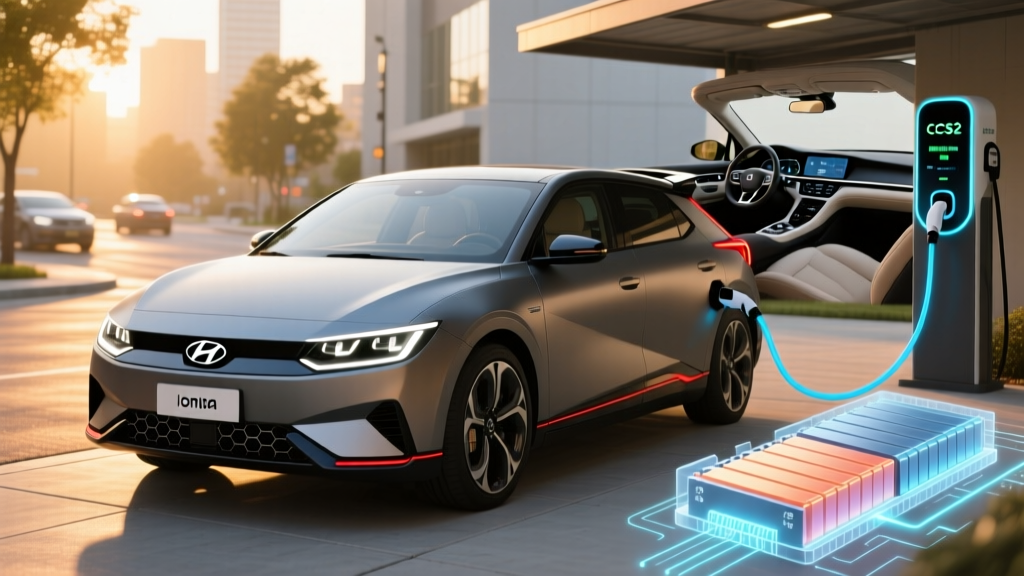
- BEV (Battery Electric Vehicle): Runs solely on battery power. No gas engine. Examples: Tesla Model Y, Hyundai Ioniq 5, Ford Mustang Mach-E.
- PHEV (Plug-in Hybrid Electric Vehicle): Has both a battery (typically 15–40 miles of electric-only range) and a gas engine. Plug in to charge. Examples: Toyota RAV4 Prime, Jeep Wrangler 4xe.
- HEV (Hybrid Electric Vehicle): Uses a small battery charged by regenerative braking and the gas engine. Cannot plug in. Examples: Toyota Prius, Honda Accord Hybrid.
NACS, CCS, and CHAdeMO: Charging Connector Types
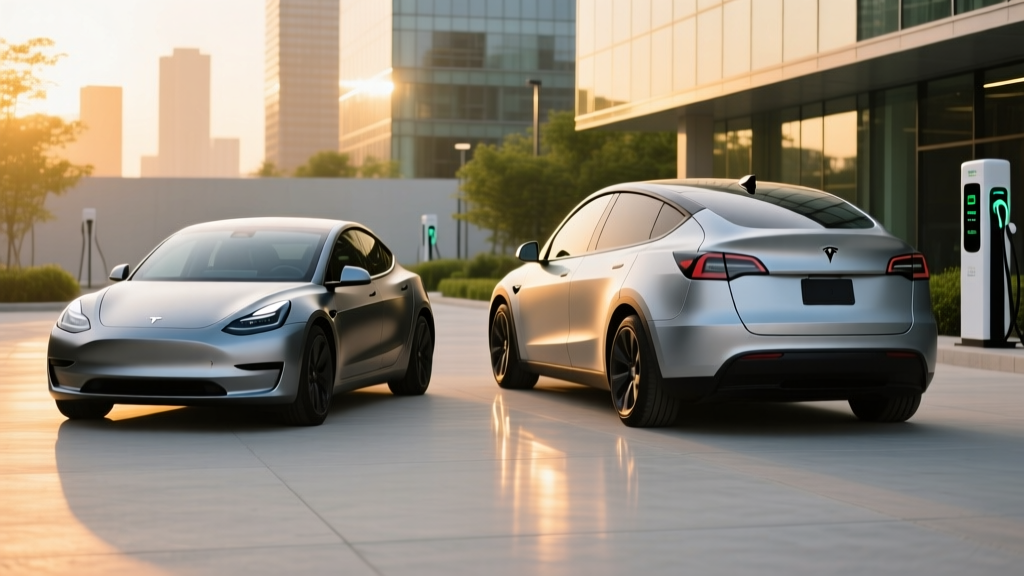
As of 2026, the North American charging landscape has largely standardized around NACS (North American Charging Standard), the connector Tesla pioneered and licensed to other automakers. Ford, GM, Rivian, Hyundai, and most major brands now ship vehicles with NACS ports, granting access to Tesla's Supercharger network — over 25,000 stalls nationwide.
CCS (Combined Charging System) remains on some older models and a handful of new ones, primarily served by Electrify America and EVgo. CHAdeMO is effectively discontinued for new vehicles (the Nissan Leaf was its last major holdout).
LFP vs. NMC: Battery Chemistry That Affects Longevity
LFP (Lithium Iron Phosphate): Lower energy density (slightly less range per pound), but superior cycle life and thermal stability. Can be charged to 100% daily without accelerated degradation. Used in Tesla Model 3 RWD, standard-range Ford Mustang Mach-E, and many Chinese-market vehicles now entering the US.
NMC (Nickel Manganese Cobalt): Higher energy density (more range in a smaller pack), but manufacturers recommend keeping daily charge between 20–80% to maximize lifespan. Used in most long-range and performance EVs.
| Myth | Fact (with 2026 data) |
|---|---|
| "EVs don't have enough range." | The median 2026 BEV achieves 270–320 miles EPA. The Hyundai Ioniq 6 SE Long Range posts 361 miles EPA. Most Americans drive under 40 miles/day (FHWA data). |
| "Batteries need replacing every few years." | Federal law mandates EV battery warranties of 8 years / 100,000 miles minimum. Real-world data from Recurrent shows most packs retain 90%+ capacity at 100k miles. |
| "Charging takes too long." | A 2026 Hyundai Ioniq 5 peaks at 240 kW DC, adding 10–80% in ~18 minutes. Most owners charge overnight at home (Level 2) and never wait at all. |
| "EVs are worse in winter." | Cold weather reduces range 15–30% depending on temperature and heat pump availability. A 300-mile EV may deliver ~220–255 miles at 20°F. Preconditioning and seat heaters mitigate this significantly. |
| "Everyone qualifies for the $7,500 tax credit." | The IRS §30D credit has MSRP caps ($55k cars / $80k SUVs/trucks), income limits ($150k single / $300k joint), and strict battery-sourcing requirements. Many popular EVs qualify for $0–$3,750 in 2026. |
EV vs. Gas vs. Hybrid: The Numbers Compared
Terminology only matters if it helps you make a decision. Here's how a mainstream BEV, PHEV, and gas vehicle stack up across the metrics that affect ownership.
| Metric | BEV (Tesla Model Y LR) | PHEV (Toyota RAV4 Prime) | Gas (Toyota RAV4 LE) |
|---|---|---|---|
| Base MSRP | $44,990 | $43,690 | $30,425 |
| Federal Tax Credit (est.) | $0–$3,750* | $0–$3,750* | $0 |
| EPA Range / Efficiency | 320 mi / 122 MPGe | 42 mi electric + 38 MPG gas | 30 MPG combined |
| Annual Fuel/Energy Cost† | ~$540 | ~$820 | ~$1,680 |
| Annual Maintenance | ~$300 | ~$550 | ~$750 |
| 5-Year Fuel + Maintenance | ~$4,200 | ~$6,850 | ~$12,150 |
| Battery Warranty | 8 yr / 120,000 mi | 10 yr / 150,000 mi | N/A |
*Credit amount depends on battery sourcing compliance, buyer income, and point-of-sale transfer rules. Verify at IRS.gov before purchasing. †Based on 12,000 mi/yr, $0.15/kWh home electricity, $3.50/gal gas.
Real Costs of EV Ownership: Beyond the Sticker Price
Understanding EV terminology helps you decode spec sheets — but ownership economics determine whether an EV actually makes financial sense for your situation.
| Cost Category | BEV (Model Y LR) | Gas (RAV4 LE) | Difference |
|---|---|---|---|
| Purchase Price (after credit) | $42,990 | $30,425 | +$12,565 |
| Home Charger Install (Level 2) | $800–$2,000 | $0 | +$800–$2,000 |
| Fuel/Energy (5 years) | $2,700 | $8,400 | −$5,700 |
| Maintenance (5 years) | $1,500 | $3,750 | −$2,250 |
| Insurance (5 years) | $9,500 | $7,200 | +$2,300 |
| Depreciation (est.) | $18,500 | $14,000 | +$4,500 |
| 5-Year Total | ~$75,990 | ~$63,775 | +$12,215 |
Estimates based on national averages. Insurance premiums for EVs run 15–30% higher due to repair costs and battery replacement risk. Depreciation figures reflect 2024–2026 market trends from Kelley Blue Book. Your actual costs will vary by state, driving habits, and electricity rates.
The break-even reality: In this comparison, the BEV costs roughly $12,000 more over five years despite massive fuel and maintenance savings. The higher purchase price, insurance premiums, and depreciation gap aren't fully offset. However, if you drive 20,000+ miles/year, have cheap home solar electricity, or qualify for the full $7,500 credit, the math flips in the EV's favor.
Real-World Ownership: What Spec Sheets Don't Tell You
Home Charging Access Is the Make-or-Break Factor
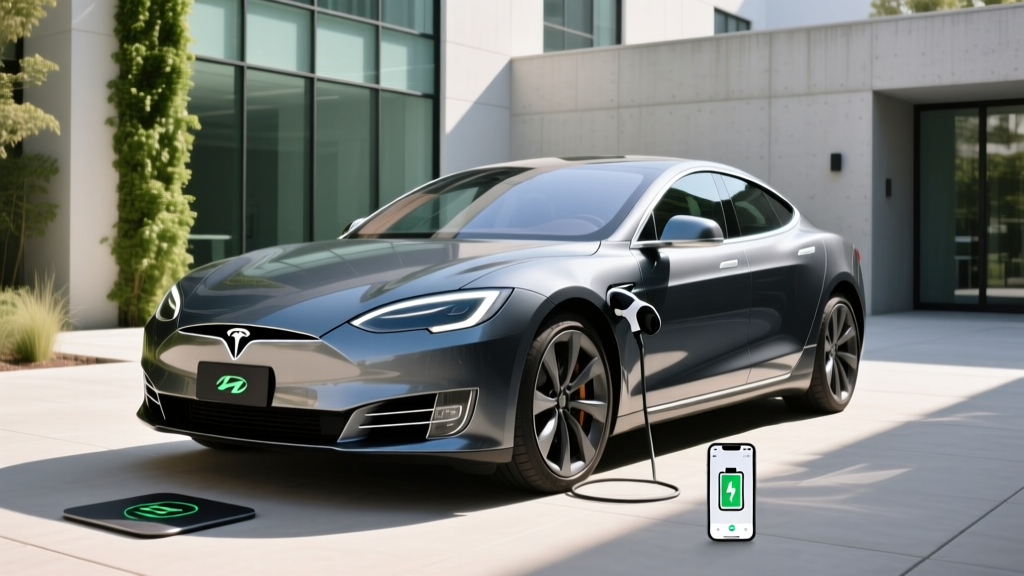
Approximately 75–80% of EV charging happens at home. If you have a garage or driveway with access to a 240V outlet (or can install one), an EV integrates seamlessly — you wake up every morning with a "full tank." A typical Level 2 home charger (11.5 kW) adds roughly 35–44 miles of range per hour of charging, easily replenishing a full battery overnight.
If you lack home charging (apartment dwellers, street parking), EV ownership becomes significantly harder. You'll rely on public DC fast charging ($0.30–$0.50/kWh, roughly double the cost of home charging) and must plan around charger availability. In this scenario, a PHEV — which can gas-up anywhere while still offering 30–42 electric miles for short commutes — may be the more practical choice.
Charging Curves: Why "Peak kW" Is Misleading
When a manufacturer says an EV charges at "250 kW," that's the peak rate, sustained only briefly (typically between 10–30% state of charge). Above 50%, the charge rate tapers significantly. Above 80%, it slows dramatically to protect battery health — this is why 10–80% charge times are the industry standard metric, not 0–100%.
For example, the 2026 Hyundai Ioniq 5 peaks at 240 kW but averages roughly 150–165 kW across a 10–80% session, completing it in approximately 18 minutes. A vehicle advertising "150 kW peak" might average only 90 kW and take 32+ minutes for the same session. Always look at the 10–80% time, not the peak number.
Cold Weather: The Range Tax Nobody Advertises
Lithium-ion batteries lose efficiency in cold temperatures, and cabin heating draws significant energy (unlike a gas car, which uses waste engine heat). At 20°F, expect a 15–30% range reduction depending on whether the EV has a heat pump (more efficient) or resistive heater. A 320-mile EPA vehicle may deliver 220–270 real-world miles in winter conditions. Preconditioning the battery while plugged in — a feature on most modern EVs — recovers some of this loss.
Your EV Decision Framework
Choose a BEV (full electric) if:
- You have reliable home charging (garage, driveway, or workplace Level 2)
- Your daily driving is under 200 miles round-trip
- You want the lowest per-mile energy cost (~$0.04–$0.05/mi on home electricity)
- You're willing to plan charging stops on road trips (15–20 min every 2–3 hours)
- You want minimal maintenance (no oil changes, fewer brake replacements due to regen)
Choose a PHEV (plug-in hybrid) if:
- You lack home charging but want some electric driving for short commutes
- You regularly take long road trips through areas with sparse charging infrastructure
- You want electric daily driving (25–42 mi) with gas-engine backup and zero range anxiety
- You live in extreme cold climates where BEV range loss is a significant concern
Choose an HEV (standard hybrid) if:
- You cannot plug in at all (no home, work, or reliable public charging)
- You want better fuel economy (40–57 MPG) without changing any habits
- You want the lowest upfront cost among electrified options
- You drive high miles but lack the infrastructure to support a BEV
Stick with gas for now if:
- You drive fewer than 6,000 miles/year (fuel savings won't offset the EV price premium)
- You regularly tow heavy loads over long distances (EV range drops 40–60% under heavy towing)
- Your budget is strictly under $28,000 and you need a new vehicle (limited EV options at this price)
First-Time EV Buyer Checklist
- Verify your home electrical panel. A Level 2 charger typically requires a 40–60 amp dedicated circuit. If your panel is near capacity (common in older homes with 100-amp service), a panel upgrade to 200 amps adds $1,500–$3,500 to installation costs. Get a quote from a licensed electrician before purchasing.
- Check §30D tax credit eligibility. Visit IRS.gov and confirm: your income is under the cap ($150k single / $300k joint), the vehicle MSRP is under the limit ($55k sedans / $80k SUVs/trucks/vans), and the specific trim qualifies based on battery sourcing. Credits can now be transferred to the dealer at point of sale as an instant discount.
- Test the real-world range. Take a prospective EV on a highway test drive at 70+ mph with climate control on. Compare the observed consumption (kWh/mi displayed on the dash) to the EPA sticker. Highway driving typically reduces range 10–15% vs. the EPA combined estimate.
- Download the charging apps. Before buying, install PlugShare, the Tesla app (for Supercharger access on NACS-equipped vehicles), and your regional utility's EV rate calculator. Map out your most common routes to confirm charging availability.
- Get an insurance quote first. EV insurance premiums average 15–30% higher than comparable gas vehicles. Get a binding quote before finalizing your purchase — some models (particularly luxury EVs) carry significantly steeper premiums.
- Understand the warranty. Federal law requires a minimum 8-year / 100,000-mile battery warranty (capacity retention threshold is typically 70%). Some manufacturers exceed this: Hyundai/Kia offers 10yr/100k, and Tesla covers 8yr/120k on the Model Y Long Range.
Frequently Asked Questions
Is "EV" an acronym or an initialism?
Technically, "EV" is an initialism — you pronounce each letter individually ("E-V"), unlike acronyms such as NASA or SCUBA that are pronounced as words. However, in everyday usage, "EV" functions as a noun and appears in dictionaries as a recognized term. It's grammatically identical to how we use "SUV," "RV," or "ATV."
What does MPGe mean, and should I care?
MPGe (miles per gallon equivalent) translates electricity consumption into a familiar gas-car metric. One gallon of gasoline contains roughly 33.7 kWh of energy, so MPGe tells you how far an EV would travel on the energy equivalent of one gallon. A 120 MPGe EV uses about 28 kWh per 100 miles. It's useful for cross-shopping, but kWh/100mi is more precise for calculating actual charging costs.
What is preconditioning and why does it matter?
Preconditioning warms or cools the battery to its optimal operating temperature before fast charging or departure. A cold battery charges significantly slower — preconditioning before arriving at a DC fast charger can cut your 10–80% session by 5–10 minutes in cold weather. Most EVs precondition automatically when you navigate to a charger in the built-in navigation system.
Do I need to charge to 100% every night?
No — and for NMC batteries, you shouldn't. Most manufacturers recommend a daily charge limit of 80% for NMC chemistry, reserving 100% for road trips. LFP batteries, however, tolerate (and actually benefit from) regular 100% charges. Check your specific vehicle's battery chemistry and follow the manufacturer's guidance.
What is regenerative braking?
Regenerative braking ("regen") converts the vehicle's kinetic energy back into stored battery energy when you lift off the accelerator or press the brake pedal. It extends range by 5–15% in stop-and-go traffic and significantly reduces wear on the friction brakes — many EV owners report original brake pads lasting 100,000+ miles.
Can I install a Level 2 charger myself?
Only if you're a qualified electrician. A Level 2 charger requires a dedicated 240V circuit (typically 40–60 amps), proper wire gauge, and permitting. DIY electrical work at this amperage carries fire and code-violation risk. Budget $500–$2,000 for professional installation (equipment + labor + permit), or more if a panel upgrade is needed.