The Short Answer: Is Electric Worth It?
For most drivers with home charging access and a daily commute under 60 miles, yes — an electric vehicle saves $4,000–$9,000 over five years compared to a comparable gas car, thanks to lower fuel and maintenance costs plus the federal §30D tax credit (up to $7,500 for qualifying new EVs, or $4,000 for used). But EVs are not universally the best choice. If you lack home or workplace charging, regularly drive 400+ miles in cold weather, or need a sub-$25,000 vehicle today, a hybrid or plug-in hybrid may serve you better. The right answer depends on your specific driving pattern, climate, and electrical setup — and the numbers below will show you exactly which path wins.
The Real Cost of Going Electric: Purchase Price, Fuel, and Maintenance
The sticker price of EVs has dropped significantly. In 2026, the average transaction price for a new EV sits around $45,000, but compelling options start much lower. The Chevrolet Equinox EV LT begins at $33,600 with an EPA-estimated 319 miles of range. The Hyundai Kona Electric SE starts at $32,975 with 261 miles EPA. After applying the federal §30D clean vehicle credit — where eligible — effective prices drop substantially.
But purchase price is only the opening move. The ownership math is where EVs typically pull ahead.
| Cost Category | Battery EV (e.g., Equinox EV) | Gas Car (e.g., Equinox AWD) | PHEV (e.g., RAV4 Prime) |
|---|---|---|---|
| Purchase Price (MSRP) | $33,600 | $31,900 | $43,690 |
| Federal Tax Credit | –$7,500* | $0 | –$7,500* |
| Effective Purchase | $26,100 | $31,900 | $36,190 |
| 5-Year Fuel/Energy | $3,375 (home charging at $0.15/kWh) | $9,375 ($3.50/gal at 24 MPG) | $4,200 (mix of electric + gas) |
| 5-Year Maintenance | $1,500 | $3,500 | $2,800 |
| 5-Year Insurance (avg) | $9,500 | $8,000 | $8,800 |
| 5-Year Total | $40,475 | $52,775 | $51,990 |
*Federal §30D credit eligibility depends on MSRP caps ($55,000 for cars, $80,000 for SUVs/trucks), buyer income limits ($150K single / $300K joint AGI), and battery component/critical mineral sourcing requirements. As of 2026, the credit can be transferred to the dealer at point of sale for an immediate price reduction. Always verify current eligibility on IRS.gov and consult a tax professional.
Notice the insurance line: EV insurance premiums run 10–20% higher on average, driven by higher repair costs for battery-adjacent collision damage and specialized parts. This eats into savings but rarely eliminates the EV cost advantage entirely.
Range Reality: What the EPA Sticker Doesn't Tell You
EPA range estimates are a useful baseline, but real-world results vary significantly based on speed, temperature, and terrain. A vehicle rated at 310 miles EPA might deliver 240–260 miles at sustained 75 mph highway speeds, and as little as 200–220 miles in sub-freezing temperatures.
Real-World Range Expectations (310-Mile EPA Vehicle)
- City/suburban, moderate weather: 290–320 miles (regen braking recovers energy)
- Highway, 70–75 mph, 65–80°F: 250–275 miles (aerodynamic drag dominates)
- Highway, 70–75 mph, 20–32°F: 210–240 miles (cabin heating + battery resistance)
- Highway, below 20°F, no heat pump: 185–210 miles (worst-case scenario)
This matters for trip planning. If your daily round-trip commute is 50 miles, even worst-case winter range covers it easily with margin. But a 300-mile road trip that barely fits the EPA sticker in summer becomes a two-charge journey in January. Vehicles equipped with a heat pump — like the Tesla Model Y, Hyundai Ioniq 5, and BMW iX — lose 15–20% range in cold weather instead of the 30–40% loss seen in EVs using resistive heating.
Battery chemistry also plays a role. Lithium iron phosphate (LFP) batteries, used in base Tesla Model 3/Y trims and some Ford models, tolerate regular 100% charging and degrade more slowly, but have lower energy density and worse cold-weather performance than nickel-manganese-cobalt (NMC) packs. If you live in Minnesota, NMC with a heat pump is the better pick. If you're in Southern California and want maximum battery longevity, LFP is compelling.
Charging Access: The Make-or-Break Factor
Whether an electric car works for you hinges almost entirely on charging access. Here's the honest breakdown:
| Level | Power (kW) | Miles Added/Hour | Typical Use | Install Cost |
|---|---|---|---|---|
| Level 1 (120V outlet) | 1.2–1.9 kW | 3–5 miles | Overnight top-up, PHEVs, low-mileage drivers | $0 (included cord) |
| Level 2 (240V home) | 7.2–11.5 kW | 25–44 miles | Daily home charging — the gold standard | $500–$2,500 (equipment + electrician) |
| DC Fast Charging | 50–350 kW | 150–1,000+ miles/hour (peak) | Road trips, quick top-ups | N/A (public infrastructure) |
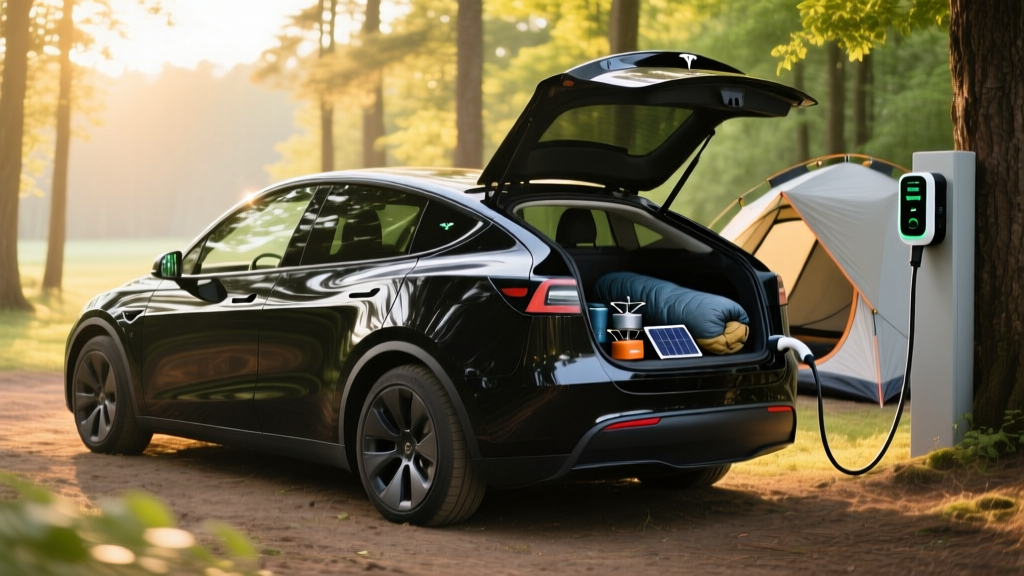
Home Level 2 charging is the single biggest quality-of-life factor in EV ownership. Plug in when you get home, wake up to a full battery every morning — no fuel station visits. A 48-amp Level 2 charger on a 240V/60A circuit delivers roughly 11.5 kW, adding about 40 miles of range per hour. Most EVs fully recharge overnight in 6–8 hours.
Installation costs vary widely. If your electrical panel has spare capacity and the charger mounts near the panel, expect $500–$1,200 total (charger hardware: $300–$700, electrician labor: $200–$500). If you need a panel upgrade from 100A to 200A service, add $1,500–$3,000. Some utilities offer rebates of $200–$500 for smart charger installations.
If you can't charge at home — apartment dwellers, street parkers, those without a garage — EV ownership becomes significantly harder. You'll rely on public DC fast charging, which costs $0.30–$0.50/kWh (roughly double home rates) and requires 20–40 minute stops several times per week. Public charger reliability remains inconsistent: a 2025 study by J.D. Power found that roughly 20% of public charging attempts encounter some issue. In this scenario, a hybrid or PHEV is the more practical choice.
EV vs Gas vs Hybrid: Which Powertrain Fits Your Life?
| Factor | Battery Electric (BEV) | Plug-In Hybrid (PHEV) | Hybrid (HEV) | Gas (ICE) |
|---|---|---|---|---|
| EPA Range / MPGe | 240–400 mi / 100–130 MPGe | 25–42 mi electric + 350+ mi gas / 85–95 MPGe | 500+ mi / 45–57 MPG | 350–500 mi / 22–35 MPG |
| Home Charging Needed? | Essential for daily use | Beneficial but not required | No | No |
| Maintenance (5-yr) | $1,200–$1,800 | $2,500–$3,200 | $2,800–$3,500 | $3,200–$4,000 |
| Best For | Home chargers, daily commutes, road-trip planners | No home charger, mixed commutes, range-anxious buyers | High-mileage drivers, no charging access | Low-mileage, budget-first buyers |
| Federal Tax Credit | Up to $7,500 (new) / $4,000 (used) | Up to $7,500 if battery ≥7 kWh | Generally $0 | $0 |
The PHEV deserves special attention as the bridge option. A vehicle like the Toyota RAV4 Prime delivers 42 miles of electric-only range — covering most daily commutes on electricity alone — with a gas engine for longer trips. You get EV-like daily driving without range anxiety or charging-dependency. For households with one car and unpredictable schedules, a PHEV often represents the smartest electrified choice.
Common EV Misconceptions: Myth vs Fact
| Myth | Fact |
|---|---|
| "EV batteries need replacing every few years" | Federal law mandates 8-year/100,000-mile battery warranties (10 years/150,000 miles in CARB states). Real-world data shows most EV batteries lose 10–15% capacity over 8 years. Full replacements are rare and typically cost $5,000–$15,000 out of warranty. |
| "EVs are worse for the environment because of battery mining" | Lifecycle analyses from Argonne National Laboratory consistently show EVs produce fewer total emissions than gas cars over their lifetime, even accounting for battery manufacturing. The breakeven point is typically 1–2 years of driving, depending on your local grid mix. |
| "The grid can't handle everyone driving EVs" | Most charging happens overnight during off-peak hours when grids have surplus capacity. A 2025 DOE analysis found that widespread EV adoption through 2030 is manageable with current infrastructure, especially with managed/time-of-use charging. |
| "EVs are slow and boring to drive" | Electric motors deliver instant torque. The Hyundai Ioniq 5 N does 0–60 in 3.4 seconds with 641 hp. Even the base Tesla Model 3 hits 60 mph in 5.8 seconds — quicker than most gas sport sedans. |
| "I'll be stranded with a dead battery" | Modern EVs provide accurate range predictions, low-battery warnings at 5% and 1%, and navigation that routes through chargers. Roadside-assistance programs cover dead-battery tows. Running out of charge is almost always a planning failure, not a vehicle failure. |
What First-Time EV Buyers Must Know Before Signing
If you're transitioning from gas to electric for the first time, these are the practical realities that no brochure will emphasize:
- Charging speed is measured in kW, battery size in kWh. A 75 kWh battery charged at 150 kW (peak) doesn't fill in 30 minutes — the charge curve tapers significantly above 80% State of Charge to protect battery health. Expect a 10–80% DC fast charge to take 18–35 minutes depending on the vehicle and charger.
- Precondition your battery before DC fast charging. Most EVs warm the battery to optimal temperature when you navigate to a fast charger. Skipping this step — or arriving at a charger without preconditioning — can cut peak charging speed in half, especially in cold weather.
- The 80% rule for daily charging. For NMC batteries, charging to 80% rather than 100% daily extends battery lifespan significantly. Reserve 100% charges for road trips. LFP batteries are fine at 100% daily — check your owner's manual.
- Tire wear increases 15–25%. EVs are heavier and deliver instant torque, wearing tires faster than comparable gas cars. Budget for replacement tires every 30,000–40,000 miles instead of 50,000+. EV-specific tires (like the Michelin e.Primacy) can help.
- Regenerative braking changes how you drive. Most EVs offer adjustable regen, and many drivers adapt to one-pedal driving — lifting off the accelerator slows the car significantly, recovering energy and reducing brake wear. Brake pads on EVs routinely last 80,000–100,000+ miles.
Your Decision Framework: Should You Go Electric?
Choose a Battery EV If:
- You can install a Level 2 charger at home (garage, driveway, or dedicated parking spot with 240V access)
- Your daily driving is under 80 miles round-trip
- You take road trips fewer than 6 times per year and can plan 20–30 minute charging stops
- You want the lowest per-mile energy cost ($0.04–$0.06/mile on home charging vs $0.14–$0.18/mile for gas)
- You qualify for the federal §30D credit, state incentives, or utility rebates
Choose a Plug-In Hybrid If:
- You lack reliable home charging but want electric daily commuting (use public Level 2 or workplace charging)
- You frequently drive 300+ miles in a single day or live in a charging-desert region
- You want EV-like commuting with zero range anxiety for spontaneous long trips
- You live in extreme cold (below 0°F regularly) where BEV range loss is steep
Choose a Standard Hybrid If:
- You have zero access to any charging — no home, no workplace, no convenient public stations
- Your budget is under $28,000 and you need maximum fuel efficiency without an EV price premium
- You drive very high annual mileage (25,000+ miles) and want proven, low-risk powertrain simplicity
Wait on Electrification If:
- You're currently leasing a gas car with 18+ months remaining — the EV market will have more sub-$30K options by then
- Your apartment building has announced upcoming EV charger installations — wait for access before buying
Frequently Asked Questions
How long do EV batteries actually last?
Most modern EV batteries are engineered for 1,500–3,000 full charge cycles before degrading to 70–80% of original capacity. In practical terms, that's 200,000–400,000 miles for most vehicles. Real-world fleet data from fueleconomy.gov and long-term owner reports show typical degradation of 1–2% per year. The federal warranty mandates coverage for at least 8 years/100,000 miles if capacity drops below a manufacturer-specified threshold (typically 60–70%).
Is electric cheaper than gas per mile in 2026?
Yes, in nearly every scenario. At the U.S. average residential electricity rate of roughly $0.16/kWh and an EV efficiency of 3.5 miles/kWh, home charging costs about $0.046 per mile. A gas car averaging 27 MPG at $3.40/gallon costs $0.126 per mile — nearly three times more. Public DC fast charging at $0.40/kWh raises the EV cost to about $0.114/mile, still cheaper than gas but narrowing the gap.
Do I need to upgrade my electrical panel for a home charger?
Maybe. A Level 2 charger drawing 48 amps requires a dedicated 60-amp circuit. If your home has a 200-amp panel with available capacity, installation is straightforward ($500–$1,200). Older homes with 100-amp service often need a panel upgrade ($1,500–$3,000). A licensed electrician must perform a load calculation to determine your exact situation — never guess on this. Some newer "smart" chargers can dynamically limit draw to match available panel capacity, avoiding an upgrade.
What happens if I run out of charge on the road?
The same thing that happens if you run out of gas: you pull over and call for help. EV navigation systems (Tesla, Rivian, Hyundai, GM) actively route you through charging stations and warn you if your destination exceeds available range. Most manufacturers include roadside assistance that covers towing to the nearest charger. The real risk isn't sudden failure — EVs give extensive warnings — it's poor trip planning in areas with sparse charging infrastructure.
Are EVs safe in crashes?
EVs consistently earn top ratings from both NHTSA and IIHS. The battery pack's low, central placement gives EVs a lower center of gravity, reducing rollover risk. The Tesla Model Y, Hyundai Ioniq 5, and Volvo EX90 all hold IIHS Top Safety Pick+ ratings. Battery fire risk in crashes is statistically lower than gas vehicle fire risk according to NHTSA data, though EV battery fires are harder to extinguish when they do occur.
How does the federal EV tax credit actually work in 2026?
Under IRS §30D, qualifying new EVs can receive up to $7,500 — split between a $3,750 battery component credit and a $3,750 critical minerals credit. Eligibility requires: vehicle MSRP under $55,000 (cars) or $80,000 (SUVs/trucks/vans), buyer AGI under $150,000 (single) or $300,000 (joint), and the vehicle must meet progressively tightening battery sourcing rules. As of 2026, you can transfer the credit to the dealer at point of sale for an immediate price reduction — no waiting until tax filing. Used EVs qualify for a separate credit of 30% of sale price, up to $4,000, with a $25,000 price cap. Check current rules at IRS.gov before purchasing.