Is the Chevy Spark Electric? The Short Answer
No, the Chevrolet Spark was never produced as an electric vehicle. Throughout its entire production run (2010–2022 in the U.S.), the Spark was offered exclusively with a gasoline engine — a 1.4-liter four-cylinder producing 98 horsepower. Chevrolet discontinued the Spark after the 2022 model year with no EV variant ever reaching showrooms.
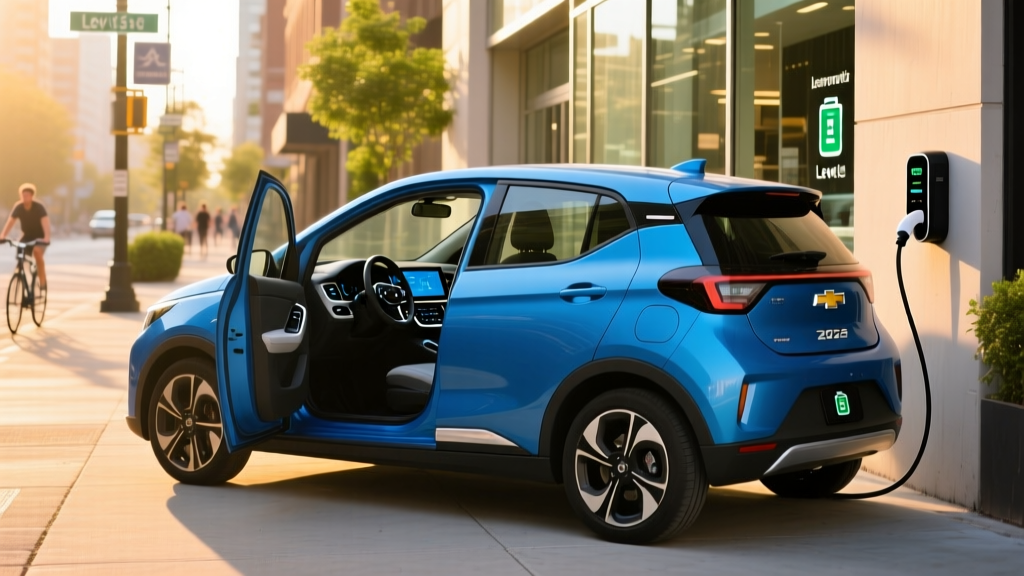
If you're searching for an affordable electric Chevy, the model you actually want is the Chevrolet Bolt EV (and its larger sibling, the Bolt EUV). The Bolt EV remains one of the most cost-effective new EVs on the market, with an EPA-estimated 259 miles of range and a starting MSRP around $26,500 before incentives. We'll break down exactly what that means for your wallet below.
Why the Confusion? Spark, Bolt, and GM's EV Naming
The mix-up is understandable. Chevrolet uses short, punchy names for its smaller vehicles, and "Spark" sounds like something that could belong on an EV badge. Add to that the fact that GM has been vocal about its electrification strategy, and it's easy to see how rumors of an "electric Spark" took hold on forums and social media.
Here's the reality of GM's affordable EV lineup as of 2026:
- Chevrolet Bolt EV — Compact hatchback, 259 mi EPA range, ~$26,500 MSRP
- Chevrolet Bolt EUV — Slightly larger crossover variant, 247 mi EPA range, ~$28,800 MSRP
- Chevrolet Equinox EV — Compact SUV, up to 319 mi EPA range, ~$33,000+ MSRP
- Cadillac Optiq / Chevrolet Blazer EV — Higher-tier options with 288–324 mi range
There is no "Spark EV" in production, announced, or rumored by GM for the 2026–2027 model years. If budget is your priority, the Bolt EV is the spiritual successor to what an electric Spark would have been.
The Real Affordable Chevy EV: Bolt EV by the Numbers
Since the Spark EV doesn't exist, let's put the actual budget champion under the microscope. The 2026 Chevrolet Bolt EV carries forward the refreshed platform GM introduced, with updated battery chemistry and faster charging.
| Spec | Value |
|---|---|
| EPA Range | 259 miles |
| Battery Capacity | 65 kWh usable (NMC lithium-ion) |
| Peak DC Fast Charge Rate | 150 kW (CCS1/NACS adapter compatible) |
| 10–80% DC Fast Charge Time | ~30 minutes (peak); expect ~35 min average |
| Level 2 AC Charge Rate | 11.5 kW (~39 mi/hr added) |
| Level 1 (120V) Charge Rate | 1.4 kW (~4 mi/hr added) |
| Horsepower | 200 hp |
| 0–60 mph | 6.5 seconds |
| Efficiency | 120 MPGe combined (28 kWh/100 mi) |
| Base MSRP (1LT) | $26,500 |
| Battery/Powertrain Warranty | 8 years / 100,000 miles |
Real-World Range Expectations
The EPA rates the Bolt EV at 259 miles, but real-world results vary. In moderate weather (60–75°F) with mixed city/highway driving, expect 230–250 miles. At sustained highway speeds (75+ mph), range drops to roughly 200–220 miles. In cold weather (below 30°F), plan for 170–200 miles — a 25–35% reduction common to all EVs without aggressive battery preconditioning. The Bolt does not feature a heat pump (it uses resistive cabin heating), which contributes to greater winter range loss than competitors like the Hyundai Ioniq 5 or Tesla Model 3.
Bolt EV vs. What a Gas Spark Would Have Cost
To understand the value proposition, let's compare owning a Bolt EV against what a hypothetical gas-powered subcompact would cost over five years. We'll use the 2022 Chevy Spark (the last model year) as the gas baseline and the 2026 Bolt EV as the electric option.
| Cost Category | 2026 Bolt EV | Gas Subcompact (30 MPG avg) |
|---|---|---|
| Purchase Price (MSRP) | $26,500 | $18,000 (est. used/discontinued) |
| Federal Tax Credit (§30D) | Up to $7,500 (if eligible) | $0 |
| Effective Purchase Price | $19,000 | $18,000 |
| Annual Fuel/Energy (75,000 mi total) | $3,750 (home charging at $0.13/kWh) | $9,375 (gas at $3.50/gal, 30 MPG) |
| 5-Year Maintenance | $1,200 (tire rotations, cabin filter, fluid top-offs) | $3,500 (oil changes, brakes, belts, spark plugs) |
| 5-Year Insurance (avg.) | $7,500 | $6,000 |
| 5-Year Total Cost | $31,450 | $36,875 |
The Bolt EV's higher sticker price is offset by the federal §30D clean vehicle credit (if you meet income, MSRP, and battery-sourcing requirements) and dramatically lower fuel and maintenance costs. Over five years, the EV comes out $5,425 ahead — and that gap widens in years six through ten as the gas car requires more repairs.
Charging at Home vs. Public: What First-Time Buyers Need to Know
The single biggest ownership variable is whether you can charge at home. Here's what that looks like in practice:
Level 1: Standard 120V Outlet
Every Bolt EV ships with a dual-level charge cord. Plugged into a standard household outlet, you'll add roughly 4 miles of range per hour. For a driver covering 30–40 miles daily, overnight Level 1 charging is sufficient — you'll recover your daily use in 8–10 hours. No electrician needed.
Level 2: 240V Home Charger
A dedicated Level 2 station (like a ChargePoint Home Flex or Emporia V2) delivers up to 11.5 kW, adding about 39 miles of range per hour. A full charge from empty takes roughly 6.5 hours. Installation costs vary:
| Item | Cost Range |
|---|---|
| Level 2 Charger Unit | $300–$700 |
| Electrician (240V circuit + outlet/hardwire) | $500–$2,000 |
| Permit (if required by local code) | $50–$200 |
| Electrical Panel Upgrade (if needed, 100A→200A) | $1,500–$3,000 |
| Total (no panel upgrade) | $850–$2,900 |
| Total (with panel upgrade) | $2,350–$5,900 |
Apartment/renter reality check: If you live in a multi-unit building without dedicated parking and charging access, owning an EV becomes significantly more challenging. You'd rely on public charging infrastructure, which is expanding but remains inconsistent in many regions. Check your local area on the DOV Alternative Fuels Station Locator before committing.
DC Fast Charging on the Road
The Bolt EV's 150 kW peak DC fast-charge rate is adequate but not class-leading. On a road trip, plan for 30–35 minute stops to go from 10% to 80%. The charging curve tapers significantly above 80% — charging from 80% to 100% can take nearly as long as 10–80%. For road-trip efficiency, stick to the 10–80% window and plan stops accordingly.
GM vehicles now support the NACS (Tesla Supercharger) standard either natively or via adapter, vastly expanding the fast-charging network available to Bolt owners. As of 2026, Bolt EV drivers can access over 20,000 Tesla Supercharger stalls across North America with the appropriate adapter.
Common EV Myths — Fact-Checked for First-Time Buyers
| Myth | Fact |
|---|---|
| "EV batteries need replacing every few years" | Modern NMC and LFP batteries are warrantied for 8 years/100,000 miles and routinely last 150,000–200,000+ miles with less than 15% degradation. The Bolt's battery warranty guarantees it will retain at least 60% of original capacity during the warranty period, but real-world data from fueleconomy.gov shows most Bolt batteries retaining 90%+ after 100,000 miles. |
| "EVs are more expensive to own than gas cars" | When accounting for the federal tax credit, lower fuel costs (electricity at ~$0.13/kWh vs. gas at ~$3.50/gal), and minimal maintenance (no oil changes, fewer brake replacements due to regenerative braking), most EVs reach cost parity within 3–5 years for drivers covering 12,000+ miles annually. |
| "You'll get stranded with a dead battery" | The average American drives 37 miles per day (FHWA data). Even with real-world range reductions, a 259-mile EPA vehicle has 5–7x daily driving needs in reserve. Road-trip planning apps (A Better Route Planner, PlugShare) make longer trips straightforward. |
| "EVs don't work in cold weather" | Range does decrease 20–35% in sub-freezing temperatures, but EVs start reliably in extreme cold (no cold-crank issues), and preconditioning while plugged in warms the battery and cabin using grid power, preserving range. |
| "The electric grid can't handle more EVs" | Most charging happens overnight during off-peak hours. A Department of Energy study found that the existing grid can support millions of additional EVs with smart-charging practices and time-of-use rates. |
Federal Tax Credit: Do You Qualify for $7,500?
The IRS §30D clean vehicle credit can reduce the Bolt EV's effective price to under $19,000 — but eligibility is not automatic. Here's the 2026 checklist:
- MSRP Cap: Vehicle must have an MSRP under $55,000 for cars (the Bolt EV qualifies at ~$26,500)
- Buyer Income Cap: Modified AGI must not exceed $150,000 (single), $225,000 (head of household), or $300,000 (married filing jointly)
- Battery Sourcing: A percentage of critical minerals and battery components must be sourced from the U.S. or free-trade-agreement countries — this requirement tightens annually and may affect eligibility for some model years
- Final Assembly: Vehicle must undergo final assembly in North America (the Bolt EV is built in Orion Township, Michigan — qualifies)
- Point-of-Sale Transfer: As of 2024+, you can transfer the credit to the dealer at purchase, reducing your out-of-pocket cost immediately rather than waiting for a tax refund
Important caveat: Battery-sourcing and critical-mineral requirements change yearly and can disqualify vehicles mid-year. Always verify current eligibility on the IRS website or with a tax professional before relying on the credit in your budget.
Decision Framework: Is the Bolt EV Right for You?
If / Then Guide for First-Time EV Buyers
Choose the Bolt EV if:
- You need a budget-friendly EV under $30,000 and qualify for the §30D credit
- Your daily commute is under 80 miles round-trip (you'll rarely use more than a third of the battery)
- You have access to home charging — even a standard 120V outlet works for modest daily mileage
- You primarily drive in urban or suburban settings where regenerative braking maximizes efficiency
- You want a proven platform with strong warranty coverage and widespread dealer support
Look elsewhere if:
- You regularly take road trips exceeding 250 miles one-way (the Bolt's 150 kW charge rate means longer stops than a Hyundai Ioniq 5 at 350 kW or Tesla Model 3 at 250 kW)
- You live in an apartment with zero charging access and your area has limited public infrastructure
- You need AWD for heavy snow/ice — the Bolt EV is front-wheel drive only
- You need more than 57 cu ft of cargo space (consider the Equinox EV or a PHEV like the Toyota RAV4 Prime)
- You experience sustained sub-zero winters — the lack of a heat pump means significant range loss and higher cabin-heating energy draw
Frequently Asked Questions
Was there ever a Chevy Spark EV concept or prototype?
GM produced an electric concept called the "Spark EV" as a technology demonstrator around 2012–2013, and a very limited compliance car (the Chevrolet Spark EV) was sold in select markets (California, Oregon) from 2014–2016. It featured a 21.3 kWh battery with roughly 82 miles of EPA range and was discontinued long before the modern EV era. It is not available new, and parts/service support for the used compliance cars is increasingly limited.
What is the cheapest new electric car available in 2026?
The Chevrolet Bolt EV at ~$26,500 MSRP is among the least expensive new EVs in the U.S. market. The Nissan Leaf starts slightly lower (~$28,000 for the S trim with 149 miles of range, or ~$36,000 for the SV Plus with 212 miles). After the §30D credit, the Bolt EV can drop below $19,000 — making it the most affordable path to a 250+ mile EV.
How long does a Chevy Bolt EV battery last?
GM warranties the Bolt's battery for 8 years or 100,000 miles against defects and excessive degradation (below 60% capacity). Real-world data from high-mileage Bolt owners shows typical degradation of 5–10% over the first 100,000 miles. Many Bolts from the 2017–2019 model years are still running with 88–93% of original battery capacity at 80,000–120,000 miles. A full battery replacement (if ever needed out of warranty) currently runs $14,000–$16,000 at a dealer, though prices continue to decline.
Can I charge a Bolt EV at a Tesla Supercharger?
Yes. As of 2026, GM vehicles can access Tesla's Supercharger network using the NACS adapter (included or available for purchase from GM). You'll need to use the GM or Tesla app to initiate sessions at Superchargers. The Bolt EV will charge at the Supercharger's available rate up to the Bolt's 150 kW peak — so at a 250 kW V3 Supercharger, you'll be limited by the car, not the station.
Is a used Spark EV a good budget EV option?
Generally, no. The 2014–2016 Spark EV's 82-mile range is impractical for most modern drivers, its CHAdeMO charging connector is increasingly unsupported at new DC fast-charging stations, and its small battery means faster relative degradation impact. You're far better served by a used first-generation Bolt EV (2017–2022), which offers 238 miles of range, a CCS connector, and a larger battery that degrades more gracefully.