Quick Answer: Is the i8 Electric?
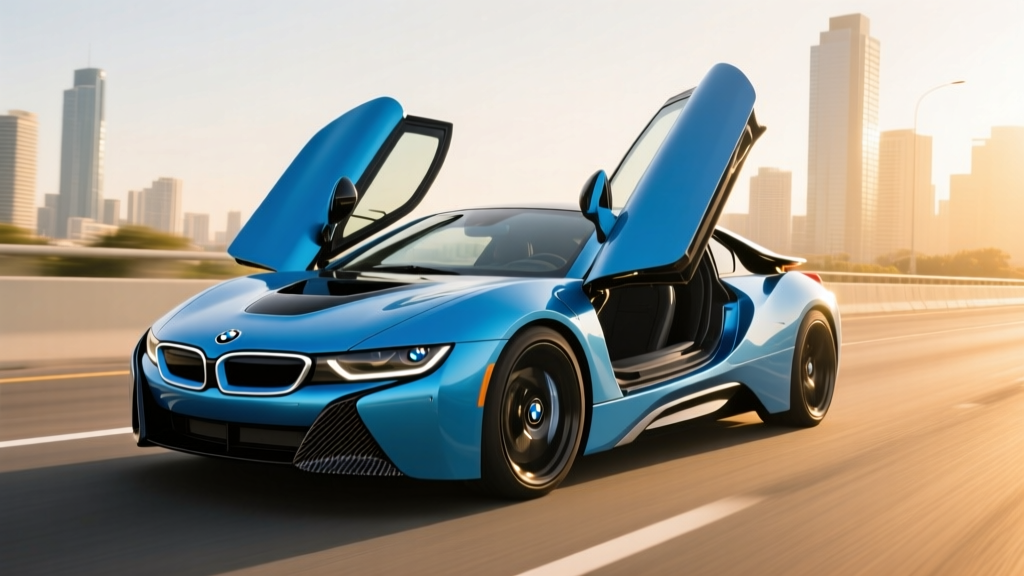
No, the BMW i8 is not a fully electric vehicle. It is a plug-in hybrid electric vehicle (PHEV) that pairs a 1.5-liter turbocharged three-cylinder gasoline engine with an electric motor and a small battery pack. The i8 can drive on electricity alone for a limited range — the EPA rated the final 2020 model year at 18 miles of electric-only range — before the gas engine kicks in. BMW discontinued the i8 in 2020, so you'll only find it on the used market today.
If you're searching "is i8 electric" because you're considering one as a used purchase, this guide breaks down exactly what you're getting, what it costs to own, and how it compares to a true battery-electric vehicle (BEV) or a conventional gas sports car.
BMW i8 Powertrain: How the Plug-In Hybrid System Works
The i8 uses BMW's eDrive plug-in hybrid architecture, but in a configuration unique to this model. Here's the mechanical layout:
- Front axle: Electric motor producing 141 horsepower (105 kW), drawing from a lithium-ion battery pack mounted in the center tunnel.
- Rear axle: Mid-mounted 1.5L turbocharged inline-three gasoline engine producing 228 hp and 236 lb-ft of torque, paired with a 6-speed automatic transmission.
- Combined system output: 369 hp and 420 lb-ft of torque (in the final 2019–2020 model years with the updated 11.6 kWh battery).
The battery pack in the 2019–2020 models stores 11.6 kWh total (approximately 9.4 kWh usable). That's a fraction of what a modern BEV carries — for comparison, a 2026 Tesla Model 3 holds roughly 60 kWh usable, and a Ford Mustang Mach-E Extended Range holds about 91 kWh usable.
The i8 can operate in three modes:
- EV mode: Electric-only, front-wheel drive, up to 18 miles at speeds up to 75 mph.
- Hybrid mode: The car manages both powertrains automatically for maximum efficiency.
- Sport mode: Both systems deliver maximum combined power, with the gas engine always active.
Specs and Numbers: What the i8 Actually Delivers
| Spec | Value |
|---|---|
| Powertrain Type | Plug-in Hybrid (PHEV) |
| Combined System Power | 369 hp / 420 lb-ft |
| Battery (Total / Usable) | 11.6 kWh / ~9.4 kWh |
| Battery Chemistry | Lithium-ion (NMC) |
| EPA Electric-Only Range | 18 miles |
| EPA Combined MPGe (Electric + Gas) | 69 MPGe |
| EPA Combined MPG (Gas Only) | 27 MPG |
| 0–60 mph | 4.2 seconds |
| Top Speed (Electronically Limited) | 155 mph |
| AC Charging (Level 2) | 3.7 kW max (~2.5 hours for full charge) |
| DC Fast Charging | Not supported |
| Original MSRP (2020 Coupe) | $147,500 |
| Battery Warranty (Original) | 8 years / 80,000 miles |
Source: EPA Fuel Economy — 2020 BMW i8
A critical note on charging: the i8 does not support DC fast charging. You're limited to Level 1 (120V household outlet, roughly 7 hours for a full charge) or Level 2 (240V, at a maximum of 3.7 kW, taking about 2.5 hours). Given the small battery, this is manageable for daily top-ups, but it means you cannot rapid-charge on a road trip the way a BEV owner can at a 150+ kW DC fast charger.
Real-World Ownership: What to Expect Living With an i8
The EPA's 18-mile electric range is a best-case figure under mixed driving conditions. Here's what real-world variables do to that number:
- Highway driving (70+ mph): Expect 12–14 electric-only miles. Aerodynamic drag and higher speeds drain the small battery quickly.
- Cold weather (below 40°F): Lithium-ion batteries lose efficiency in the cold. Expect 10–13 miles of electric range, plus reduced regenerative braking effectiveness until the battery warms up.
- City driving with regen: This is where the i8 maximizes electric range — you may see the full 18 miles or close to it in stop-and-go traffic with frequent regenerative braking.
For daily commutes under 15 miles round-trip, the i8 can function as a quasi-EV during the week, with the gas engine handling weekend drives and longer trips. This is the PHEV ownership sweet spot — but if your commute is 30+ miles, the gas engine will be doing most of the work, and you'll see fuel economy closer to the 27 MPG combined gas-only rating.
Home Charging Reality
Because the i8's battery is small, home charging is straightforward. A standard 120V outlet (Level 1) will fully recharge it overnight in about 7 hours. If you install a Level 2 home charger (240V), you'll cut that to roughly 2.5 hours. You don't need an expensive 48-amp hardwired unit — even a basic 16-amp Level 2 unit will max out the i8's 3.7 kW onboard charger.
If you don't have access to home or workplace charging, the i8's PHEV system still works — it simply operates as a conventional hybrid, achieving around 27 MPG combined. You lose the electric-only commuting benefit, but the car remains functional.
Cost Breakdown: Used i8 vs. Gas Sports Car vs. EV
The i8 was discontinued after the 2020 model year, so all purchases are on the used market. As of early 2026, expect to pay roughly $60,000–$85,000 for a 2019–2020 i8 Coupe depending on mileage and condition. Roadster variants command a premium, typically $75,000–$100,000+.
| Cost Category | Used BMW i8 (PHEV) | Porsche 911 Carrera (Gas) | Tesla Model 3 Performance (BEV) |
|---|---|---|---|
| Purchase Price (approx.) | $70,000 (used 2020) | $115,000 (new 2026) | $54,990 (new 2026) |
| Annual Fuel/Energy (12,000 mi) | $1,200–$1,800 | $2,800–$3,200 | $500–$700 (home charging) |
| Annual Maintenance | $800–$1,500 | $1,200–$2,000 | $300–$500 |
| Annual Insurance (avg.) | $2,500–$3,500 | $2,800–$4,000 | $1,800–$2,500 |
| Estimated Annual Total | $4,500–$6,800 | $6,800–$9,200 | $2,600–$3,700 |
Fuel/energy costs based on $3.50/gal premium gasoline and $0.16/kWh national average electricity. Insurance estimates vary significantly by driver profile, location, and carrier. Sources: fueleconomy.gov, insurer averages.
The Tax Credit Question
Because the i8 is only available used, the relevant incentive is the §25E Used Clean Vehicle Credit, which provides up to $4,000 (30% of the sale price, capped at $4,000) for qualifying used EVs and PHEVs purchased from a dealer. Key eligibility requirements for 2026:
- Sale price must be $25,000 or less — the i8's used market price far exceeds this cap, so it does not qualify for the used vehicle credit.
- Buyer income limits apply: $75,000 single / $150,000 joint filers.
- Must purchase from a licensed dealer, not a private party.
The original §30D new vehicle credit is also unavailable since the i8 is no longer sold new. Bottom line: expect no federal tax credit on a used i8 purchase. Check IRS.gov for current rules, and consult a tax professional for your specific situation.
Common Misconceptions About the i8
| Myth | Fact |
|---|---|
| "The i8 is a fully electric car." | It's a plug-in hybrid with a gas engine. Only 18 miles of electric-only range. |
| "It has supercar performance." | 4.2 seconds 0–60 is quick, but a 2026 Tesla Model 3 Performance does it in 2.9 seconds for a third of the original price. |
| "The battery will need expensive replacement." | BMW's 8-year/80,000-mile battery warranty has expired on most examples, but the 11.6 kWh pack is relatively small. Replacement estimates range $8,000–$14,000. Degradation on well-maintained examples has been modest — many owners report 85–90% state of health after 5+ years. |
| "It charges fast." | Maximum 3.7 kW on Level 2. No DC fast charging. Full charge takes ~2.5 hours on Level 2. |
| "It qualifies for EV tax credits." | Not on the used market — the sale price exceeds the $25,000 cap for the §25E used credit. |
Decision Framework: Should You Buy a Used i8?
Choose the BMW i8 if:
- You want exotic styling and carbon-fiber construction at a depreciated used price.
- Your daily commute is under 15 miles and you have home charging — you'll run mostly on electricity during the week.
- You value the PHEV flexibility: electric for short trips, gas engine for road trips without range anxiety.
- You accept higher maintenance costs typical of a complex, low-volume German sports car.
- You understand the i8 is a collector-adjacent vehicle — parts availability may narrow as the platform ages.
Look elsewhere if:
- You want a true zero-tailpipe-emission EV — consider a used Tesla Model 3, Chevrolet Bolt, or Hyundai Ioniq 5 instead.
- You need more than 18 miles of electric range — modern PHEVs like the 2026 Toyota RAV4 Prime offer 42 miles electric-only.
- You want fast DC charging capability — the i8 doesn't support it at all.
- You're budget-conscious on maintenance — the i8's carbon-fiber body, complex dual-powertrain, and BMW dealership servicing add up.
- You want a federal tax credit — the i8's used price disqualifies it from §25E.
How the i8 Compares to Modern Alternatives
The automotive landscape has shifted dramatically since the i8 launched in 2014. Here's how it stacks up against vehicles a cross-shopping buyer might consider in 2026:
| Vehicle | Type | Electric Range | 0–60 mph | Price (approx.) |
|---|---|---|---|---|
| BMW i8 (2020, used) | PHEV | 18 mi | 4.2 sec | $60K–$85K |
| Toyota RAV4 Prime (2026) | PHEV | 42 mi | 5.7 sec | $46K new |
| Tesla Model 3 Performance (2026) | BEV | 315 mi (EPA) | 2.9 sec | $54,990 new |
| BMW i4 M50 (2026) | BEV | 270 mi (EPA) | 3.7 sec | $67,000 new |
| Porsche Taycan (2026 base) | BEV | 246 mi (EPA) | 3.5 sec | $92,000 new |
The i8's advantage is its exotic design and carbon-fiber construction — nothing in this price range looks like it. But in terms of electric range, charging speed, and straight-line performance, modern BEVs and even mainstream PHEVs have surpassed it.
First-Time EV Buyer: What You Should Know About PHEVs
If you're researching the i8 as your first step into an electrified vehicle, here are the fundamentals:
- kWh (kilowatt-hours) measures battery capacity — how much energy is stored. The i8's 11.6 kWh is tiny compared to a BEV's 60–100 kWh pack.
- kW (kilowatts) measures power — how fast energy flows. The i8's 3.7 kW AC charging rate means it draws energy slowly compared to modern BEVs that accept 150–250+ kW at a DC fast charger.
- PHEV ownership is lowest-friction when you charge daily. Plug in every night, commute on electricity, and let the gas engine handle longer drives. If you never plug in, you're just carrying dead battery weight and achieving mediocre 27 MPG.
- Maintenance is dual-system. You have an engine (oil changes, spark plugs, coolant) AND an electric drivetrain (battery health monitoring, inverter cooling). Budget accordingly.
- State of Health (SoH) matters on a used PHEV. Ask the seller for a battery health report — a pre-purchase inspection at a BMW dealer can pull this data. Avoid examples below 80% SoH unless the price reflects a potential battery replacement.
Frequently Asked Questions
Is the BMW i8 a fully electric car?
No. The BMW i8 is a plug-in hybrid electric vehicle (PHEV). It has both a gasoline engine and an electric motor with a small battery. It can drive up to 18 miles on electricity alone, but it requires gasoline for longer trips.
Why did BMW discontinue the i8?
BMW ended i8 production in 2020 after approximately six years. Sales declined as the platform aged without a major redesign, and BMW shifted its electrification strategy toward fully electric vehicles under the "i" brand, including the i4, iX, and upcoming Neue Klasse models.
How much does it cost to charge a BMW i8 at home?
Very little, thanks to the small battery. A full charge from empty uses roughly 9.4 kWh of usable energy. At the national average of $0.16/kWh, that's about $1.50 per full charge. If you commute 15 miles daily on electricity, expect to spend roughly $25–$35 per month on electricity for the i8.
Does the BMW i8 qualify for any tax credits in 2026?
No. The i8 is only available on the used market, and its sale price (typically $60,000+) far exceeds the $25,000 cap required for the §25E Used Clean Vehicle Credit. The §30D new vehicle credit is unavailable since the model is discontinued. Consult a tax professional for your specific situation.
What's the biggest risk of buying a used i8?
The primary risks are (1) out-of-warranty battery replacement cost ($8,000–$14,000 estimated), (2) carbon-fiber body repair costs after collision damage (fewer shops are equipped for this), and (3) long-term parts availability as the platform ages. A thorough pre-purchase inspection at a BMW dealership is strongly recommended.
Can the BMW i8 drive on electricity only?
Yes, for up to 18 miles (EPA estimate) in EV mode. The front electric motor powers the front wheels exclusively. Once the battery depletes, the rear gas engine activates automatically. Real-world electric range is typically 12–16 miles depending on speed, temperature, and terrain.