The Short Answer: No, the BMW i8 Is Not a Fully Electric Car
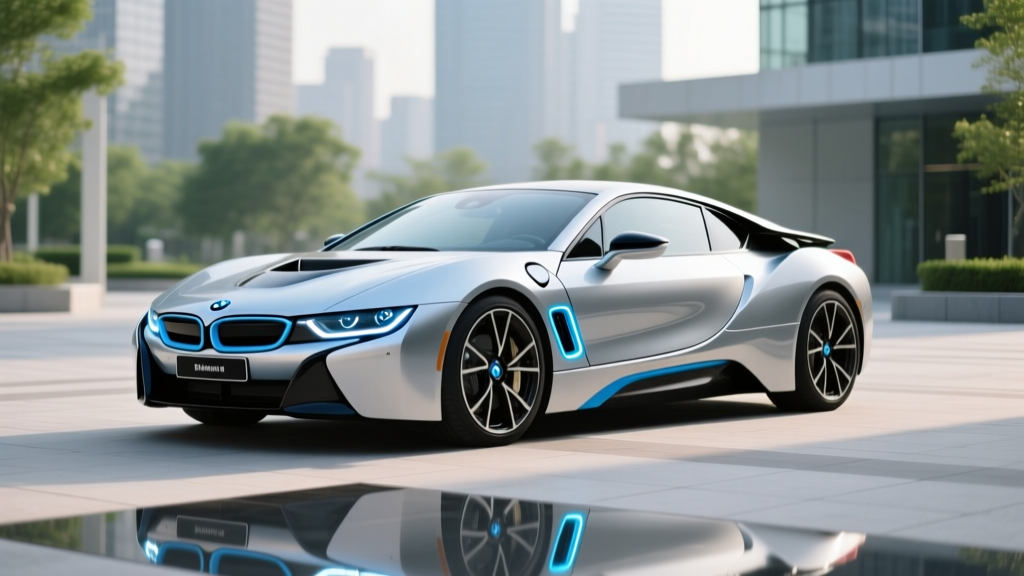
The BMW i8 is a plug-in hybrid electric vehicle (PHEV), not a battery-electric vehicle (BEV). It pairs a 1.5-liter turbocharged 3-cylinder gasoline engine with an electric motor and a small 11.6 kWh battery pack (7.1 kWh usable in later models). On a full charge, the i8 delivers roughly 18 miles of electric-only range before the gas engine takes over. Production ended in 2020, so every i8 on the market today is a used vehicle — and it does not qualify for the federal §30D new-EV tax credit.
If you've seen the BMW i8's futuristic scissor doors and carbon-fiber body and assumed it was fully electric, you're not alone. The "i" badge, aggressive aero, and hybrid powertrain create genuine confusion. But understanding exactly what the i8 is — and isn't — matters if you're considering one as a daily driver, a weekend car, or a stepping stone into electrified ownership.
How the BMW i8 Powertrain Actually Works
The i8 uses a through-the-road hybrid architecture. The rear wheels are driven by the 228-hp gasoline engine via a 6-speed automatic transmission, while the front wheels get power from a 141-hp electric motor fed by the lithium-ion battery pack. Combined system output is 369 horsepower and 420 lb-ft of torque.
| Specification | Value |
|---|---|
| Battery (gross / usable) | 11.6 kWh / ~9.4 kWh (7.1 kWh usable in EV mode) |
| Battery chemistry | NMC (Nickel Manganese Cobalt) |
| Electric-only range (EPA) | 18 miles |
| Real-world EV range | 12–16 miles (highway/cold weather reduces further) |
| Combined MPGe (EV mode) | 69 MPGe |
| Gas-only fuel economy | 27 mpg combined |
| Total system output | 369 hp / 420 lb-ft |
| 0–60 mph | 4.2 seconds |
| Level 2 charging (full) | ~3 hours at 3.7 kW |
| DC fast charging | Not supported |
| Gas tank capacity | 11.1 gallons |
| Total range (EV + gas) | ~320–340 miles |
The battery sits in a T-shaped configuration through the center tunnel and behind the seats. BMW upgraded the pack from 7.1 kWh to 11.6 kWh for the 2019 model year (LCI refresh), which bumped electric range from 15 to 18 miles. Earlier 2014–2018 models will give you less electric-only driving.
BMW i8 vs. a True BEV: What the Numbers Show
To understand where the i8 fits, compare it against a modern battery-electric vehicle. The differences in daily usability are stark.
| Metric | BMW i8 (2020) | 2025 BEV Example |
|---|---|---|
| Electric-only range | 18 mi (EPA) | 330+ mi (EPA) |
| Battery capacity (usable) | ~7.1 kWh (EV mode) | 75–82 kWh |
| Home charging (Level 2) | ~3 hrs (3.7 kW) | ~8–10 hrs (7.7–11.5 kW) |
| DC fast charging | None | 170–250 kW peak |
| Gas engine | Yes (1.5L turbo) | None |
| Fuel required | Premium gasoline + electricity | Electricity only |
| Tailpipe emissions (EV mode) | Zero (for ~18 mi) | Zero (always) |
| Oil changes | Required (~$150–250) | None |
| Current federal EV tax credit | Not eligible (discontinued, used) | Up to $7,500 if eligible |
The i8's 18-mile electric range covers short commutes — the EPA rates it at 69 MPGe in electric mode. But once that battery depletes, you're driving a 3,500-lb gasoline sports car at 27 mpg. A modern BEV eliminates the gas engine entirely, offering 300+ miles of electric range and access to DC fast charging for road trips.
Real-World Ownership Costs: i8 vs. Gas vs. BEV
The i8 occupies a strange cost position. It's not cheap to buy, and its hybrid complexity means maintenance costs from both worlds.
| Cost Category | BMW i8 (Used ~$60K) | Gas Sports Car (e.g., Porsche 718) | BEV (e.g., Model 3 LR) |
|---|---|---|---|
| Purchase price (typical) | $50,000–$75,000 (used) | $65,000–$85,000 | $42,000–$52,000 (new) |
| Fuel / electricity | $1,200–$1,600 (gas + elec) | $2,000–$2,600 (premium gas) | $500–$700 (home charging) |
| Oil changes | $200–$400/yr | $200–$400/yr | $0 |
| Maintenance (avg) | $800–$1,500/yr | $600–$1,200/yr | $300–$500/yr |
| Insurance (avg) | $2,500–$4,000/yr | $2,000–$3,500/yr | $1,500–$2,500/yr |
| Federal tax credit | $0 | $0 | Up to $7,500 (if eligible) |
Key takeaways on cost:
- Fuel savings are modest. With only 18 miles of EV range, most i8 driving happens on gasoline. If your commute is under 15 miles round-trip and you charge nightly, you'll save significantly. For longer commutes, the i8 burns premium fuel like any sports car.
- Maintenance is dual-system. You're servicing a turbocharged gas engine (oil, filters, spark plugs) and a high-voltage electric system. BMW's hybrid-specific components — the electric motor, power electronics, and battery cooling system — add complexity that independent shops may not be equipped to handle.
- Insurance runs high. The i8's carbon-fiber construction, exotic doors, and low production volume push premiums above typical sports cars. Get quotes before committing.
- No federal tax credit. The i8 is out of production. The §30D credit applies only to new qualifying vehicles. The used clean vehicle credit (§25E) offers up to $4,000, but the i8's original MSRP of ~$140,000+ exceeds the $25,000 used-price cap, making it ineligible.
Battery Longevity, Degradation, and Replacement
The i8's high-voltage battery is its most anxiety-inducing component for prospective used buyers. Here's what the data shows:
BMW designed the i8 battery with aggressive thermal management and a large buffer — only about 7.1 kWh of the 11.6 kWh pack is usable in EV mode. This conservative strategy limits stress on the cells. Real-world owner reports on forums like BimmerPost indicate most i8 batteries retain 85–92% capacity after 6–8 years, translating to roughly 15–16 miles of EV range instead of the original 18.
However, replacement cost is the elephant in the room. A new i8 battery pack from BMW reportedly costs $15,000–$20,000 installed. While catastrophic failure is rare, this figure should factor into any purchase decision for a vehicle now 5–10 years old.
BMW's original high-voltage battery warranty was 8 years / unlimited miles for the 2014–2020 models. If you're buying a 2017 or newer i8, some factory battery coverage may still apply — verify the in-service date with BMW directly.
Common Misconceptions About the BMW i8
| Myth | Fact |
|---|---|
| "The i8 is a fully electric car." | It's a PHEV with a gas engine. It requires premium gasoline for anything beyond ~18 miles. |
| "The i8 qualifies for the $7,500 EV tax credit." | No. Production ended in 2020. It's ineligible for §30D (new) and §25E (used, due to price cap). |
| "I can DC fast-charge the i8 on road trips." | The i8 has no DC fast-charging capability. Maximum charge rate is 3.7 kW AC (Level 2). |
| "The i8 gets 70+ mpg all the time." | 69 MPGe applies only in EV mode. Once the battery depletes, it returns ~27 mpg on gas — like a conventional sports car. |
| "The i8 is a practical daily EV commuter." | With 18 mi EV range, it works only for very short commutes. Cargo space is 4.7 cu ft, and the cabin fits two adults snugly. |
| "It charges like other EVs at public stations." | Most public Level 2 chargers will work (J1772 connector), but at only 3.7 kW, a full charge takes ~3 hours. Public DC fast chargers are unusable. |
Home Charging: What You Need to Know
The i8 uses a standard J1772 connector for Level 2 AC charging. It does not support NACS, CCS, or CHAdeMO DC fast charging — this is an AC-only vehicle for external charging.
At its maximum 3.7 kW charge rate, replenishing the battery from empty to full takes approximately 3 hours. This is slow by modern PHEV standards (many 2025 PHEVs accept 7.2–11 kW), but it's manageable for overnight charging.
Home charging requirements:
- A standard 120V outlet (Level 1) delivers roughly 1.4 kW, taking ~5–6 hours for a full charge — workable for overnight top-ups.
- A 240V Level 2 home charger (like a ChargePoint Home Flex or BMW i Wallbox) at 3.7 kW or higher will fully charge the i8 in ~3 hours.
- Level 2 installation costs typically range from $500–$2,000 depending on electrical panel capacity and run length. A 200-amp panel is usually sufficient; older homes may need a panel upgrade ($1,500–$3,000+).
If you lack home charging access — apartment dwellers, street parkers — the i8's 18-mile EV range becomes nearly useless. You'd be driving it as a gas-only car at 27 mpg, negating its hybrid advantage entirely.
Decision Framework: Is the BMW i8 Right for You?
Choose the BMW i8 if:
- You want an exotic-looking sports car with some electric capability for short errands
- Your daily driving is under 15 miles and you have reliable home charging
- You value the i8's design, carbon-fiber chassis, and BMW heritage over pure EV efficiency
- You understand you're buying a used, complex hybrid with dual-system maintenance costs
- You're okay with 27 mpg when the battery is depleted and no DC fast charging
Choose a modern BEV instead if:
- You want zero gasoline use and zero tailpipe emissions for all driving
- Your commute exceeds 20 miles one-way
- You need DC fast charging for road trips (20–30 minute stops vs. the i8's gas-only highway driving)
- You want current-year warranty coverage and federal tax credit eligibility
- You prefer lower ongoing maintenance (no oil changes, no turbo engine servicing)
Choose a modern PHEV (e.g., Toyota RAV4 Prime, BMW X5 xDrive50e) if:
- You want 35–50 miles of electric range for real daily commuting
- You need practical cargo space and seating for 4–5 passengers
- You want DC fast charging or at least faster Level 2 rates (7.2+ kW)
- You want a current-model warranty and potential tax credit eligibility
Frequently Asked Questions
Can the BMW i8 drive on electricity alone?
Yes, for approximately 18 miles (EPA) in its eDrive mode. In real-world conditions — highway speeds, cold weather, or aggressive acceleration — expect 12–15 miles. After that, the 1.5L turbo gas engine engages automatically.
Does the BMW i8 charge itself while driving?
Partially. The i8 uses regenerative braking and can run the gas engine as a generator to maintain or slightly recharge the battery. However, this is not a substitute for plugging in. To get meaningful electric range, you must charge from an external power source.
What happens if the i8 battery dies completely?
The i8 can still operate as a conventional hybrid using the gas engine. The high-voltage battery never truly reaches zero — BMW's battery management system maintains a minimum buffer. However, if the pack suffers a fault or catastrophic degradation, the car may enter a limp mode requiring service.
Is the BMW i8 a good first EV or hybrid purchase?
Generally, no. It's a low-production exotic sports car with hybrid complexity, expensive replacement parts, limited EV range, and no fast charging. First-time electrified buyers are better served by a modern PHEV with 35+ miles of range or a BEV with 250+ miles of range and DC fast charging. The i8 is best as a second or weekend car for enthusiasts who understand its trade-offs.
How reliable is the BMW i8?
The i8's powertrain has proven more reliable than many expected, thanks to BMW's conservative battery management and the relative simplicity of the 1.5L B38 engine (shared with the Mini Cooper). Common issues include 12V battery drain (a separate auxiliary battery, not the traction pack), software glitches, and expensive carbon-fiber body repair after collisions. Check NHTSA for recalls specific to the model year you're considering.
Why did BMW discontinue the i8?
BMW ended i8 production in June 2020 after roughly 20,000 units. The platform was aging, the electric range was modest by evolving standards, and BMW pivoted its electrification strategy toward the iX and i4 on newer architectures. A spiritual successor has not been announced as of 2026.