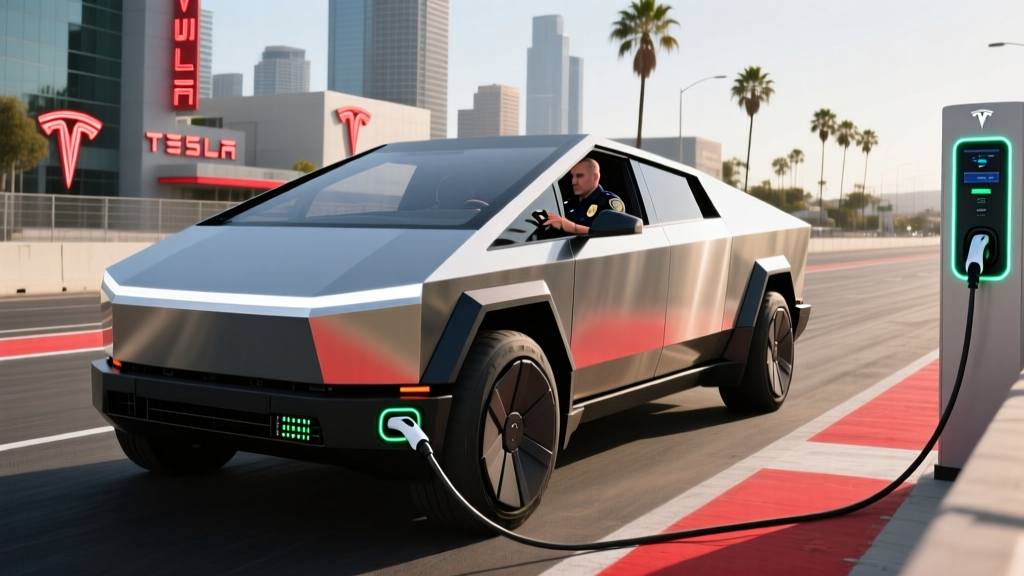
When the Irvine Police Department (IPD) announced it would add a Tesla Cybertruck to its patrol fleet, the internet lit up. But beyond the viral photos and social media debate, the Irvine PD Cybertruck pilot represents something far more consequential: one of the most rigorous real-world stress tests any electric pickup has faced under sustained law-enforcement duty cycles. For prospective EV buyers in 2026, what Irvine PD learns about range degradation, charging logistics, and total cost of ownership under 24/7 patrol conditions offers data points no consumer review can replicate.
This article examines the Irvine PD Cybertruck deployment, breaks down the 2026 Tesla Cybertruck's full specifications, and translates fleet-duty findings into practical ownership insights for civilian buyers weighing the Cybertruck against rivals like the Ford F-150 Lightning and Rivian R1T.
Why Irvine PD Chose the Cybertruck for Patrol Duty
The Irvine Police Department serves a city of roughly 310,000 residents across 66 square miles of Orange County, California. Patrol vehicles typically log 20,000–40,000 miles per year with extensive idling, rapid acceleration, and sustained low-speed operation — conditions that stress any powertrain but can uniquely expose EV battery thermal management limits.
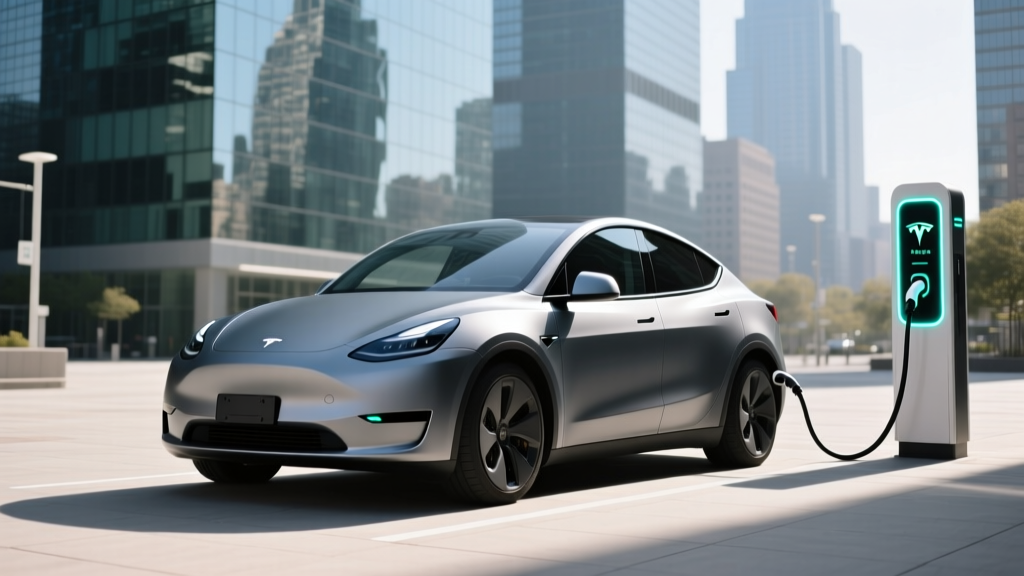
IPD's decision to pilot the Cybertruck followed a broader trend among Southern California agencies evaluating EVs for cost savings on fuel and maintenance. The department previously tested a Tesla Model Y, which demonstrated significant per-mile cost reductions but raised questions about whether a pickup form factor could better serve certain patrol roles — particularly those involving equipment transport, off-park access, and visibility in community engagement settings.
The Cybertruck's stainless-steel exoskeleton, available all-wheel drive, and large bed also appealed to fleet managers looking to reduce upfitting costs. Traditional police interceptors require extensive aftermarket modifications for cages, light bars, and equipment racks. The Cybertruck's structural rigidity and integrated power supply (via its 240V bed outlet and V2L capability) promised a simpler upfit path.
EPA estimated range: 340 miles (AWD trim, 2026 model year).
Real-world expectation: ~260–290 miles at sustained highway speeds (70–80 mph); ~220–250 miles in cold weather (below 32°F) with cabin heating. Patrol duty with frequent idling, HVAC use, and accessory loads may reduce effective range further. Source: fueleconomy.gov.
2026 Cybertruck Full Specifications: What Powers the Irvine PD Unit
The Irvine PD Cybertruck is based on the dual-motor AWD trim, which Tesla positions as the volume model for both consumer and fleet buyers. Here is the complete specification breakdown for the 2026 model year:
| Spec | Value |
|---|---|
| EPA Range | 340 miles |
| Battery Capacity | ~123 kWh usable (NMC chemistry, structural pack) |
| Drivetrain | Dual-motor AWD |
| Horsepower | 600 hp (combined) |
| 0–60 mph | 3.9 seconds |
| Max DC Fast Charge | 250 kW (peak) |
| 10–80% DC Charge Time | ~25 minutes |
| Level 2 Home Charging | 11.5 kW (~34 mi/hr) |
| Efficiency | 68 MPGe combined / 49 kWh per 100 mi |
| Towing Capacity | 7,500 lbs |
| Payload | 2,500 lbs |
| Cargo Bed Length | 6 ft (72 in) |
| Cargo Volume (bed + frunk) | ~67 cu ft bed + ~7 cu ft frunk |
| Seating | 5 passengers (2-row bench) |
| Rear Legroom | ~38.0 inches |
| Base MSRP (AWD) | $79,990 |
| Battery/Powertrain Warranty | 8 years / 120,000 miles |
| Bumper-to-Bumper | 4 years / 50,000 miles |
Note: Battery chemistry is nickel-manganese-cobalt (NMC), consistent with Tesla's long-range structural packs. The Cybertruck does not use LFP (lithium iron phosphate) chemistry, which Tesla reserves for standard-range rear-wheel-drive models in the Model 3/Y lineup.
Charging Speed & Fleet Logistics: The Patrol Shift Challenge
For Irvine PD, charging infrastructure is the single biggest operational variable. A patrol shift typically runs 10–12 hours. Officers need enough range to cover their beat without mid-shift charging interruptions that take them out of service.
Here's how the Cybertruck's charging profile maps to fleet and civilian needs:
| Level | Power (kW) | Miles Added/Hour | Best For |
|---|---|---|---|
| Level 1 (120V) | ~1.4 kW | ~3–4 mi/hr | Emergency trickle; not practical for daily use |
| Level 2 (240V, 48A) | 11.5 kW | ~34 mi/hr | Overnight home/depot charging; ~10 hrs for full charge |
| DC Fast (Tesla V3/V4 Supercharger) | 250 kW peak | ~200+ mi in 15 min | Mid-shift top-ups; road trips; 10–80% in ~25 min |
Charging-curve reality check: The Cybertruck's 250 kW peak rate is not sustained across the entire session. Like all EVs, the charge rate tapers significantly above 80% State of Charge (SoC). In practice, the 10–80% window captures the fastest portion of the curve. Charging from 80–100% can add another 20–30 minutes. For fleet managers and civilian owners alike, the practical recommendation is to charge to 80% for daily use and reserve 100% fills for planned long trips.
Irvine PD has reportedly installed Level 2 chargers at its station for overnight charging, with access to Tesla Supercharger stations for mid-day top-ups if needed. This dual approach mirrors what most EV-owning households need: reliable overnight Level 2 at home, supplemented by DC fast charging for longer drives.
Performance & Driving Dynamics: Beyond the Viral Headlines
The Cybertruck AWD's 600 horsepower and 3.9-second 0–60 mph time make it one of the quickest pickups ever sold. For Irvine PD, the instant torque delivery matters less for pursuit scenarios (most patrol work doesn't involve high-speed chases) and more for safe highway merging and rapid response acceleration from idle.
The truck's steer-by-wire system — which replaces the traditional mechanical steering column with electronic signals — provides a variable steering ratio that requires less hand movement at low speeds (useful in parking lots and tight patrol zones) while maintaining stability at highway speeds. However, this system has drawn scrutiny from some drivers who find the feedback less intuitive than a conventional rack. Officers reportedly adapted within a few shifts, but civilian test-drives should budget time to adjust.
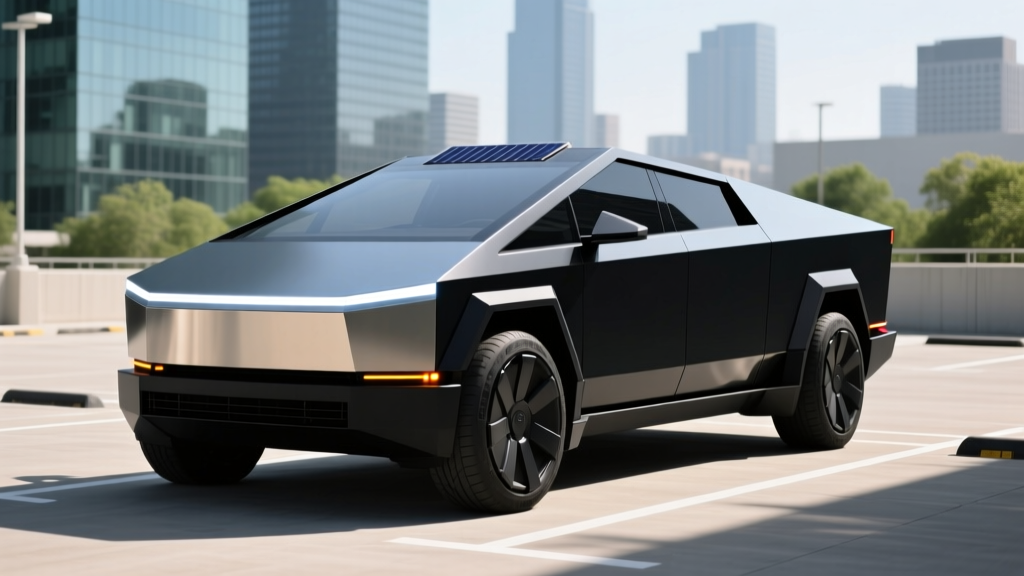
The stainless-steel body panels are dent-resistant, a genuine advantage for fleet vehicles that endure tight parking structures and minor contact. However, the panels show fingerprints and smudges readily — a cosmetic concern that matters more for civilian owners than marked patrol units.
Pricing, Tax Credits & the Total Cost Equation
The 2026 Cybertruck AWD starts at $79,990 before destination charges. The tri-motor Cyberbeast variant sits at $99,990. For Irvine PD and other government fleets, vehicles are typically purchased through government procurement contracts, which may negotiate volume pricing.
For individual buyers, the critical question is federal tax credit eligibility under IRS §30D:
| Trim | MSRP | §30D Credit Eligible? | Net Price (after max credit) |
|---|---|---|---|
| RWD (if available) | ~$60,990 (est.) | Potentially — if under $80K MSRP cap & sourcing rules met | ~$53,490 |
| AWD | $79,990 | Eligible — under $80K MSRP cap for trucks | ~$72,490 |
| Cyberbeast | $99,990 | Not eligible — exceeds $80K MSRP cap | $99,990 |
Key §30D caveats for 2026:
- MSRP cap: Trucks (including the Cybertruck) must have an MSRP at or below $80,000. The AWD qualifies; the Cyberbeast does not.
- Income cap: Buyer adjusted gross income must not exceed $150,000 (single), $225,000 (head of household), or $300,000 (joint).
- Battery sourcing: A percentage of critical minerals and battery components must be sourced from the U.S. or free-trade-agreement countries. These thresholds increase annually. Check the latest fueleconomy.gov credit listings for the specific Cybertruck configuration you're considering.
- Point-of-sale transfer: As of 2024, buyers can transfer the credit to the dealer at purchase, reducing the upfront price rather than waiting for a tax refund.
For Irvine PD as a government fleet, the §30D credit does not apply (government entities are tax-exempt). However, the Commercial Clean Vehicle Credit (§45W) may apply to fleet purchases, offering up to $7,500 for vehicles over 14,000 lbs GVWR or $4,000 for lighter vehicles. Consult a tax professional for fleet-specific eligibility.
Real-World Range Under Patrol Conditions
The EPA's 340-mile estimate for the Cybertruck AWD assumes a mix of city and highway driving under moderate temperatures. Patrol duty introduces variables the EPA cycle doesn't capture:
- Extended idling with HVAC: Officers idle for extended periods during stakeouts, report-writing, and scene management. While EVs don't burn fuel at idle, running the cabin HVAC and onboard electronics (laptop, radios, light bar) draws from the battery continuously.
- Frequent acceleration: Stop-and-go patrol patterns consume more energy than steady-state highway driving.
- Accessory loads: Light bars, sirens, radios, and onboard computers add parasitic draw that reduces effective range.
Based on data from other agencies running EVs (including the Fremont Police Department's Tesla Model Y pilot and various California Highway Patrol evaluations), expect effective patrol-duty range to land in the 200–260 mile window before needing a charge. For a typical 12-hour shift covering 80–120 miles, this provides a comfortable buffer — but it underscores the need for reliable depot charging between shifts.
For civilian owners, the practical takeaway is that the Cybertruck AWD will deliver roughly 260–290 miles on a highway road trip at 75 mph in mild weather, dropping to 220–250 miles in freezing temperatures. If you regularly drive in sub-30°F climates or tow heavy loads, budget for more frequent charging stops.
Tech, Safety & Driver-Assist Features
The 2026 Cybertruck comes equipped with Tesla's latest hardware suite:
- Autopilot (standard): Adaptive cruise control, lane-centering, automatic emergency braking, and blind-spot monitoring. This is SAE Level 2 driver assistance — the driver must remain attentive and keep hands on the wheel at all times.
- Full Self-Driving Supervised (optional, ~$8,000): Adds automatic lane changes, navigation-guided on/off-ramp transitions, and traffic-light/stop-sign recognition. Still SAE Level 2 — not autonomous driving.
- 18.5-inch center touchscreen: Controls virtually all vehicle functions, including climate, mirrors, and glovebox. The minimalist interior means zero physical buttons, which some officers find distracting during high-workload driving scenarios.
- 360-degree camera system: Aids in low-speed maneuvering and parking, critical for a vehicle this size (223.5 inches long, 80 inches wide without mirrors).
- Bioweapon Defense Mode: HEPA air filtration system — genuinely useful in wildfire-smoke-prone regions of California.
Pros & Cons: The Cybertruck Verdict
Pros
- 340-mile EPA range (AWD) is competitive for a full-size electric pickup
- 250 kW DC fast charging; 10–80% in ~25 minutes
- Stainless-steel body resists dents — ideal for fleet/commercial use
- 600 hp and 3.9-second 0–60 provide exceptional merging/pursuit capability
- V2L (vehicle-to-load) capability powers tools and equipment from the bed
- Access to Tesla Supercharger network — the most reliable public DC network in the U.S.
- Low operating cost per mile vs. gas pickups (electricity vs. fuel savings)
Cons
- $79,990+ MSRP puts it out of reach for many buyers; Cyberbeast ineligible for tax credit
- Steer-by-wire takes adaptation; feedback differs from conventional steering
- Large footprint (223.5 in long) makes tight urban parking challenging
- Minimalist interior with no physical buttons frustrates some drivers
- Rear visibility is limited; relies heavily on cameras
- NMC battery chemistry — not the longer-life LFP option
- Build-quality consistency has been a concern since launch; panel gaps reported
Who Should Buy the Cybertruck (and Who Shouldn't)?
Best suited for:
- Fleet and commercial operators who value low per-mile operating costs, V2L capability, and access to the Supercharger network for route flexibility.
- Tech-forward pickup buyers who want standout design, rapid acceleration, and are comfortable with a screen-dominant interface.
- California and Sun Belt residents where mild weather preserves range and Supercharger density is highest.
Think twice if:
- You need a conventional pickup with physical controls, easy serviceability, and dealer-network support in rural areas.
- You regularly tow near the 7,500-lb limit — towing cuts range by 30–50%, bringing effective range to 170–230 miles.
- You live in a region with sparse DC fast-charging infrastructure and cannot install Level 2 at home.
Frequently Asked Questions
What is the real-world range of the Irvine PD Cybertruck?
The EPA rates the Cybertruck AWD at 340 miles. Under real-world highway driving, expect 260–290 miles. Under patrol-duty conditions with HVAC, accessories, and stop-and-go driving, effective range may be 200–260 miles. Cold weather (below 32°F) further reduces range by roughly 15–25%.
How fast does the Cybertruck charge at home and on the road?
At home on a Level 2 (240V, 48A) charger, the Cybertruck adds roughly 34 miles of range per hour, taking about 10 hours for a full charge. On a Tesla V3/V4 Supercharger at 250 kW peak, it charges from 10–80% in approximately 25 minutes.
How much does the Cybertruck cost after federal tax credits?
The AWD trim at $79,990 may qualify for the full $7,500 §30D credit (net ~$72,490) if you meet income limits ($150K single / $300K joint) and the vehicle's battery sourcing meets 2026 thresholds. The Cyberbeast at $99,990 exceeds the $80K MSRP cap and does not qualify. Always verify current eligibility on fueleconomy.gov.
Does the Cybertruck qualify for the federal EV tax credit?
The AWD trim qualifies based on its MSRP (under the $80K truck cap). However, eligibility also depends on buyer income, battery component sourcing, and critical-mineral requirements that tighten each year. The Cyberbeast does not qualify. Consult a tax professional and check IRS.gov for the latest rules.
Is the Cybertruck worth buying vs. the F-150 Lightning or Rivian R1T?
The Cybertruck wins on acceleration (3.9s 0–60 vs. Lightning's ~4.0s for extended-range, Rivian dual-motor ~4.5s), Supercharger network access, and stainless-steel durability. The F-150 Lightning offers a more traditional truck experience, better rear-seat comfort, and a lower starting price (~$55K). The Rivian R1T excels in off-road capability and interior refinement but costs more and uses a smaller charging network. Your choice depends on whether you prioritize Tesla's ecosystem and performance or a more conventional truck layout.
What battery chemistry does the Cybertruck use?
The Cybertruck uses NMC (nickel-manganese-cobalt) chemistry in a structural battery pack with approximately 123 kWh of usable capacity. NMC offers higher energy density than LFP but has a somewhat shorter cycle life. Tesla's battery warranty covers 8 years or 120,000 miles with a minimum 70% capacity retention threshold.
Sources: EPA fueleconomy.gov, IRS §30D Clean Vehicle Credits, Tesla Cybertruck specifications.