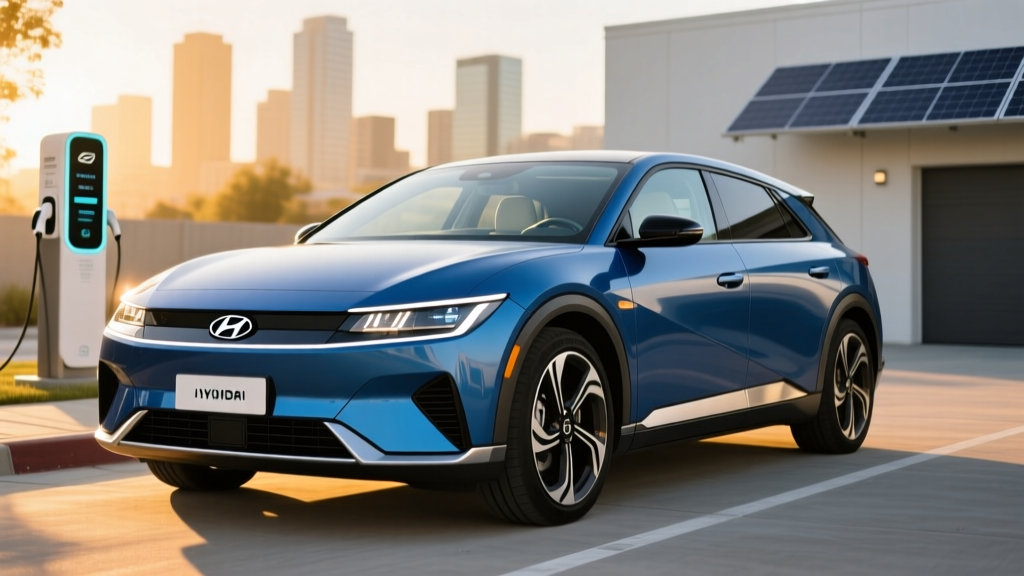
Quick Verdict: Is the Ioniq 5 SEL Worth Leasing in 2026?
The Hyundai Ioniq 5 SEL remains one of the best-balanced electric crossovers on the market, and leasing it in 2026 can sidestep the federal tax credit's battery-sourcing headaches. With an EPA-estimated 303 miles of range (RWD), 800V-class DC fast charging that peaks at 238 kW, and a starting MSRP around $47,600, the SEL trim hits a sweet spot between the base SE and loaded Limited. It's a strong pick for commuters and small families who want a practical daily driver with road-trip capability — provided you understand the real-world range trade-offs and charging-network realities.
EPA-estimated: 303 miles (SEL RWD, 19-inch wheels). Expect roughly 250–275 miles on sustained highway driving at 70+ mph, and 220–245 miles in freezing temperatures with cabin heat active. AWD trims drop to an EPA 261 miles with similar proportional reductions.
2026 Ioniq 5 SEL: Core Specs at a Glance
| Specification | SEL RWD | SEL AWD |
|---|---|---|
| EPA Range | 303 mi | 261 mi |
| Battery (usable) | 84.0 kWh | 84.0 kWh |
| Chemistry | NMC (Nickel Manganese Cobalt) | NMC |
| Max DC Fast Charge | 238 kW | 238 kW |
| 10–80% DC Time | ~20 min | ~20 min |
| Level 2 Home Charge | 10.9 kW (~37 mi/hr) | 10.9 kW (~37 mi/hr) |
| Horsepower | 225 hp | 320 hp |
| 0–60 mph | 7.0 sec | 4.5 sec |
| Drivetrain | Rear-Wheel Drive | Dual-Motor AWD |
| MPGe (combined) | 114 MPGe | 101 MPGe |
| Efficiency | 30 kWh/100 mi | 33 kWh/100 mi |
| Cargo (rear seats up) | 27.2 cu ft | 27.2 cu ft |
| Cargo (seats folded) | 59.3 cu ft | 59.3 cu ft |
| Rear Legroom | 39.4 in | 39.4 in |
| Base MSRP (2026) | ~$47,600 | ~$51,100 |
| Battery Warranty | 10 yr / 100,000 mi | 10 yr / 100,000 mi |
Source: fueleconomy.gov and Hyundai USA specifications. Real-world results vary by driving style, temperature, and terrain.
Real-World Range: What the EPA Sticker Doesn't Tell You
The 303-mile EPA figure for the SEL RWD is measured under mixed driving conditions. On a flat, 65-mph suburban commute in mild weather, owners commonly report matching or slightly exceeding that number thanks to the Ioniq 5's strong regenerative braking and efficient heat pump (standard on SEL and above).
However, highway efficiency drops noticeably at sustained 75–80 mph speeds. The boxy, retro-futuristic styling creates more aerodynamic drag than a sleeker sedan like the Tesla Model 3 or Hyundai Ioniq 6. Expect highway-only trips to yield 250–275 miles from a full charge in the RWD model. In sub-30°F weather, even with the heat pump running, plan for 220–245 miles of usable range. That's still enough for most daily driving and manageable on road trips if you plan charging stops around the 200-mile mark.
The AWD variant's 261-mile EPA rating translates to roughly 215–235 miles on the highway in fair weather and potentially under 200 miles in deep cold. If your commute involves mountain passes or frequent high-speed driving, factor that into your route planning.
Charging Speed: The 800V Advantage in Practice
Hyundai's E-GMP platform uses an 800V electrical architecture — a feature still rare outside of Porsche, Kia EV6, and Genesis GV60 siblings. This translates to genuinely fast DC charging when you find a capable station.
| Charging Level | Power | Speed (Approx.) | Use Case |
|---|---|---|---|
| Level 1 (120V outlet) | ~1.4 kW | ~5 mi/hr | Emergency / overnight trickle |
| Level 2 (240V home) | 10.9 kW | ~37 mi/hr | Daily home charging (~8.5 hrs 10–100%) |
| DC Fast (350 kW station) | Peak 238 kW | 10–80% in ~20 min | Road trips (requires CCS or NACS adapter) |
| DC Fast (150 kW station) | ~130–140 kW avg | 10–80% in ~30 min | Common public fast chargers |
Charging-curve reality check: The 238 kW peak only holds between roughly 10% and 45% state of charge. After 55%, the rate tapers to ~150 kW, and above 80% it drops sharply to protect the NMC battery. This is normal for lithium-ion chemistry, but it means a 10–90% session takes closer to 35–40 minutes, not 20. Plan road-trip stops to charge from 10–80% and move on — the last 20% is painfully slow.
For 2026, Hyundai continues to provide a NACS adapter (or offers the native NACS port on later-production models), granting access to Tesla's Supercharger network — a significant advantage for road-trip flexibility. Check with your dealer on whether your specific VIN ships with the native NACS port or the CCS port plus adapter.
Pricing, Lease Value & Federal Tax Credit Eligibility
The 2026 Ioniq 5 SEL starts at approximately $47,600 (RWD), with the AWD adding roughly $3,500. A well-optioned SEL with carpeted floor mats and a cargo net might land around $48,500 before destination.
Does the Ioniq 5 Qualify for the §30D Federal Tax Credit?
This is where leasing becomes strategically important. Under current IRS rules for the §30D Clean Vehicle Credit, the Ioniq 5 faces battery-sourcing and critical-mineral requirements that have historically disqualified some Hyundai/Kia models built outside North America. However, the Ioniq 5 is now assembled at Hyundai's Metaplant in Ellabell, Georgia, which improves its eligibility position.
- MSRP Cap: SUVs/crossovers must be under $80,000 — Ioniq 5 qualifies ✓
- Buyer Income Cap: AGI ≤ $150,000 (single) / $300,000 (joint) — varies by buyer
- North American Assembly: Must be assembled in NA — Ioniq 5 (GA-built) qualifies ✓
- Battery Sourcing: Critical minerals and battery components must meet escalating percentage thresholds — verify current-year compliance on fueleconomy.gov before purchasing
- Point-of-Sale Transfer: Eligible buyers can apply the credit as an instant rebate at the dealer
The lease loophole: If you lease rather than buy, the §30D credit goes to the lessor (the financing company), not you. However, most Hyundai dealerships pass the $7,500 savings through as a lease cash incentive, effectively reducing your monthly payment. This bypasses the buyer income cap and battery-sourcing uncertainty entirely. Many Ioniq 5 shoppers find leasing yields a lower effective monthly cost than purchasing with the credit, especially when factoring in depreciation risk and battery-sourcing ambiguity.
A typical 36-month Ioniq 5 SEL lease in early 2026 runs roughly $350–$450/month with $3,500–$4,500 due at signing, depending on regional incentives and money factor. Compare that to purchasing at ~$47,600, minus a potential $7,500 credit, plus sales tax and higher monthly finance payments.
Driving Experience, Tech & Daily Livability
The Ioniq 5 SEL's 225 hp RWD powertrain delivers adequate acceleration for merging and passing (0–60 in about 7.0 seconds), while the 320 hp AWD model is genuinely quick at 4.5 seconds. Both variants benefit from the low center of gravity that the under-floor battery provides, giving the crossover composed handling through corners despite its 4,400+ lb curb weight.
Interior & Tech Highlights:
- Dual 12.3-inch displays (instrument cluster + infotainment) with Hyundai's latest Bluelink connected services
- Highway Driving Assist 2 (HDA-2) — a competent SAE Level 2 driver-assist system with lane-centering, adaptive cruise, and lane-change assist
- Vehicle-to-Load (V2L): Power laptops, camp coolers, or even a small appliance via the interior 120V outlet or exterior V2L adapter (up to 3.6 kW output)
- Heat pump (standard on SEL) for improved cold-weather efficiency
- Relaxation seats with power lumbar and leg rest (driver side)
Notable Drawbacks:
- No front trunk (frunk) on RWD models — only a small storage cubby; AWD has no frunk at all
- Rear wiper is absent — a frustrating omission for a vehicle with a steeply raked rear hatch that collects road grime
- Infotainment relies heavily on touch controls; physical knobs are limited to a volume rocker
- Road noise is noticeable at highway speeds compared to the Genesis GV60 or Tesla Model Y
Hyundai's Highway Driving Assist 2 is a Level 2 driver-assistance system. It controls steering, acceleration, and braking under certain conditions, but the driver must remain fully engaged with hands on the wheel and eyes on the road at all times. This is not autonomous driving.
How the Ioniq 5 SEL Compares to Key Rivals
At the ~$47,000–$51,000 price point, the Ioniq 5 SEL competes with several strong EVs:
- Tesla Model Y Long Range: ~320 mi EPA, wider Supercharger access (native NACS), more cargo space, but aging interior and no Apple CarPlay/Android Auto. Slightly pricier.
- Kia EV6 Wind: Shares the E-GMP platform and 800V charging, similar range and pricing, but a sportier driving position and slightly less rear headroom.
- Ford Mustang Mach-E Premium: Good driving dynamics and BlueCruise hands-free capability, but slower DC charging (~150 kW peak) and less rear-seat space.
- Volkswagen ID.4 Pro S: Often cheaper after incentives, adequate range (~275 mi), but significantly slower DC charging and a less refined infotainment system.
The Ioniq 5's edge is the combination of fast 800V charging, a comfortable ride, generous rear-seat legroom (39.4 inches — more than the Model Y), and V2L capability. Its weakness is the lack of a frunk and the still-maturing Hyundai dealer experience compared to Tesla's direct-to-consumer model.
Warranty & Long-Term Ownership
Hyundai backs the Ioniq 5 with one of the best warranties in the EV segment:
- Battery: 10 years / 100,000 miles (capacity retention threshold: 70%)
- Powertrain: 10 years / 100,000 miles
- New Vehicle: 5 years / 60,000 miles
- Roadside Assistance: 5 years / unlimited miles
NMC batteries in Hyundai's E-GMP platform have shown modest degradation in real-world use — typically 5–8% capacity loss over the first 100,000 miles based on owner-reported data. The 70% retention threshold at 10 years is industry-standard but less generous than Tesla's 70% at 8 years/120,000 miles for the Model Y. If you lease for 36 months, degradation is effectively not your concern.
Who Should Lease the Ioniq 5 SEL?
Choose the Ioniq 5 SEL if:
- You want a comfortable, tech-forward daily commuter with 250+ real-world miles of range
- You have access to home Level 2 charging and want ~37 miles of range added per hour
- You value fast DC charging for occasional road trips (10–80% in ~20 min at a 350 kW station)
- You want V2L capability for camping or emergency backup power
- You prefer leasing to avoid battery-sourcing tax credit uncertainty and depreciation risk
Look elsewhere if:
- You need maximum cargo space or a front trunk (check the Model Y or Rivian R1S)
- You tow frequently (the Ioniq 5 is rated for only 1,650 lbs with a dealer-installed hitch)
- You regularly drive in extreme cold with no charging access at home or work
- You want true hands-free highway driving (Ford BlueCruise or GM Super Cruise offer hands-off on mapped highways)
Frequently Asked Questions
What is the real-world range of the 2026 Ioniq 5 SEL?
The EPA rates the SEL RWD at 303 miles. In real-world mixed driving, expect 270–290 miles in mild weather and 250–275 miles on sustained highway trips. Cold weather (below freezing) reduces range to approximately 220–245 miles. The AWD model starts at 261 EPA miles with proportionally lower real-world figures.
How fast does the Ioniq 5 charge at home and on the road?
At home on a 240V Level 2 charger (10.9 kW), the Ioniq 5 adds about 37 miles of range per hour, fully replenishing the 84 kWh battery in roughly 8.5 hours. On a 350 kW DC fast charger, it peaks at 238 kW and charges from 10–80% in approximately 20 minutes. On a more common 150 kW public charger, expect 10–80% in about 30 minutes.
How much does the Ioniq 5 SEL cost after tax credits?
The SEL RWD starts around $47,600. If you purchase and qualify for the full $7,500 federal §30D credit (subject to income caps, battery-sourcing compliance, and AGI limits), your effective price drops to ~$40,100 before state incentives. If you lease, the dealer typically applies the $7,500 as lease cash, reducing monthly payments to roughly $350–$450/month on a 36-month term with $3,500–$4,500 due at signing. Always verify current eligibility on IRS.gov or consult a tax professional.
Is the Ioniq 5 SEL better than the Tesla Model Y?
It depends on your priorities. The Ioniq 5 offers faster DC charging (238 kW vs. ~250 kW peak for Model Y, but sustained rates are comparable), more rear legroom, V2L, Apple CarPlay/Android Auto, and a quieter ride at lower speeds. The Model Y wins on EPA range (~320 mi), cargo volume, native Supercharger access, and over-the-air update maturity. Both are excellent — test-drive both before deciding.
Does the Ioniq 5 SEL have a front trunk (frunk)?
The RWD model has a small front storage compartment (roughly 0.85 cu ft) suitable for charging cables. The AWD model has no frunk at all due to the front motor. If front cargo space is a priority, consider the Ford Mustang Mach-E or Rivian R1T instead.
What happens to the battery after the lease ends?
Not your problem — that's one of the main advantages of leasing. Hyundai's battery warranty covers 10 years/100,000 miles with a 70% capacity retention threshold. Over a typical 3-year/36,000-mile lease, NMC degradation is usually 3–5%, well within warranty. If you do purchase at lease-end, the remaining warranty transfers to you.