Quick Verdict: Should You Lease the Ioniq 5 N?
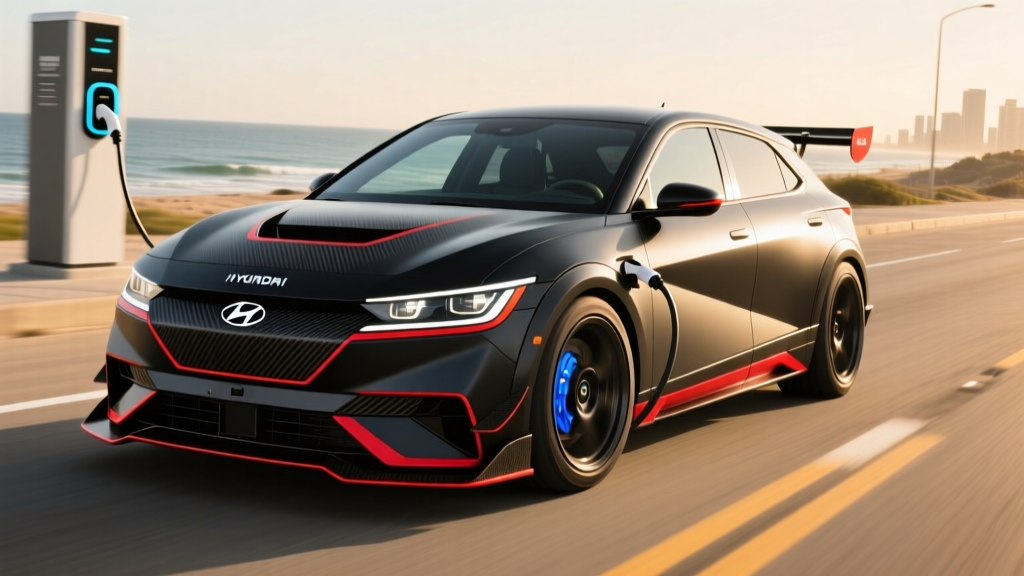
The 2026 Hyundai Ioniq 5 N is the rare performance EV that makes you forget you're driving a crossover. With 641 horsepower in N Grin Boost mode, a sub-3.5-second 0-60 time, and track-capable thermal management, it competes with the Tesla Model Y Performance, Porsche Macan Electric, and BMW iX M60. But its 221-mile EPA range and premium pricing mean the Ioniq 5 N lease math requires careful consideration.
For 2026, Hyundai continues the Ioniq 5 N as a single, fully-loaded trim starting at $66,500 (plus destination). It remains ineligible for the §30D federal tax credit on new purchases due to battery sourcing, which shifts the value proposition toward leasing—where Hyundai's captive finance arm may pass through the $7,500 commercial EV credit as a lease incentive, depending on current programs.
| Spec | Value |
|---|---|
| Base MSRP | $66,500 (+ $1,295 destination) |
| EPA Range | 221 miles |
| Battery | 84.0 kWh usable, NMC (nickel-manganese-cobalt) |
| Drivetrain | Dual-motor AWD |
| Horsepower | 601 hp (641 hp w/ N Grin Boost) |
| 0-60 mph | 3.4 seconds (N Grin Boost) |
| Max DC Fast Charge | 240 kW (peak) |
| 10-80% DCFC Time | ~18 minutes |
| Level 2 Charge Rate | 10.9 kW (~33 mi/hr) |
| MPGe (combined) | 85 MPGe |
| Efficiency | 39 kWh/100 mi |
| Cargo (behind rear seats) | 27.2 cu ft |
| Cargo (seats folded) | 59.3 cu ft |
| Warranty | 8 yr / 100,000 mi battery & powertrain |
Range and Efficiency: The Performance Trade-Off
The Ioniq 5 N's 84.0 kWh NMC battery pack is the same unit found in the standard Ioniq 5 Long Range, but the N's aggressive powertrain tuning, wider 275-section performance tires, and reduced emphasis on efficiency drop its EPA rating to 221 miles. That's 89 fewer miles than the standard Ioniq 5 Limited AWD (310 mi EPA).
Real-World Range Expectations
EPA Sticker: 221 miles
Real-World Highway (70-80 mph): ~175-190 miles. At sustained highway speeds, the Ioniq 5 N's aerodynamic drag and performance tires consume energy faster than the EPA test cycle assumes. Expect roughly 85% of the sticker figure on a flat, temperate highway run.
Cold Weather (below freezing): ~140-160 miles. The NMC battery loses roughly 25-35% range in sub-32°F conditions, even with the heat pump running. Preconditioning while plugged in mitigates this.
Track Use: Aggressive driving will deplete the battery in under 80 miles. Hyundai's track-optimized thermal management delays power derating, but energy consumption at full output is extreme.
Efficiency is rated at 85 MPGe combined (39 kWh per 100 miles) per fueleconomy.gov. For context, the Tesla Model Y Performance achieves 111 MPGe combined—meaning you'll spend noticeably more per mile on electricity with the Ioniq 5 N.
Charging Speed: 800V Architecture Advantage
The Ioniq 5 N retains Hyundai's E-GMP 800-volt architecture, which remains one of the fastest-charging platforms available in 2026. On a capable 350 kW DC fast charger (like Electrify America's latest stalls), the Ioniq 5 N peaks at 240 kW and can charge from 10% to 80% in approximately 18 minutes.
| Charge Level | Power | Time / Rate |
|---|---|---|
| Level 1 (120V, 12A) | ~1.4 kW | ~4 mi/hr — 55+ hours for full charge |
| Level 2 (240V, 48A) | 10.9 kW | ~33 mi/hr — 7.5 hours for full charge |
| DC Fast Charge (peak) | 240 kW | 10-80% in ~18 minutes |
Charging curve reality: The 240 kW figure is a peak, not a sustained rate. The Ioniq 5 N holds strong charge speeds between 10-55% SoC, then tapers progressively. From 80-100%, charging slows dramatically to protect the battery—plan to charge to 80% on road trips and move on rather than wait for a full top-up.
The Ioniq 5 N ships with a NACS (Tesla-style) charge port for 2026, granting native access to Tesla Supercharger stalls without an adapter. This is a significant advantage over CCS-equipped competitors still relying on adapter dongles.
Home charging note: To achieve the full 10.9 kW Level 2 rate, you'll need a 48-amp hardwired wallbox on a 60-amp dedicated circuit. Expect home installation to cost $800-$2,000 depending on your panel capacity and run length—defer final specs to a licensed electrician.
Performance: 641 HP and Track-Credible Handling
This is where the Ioniq 5 N justifies its premium. The dual-motor AWD system produces 601 horsepower in standard driving and 641 horsepower with N Grin Boost engaged (a 10-second burst). The result is a 3.4-second 0-60 mph time that puts it in supercar territory from a family crossover.
But straight-line speed is the easy part. Hyundai N has engineered genuine track capability:
- N Battery Preconditioning: Pre-cools or pre-heats the battery pack to optimal temperature before track sessions, maximizing power delivery and delaying thermal derating.
- N Race Mode: Adjusts regen, throttle response, torque distribution, and stability control for circuit driving.
- N Drift Optimizer: Torque-vectoring software that enables controlled oversteer (for closed-course use only).
- Enhanced brake regen: Up to 0.65g of regenerative braking, reducing wear on the mechanical brakes during track use.
- 275/35 R21 Pirelli P Zero tires: Purpose-developed for the Ioniq 5 N (marked "HN" for Hyundai N).
The Ioniq 5 N also simulates an 8-speed dual-clutch transmission with N e-Shift, complete with simulated shift shock and rev-matching. You can turn it off for seamless EV acceleration, but the feature genuinely enhances engagement on twisty roads.
Pricing, Tax Credits, and Lease Economics
The 2026 Ioniq 5 N comes in a single, fully-loaded trim. There are no options packages—only color choices (Performance Blue Matte adds $1,000).
| Item | Amount |
|---|---|
| Base MSRP | $66,500 |
| Destination Charge | $1,295 |
| Total Before Incentives | $67,795 |
| Federal §30D Credit (Purchase) | $0 — Ineligible (battery sourcing) |
| Federal Commercial EV Credit (Lease) | Up to $7,500 — depends on lessor pass-through |
| Estimated Lease (36 mo, $4,999 due) | ~$799-$899/mo (varies by dealer/region) |
Federal tax credit details: Under current IRS §30D rules, the Ioniq 5 N does not qualify for the $7,500 new clean vehicle credit when purchased outright. The battery's critical minerals and component sourcing do not meet the domestic-content thresholds required for 2026. This is consistent with Hyundai/Kia EVs assembled in South Korea for the US market.
Lease loophole: Vehicles leased through a financing entity may qualify for the §45W commercial clean vehicle credit ($7,500), which the lessor can pass through as a capitalized-cost reduction (effectively lowering your monthly payment). Hyundai Motor Finance has historically applied this credit to Ioniq 5 N leases, but availability and terms vary by month and region. Confirm current lease offers directly with your dealer.
Income caps do not apply to the §45W commercial credit (lease path), unlike the §30D purchase credit which caps eligibility at $300,000 MAGI (joint) / $150,000 (single). The MSRP cap ($80,000 for SUVs) also does not restrict the Ioniq 5 N, which prices well under that threshold.
Interior, Tech, and Practicality
The Ioniq 5 N's cabin uses the same retro-futuristic architecture as the standard Ioniq 5, with N-specific upgrades:
- 12.3-inch dual displays: Combined instrument cluster and infotainment with N-specific performance screens (g-meter, lap timer, battery temp, torque split).
- N Sport bucket seats: Heavily bolstered, heated and ventilated, with illuminated N logos.
- N-specific steering wheel: Alcantara-wrapped with dedicated N Mode buttons and N Grin Boost paddle.
- Wireless Apple CarPlay and Android Auto on the standard 12.3-inch infotainment screen.
- Hyundai SmartSense ADAS: Highway Driving Assist 2 (Level 2 driver-assist—requires hands-on-wheel engagement at all times), forward collision-avoidance, blind-spot monitoring, rear cross-traffic alert.
Cargo and passenger space:
- 27.2 cu ft behind rear seats (adequate for groceries, luggage for two)
- 59.3 cu ft with rear seats folded
- Front trunk (frunk): 0.85 cu ft — essentially a charging cable cubby, not real cargo space
- Rear legroom: 39.4 inches — comfortable for adults
- Wheelbase: 118.1 inches — long wheelbase contributes to ride stability
Notable drawbacks: The Ioniq 5 N lacks a rear wiper (visibility issue in rain), the frunk is nearly useless, and the firm sport suspension transmits more road imperfection than the standard Ioniq 5. Road noise from the 21-inch performance tires is noticeable at highway speed.
Who Should Lease the Ioniq 5 N?
Choose the Ioniq 5 N if:
- You want a daily-drivable EV with genuine track capability and supercar acceleration.
- You have reliable home Level 2 charging and can accept ~180 miles of real-world highway range.
- You prefer leasing to sidestep the purchase tax-credit ineligibility.
- You value Hyundai's 8-year/100,000-mile battery and powertrain warranty.
- You want NACS native Supercharger access without adapters.
Look elsewhere if:
- Range is your top priority — the standard Ioniq 5 Limited (310 mi EPA) or Tesla Model Y Long Range (330 mi) offer far more.
- You need three rows of seating or significant cargo volume.
- You primarily drive long highway routes in cold climates where 150-mile real-world range becomes stressful.
- You want the lowest possible operating cost — the Ioniq 5 N's 39 kWh/100 mi efficiency is thirstier than most EVs.
Pros and Cons
Pros
- 641 hp and 3.4-second 0-60 from a practical crossover
- Genuine track thermal management — not just a straight-line drag strip car
- 800V architecture: 10-80% in ~18 minutes at 240 kW peak
- NACS charge port for native Tesla Supercharger access
- 8-year/100,000-mile battery and powertrain warranty
- Lease path may capture $7,500 commercial credit as cap-cost reduction
- Engaging N e-Shift simulated gear changes (optional)
Cons
- 221-mile EPA range (real-world highway ~175-190 mi) is limiting for road trips
- Not eligible for §30D purchase tax credit
- $67,795 starting price is steep for an Ioniq 5
- Firm sport ride and noticeable tire noise on rough pavement
- Small frunk (0.85 cu ft) — essentially useless
- No rear wiper
- 85 MPGe combined is inefficient vs. mainstream EVs
Competitive Comparison
| Spec | Hyundai Ioniq 5 N | Tesla Model Y Perf. | Porsche Macan 4 Elec. |
|---|---|---|---|
| Base MSRP | $66,500 | ~$55,490 | ~$82,900 |
| EPA Range | 221 mi | 277 mi | 307 mi |
| Horsepower | 641 hp (boost) | 510 hp | 402 hp |
| 0-60 mph | 3.4 sec | 3.5 sec | 4.9 sec |
| Max DCFC | 240 kW | 250 kW | 270 kW |
| 10-80% DCFC | ~18 min | ~15 min | ~21 min |
| Federal Credit (Purchase) | $0 | Up to $7,500 | $0 |
The Model Y Performance undercuts the Ioniq 5 N by over $10,000, offers more range, and qualifies for the purchase tax credit—but it lacks the Ioniq 5 N's track engineering, simulated gear shifts, and N-branded engagement. The Porsche Macan Electric costs significantly more and isn't a track weapon, but delivers superior range and luxury. The Ioniq 5 N occupies a unique niche: the driver's EV for someone who values engagement above efficiency.
Frequently Asked Questions
What is the real-world range of the 2026 Ioniq 5 N?
The EPA rates it at 221 miles, but expect roughly 175-190 miles at highway speeds in temperate weather, and as little as 140-160 miles in sub-freezing conditions. Track driving will deplete the battery in under 80 miles. Plan road trips around 150-mile charging intervals for a comfort margin.
How fast does the Ioniq 5 N charge at home and on DC fast chargers?
On a 350 kW DC fast charger, it peaks at 240 kW and charges 10-80% in approximately 18 minutes. At home on a 48-amp Level 2 wallbox (10.9 kW), a full charge takes about 7.5 hours, adding roughly 33 miles of range per hour of charging.
Does the Ioniq 5 N qualify for the federal EV tax credit?
Not for outright purchase—the Ioniq 5 N is ineligible under §30D due to battery sourcing requirements. However, leasing through Hyundai Motor Finance may allow the lessor to claim the §45W commercial EV credit ($7,500) and pass it through as a cap-cost reduction, lowering your monthly payment. Verify current programs with your dealer.
Is the Ioniq 5 N worth leasing over buying?
From a pure financial standpoint, leasing is the more advantageous path for the Ioniq 5 N in 2026. The purchase tax credit is unavailable, but the lease credit may apply. Leasing also shields you from depreciation risk on a niche performance EV and lets you upgrade when Hyundai refreshes the platform.
Is the Ioniq 5 N a good daily driver?
Yes, with caveats. The ride is firm but compliant, the cabin is comfortable, and it has all the ADAS features you'd expect. The main daily-driver limitation is range—if your round-trip commute exceeds 150 miles, or you lack home charging, the 221-mile EPA rating will require frequent charging stops. For shorter commutes with home charging, it's an excellent daily.
What is the warranty coverage on the Ioniq 5 N battery?
Hyundai covers the battery and powertrain for 8 years or 100,000 miles, whichever comes first. The warranty guarantees the battery will retain at least 70% of its original capacity during that period. This is among the strongest battery warranties in the industry and provides meaningful long-term reassurance.
How does the Ioniq 5 N compare to the Tesla Model Y Performance?
The Model Y Performance is significantly cheaper (~$55,490 vs. $66,500), offers more EPA range (277 vs. 221 mi), qualifies for the purchase tax credit, and has a more mature Supercharger network. The Ioniq 5 N counters with superior track engineering, more engaging driving dynamics, N e-Shift simulated gears, a more premium interior, and stronger warranty coverage. Choose the Tesla for value and range; choose the Hyundai for driving engagement.
Sources: U.S. EPA / fueleconomy.gov, IRS §30D New Clean Vehicle Credit, Hyundai Motor America.