Quick Verdict: A Track-Capable EV With Real Daily-Driving Chops
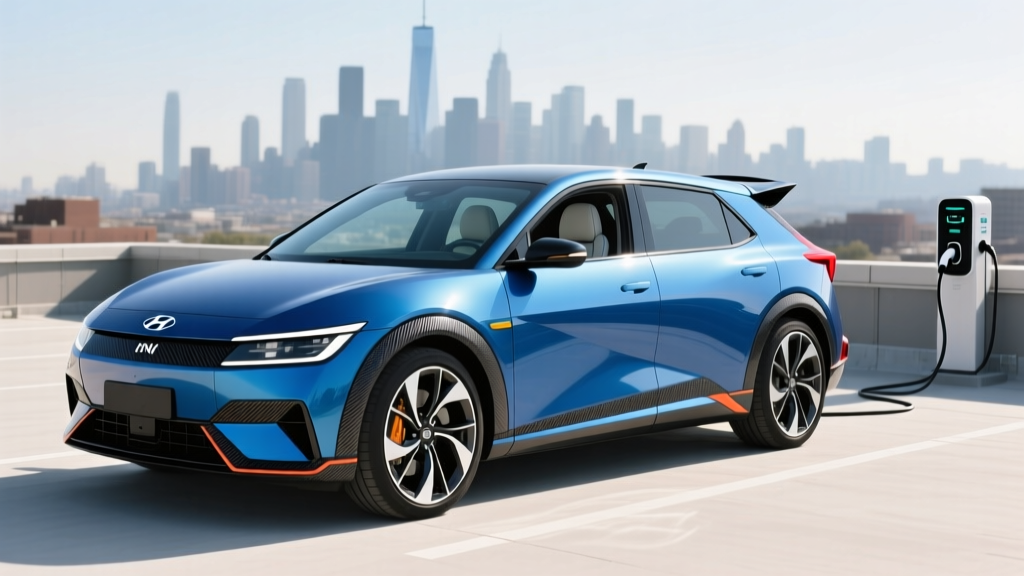
The Hyundai Ioniq 5 N occupies a rare position in the EV market: it is simultaneously a legitimate performance machine and a practical daily driver. For the 2026 model year, Hyundai continues to offer the Ioniq 5 N as a single, well-equipped trim with an 84.0 kWh battery pack, dual-motor all-wheel drive, and up to 641 horsepower with N Grin Boost engaged. If you've been searching for Ioniq 5 N lease deals, you're likely weighing whether the monthly payments justify the performance—and whether this EV can actually serve as your only car.
The short answer: yes, with caveats. The Ioniq 5 N trades some range for its performance hardware, and at a starting MSRP around $67,675 (including destination), it sits above the IRS §30D federal tax credit MSRP cap for SUVs. But for drivers who want 0-60 mph in roughly 3.25 seconds alongside usable cargo space and 232 kW DC fast charging, the value proposition is compelling. Let's dissect the numbers that matter.
Range, Battery & Efficiency: The Performance Trade-Off
EPA Estimated Range: 221 miles (standard), up to 238 miles with lighter wheels/tire configuration per fueleconomy.gov
Real-World Expectation: Expect 180–200 miles on sustained highway driving at 70+ mph. In cold weather (below 30°F), plan for 150–170 miles due to cabin heating demands and reduced battery efficiency. Aggressive driving with N Grin Boost will drop range significantly below these figures.
| Specification | Value |
|---|---|
| Battery Capacity (Usable) | 84.0 kWh |
| Battery Chemistry | NMC (Nickel Manganese Cobalt) |
| EPA Range | 221–238 miles |
| EPA Combined MPGe | |
| Efficiency (kWh/100 mi) | ~39–41 kWh/100 mi |
| Thermal Management | Liquid-cooled with battery preconditioning |
The Ioniq 5 N uses Hyundai's E-GMP platform with an 84.0 kWh NMC (nickel manganese cobalt) battery pack. NMC chemistry offers higher energy density than LFP (lithium iron phosphate), which is necessary to hit 220+ miles of range while powering a 641-hp drivetrain. The trade-off is that NMC batteries are more sensitive to sustained high states of charge and benefit from being kept between 20–80% SoC for daily use to maximize longevity.
Efficiency sits around 39–41 kWh per 100 miles depending on driving style and conditions. That's thirstier than the standard Ioniq 5 (roughly 30 kWh/100 mi) but expected given the N's heavier curb weight (~4,860 lbs), stickier performance tires, and more aggressive power delivery. On a 300-mile road trip, you'll need one DC fast-charge stop—manageable, but not class-leading for the segment.
Charging Speed: 232 kW Peak With Sustained Performance
Charging speed is where the Ioniq 5 N's 800-volt E-GMP architecture earns its keep. Most mainstream EVs use 400-volt systems that peak at 150 kW or less; the Ioniq 5 N can accept up to 232 kW at a compatible DC fast charger.
| Charge Level | Power / Rate | Time or Miles Added |
|---|---|---|
| Level 1 (120V household) | ~1.4 kW | ~3–4 miles per hour |
| Level 2 (240V home, 48A) | ~10.9 kW | ~30 miles per hour; full charge in ~8 hrs |
| DC Fast Charge (peak) | 232 kW | 10–80% in ~18 minutes |
| DC Fast Charge (350 kW station) | Up to 232 kW sustained initially | ~120 miles added in 10 minutes (ideal conditions) |
Here's what those numbers mean in practice: at a 350 kW Electrify America or Tesla Supercharger (with NACS adapter), the Ioniq 5 N will precondition its battery (if navigation is set to the charger) and ramp quickly to its 232 kW peak. You'll see sustained rates above 180 kW through roughly 55% SoC, after which the charge curve tapers. The 10–80% sprint takes approximately 18 minutes under good conditions—competitive with the Porsche Taycan and faster than the Tesla Model Y Performance.
One important note: to achieve peak charging speeds, the battery must be warm (ideally 77–95°F). Always use the vehicle's navigation to route to a DC fast charger, which triggers automatic battery preconditioning. Without preconditioning, especially in cold weather, your peak charge rate may be cut by 30–50%.
For home charging, a Level 2 wall connector on a 60-amp circuit (48 amps continuous) delivers roughly 10.9 kW, adding about 30 miles of range per hour. An overnight charge from 20% to 80% takes approximately 5–6 hours—perfect for daily replenishment.
Performance: 641 HP, 3.25-Second 0-60, and Track Credentials
| Specification | Value |
|---|---|
| Drivetrain | Dual-motor AWD |
| Horsepower (N Grin Boost) | 641 hp |
| Torque | 568 lb-ft (601 lb-ft with N Grin Boost) |
| 0–60 mph | ~3.25 seconds |
| Top Speed | 161 mph (electronically limited) |
| Curb Weight | ~4,860 lbs |
| Brakes | 4-piston front calipers, 15.4" rotors; regen up to 0.6g |
The Ioniq 5 N is not simply a standard Ioniq 5 with more power. Hyundai's N division added a structurally reinforced body, revised suspension geometry with adaptive dampers, a mechanical limited-slip front differential (simulated via brake vectoring), and an 84.0 kWh battery with enhanced cooling for sustained track use.
With N Grin Boost engaged (a 10-second burst mode activated by a steering wheel button), the dual-motor setup delivers 641 hp and drops the 0-60 mph time to approximately 3.25 seconds. That puts it in the territory of the Tesla Model Y Performance (3.5 sec) and the Porsche Macan 4 Electric (4.9 sec), while undercutting both on price.
Where the Ioniq 5 N truly separates itself is track capability. The N-tuned battery thermal management system allows for multiple hard laps without significant power derating—a common problem in performance EVs not designed for sustained high-load use. The regenerative braking system can decelerate at up to 0.6g, reducing wear on the physical brakes during track sessions.
Pricing, Lease Deals & Federal Tax Credit Eligibility
| Item | Amount |
|---|---|
| Base MSRP (incl. destination) | $67,675 |
| As-Tested (with options/packages) | $69,000–$72,000 |
| Federal §30D Tax Credit Eligibility | NOT eligible — exceeds $80,000 SUV cap? No. Exceeds $55,000 sedan cap. Classification matters. |
| Estimated Monthly Lease (36 mo, $4,500 down) | $750–$950/mo depending on money factor & incentives |
| Hyundai Lease Cash / Incentives (varies by region) | Check HyundaiUSA.com for current offers |
The 2026 Ioniq 5 N starts at approximately $67,675 including destination charges. It comes in a single, fully loaded trim—there are no base models to de-content. Available add-ons include matte paint, performance accessories, and the N Road Kit.
Federal §30D Tax Credit — Key Rules (2026):
- MSRP Cap: $80,000 for SUVs/pickups/vans; $55,000 for sedans. The Ioniq 5 N is classified as an SUV by the IRS, so it falls under the $80,000 cap. At ~$67,675, it clears this threshold.
- Buyer Income Cap: AGI must not exceed $150,000 (single), $225,000 (head of household), or $300,000 (joint filers).
- Battery Sourcing: Critical minerals and battery components must meet phased-in domestic/free-trade-partner sourcing requirements. Hyundai has worked to localize supply chains, but eligibility can vary by production batch.
- Point-of-Sale Transfer: If eligible, you can transfer the credit to the dealer at purchase, reducing your out-of-pocket cost immediately.
Important: Always verify current eligibility on IRS.gov and confirm the specific VIN's battery sourcing status before relying on the credit. Rules and sourcing compliance can shift.
For lease deals specifically: under current IRS guidance, leased EVs may qualify for the commercial clean vehicle credit (§45W), which goes to the leasing company (lessor) rather than the lessee. Some automakers pass this savings through as reduced monthly payments or lease cash. Hyundai has historically been competitive with lease incentives, so check HyundaiUSA.com and local dealer listings for current Ioniq 5 N lease specials. A realistic monthly lease payment lands in the $750–$950 range on a 36-month term with $3,500–$5,000 due at signing, depending on your region, credit tier, and available incentives.
Interior, Cargo & Daily Usability
Despite the performance focus, the Ioniq 5 N retains the practical cabin dimensions that make the standard Ioniq 5 a popular family EV.
- Cargo Volume: 27.2 cu ft behind rear seats; 59.3 cu ft with rear seats folded
- Frunk (Front Trunk): 2.0 cu ft (reduced vs. standard Ioniq 5 due to additional cooling hardware)
- Rear Legroom: 39.4 inches
- Front Headroom: 40.2 inches
- Seating: 5 passengers; N-specific sport seats with enhanced bolstering
The N-specific sport seats are a significant upgrade over the standard Ioniq 5's chairs, with aggressive side bolsters and integrated headrests. They remain comfortable for long drives, though the firmer padding may not suit everyone. The rear seat offers generous legroom for two adults, though the sloping roofline slightly reduces headroom for taller passengers.
The frunk shrinks to just 2.0 cu ft in the N variant—Hyundai uses that space for additional power electronics and cooling systems. You'll fit a charging cable and a small bag, not much more. The rear cargo area, however, remains spacious at 27.2 cu ft, enough for a week's groceries or two large suitcases.
Tech, Driver Assistance & Standout Features
The Ioniq 5 N comes loaded with Hyundai's latest technology suite:
- Infotainment: Dual 12.3-inch displays (instrument cluster + touchscreen) with wireless Apple CarPlay and Android Auto
- N-Specific Software: N Grin Boost, N Torque Distribution, N Drift Optimizer, N e-Shift (simulated 8-speed DCT with audible/physical shift cues), N Active Sound+ (synthesized engine/exhaust sounds through interior and exterior speakers)
- Driver Assistance (Hyundai SmartSense): Forward collision-avoidance assist, blind-spot collision-avoidance, rear cross-traffic collision-avoidance, lane keeping assist, highway driving assist with stop-and-go adaptive cruise
- Camera System: Surround-view monitor with 3D perspective, remote smart parking assist
- V2L (Vehicle-to-Load): Power external devices up to 3.6 kW via the interior V2L outlet or exterior adapter
Driver-Assist Level: Hyundai SmartSense is a SAE Level 2 system. It provides steering and speed assistance on highways, but the driver must remain fully engaged—hands on or near the wheel, eyes on the road. This is not autonomous driving.
The N e-Shift feature is polarizing but clever: it simulates the sensation of an 8-speed dual-clutch transmission, complete with torque interruption between "shifts" and a physical jolt you can feel through the seat. Some EV purists find it unnecessary; others appreciate the engagement it adds to spirited driving. Similarly, N Active Sound+ generates synthetic powertrain sounds—useful for pedestrian awareness and driver feedback, though you can turn it off for silent operation.
Pros, Cons & Competitor Comparison
Pros
- 232 kW DC fast charging (10–80% in ~18 min) among the fastest in its class
- 641 hp and 3.25-sec 0-60 at a sub-$70K price point
- Genuine track capability with sustained performance cooling
- Spacious cabin with 27+ cu ft cargo volume
- V2L capability for camping, tailgating, or emergency power
- N e-Shift and Active Sound+ add engagement absent in most EVs
- Comprehensive Hyundai SmartSense safety suite standard
Cons
- 221-mile EPA range is modest for the price; highway/cold-weather range drops to 150–180 mi
- Firm ride quality from N-tuned suspension may fatigue on rough roads
- Small frunk (2.0 cu ft) limits front storage
- Higher efficiency consumption (~40 kWh/100 mi) means higher charging costs vs. standard Ioniq 5
- Tax credit eligibility depends on battery sourcing — verify VIN before purchase
- Synthetic sounds and simulated shifts won't appeal to all buyers
Key Competitors:
- Tesla Model Y Performance (~$54,990): Longer range (303 mi EPA), more Supercharger access, but less engaging to drive and no track focus.
- Porsche Macan 4 Electric (~$78,800): Superior handling and build quality, but significantly more expensive with slower DC charging (peak ~270 kW but heavier vehicle).
- Ford Mustang Mach-E GT (~$62,995): Similar performance (480 hp, 3.5 sec 0-60) with 280 mi range, but older 400V architecture means slower charging.
Choose the Ioniq 5 N if: You want track-capable performance, best-in-class DC charging speed, and a practical cabin—all under $70K. You accept the range trade-off for the driving experience.
Look elsewhere if: You need 300+ miles of range for frequent road trips, prefer a softer ride for daily commuting, or want the lowest possible cost-per-mile efficiency.
Warranty & Long-Term Ownership
| Coverage Type | Term |
|---|---|
| New Vehicle Limited | 5 years / 60,000 miles |
| Powertrain | 10 years / 100,000 miles |
| Battery (High-Voltage) | 10 years / 100,000 miles (capacity retention threshold: ~70%) |
| Corrosion Perforation | 7 years / unlimited miles |
| Roadside Assistance | 5 years / unlimited miles |
Hyundai's warranty coverage is among the best in the industry. The 10-year/100,000-mile powertrain and high-voltage battery warranty provides meaningful peace of mind, especially for a performance-oriented EV that will see harder use than most. The battery warranty guarantees that the pack will retain approximately 70% of its original capacity over the warranty period—if degradation exceeds that threshold, Hyundai will repair or replace the battery.
For N-specific components (adaptive dampers, N-branded brake components, performance differentials), coverage follows the standard 5-year/60,000-mile new vehicle warranty. Track use does not void the warranty per Hyundai's N division policy, but damage from accidents or abuse is excluded as with any vehicle.
Frequently Asked Questions
What is the real-world range of the Ioniq 5 N?
The EPA rates the Ioniq 5 N at 221–238 miles depending on wheel/tire configuration. In real-world highway driving at 70 mph, expect 180–200 miles. In cold weather (below 30°F), plan for 150–170 miles. Aggressive track or canyon driving will reduce range further.
How fast does the Ioniq 5 N charge?
At a 350 kW DC fast charger with battery preconditioning, the Ioniq 5 N peaks at 232 kW and charges from 10–80% in approximately 18 minutes. On a home Level 2 charger (48 amps / 10.9 kW), it adds about 30 miles per hour, with a full charge taking roughly 8 hours.
Does the Ioniq 5 N qualify for the federal EV tax credit?
The Ioniq 5 N's MSRP (~$67,675) falls under the $80,000 SUV cap, and buyer income limits apply ($150K single / $300K joint). However, battery sourcing requirements under IRS §30D can affect eligibility by VIN. Always verify on fueleconomy.gov and IRS.gov before purchasing. Leased vehicles may qualify for a separate commercial credit passed through by the lessor.
Is the Ioniq 5 N worth buying vs. the Tesla Model Y Performance?
If driving engagement, track capability, and faster DC charging matter to you, the Ioniq 5 N is the stronger choice. If you prioritize maximum range (303 mi EPA), lower starting price (~$54,990), and Supercharger network access, the Model Y Performance wins. They serve different buyer priorities.
What are the biggest drawbacks of the Ioniq 5 N?
The main trade-offs are range (221 mi EPA is modest at this price), firm ride quality from the N-tuned suspension, a small frunk (2.0 cu ft), and higher energy consumption (~40 kWh/100 mi) that increases charging costs compared to more efficiency-focused EVs.
Can I daily-drive the Ioniq 5 N?
Absolutely. Despite its track credentials, the Ioniq 5 N offers a spacious cabin, comfortable sport seats, 27.2 cu ft of cargo space, V2L capability, and a full suite of Level 2 driver-assist features. The range requires planning for longer trips, but for a commute-and-weekend-fun use case, it works well as a sole vehicle.
How does the N e-Shift feature work?
N e-Shift simulates an 8-speed dual-clutch transmission by momentarily interrupting torque delivery between "gears," creating a physical jolt and audible shift cue. It's designed to increase driver engagement during spirited driving. You can disable it for smooth, single-speed EV acceleration at any time.