Quick Verdict: The Ioniq 5 N Is a Track Toy That Commutes
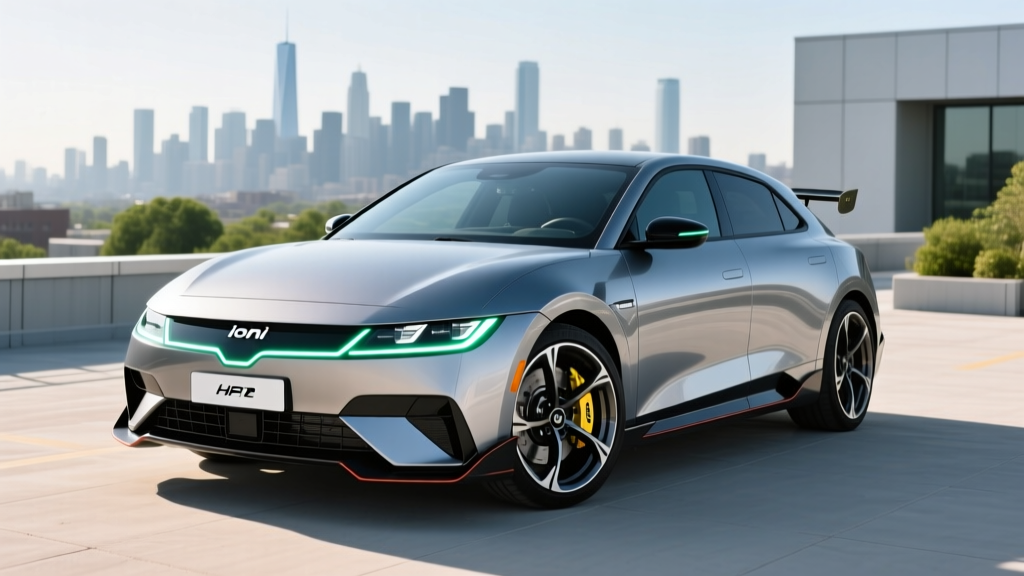
The Hyundai Ioniq 5 N isn't trying to be an efficiency champion. It's a 5,000-pound performance crossover that happens to run on electrons, and its headline figure — 641 horsepower with N Grin Boost engaged — puts it in supercar territory. But buyers researching the Ioniq 5 N hp output need to understand the full trade-off: that power comes at the cost of range, efficiency, and a stiff ride that'll make potholes personal. If you want the fastest SUV Hyundai has ever built and can live with ~180 real-world highway miles between charges, it's a blast. If you need a daily workhorse, the standard Ioniq 5 or Kia EV6 GT-Line will serve you better.
Ioniq 5 N HP, Performance, and Drivetrain Specs
The Ioniq 5 N uses a dual-motor all-wheel-drive setup built on Hyundai's E-GMP platform, but with significant performance upgrades over the standard model. The front motor produces 223 hp and the rear motor delivers 378 hp, for a combined 601 horsepower in standard N Drive mode. Engage N Grin Boost — a 10-second overboost function activated by the steering-wheel N button — and output jumps to 641 hp with 568 lb-ft of torque.
| Specification | Value |
|---|---|
| Horsepower (N Drive) | 601 hp |
| Horsepower (N Grin Boost) | 641 hp |
| Torque (N Grin Boost) | 568 lb-ft |
| 0-60 mph | 3.4 seconds |
| Top Speed | 161 mph |
| Drivetrain | Dual-motor AWD |
| Battery Capacity (usable) | 84.0 kWh |
| Battery Chemistry | NMC (Nickel Manganese Cobalt) |
| EPA Range | 221 miles |
| Combined MPGe | 81 MPGe |
| Efficiency | 41 kWh/100 mi |
That 3.4-second 0-60 time is legitimate. Hyundai reinforced the battery structure, added an N-specific thermal management system with enhanced cooling, and included an N Pedal mode that sharpens throttle response and increases regen aggressiveness. The car also features N Torque Distribution allowing front-rear torque split adjustment from 100:0 to 0:100, and an N Drift Optimizer for controlled oversteer — yes, on a crossover.
Real-World Range: 221 EPA Miles, but Plan for Less
Real-World Highway Expectation: 175–190 miles (70+ mph sustained)
Cold-Weather Expectation (below 30°F): 150–170 miles
City / Moderate Driving: 200–215 miles
The 221-mile EPA sticker is the lowest in the Ioniq 5 lineup by a wide margin — the standard Long Range RWD model achieves 303 miles. The reason is physics: 641 hp, wider 275-section Pirelli P Zero tires, performance-tuned suspension, and roughly 550 extra pounds of structural reinforcement all increase energy consumption. At 41 kWh per 100 miles, the Ioniq 5 N sips electricity like a sports sedan sips premium fuel.
In real-world highway testing at sustained speeds above 70 mph, expect range to drop to roughly 175–190 miles. Cold weather compounds the penalty: below freezing, battery preconditioning and cabin heating can push usable range toward 150 miles. According to fueleconomy.gov, the Ioniq 5 N's combined 81 MPGe is roughly half the efficiency of the standard Ioniq 5 AWD (110 MPGe combined).
If your commute is under 80 miles round-trip and you have reliable home charging, 221 miles is manageable. If you regularly drive 200+ miles between charging stops, the Ioniq 5 N will demand careful trip planning.
Charging Speed: 240 kW Peak, but Watch the Curve
The Ioniq 5 N retains the E-GMP platform's 800-volt architecture, which remains one of the fastest-charging systems available in any production vehicle. On a 350 kW DC fast charger, Hyundai rates the Ioniq 5 N at a peak of 240 kW with a 10–80% charge time of approximately 18 minutes under ideal thermal conditions.
| Charging Level | Power | Speed / Time |
|---|---|---|
| DC Fast Charge (350 kW station) | Up to 240 kW peak | 10–80% in ~18 min |
| DC Fast Charge (150 kW station) | Up to 150 kW | 10–80% in ~28 min |
| Level 2 Home (48A / 11.5 kW) | 11.5 kW | ~32 mi/hr added; 0–100% in ~7.5 hrs |
| Level 2 Home (32A / 7.7 kW) | 7.7 kW | ~21 mi/hr added; 0–100% in ~11 hrs |
| Level 1 (120V / 12A) | ~1.4 kW | ~4 mi/hr added; 60+ hrs for full |
The critical detail that spec sheets bury: peak kW is not sustained kW. The Ioniq 5 N will pull close to 240 kW between roughly 10–55% State of Charge, then the charge curve tapers progressively. From 55–80%, you'll see rates drop to 120–80 kW. Above 80%, charging slows dramatically to protect battery health — expect 50 kW or less. If you arrive at a charger at 5% SoC on a warm day with battery preconditioning active, the 18-minute claim holds. In cold weather without preconditioning, add 5–10 minutes.
Hyundai includes a battery preconditioning feature that warms the pack when a DC fast charger is set as your navigation destination. Always use it — skipping preconditioning in cold weather can cut peak charge rates in half.
For home Level 2 charging, the Ioniq 5 N's onboard charger accepts up to 10.9 kW. On a 48-amp circuit, you'll add roughly 32 miles of range per hour — enough to fully replenish the 84 kWh battery overnight. A quality Level 2 home charger installation typically runs $800–$2,000 including the unit, wiring, and electrician labor, though a panel upgrade can push costs higher.
Pricing, Trims, and Federal Tax Credit Eligibility
The Ioniq 5 N is offered in a single, fully loaded configuration. There are no lower trims to chase — this is Hyundai N's halo EV.
| Item | Amount |
|---|---|
| Base MSRP (2025/2026) | $67,475 (incl. destination) |
| As-Tested (Performance Blue Matte, no add-ons) | ~$68,225 |
| Federal §30D Tax Credit (max) | Up to $7,500 |
| Estimated Net Price (if full credit applies) | ~$59,975 |
Federal tax credit caveats: Under current IRS §30D rules, the Ioniq 5 N qualifies as an SUV for the MSRP cap ($80,000 limit), so it clears that hurdle. However, eligibility for the full $7,500 depends on three factors that change frequently:
- Battery component sourcing: A percentage of battery components must be manufactured or assembled in North America, increasing annually.
- Critical minerals sourcing: A percentage of critical minerals must be sourced from the U.S. or free-trade-agreement countries.
- Buyer income caps: Modified AGI must not exceed $300,000 (joint), $225,000 (head of household), or $150,000 (single).
The point-of-sale transfer option allows dealers to apply the credit as an immediate discount at purchase, but only if all sourcing and income requirements are met. Hyundai's U.S.-assembled Ioniq 5 models (built at the Metaplant in Georgia) have improved their credit eligibility, but the N variant's specific battery cell sourcing should be confirmed with your dealer and verified against the IRS's current qualifying vehicle list before committing. Consult a tax professional for your specific situation.
Interior, Cargo, Tech, and Driver Assistance
The Ioniq 5 N interior blends the standard car's retro-futuristic dual-screen layout with N-specific performance upgrades. You get a 12.3-inch digital cluster and 12.3-inch infotainment touchscreen, N-branded sport bucket seats with enhanced bolstering, an N-specific steering wheel with two programmable N buttons, and physical buttons for climate controls — a welcome choice.
| Dimension | Measurement |
|---|---|
| Front Legroom | 41.7 inches |
| Rear Legroom | 39.4 inches |
| Cargo (behind rear seats) | 27.2 cu ft |
| Cargo (rear seats folded) | 59.3 cu ft |
| Frunk (front trunk) | 2.0 cu ft |
The 27.2 cu ft cargo area is slightly reduced from the standard Ioniq 5 (27.2 vs. 27.2 — essentially identical, though the N's reinforced rear subframe and exhaust-simulator hardware eat into the under-floor storage slightly). The frunk is small at 2.0 cu ft — enough for a charging cable and a jacket, not a grocery run.
Standout tech features:
- N Active Sound+: Simulates engine sound and even simulated gear shifts through interior and exterior speakers. Polarizing, but genuinely immersive on a canyon road.
- N e-Shift: Simulates an 8-speed dual-clutch transmission with torque interruption between "gears" — including rev-matching on downshifts.
- N Race App: Tracks lap times, G-forces, and power/torque output on the infotainment screen.
- Hyundai SmartSense ADAS: Includes adaptive cruise with stop-and-go, lane-keeping assist, blind-spot monitoring, rear cross-traffic collision avoidance, and highway driving assist. This is SAE Level 2 — the driver must remain engaged at all times.
Notable drawbacks: The ride is firm. On anything less than smooth pavement, you'll feel every expansion joint and pothole. Road noise is pronounced at highway speeds due to the performance tires. The simulated engine sound is a love-it-or-hate-it feature, and there's no way to fully disable the N-specific interface overlays without digging through menus. Rear visibility is compromised by the roof spoiler and thick C-pillars — a backup camera is essential.
Warranty Coverage
Hyundai backs the Ioniq 5 N with its standard warranty package, which is among the best in the industry:
- Battery: 10 years / 100,000 miles (capacity retention above a defined threshold, typically 70%)
- Powertrain: 10 years / 100,000 miles
- New Vehicle (bumper-to-bumper): 5 years / 60,000 miles
- Roadside Assistance: 5 years / unlimited miles
- Complimentary Maintenance: 3 years / 36,000 miles
The 10-year battery warranty provides strong peace of mind for a performance-oriented EV that will see hard use. Hyundai's N division has also stated that track use does not automatically void the powertrain warranty, though abuse-related failures may not be covered — document your maintenance.
Who the Ioniq 5 N Is For — and Who Should Skip It
- You want a daily-drivable performance EV that can genuinely hold its own at a track day
- Your commute is under 80 miles and you have reliable Level 2 home charging
- You value engagement over efficiency — simulated shifts, drift modes, and 641 hp matter to you
- You want a practical hatchback form factor with real rear-seat and cargo space
- You need 280+ miles of real-world range for road trips or long commutes
- Ride comfort and cabin quietness are top priorities
- You want to minimize charging stops and electricity costs
- Your budget is better served by a $50K EV with 300+ mile range
Pros and Cons at a Glance
- 641 hp / 3.4s 0-60 — genuine supercar acceleration
- 240 kW peak DC fast charging, 10–80% in ~18 min
- Best-in-class 10-year / 100,000-mile battery warranty
- Practical cargo and passenger space for a performance vehicle
- N e-Shift and Active Sound+ add real engagement
- 800V architecture charges faster than most competitors
- 221-mile EPA range; ~175–190 mi real-world highway
- 41 kWh/100 mi — expensive to charge on road trips
- Firm ride and high road noise on rough pavement
- ~$67,500 base price; tax credit not guaranteed
- Simulated engine sounds won't appeal to everyone
- Heavy at ~5,000 lbs — tire wear will be a cost factor
Frequently Asked Questions
What is the real-world range of the Ioniq 5 N?
The EPA rates the Ioniq 5 N at 221 miles. In real-world highway driving at 70+ mph, expect 175–190 miles. In cold weather below freezing, that can drop to 150–170 miles. For mixed city/highway commuting at moderate speeds, 200–215 miles is achievable.
How fast does the Ioniq 5 N charge?
On a 350 kW DC fast charger, the Ioniq 5 N peaks at 240 kW and charges from 10–80% in approximately 18 minutes under ideal conditions. On a 48-amp Level 2 home charger (11.5 kW), a full charge takes about 7.5 hours, adding roughly 32 miles of range per hour.
How much does the Ioniq 5 N cost after tax credits?
The base MSRP is approximately $67,475. If you qualify for the full $7,500 federal §30D credit (subject to income caps, battery sourcing requirements, and MSRP limits), the net price drops to roughly $59,975. Eligibility is not guaranteed — verify with the IRS qualifying vehicle list and your tax professional before purchase.
Does the Ioniq 5 N qualify for the federal EV tax credit?
It may, but eligibility depends on current-year battery sourcing rules, your modified adjusted gross income, and the $80,000 SUV MSRP cap (which the Ioniq 5 N clears). Hyundai builds the Ioniq 5 at its Georgia Metaplant, improving domestic content. Check the IRS clean vehicle credit page for the latest qualifying list before committing.
Is the Ioniq 5 N worth buying vs. the Tesla Model Y Performance or Kia EV6 GT?
The Ioniq 5 N offers more horsepower (641 vs. ~456 for Model Y Performance), faster DC charging (240 kW vs. ~250 kW peak but on a 400V architecture for the EV6 GT), and a more engaging driving experience with simulated shifts and drift modes. However, the Model Y Performance has significantly more range (~285 miles EPA), access to the Supercharger network (though Hyundai now has NACS adapters), and a lower starting price (~$48K). The EV6 GT shares the 800V platform but has less range (206 mi EPA) and a slightly lower price (~$62K). If maximum fun-per-mile is your priority, the Ioniq 5 N wins. If range and value matter more, the Model Y Performance is the pragmatic choice.
What is the Ioniq 5 N battery warranty?
Hyundai covers the Ioniq 5 N's 84 kWh NMC battery for 10 years or 100,000 miles, whichever comes first. The warranty guarantees capacity retention above a defined threshold (typically 70% State of Health). The powertrain carries the same 10-year / 100,000-mile coverage.