If you have spent any time browsing Ioniq 5 forums — from Hyundai's own owner community to dedicated subreddits and EV enthusiast boards — you already know the discourse is polarized. Some threads hail the Ioniq 5 as the best all-around electric crossover on the market. Others warn of range disappointments, charging quirks, and tax-credit confusion. As someone who has tracked this platform since its 2022 U.S. launch and tested multiple model years firsthand, I can tell you the truth usually sits somewhere between the hype and the hand-wringing.
This review takes the most repeated claims from Ioniq 5 forums and puts them against verified 2026 model-year data, EPA figures, and real-world testing notes. Whether you are considering a new purchase or trying to optimize the Ioniq 5 you already own, here is what the numbers actually say.
2026 Hyundai Ioniq 5 at a Glance: Core Specs
| Spec | SE/SEL RWD | SEL/Limited AWD | Ioniq 5 N |
|---|---|---|---|
| EPA Range | 303 mi | 260–290 mi | 221 mi |
| Battery (usable) | 77.4 kWh (NMC) | 77.4 kWh (NMC) | 84.0 kWh (NMC) |
| Peak DC Charge Rate | ~240 kW | ~240 kW | ~250+ kW |
| 10–80% DC Time | ~18 min (ideal) | ~18 min (ideal) | ~18 min (ideal) |
| Level 2 Home Rate | 10.9 kW (~37 mi/hr) | 10.9 kW (~37 mi/hr) | 10.9 kW (~37 mi/hr) |
| 0–60 mph | 7.0 sec | 4.5 sec | 3.25 sec |
| Horsepower | 168 hp | 320 hp | 641 hp (N Grin Boost) |
| Drivetrain | RWD single motor | Dual-motor AWD | Dual-motor AWD |
| MPGe (combined) | 117 MPGe | 101–110 MPGe | 85 MPGe |
| Base MSRP | ~$42,600 | ~$47,400 | ~$66,200 |
| Battery/Powertrain Warranty | 10 yr / 100,000 mi | ||
Source: fueleconomy.gov and Hyundai USA spec sheets. Figures reflect 2026 model-year data where published; some trims carry over from confirmed 2025 specs. Pricing excludes destination.
Real-World Range: What Forum Owners Report vs. the EPA Sticker
EPA Sticker: 303 mi (RWD, 19" wheels) / 260–290 mi (AWD)
Real-World Highway (70–75 mph, mild weather): ~245–270 mi (RWD) / ~215–240 mi (AWD)
Cold Weather (below 32°F, mixed driving): Expect 25–35% reduction from EPA — roughly 195–225 mi (RWD), 170–200 mi (AWD)
City / Moderate-Speed Commuting: Often meets or slightly exceeds EPA in warm weather
One of the most debated topics on Ioniq 5 forums is range accuracy. The RWD Long Range's 303-mile EPA figure is legitimate — but it represents a blended cycle. On sustained highway driving at 70–75 mph, aerodynamic drag dominates, and you will typically see 245–270 miles of usable range before the low-SoC warnings begin. This is not a defect; it is physics, and it applies to virtually every EV on the market.
The Ioniq 5's NMC (nickel manganese cobalt) battery chemistry offers strong energy density, which is how Hyundai packs 77.4 kWh of usable capacity into a relatively compact crossover. However, NMC cells are somewhat more sensitive to extreme cold than LFP (lithium iron phosphate) alternatives. Without preconditioning, winter range loss can hit 30–35%. The Ioniq 5's heat pump — standard on most trims — mitigates cabin-heating losses, but the battery itself still loses efficiency in deep cold.
Forum claim fact-check: Owners posting about getting "only 220 miles on a road trip" are reporting accurately for AWD models at highway speeds. That is not a software bug; it is the expected real-world outcome. If your commute is mostly city and suburban at speeds under 50 mph, you may actually exceed the EPA number in moderate temperatures.
Charging Speed: 800V Architecture Still Delivers — With Caveats
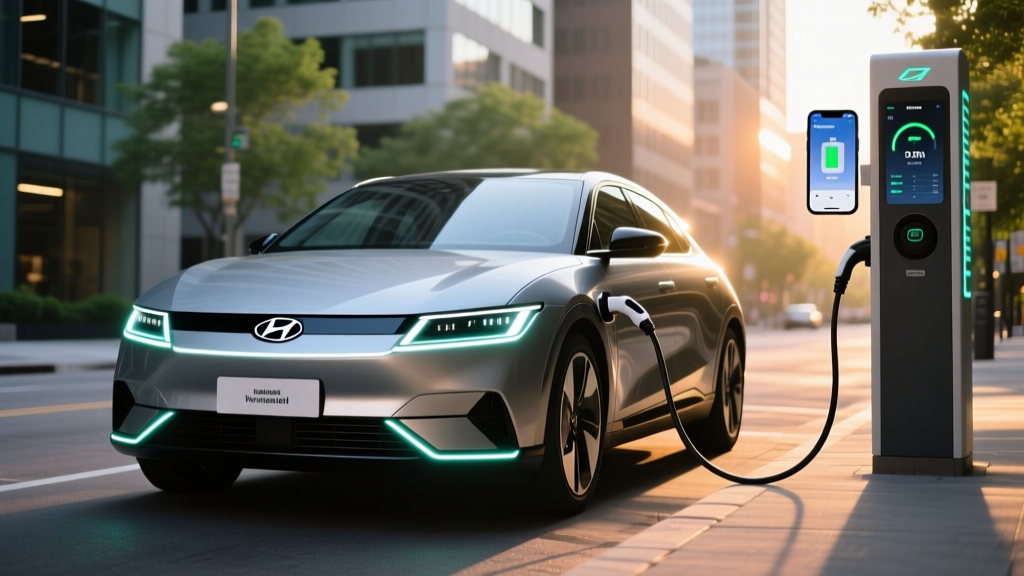
The Ioniq 5's 800-volt E-GMP platform remains one of its strongest selling points, and this is where forum praise is largely justified. The architecture enables peak DC fast-charging rates around 240 kW at compatible 350 kW chargers (Electrify America, select EVgo stations, and growing NACS/Supercharger access via adapter or native port on newer builds).
| Charging Level | Power | Connector | Speed (approx.) |
|---|---|---|---|
| Level 1 (120V outlet) | ~1.4 kW | J1772 / NACS | ~4–5 mi/hr |
| Level 2 (240V home) | 10.9 kW | J1772 / NACS | ~37 mi/hr (full charge ~7–8 hr) |
| DC Fast Charge | Up to ~240 kW peak | CCS / NACS | 10–80% in ~18 min (ideal conditions) |
The charge-curve reality forums sometimes miss: That 240 kW is a peak, not a sustained rate. The Ioniq 5 pulls its maximum rate between roughly 10–55% state of charge, then tapers progressively. From 80–100%, charging slows dramatically — often below 50 kW — to protect battery longevity. If you are road-tripping, the practical strategy is to charge from 10–80% and go, rather than sitting at the charger waiting for a full battery. A 10–80% session in warm weather with battery preconditioning active can genuinely complete in 18–20 minutes at a 350 kW station.
For 2026, Hyundai has expanded NACS (North American Charging Standard) availability. Newer Ioniq 5 builds may come with a native NACS port, while earlier models rely on the included CCS-to-NACS adapter for Tesla Supercharger access. Always confirm your specific build's port type before planning a Supercharger-dependent road trip.
Home charging: The onboard charger maxes at 10.9 kW on Level 2. With a 48-amp hardwired Level 2 station on a 60-amp circuit, you will add roughly 37 miles of range per hour, or fully recharge overnight in 7–8 hours. If your home panel is older (100-amp service), an electrician may need to upgrade to 200-amp service — budget $1,500–$3,500 for that work on top of the $500–$800 for the charger unit and $500–$1,500 for installation labor.
Performance and Drivetrain: RWD Efficiency vs. AWD Punch
The standard RWD Ioniq 5 produces 168 hp from its rear-mounted motor, delivering a 0–60 mph time of around 7.0 seconds. It is adequate for commuting and merging but not thrilling. The efficiency payoff is real: the RWD Long Range achieves 117 MPGe combined (roughly 29 kWh/100 mi), making it one of the most efficient crossovers in its class.
Step up to the dual-motor AWD and you get 320 hp and a 4.5-second 0–60 time. The AWD system adds traction confidence in rain and snow, though the trade-off is 13–43 fewer miles of EPA range depending on wheel size and trim.
At the top of the range, the Ioniq 5 N is Hyundai's performance halo — 641 hp with N Grin Boost engaged, a 3.25-second 0–60, track-capable cooling, and simulated gear shifts that forum enthusiasts either love or find gimmicky. Its 221-mile EPA range is the price you pay for that performance.
Interior, Cargo, and Technology
The Ioniq 5's flat-floor E-GMP architecture gives it a surprisingly spacious cabin for its footprint. Rear legroom measures 39.4 inches — competitive with midsize SUVs despite the Ioniq 5 being classified as a compact crossover. Cargo volume behind the rear seats is approximately 27.2 cubic feet, expanding to around 59.3 cubic feet with the rear seats folded.
The front trunk (frunk) on AWD models is modest — roughly 0.85 cubic feet, enough for a charging cable kit or small bag. RWD models offer a larger 2.1-cubic-foot frunk since there is no front motor.
Infotainment and tech: Dual 12.3-inch displays (instrument cluster and infotainment) run Hyundai's latest software with wireless Apple CarPlay and Android Auto. The center console slides forward and back (the "Universal Island"), which is genuinely useful for tight parking-space exits. Physical climate-control buttons were reintroduced after early models drew criticism for touchscreen-only HVAC operation.
Driver assistance: Hyundai's Highway Driving Assist 2 (HDA2) is a capable Level 2 system offering adaptive cruise with stop-and-go, lane-centering, and lane-change assist. It is well-calibrated for highway use but requires hands-on-wheel engagement at all times. This is not a "self-driving" system — it is a supervised driver-assist feature. Hyundai's digital key, vehicle-to-load (V2L) power output (up to 3.6 kW from the interior and exterior ports), and over-the-air updates round out the tech suite.
Notable drawbacks cited on forums: The absence of a rear wiper on earlier model years (addressed on newer builds), wind noise at highway speeds above 70 mph, and the lack of a spare tire (a tire-repair kit is standard). Some owners also report that the regenerative braking paddle settings reset to default on startup rather than remembering the driver's preference.
Pricing, Trims, and Federal Tax Credit Eligibility
| Trim | Base MSRP | Est. After §30D Credit* | AWD Available? |
|---|---|---|---|
| SE Standard Range | ~$42,600 | ~$35,100 | No |
| SE | ~$46,750 | ~$39,250 | Yes (+$3,500) |
| SEL | ~$49,100 | ~$41,600 | Yes (+$3,500) |
| Limited | ~$54,600 | ~$47,100 | Yes (std) |
| Ioniq 5 N | ~$66,200 | ~$58,700 | Yes (std) |
*Estimated price assumes full $7,500 federal tax credit under IRS §30D. Actual eligibility depends on multiple factors — see checklist below. Prices exclude destination (~$1,395) and do not reflect state/local incentives.
- MSRP Cap: Vehicle must be under $80,000 MSRP for SUVs/crossovers — all Ioniq 5 trims qualify.
- Buyer Income Cap: AGI must not exceed $150,000 (single), $225,000 (head of household), or $300,000 (joint).
- Battery Sourcing: Critical minerals and battery components must meet phased-in percentage thresholds for North American or FTA-partner sourcing. Hyundai has shifted significant battery production to the Georgia Metaplant, but verify your specific VIN's eligibility at IRS.gov's eligible vehicle list.
- Point-of-Sale Transfer: As of 2024+, you can transfer the credit to the dealer at purchase, reducing your out-of-pocket cost immediately rather than waiting for a tax refund. Confirm dealer participation.
- New vs. Used: The full $7,500 applies to new vehicles. A separate used-EV credit (up to $4,000) applies to qualifying pre-owned Ioniq 5s, subject to different price and income caps.
Rules are subject to change. Consult a tax professional and verify at irs.gov before purchasing.
A major forum talking point is whether the Ioniq 5 qualifies for the full $7,500 credit. With Hyundai's Metaplant America in Ellabell, Georgia, now producing Ioniq 5 units domestically, many — but not necessarily all — VINs meet the battery-sourcing and assembly requirements. The key variable is the specific battery cell supplier for your build batch. Always run your VIN through the IRS eligibility tool or ask the dealer for the §30D compliance documentation before finalizing your purchase.
Ioniq 5 vs. Key Competitors: How Does It Stack Up?
| Spec | Hyundai Ioniq 5 SEL AWD | Tesla Model Y LR AWD | Ford Mustang Mach-E ER AWD | Kia EV6 GT-Line AWD |
|---|---|---|---|---|
| EPA Range | 260–290 mi | 310–320 mi | 275–290 mi | 274–282 mi |
| Peak DC Charge | ~240 kW | ~250 kW | ~150 kW | ~240 kW |
| 10–80% DC Time | ~18 min | ~20 min | ~36 min | ~18 min |
| 0–60 mph | 4.5 sec | 4.8 sec | 5.1 sec | 4.5 sec |
| Cargo (rear seats up) | 27.2 cu ft | 30.2 cu ft | 29.7 cu ft | 24.4 cu ft |
| Battery Warranty | 10 yr / 100k mi | 8 yr / 120k mi | 8 yr / 100k mi | 10 yr / 100k mi |
| Base MSRP (AWD mid) | ~$52,600 | ~$48,500 | ~$51,000 | ~$53,500 |
Where the Ioniq 5 wins: Charging speed (tied with its Kia EV6 sibling, far ahead of the Mach-E), 10-year battery warranty, V2L capability, and the 800V architecture's thermal resilience during repeated fast-charge sessions. The interior design and ride comfort also consistently score high in owner surveys.
Where it trails: The Tesla Model Y offers more cargo space and slightly more EPA range, plus access to the full Supercharger network without an adapter (though the Ioniq 5's NACS adoption is closing this gap). The Mach-E provides a sportier driving feel for some reviewers, though its slower DC charging is a real road-trip drawback.
Pros and Cons: The Forum Consensus, Verified
✓ Pros
- Class-leading DC fast-charge speed (800V, ~18 min 10–80%)
- Spacious flat-floor cabin with generous rear legroom (39.4")
- 10-year / 100,000-mile battery and powertrain warranty
- V2L (vehicle-to-load) powers appliances and tools up to 3.6 kW
- Smooth ride quality and low cabin noise at moderate speeds
- HDA2 is a competent Level 2 highway assist
- Strong efficiency on RWD trims (117 MPGe combined)
✗ Cons
- AWD range drops noticeably vs. RWD (260 mi vs. 303 mi EPA)
- Cold-weather range loss is significant without preconditioning
- Frunk is very small on AWD models (0.85 cu ft)
- No spare tire — repair kit only
- Tax-credit eligibility varies by VIN/build batch — requires verification
- Infotainment learning curve; some menu nesting frustrates owners
- Wind noise noticeable above 70 mph on some builds
Who Should Buy the Ioniq 5?
Choose the Ioniq 5 if:
- You want one of the fastest-charging crossovers available and take regular road trips where 18-minute DC stops matter.
- You value a long powertrain warranty (10 years) as peace of mind against battery degradation.
- Your daily commute is under 80 miles round-trip, meaning the real-world range is more than sufficient.
- You want V2L for camping, tailgating, or emergency backup power.
Look elsewhere if:
- You need maximum cargo volume — the Model Y or Mach-E offer more cubic feet.
- You live in an extremely cold climate and cannot charge at home — winter range loss will be painful without daily top-ups.
- You want the longest possible range without charging stops — the RWD Long Range is good at 303 mi EPA, but competitors like the Model Y LR push past 320 mi.
- You need towing capacity beyond 2,300 lbs (AWD) — this is a light-duty tow vehicle at best.
Frequently Asked Questions from Ioniq 5 Forums
What is the real-world range of the Ioniq 5 on a road trip?
Expect 245–270 miles at highway speeds (70–75 mph) in warm weather for the RWD Long Range, and 215–240 miles for the AWD. In cold weather (below freezing), subtract 25–35%. Plan charging stops at 200 miles for comfortable highway margins in an AWD model.
How fast does the Ioniq 5 charge at home and on DC fast chargers?
On a Level 2 home charger (240V, 48A), the Ioniq 5 charges at 10.9 kW, adding about 37 miles per hour — a full charge takes 7–8 hours. On a 350 kW DC fast charger, it peaks at around 240 kW and can go from 10–80% in approximately 18 minutes under ideal (warm-battery, preconditioned) conditions. Expect 22–28 minutes in cooler weather without preconditioning.
Does the 2026 Ioniq 5 qualify for the $7,500 federal tax credit?
Many Ioniq 5 builds qualify, but it is not universal. Eligibility under IRS §30D depends on the battery's critical-mineral sourcing, buyer income (AGI caps of $150K/$225K/$300K), and the vehicle's MSRP (must be under $80K — all trims clear this). Hyundai's Georgia-built units have improved sourcing compliance. Always verify your specific VIN at fueleconomy.gov and consult a tax professional.
Is the Ioniq 5 worth buying over the Tesla Model Y or Kia EV6?
The Ioniq 5 is the right pick if you prioritize fast DC charging, a 10-year warranty, and a distinctive design with V2L capability. The Model Y wins on cargo space and Supercharger network maturity. The Kia EV6 shares the Ioniq 5's 800V platform and is mechanically similar — choose based on styling preference, dealer experience, and specific trim pricing. All three are strong; none is objectively "best" for every buyer.
What are the biggest problems reported on Ioniq 5 forums?
The most common complaints center on range expectations (AWD owners surprised by real-world highway numbers), the small AWD frunk, occasional ICCU (Integrated Charging Control Unit) failures on early 2022–2023 builds, and infotainment quirks. Hyundai has issued software updates and warranty coverage for the ICCU issue. Later model years (2025–2026) have shown improved reliability in these areas.
Does the Ioniq 5 have a heat pump, and does it help in winter?
Yes, a heat pump is standard on most Ioniq 5 trims. It significantly reduces the energy cost of cabin heating compared to resistive heaters, typically recovering 2–4 miles of range in cold conditions. However, it does not prevent battery-level cold-weather range loss — preconditioning the battery before fast charging and using seat/steering-wheel heaters instead of cabin air heating will stretch your winter range further.
Can I use Tesla Superchargers with the Ioniq 5?
Newer 2026 Ioniq 5 builds may come equipped with a native NACS port, granting direct Supercharger access. Earlier builds with a CCS port can use Hyundai's included or available CCS-to-NACS adapter. Confirm your vehicle's port type and adapter compatibility before relying on Superchargers for a trip. Supercharger access via adapter works for V3 and V4 stalls with the NACS connector.
Sources consulted: U.S. EPA / fueleconomy.gov, IRS §30D Eligible Vehicle List, Hyundai Motor America specifications. Always verify current-year figures with official sources before purchasing.