Quick Answer: Is the International Scout EV Worth Considering?
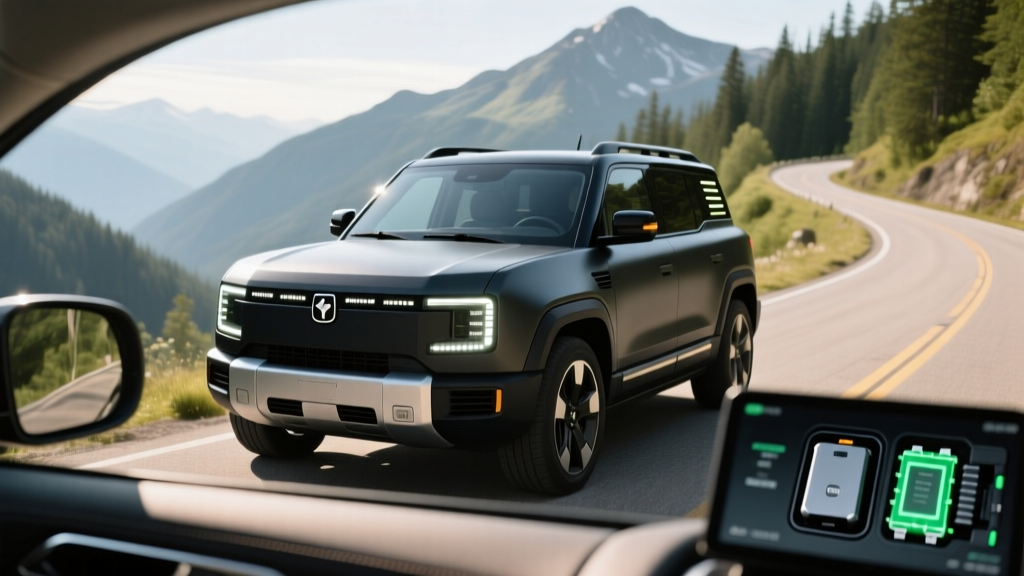
The International Scout electric vehicle is an all-new, body-on-frame electric SUV and pickup from the revived Scout Motors brand (backed by Volkswagen Group). Deliveries of the 2026 Scout Traveler SUV and Scout Terra pickup are expected to begin in late 2026 or early 2027. Preliminary specs target 350+ miles of EPA range, up to 800 lb-ft of torque, a ~$50,000 starting MSRP, and NACS-native charging on Tesla Superchargers. If you need a rugged, off-road-capable electric utility vehicle with real towing capability and can wait for early-production deliveries, the Scout is one of the most anticipated EVs in the segment. If you need a vehicle today or want proven long-term reliability data, established competitors like the Rivian R1S/R1T or Ford F-150 Lightning remain safer bets for now.
What Is the International Scout Electric Vehicle?
Scout Motors is a standalone American brand created by Volkswagen Group to revive the iconic International Harvester Scout nameplate as an all-electric, off-road-focused marque. Unlike VW's ID. lineup of crossover EVs, Scout vehicles are built on a dedicated body-on-frame platform designed for serious utility: real ground clearance, solid rear axles, mechanical locking differentials, and genuine towing capacity.
Two models were unveiled in October 2024 and are slated for production at Scout's purpose-built factory in Blythewood, South Carolina:
- Scout Traveler — A four-door, five-seat electric SUV with a short rear overhang and available glass roof.
- Scout Terra — A four-door electric pickup truck with a five-foot bed and midgate option for extended cargo length.
Both models share the same skateboard platform, dual-motor all-wheel-drive powertrain, and battery architecture. Scout has confirmed the vehicles will use NACS (North American Charging Standard) connectors natively, granting access to Tesla's Supercharger network from day one — a major practical advantage over CCS-only vehicles in 2026.
Scout has also announced a Harvester Edition range-extended variant that pairs a smaller battery with a gasoline engine-generator (an EREV layout) for buyers who want electric driving with unlimited range on remote trails. This is a significant differentiator in the EV truck space.
Estimated Specs: Range, Battery, and Performance
Because the Scout Traveler and Terra are not yet in customer hands, all specifications below are based on Scout Motors' official announcements and should be treated as preliminary. Final EPA certification figures will be published closer to delivery.
| Specification | Scout Traveler (SUV) | Scout Terra (Pickup) |
|---|---|---|
| EPA Range (target) | ~350 miles | ~340 miles |
| Battery Chemistry | Expected NMC (nickel manganese cobalt) | |
| Battery Capacity | Not yet disclosed (est. 100-120 kWh usable) | |
| Drivetrain | Dual-motor AWD | |
| Horsepower | ~400 HP (est.) | |
| Torque | Up to 800 lb-ft | |
| 0-60 mph | ~6.5 seconds (est.) | |
| Towing Capacity | Up to 10,000 lbs (target) | |
| Payload (Terra) | N/A | ~1,800 lbs (target) |
| Ground Clearance | ~12+ inches (est.) | |
| Charging Port | NACS (native) | |
| Max DC Fast Charge | ~350 kW (target, 800V architecture) | |
| Starting MSRP (target) | ~$50,000 (before incentives) | |
Real-World Range Expectations
EPA target: ~350 miles (Traveler) / ~340 miles (Terra)
Real-world range will depend heavily on use case. Body-on-frame electric trucks and SUVs with large frontal areas and off-road tires lose efficiency quickly at highway speeds. Expect:
- Highway cruising (75 mph): ~260-290 miles effective range
- City/suburban mixed driving: ~310-340 miles, close to EPA
- Cold weather (below 30°F): ~240-280 miles (20-30% reduction is typical for large EVs without confirmed heat pump data)
- Towing a 5,000-lb trailer: ~150-180 miles — range roughly halves when towing, consistent with Rivian R1T and F-150 Lightning real-world tests
Scout has not yet confirmed whether the vehicles will include a standard heat pump for cold-weather efficiency. This will be a critical spec to watch, as resistive cabin heating can cut winter range by an additional 10-15%.
Charging Speed and Infrastructure
Scout's adoption of the NACS connector and reported 800-voltage architecture positions these vehicles among the fastest-charging EV trucks on paper. Here's what that translates to in practice:
| Charging Level | Power (kW) | Estimated Miles Added per Hour | Use Case |
|---|---|---|---|
| Level 1 (120V outlet) | ~1.4 kW | ~3-4 miles/hr | Emergency/top-up only |
| Level 2 (240V home) | ~11.5 kW | ~30-35 miles/hr | Daily home charging |
| DC Fast Charge (peak) | ~350 kW | ~150+ miles in 10 min | Road trips |
| DC Fast Charge (10-80%) | Variable (tapers above 80%) | ~20-25 min (est.) | Optimal road-trip stop |
Key charging reality: Peak charge rate (350 kW) is only sustained for a portion of the session. As the battery's state of charge (SoC) rises above 50-60%, the charge curve tapers significantly to protect battery chemistry. A "10-80% in ~20 minutes" claim assumes ideal conditions: a preconditioned battery, a charger capable of delivering the full rate, and moderate ambient temperatures. In practice, plan for 25-35 minutes at a DC fast charger on road trips.
Home charging setup: To get the full ~11.5 kW Level 2 rate, you'll need a 60-amp dedicated circuit with a hardwired wall connector (or a NACS-compatible Level 2 EVSE). Most homes with a 200-amp electrical panel can accommodate this. Budget $800-$2,500 for professional installation depending on your panel's proximity to the garage and local permit requirements. Homes with older 100-amp panels may need a $2,000-$5,000 panel upgrade.
EV vs. Gas: How Does the Scout Compare to a Conventional Truck?
The Scout Traveler and Terra will compete directly with both electric rivals (Rivian R1S/R1T, Ford F-150 Lightning, Chevrolet Silverado EV) and traditional body-on-frame SUVs and trucks (Jeep Wrangler 4xe, Toyota 4Runner, Ford Bronco). Here's how the economics stack up against a comparable gas-powered midsize truck over five years of ownership:
| Factor | Scout Terra (EV, est.) | Gas Midsize Truck (e.g., Toyota Tacoma TRD) |
|---|---|---|
| Starting MSRP | ~$50,000 | ~$40,000-$45,000 |
| Federal Tax Credit (§30D) | Up to $7,500 (if eligible) | $0 |
| Effective Purchase Price | ~$42,500 | ~$40,000-$45,000 |
| Fuel/Energy Cost (15,000 mi/yr) | ~$750-$1,200/yr (home charging) | ~$2,200-$2,800/yr (gas at $3.50/gal, 20 MPG) |
| 5-Year Fuel/Energy Total | ~$3,750-$6,000 | ~$11,000-$14,000 |
| Maintenance (5 years) | ~$1,500-$2,500 | ~$3,500-$5,000 |
| Estimated Insurance (annual avg) | ~$2,200-$2,800 | ~$1,600-$2,200 |
| 5-Year Total Cost of Ownership* | ~$55,000-$65,000 | ~$60,000-$72,000 |
*Includes purchase price (after credit), energy/fuel, maintenance, and insurance. Excludes depreciation, registration, and state incentives. Actual costs vary by location, driving habits, electricity rates, and insurance profile.
The Scout's higher upfront cost is substantially offset by the federal tax credit and dramatically lower energy and maintenance costs. Over five years, a home-charging Scout owner could save $8,000-$15,000 compared to a gas truck, with the savings widening if you have access to cheap off-peak electricity rates or solar panels.
Federal Tax Credit: Will the Scout Qualify?
The Scout Traveler and Terra are being manufactured in Blythewood, South Carolina, which satisfies the North American final assembly requirement of the IRS §30D Clean Vehicle Credit. However, full $7,500 credit eligibility depends on several factors that Scout has not yet fully confirmed:
- MSRP cap: SUVs must be under $80,000; pickups under $80,000. Scout's ~$50,000 starting price clears this easily, though fully loaded trims could approach the cap.
- Buyer income limits: Modified adjusted gross income (MAGI) must not exceed $300,000 (joint filers), $225,000 (head of household), or $150,000 (single). This is a hard cap with no phase-out.
- Battery component sourcing: A percentage of battery components must be manufactured or assembled in North America, and a percentage of critical minerals must be sourced from the US or free-trade-agreement countries. These thresholds increase annually. Scout, as a VW Group brand, has indicated it is working to meet these requirements, but final certification will come closer to delivery.
- Point-of-sale transfer: As of 2024, eligible buyers can transfer the credit to the dealer at purchase, receiving it as an immediate price reduction rather than waiting to claim it on their tax return. This should apply to Scout vehicles if they qualify.
Bottom line: Do not assume the full $7,500 credit is guaranteed. Verify eligibility on fueleconomy.gov closer to the delivery date, and consult a tax professional for your specific situation.
Who Should Buy the Scout — and Who Shouldn't?
Decision Framework: Is the Scout Right for You?
Choose the Scout Traveler or Terra IF:
- You need genuine off-road capability (trail riding, overlanding, rural property access) and want it electrified.
- You want a body-on-frame EV with real towing capacity (up to 10,000 lbs target) — not a unibody crossover.
- You have access to home Level 2 charging (a garage or driveway with a 240V circuit).
- You're comfortable being an early adopter of a new brand with no long-term reliability track record.
- You can wait for late-2026/early-2027 delivery and potential first-year production quirks.
- You value native NACS/Supercharger access without adapters.
Look elsewhere IF:
- You need a vehicle immediately — the Scout is not yet available for delivery.
- You live in an apartment or condo without charging access and your area has limited public DC fast charging. Body-on-frame EVs with large batteries are painful to rely on public infrastructure alone.
- You primarily drive in extreme cold climates and need maximum range certainty — until Scout confirms heat pump specs and publishes cold-weather range data, there's uncertainty.
- You want a proven, high-volume brand with established service networks — Rivian, Ford, and Chevrolet have more existing service infrastructure today.
- Your daily commute is under 40 miles and you don't need off-road or towing capability — a smaller, lighter EV (Hyundai Ioniq 5, Tesla Model Y) will be more efficient and affordable.
Common Misconceptions About the Scout EV
| Myth | Fact |
|---|---|
| "Scout is just a rebadged VW ID. vehicle." | False. Scout uses an entirely separate body-on-frame platform developed in the US. It shares no architecture with VW's unibody ID.4 or ID. Buzz. |
| "Electric trucks can't tow seriously." | They can tow heavy loads, but range drops dramatically (often 40-60%) when towing. The Scout targets 10,000 lbs of capacity, but plan for ~150-180 miles of range with a heavy trailer — and more frequent charging stops. |
| "The $50,000 price means I'll pay $50,000 out the door." | The ~$50,000 figure is a target starting MSRP for base trims. Well-equipped models (Adventure trim, Harvester range extender, off-road packages) will likely push into the $60,000-$75,000 range. Factor in destination charges, taxes, and dealer fees. |
| "I'll get the full $7,500 tax credit automatically." | Credit eligibility depends on your income, the vehicle's battery sourcing compliance, and MSRP caps. It's not guaranteed until the IRS certifies the specific model and trim. |
| "350 miles of range means 350 miles no matter what." | EPA range is a laboratory estimate. Highway driving at 75+ mph, cold weather, towing, and aggressive acceleration all reduce range. Plan for 260-290 miles on a real highway road trip. |
First-Time EV Buyer: What You Need to Know Before Reserving
If the International Scout electric vehicle would be your first EV, here are the practical ownership realities that brochures don't emphasize:
Home charging is non-negotiable for convenience. Level 2 home charging (240V) adds ~30-35 miles of range per hour, meaning an overnight session easily refills a depleted battery. Without home charging, you'll rely on public DC fast chargers, which cost 2-4x more per kWh than residential electricity, take 25-40 minutes per session, and may have reliability issues. Scout has not announced proprietary charging networks — you'll use Tesla Superchargers (via NACS), Electrify America, EVgo, and other public networks.
Insurance costs more for EVs. EV insurance premiums typically run 15-30% higher than comparable gas vehicles due to higher repair costs (specialized body shops, battery replacement risk, advanced sensor calibration). Budget $2,200-$2,800/year for a Scout-class vehicle, and get quotes before committing to a reservation.
Maintenance is cheaper, but not zero. EVs eliminate oil changes, spark plugs, transmission fluid, and exhaust system repairs. You'll still need tire rotations (EVs wear tires faster due to instant torque and heavier weight), cabin air filter replacements, brake fluid checks, and windshield washer fluid. Budget ~$300-$500/year for routine maintenance — roughly half what a gas truck costs.
Battery degradation is real but slow. Modern NMC batteries typically lose 10-15% of capacity over 8-10 years and 100,000-150,000 miles. Scout's battery warranty terms have not been published yet, but the industry standard is 8 years / 100,000 miles with a minimum 70% capacity retention guarantee. Monitor your battery's state of health (SoH) through the vehicle's telemetry system and avoid habitual DC fast charging above 80% or regularly draining below 10% to maximize longevity.
Reservations are refundable (so far). Scout has been accepting refundable reservations (reportedly $100) since the October 2024 reveal. If you're interested but uncertain, placing a refundable reservation costs almost nothing and secures your place in the production queue. You can cancel at any time if specs, pricing, or your situation changes before delivery.
Frequently Asked Questions
When will the International Scout electric vehicle actually be available?
Scout Motors targets production start in 2027 at its Blythewood, South Carolina factory, with first deliveries potentially in late 2026 or early 2027. However, automotive production timelines frequently slip — especially for a new brand building a new factory. Plan for 2027 deliveries as the realistic window.
How much does it cost to reserve a Scout?
Scout has been accepting fully refundable $100 reservations since October 2024. This holds your place in line without financial commitment.
Will the Scout have a range-extended (EREV) option?
Yes. Scout has announced a "Harvester Edition" that pairs a smaller battery with a gasoline engine-generator. This EREV (extended-range electric vehicle) layout provides electric driving for daily use with a gas generator for unlimited range on long trips or remote trails. Exact range and pricing for the Harvester variant have not been disclosed.
Can I charge a Scout at Tesla Superchargers?
Yes. Scout has confirmed native NACS connectors on all vehicles, meaning direct access to Tesla's Supercharger network without adapters — a significant advantage for road-trip charging in 2026 and beyond.
How does the Scout compare to the Rivian R1T and R1S?
The Rivian R1T (pickup) and R1S (SUV) are the closest competitors. Rivian's vehicles are already in production with proven specs: ~350-mile EPA range (Max Pack), ~330 miles (Standard), quad-motor options with up to 1,025 HP, and a mature service network. However, Rivian pricing starts higher ($69,900+ for R1S, $67,900+ for R1T as of 2025). The Scout's ~$50,000 target starting price undercuts Rivian significantly, though final pricing and trim content remain unconfirmed. If you need a vehicle now, Rivian is the proven choice. If you can wait and want to save $15,000-$20,000 on the base price, Scout is worth the reservation.
Will Scout dealerships exist, or is it direct-to-consumer only?
Scout has announced a direct-to-consumer sales model (similar to Tesla and Rivian) with no traditional franchise dealerships. They plan to open "Scout Shops" for test drives, vehicle pickup, and service. The number and locations of these facilities have not been fully detailed, which is a risk factor for buyers in areas far from announced Scout Shop locations.
What is the battery warranty?
Scout has not yet published battery warranty terms. The federal minimum for EV battery warranties is 8 years / 100,000 miles, and most manufacturers (including Rivian, Ford, and Hyundai) offer at least this coverage with a 70% capacity retention guarantee. Expect Scout to meet or exceed this standard, but wait for official confirmation before relying on it.
Specs and pricing referenced in this article are based on Scout Motors' announcements as of early 2026 and are subject to change before production begins. Always verify final EPA ratings, MSRP, and IRS §30D tax credit eligibility at the time of purchase. For the latest EV efficiency data, consult fueleconomy.gov.