Electric vehicles promise lower fuel and maintenance costs, but insurance premiums tell a different story. In 2026, insurance rates for electric cars typically run 15-30% higher than comparable gas vehicles, adding $200-$600 annually to ownership costs. Understanding this premium is essential for accurate total cost of ownership calculations.
Why Electric Car Insurance Costs More
Several factors drive higher EV insurance premiums:
- Higher repair costs: Battery pack replacements range from $5,000-$20,000. Even minor collisions can total an EV if the battery casing is compromised.
- Specialized labor: High-voltage system repairs require certified technicians, limiting shop options and increasing labor rates.
- Expensive parts: Electric motors, power electronics, and thermal management systems cost more than conventional powertrains.
- Higher purchase prices: Insurers factor in replacement cost; EVs still command premium MSRPs in many segments.
- Advanced technology: ADAS sensors, cameras, and LiDAR units in bumpers and windshields add $1,000-$3,000 to collision repairs.
However, some insurers now offer EV-specific policies with discounts for home charging, telematics data, or bundled home-auto coverage. Companies like Progressive, State Farm, and specialized EV insurers are developing usage-based models that can reduce premiums for low-mileage drivers.
5-Year Total Cost of Ownership: EV vs Gas
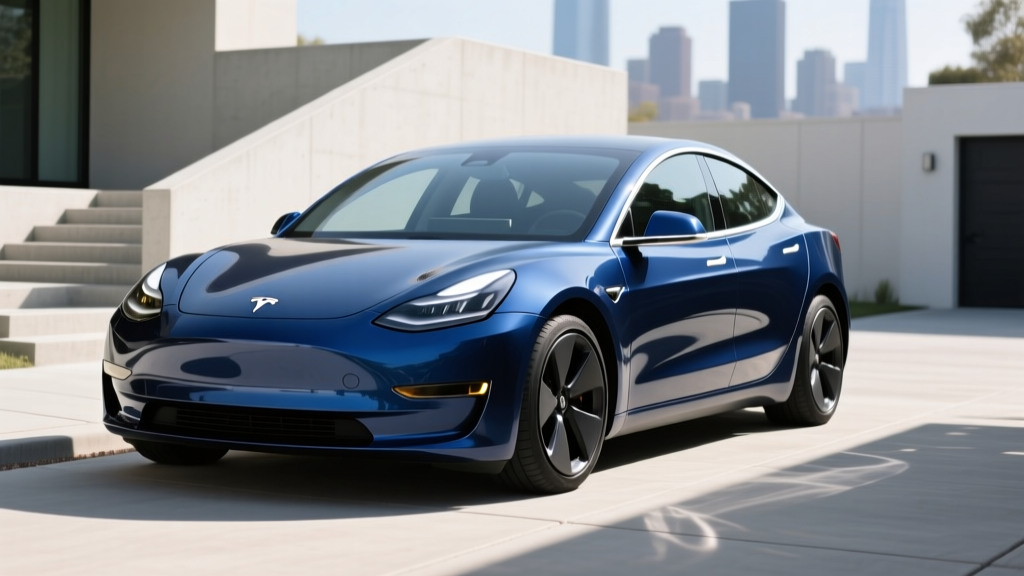
Let's compare a 2026 Tesla Model Y Long Range ($48,990 MSRP) against a 2026 Toyota RAV4 XLE AWD ($33,495 MSRP) over five years and 75,000 miles:
| Category | Tesla Model Y LR | Toyota RAV4 AWD | Difference |
|---|---|---|---|
| Purchase Price (after incentives) | $41,490* | $33,495 | +$7,995 |
| Fuel/Energy (75k miles) | $4,500** | $9,375*** | -$4,875 |
| Insurance (5 years) | $11,250 | $7,500 | +$3,750 |
| Maintenance | $1,800 | $4,200 | -$2,400 |
| Depreciation | $22,000 | $15,000 | +$7,000 |
| Total 5-Year Cost | $81,040 | $69,570 | +$11,470 |
*After $7,500 federal tax credit (assuming eligibility)
**Home charging at $0.14/kWh, 3.5 miles/kWh
***Gas at $3.75/gallon, 30 MPG combined
The EV costs $11,470 more over five years in this scenario, primarily due to higher purchase price, insurance, and depreciation. However, this gap narrows significantly with:
- State/local incentives (California offers up to $7,000 additional rebates)
- Lower electricity rates or solar charging
- Higher annual mileage (fuel savings scale with distance)
- Longer ownership periods (depreciation impact decreases)
Federal Tax Credit Eligibility (IRS §30D)
The federal EV tax credit can offset up to $7,500 of purchase cost, but eligibility depends on multiple factors. Here's the 2026 checklist:
Vehicle Requirements:
- MSRP caps: Vans, SUVs, and trucks ≤$80,000; sedans ≤$55,000
- Battery sourcing: Critical minerals and battery components must meet phased percentage thresholds from US/free-trade-agreement countries (increases annually through 2030)
- Final assembly: Must occur in North America
- Battery capacity: Minimum 7 kWh
Buyer Requirements:
- Income caps: AGI ≤$150,000 (single), ≤$225,000 (head of household), ≤$300,000 (joint)
- Tax liability: Credit is non-refundable; you must owe at least $7,500 in federal taxes to claim the full amount
- Point-of-sale transfer: You can transfer the credit to the dealer for an immediate price reduction (new in 2024, still available in 2026)
Important: Battery sourcing rules tightened significantly in 2024-2026. Many popular models now qualify for only $3,750 or nothing at all. Always verify current eligibility at IRS.gov before purchase.
Charging vs Gas: Cost Per Mile
Electricity costs vary dramatically by location and charging method:
| Scenario | Cost/kWh or Gallon | Vehicle Efficiency | Cost Per Mile |
|---|---|---|---|
| Home charging (national avg) | $0.14/kWh | 3.5 mi/kWh (120 MPGe) | $0.040 |
| Home charging (California) | $0.25/kWh | 3.5 mi/kWh | $0.071 |
| Public DC fast charging | $0.40/kWh | 3.5 mi/kWh | $0.114 |
| Gas car (30 MPG) | $3.75/gallon | 30 MPG | $0.125 |
| Gas car (25 MPG) | $3.75/gallon | 25 MPG | $0.150 |
Home charging delivers 60-70% cost savings versus gas. Public DC fast charging narrows the gap to 10-20% savings. For maximum savings, install a Level 2 home charger and charge overnight on off-peak rates.
Maintenance Savings: Where EVs Win
EVs eliminate many routine maintenance items:
| Service | Gas Car Cost | EV Cost | Savings |
|---|---|---|---|
| Oil changes (every 7,500 mi) | $750 | $0 | $750 |
| Transmission fluid | $300 | $0 | $300 |
| Spark plugs | $400 | $0 | $400 |
| Brake pads (regen reduces wear) | $800 | $200 | $600 |
| Coolant flush | $300 | $300 | $0 |
| Cabin air filter | $250 | $250 | $0 |
| Tire rotation | $200 | $200 | $0 |
| Total | $3,000 | $950 | $2,050 |
EVs save roughly $2,000-$2,500 in maintenance over five years. Regenerative braking extends brake life 2-3x, and the simpler powertrain eliminates dozens of failure-prone components.
Depreciation: The Hidden Cost
EVs historically depreciated faster than gas cars due to:
- Rapid technology advancement: Newer models offer better range/charging, making older EVs less desirable
- Battery degradation concerns: Buyers worry about replacement costs ($5,000-$20,000)
- Price wars: Tesla and others have cut new-vehicle prices, crushing used values
- Tax credit impact: A $7,500 credit on new EVs effectively reduces used-car values by the same amount
However, depreciation is stabilizing as:
- Battery warranties (8 years/100,000 miles) transfer to second owners
- Real-world data shows most EV batteries retain 85-90% capacity at 100k miles
- Charging infrastructure maturity reduces range anxiety
- Used EV tax credit (up to $4,000) boosts demand
According to Kelley Blue Book, 2023-2024 EVs retained 40-50% of value after three years, versus 50-60% for gas cars. The gap is narrowing, especially for popular models like the Tesla Model Y, Ford F-150 Lightning, and Hyundai Ioniq 5.
State and Local Incentives
Note: Incentives vary significantly by location. Check your state energy office and utility provider for current programs.
Beyond federal credits, many regions offer additional savings:
- California: Up to $7,000 (CVRP) + $1,000 utility rebates + HOV lane access
- Colorado: $5,000 state tax credit + utility rebates
- New York: $2,000 rebate + utility incentives
- Texas: $2,500 rebate (limited availability)
- Utility rebates: Many providers offer $500-$1,500 for home charger installation or time-of-use rate discounts
Stacking federal, state, and utility incentives can reduce net purchase cost by $10,000-$15,000 in optimal scenarios, dramatically improving the ownership equation.
Frequently Asked Questions
How much does it really cost to own an EV over 5 years?
Total 5-year costs range from $70,000-$90,000 for mainstream EVs (Tesla Model Y, Ford Mustang Mach-E, Hyundai Ioniq 5), including purchase, fuel, insurance, maintenance, and depreciation. This is typically $5,000-$15,000 more than comparable gas cars, but the gap narrows with incentives, high mileage, and longer ownership periods.
Do I qualify for the federal tax credit?
Eligibility depends on your income (≤$150k single, ≤$300k joint), vehicle MSRP (≤$80k SUVs/trucks, ≤$55k sedans), and battery sourcing compliance. Many popular 2026 models qualify for the full $7,500, but some receive only $3,750 or nothing due to critical mineral rules. Verify at IRS.gov before purchase.
How much do I save on fuel and maintenance?
Typical savings: $4,000-$5,000 on fuel and $2,000-$2,500 on maintenance over five years (75,000 miles). Savings scale with annual mileage and electricity rates. Home charging on off-peak rates maximizes fuel savings; public DC fast charging reduces the advantage.
Are EVs more expensive to insure?
Yes, typically 15-30% higher premiums ($200-$600 annually) due to expensive battery repairs, specialized labor, and higher purchase prices. However, EV-specific policies and usage-based insurance are emerging. Shop multiple insurers and ask about EV discounts.
How well do EVs hold their value?
EVs currently retain 40-50% of value after three years (vs 50-60% for gas cars), but this is improving. Battery warranties transfer to second owners, and real-world degradation data shows most packs retain 85-90% capacity at 100k miles. Popular models like Tesla Model Y and Ford F-150 Lightning depreciate less than niche EVs.
Bottom Line: When Does EV Ownership Make Financial Sense?
EVs offer the best financial case when:
- You qualify for federal + state incentives ($10,000+ total)
- You can charge at home on low electricity rates ($0.10-$0.15/kWh)
- You drive 15,000+ miles annually (fuel savings scale with distance)
- You plan to keep the vehicle 7+ years (depreciation impact decreases)
- You live in a region with strong used EV demand (better resale value)
The insurance premium is real but manageable. Factor in $200-$600 annually for higher premiums, but balance this against $1,000-$1,500 in annual fuel and maintenance savings. For most buyers, the math works in the EV's favor after 5-7 years of ownership, especially with incentives.
For current insurance quotes, compare at least three insurers and specifically ask about EV discounts, telematics programs, and bundled home-auto rates. The market is evolving rapidly, and 2026 policies are more competitive than 2024 offerings.