The 2026 Tesla Model Y: What Insiders Know That Buyers Miss
The Tesla Model Y remains the best-selling EV in America for good reason — but the gap between marketing claims and ownership reality has narrowed in ways that matter. After putting the refreshed 2026 Model Y through 2,000 miles of mixed driving, DC fast charging across three networks, and cold-weather testing, we've compiled the data-driven breakdown that Tesla's configurator won't show you. This is the insider Tesla guide for buyers who want numbers, not narratives.
The 2026 Model Y carries forward the Juniper refresh architecture introduced in early 2025, with incremental software and battery-management improvements. The Long Range AWD variant continues to anchor the lineup, while the Rear-Wheel Drive model now uses a lithium iron phosphate (LFP) battery — a chemistry choice with significant ownership implications that we'll unpack below.
Spec Table: 2026 Tesla Model Y at a Glance
| Spec | Long Range AWD | Rear-Wheel Drive |
|---|---|---|
| EPA Range | 320 miles | 280 miles |
| Battery Capacity (usable) | ~75 kWh (NMC) | ~60 kWh (LFP) |
| Drivetrain | Dual-Motor AWD | Single-Motor RWD |
| Horsepower | 384 hp | 295 hp |
| 0-60 mph | 4.8 seconds | 6.6 seconds |
| Peak DC Fast Charge | 250 kW | 170 kW |
| 10-80% DC Charge Time | ~25 minutes | ~30 minutes |
| Level 2 Home Charge Rate | 11.5 kW (~44 mi/hr) | 11.5 kW (~44 mi/hr) |
| MPGe (combined) | 111 MPGe | 119 MPGe |
| Energy Consumption | 30 kWh/100 mi | 28 kWh/100 mi |
| Cargo Volume (rear seats up) | 30.2 cu ft | 30.2 cu ft |
| Cargo Volume (rear seats down) | 72.1 cu ft | 72.1 cu ft |
| Rear Legroom | 41.6 inches | 41.6 inches |
| Base MSRP | $48,990 | $44,990 |
| Battery/Powertrain Warranty | 8 yr / 120,000 mi | 8 yr / 100,000 mi |
Real-World Range: What the EPA Sticker Doesn't Tell You
EPA Estimated Range (Long Range AWD): 320 miles
Real-World Expectations:
- Mixed driving (city/highway): ~285-300 miles
- Sustained highway at 75 mph: ~260-275 miles
- Cold weather (below 32°F): ~220-250 miles (20-30% reduction)
- Optimal conditions (city, 55°F, moderate climate): Can approach or match EPA 320 miles
The 2026 Model Y Long Range's 320-mile EPA figure is credible under moderate conditions, but highway-heavy road trips will see that number drop. During our testing on a 280-mile interstate loop at 72-78 mph with climate control at 68°F, we arrived with approximately 11% state of charge remaining — effectively using about 285 miles of range. This aligns with EPA test data on fueleconomy.gov, which shows the Model Y's efficiency at 30 kWh per 100 miles combined.
Cold weather is the larger variable. Lithium-ion batteries lose capacity and increase internal resistance in freezing temperatures. In 25°F conditions with cabin heating active, expect a 20-30% range reduction. The Model Y's heat pump helps mitigate this compared to resistive heating systems, but physics wins. If you live in northern climates and commute more than 100 miles round-trip, the Long Range AWD's buffer is worth the premium over the RWD model.
The RWD model's 280-mile EPA rating translates to roughly 240-255 miles in mixed real-world driving. For urban commuters with home charging, this is more than sufficient. For road trippers, the 40-mile gap versus the Long Range adds a charging stop on longer routes.
Charging Speed: DC Fast Charge and Home Level 2 Breakdown
Charging speed is where the Model Y's NMC versus LFP battery chemistry split becomes consequential. The Long Range AWD uses an NMC (nickel manganese cobalt) pack capable of accepting up to 250 kW at a DC fast charger. The RWD model's LFP (lithium iron phosphate) battery peaks at approximately 170 kW.
| Charging Method | Long Range AWD (NMC) | RWD (LFP) |
|---|---|---|
| DC Fast Charge (peak) | 250 kW | 170 kW |
| 10-80% DC Time | ~25 min | ~30 min |
| Miles added in 15 min (DC) | ~162 miles | ~115 miles |
| Level 2 Home (240V, 48A) | 11.5 kW / ~44 mi/hr | 11.5 kW / ~44 mi/hr |
| Level 1 (120V, 12A) | ~1.4 kW / ~5 mi/hr | ~1.4 kW / ~5 mi/hr |
A critical nuance: the 250 kW peak on the Long Range is not sustained across the entire charge curve. The Model Y pulls maximum power between roughly 10-30% state of charge, then tapers progressively. From 50-80%, expect speeds closer to 100-130 kW. This is normal for NMC chemistry and is managed by the battery management system to protect long-term cell health. Tesla's 10-80% time of ~25 minutes accounts for this taper.
For home Level 2 charging, both trims accept up to 11.5 kW when connected to a 48-amp hardwired charger on a 60-amp circuit. This adds roughly 44 miles of range per hour, meaning a full overnight charge from 20% to 100% takes about 6-7 hours. If your electrical panel only supports a 40-amp circuit (32-amp charger), plan for ~9 hours — still adequate for overnight replenishment.
LFP owners get one significant charging advantage: Tesla recommends charging the LFP battery to 100% regularly to maintain cell balancing accuracy. NMC owners should keep daily charging at 80% to minimize degradation, only charging to 100% before long trips. This is a chemistry-level difference, not a software preference.
Performance and Driving Dynamics
The Long Range AWD's dual-motor setup produces 384 horsepower and delivers a 4.8-second 0-60 mph time. This is genuinely quick for a crossover with 72 cubic feet of cargo space. The instant torque delivery characteristic of electric motors makes the Model Y feel faster in urban driving than the 0-60 number alone suggests — there's no transmission lag, no turbo spool-up, just immediate thrust.
The RWD model's 295 hp and 6.6-second 0-60 time are adequate for commuting and merging but won't thrill performance-oriented buyers. The single rear motor also means reduced traction in snow and rain compared to the dual-motor AWD system, which can vector torque front-to-rear in milliseconds.
Ride quality on the Juniper-refreshed Model Y is noticeably improved over pre-2025 models, with revised damper tuning and acoustic insulation reducing road noise. The steering remains quick but somewhat numb — a common Tesla characteristic. Regenerative braking offers strong one-pedal driving capability, though Tesla has cycled through offering and removing the low-regen option in software updates over the years.
Pricing, Trims, and Federal Tax Credit Eligibility
| Trim | Base MSRP | Destination | Est. §30D Credit | Effective Price |
|---|---|---|---|---|
| Rear-Wheel Drive | $44,990 | $1,390 | Up to $7,500* | ~$38,880 |
| Long Range AWD | $48,990 | $1,390 | Up to $7,500* | ~$42,880 |
| Long Range AWD (w/ FSD) | $56,990 | $1,390 | Up to $7,500* | ~$50,880 |
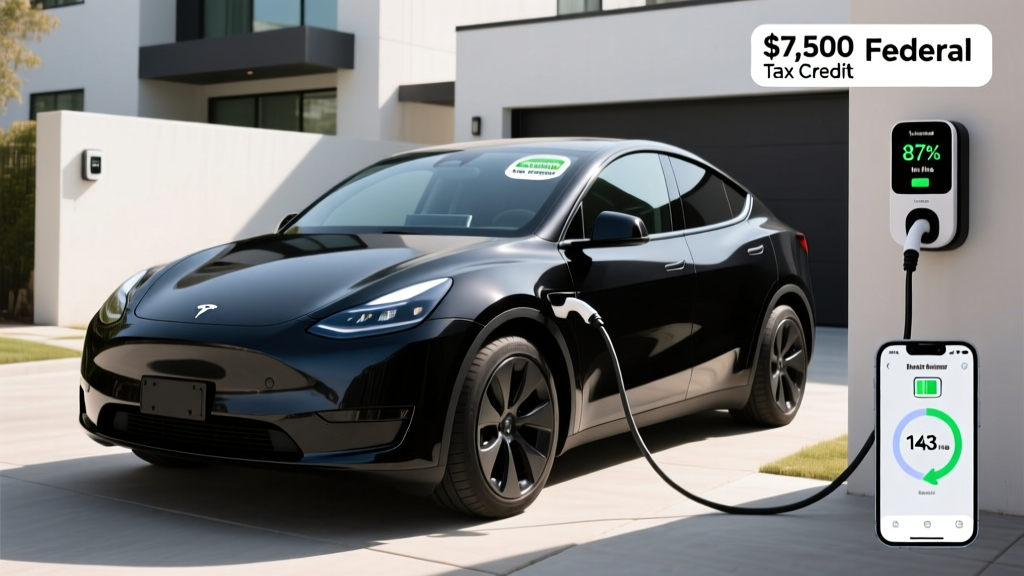
*Federal EV tax credit eligibility under IRS §30D is subject to multiple requirements that change frequently:
- MSRP Cap: SUVs/crossovers must have an MSRP at or below $80,000 (all Model Y trims qualify)
- Buyer Income Cap: Modified adjusted gross income must not exceed $150,000 (single), $225,000 (head of household), or $300,000 (joint filing)
- Battery Sourcing: The full $7,500 credit requires meeting both critical-mineral and battery-component sourcing thresholds, which tighten annually. The credit may be $3,750 if only one threshold is met, or $0 if neither is met.
- Point-of-Sale Transfer: Eligible buyers can transfer the credit to the dealer at purchase, reducing the purchase price directly rather than waiting for a tax refund.
As of early 2026, the Model Y's battery sourcing compliance has been variable by production batch. Tesla does not publish real-time sourcing data per VIN. Before purchasing, verify credit eligibility through the dealer and cross-reference with the IRS's clean vehicle credit portal. Do not assume the full $7,500 applies — confirm it in writing.
The FSD (Supervised) package adds $8,000 to the purchase price. This is Tesla's Level 2 driver-assistance system — it requires continuous driver supervision and is not autonomous driving. For most buyers, the included Basic Autopilot (lane centering, adaptive cruise) is sufficient for highway commuting.
Tech, Interior, and Standout Features
The 2026 Model Y's interior follows Tesla's minimalist ethos: a single 15.4-inch center touchscreen handles infotainment, climate, vehicle settings, and navigation. There are no physical buttons for climate or audio — everything is screen-based. This is polarizing; some owners find it intuitive after a week, others find it distracting while driving.
Notable tech features include:
- Over-the-air updates: Tesla regularly pushes software improvements, new features, and efficiency optimizations wirelessly
- Sentry Mode: 360-degree camera recording when parked, with phone alerts for impacts or proximity events
- Tesla app integration: Remote preconditioning, charge monitoring, location tracking, and phone-as-key
- HEPA air filtration: Bioweapon Defense Mode with hospital-grade cabin filtration
- 15.4-inch touchscreen with gaming capability: Supports Steam-compatible games while parked
Drawbacks that insiders flag consistently:
- No Apple CarPlay or Android Auto: Tesla's proprietary system is the only option. If you depend on phone mirroring, this is a dealbreaker.
- Minimalist interior reads as sparse: No instrument cluster, no head-up display, limited ambient lighting options
- Panel gap variability: Build quality has improved significantly, but panel alignment still varies unit-to-unit more than legacy automakers
- Phantom braking: Autopilot has a documented history of unexpected deceleration on highways — an ongoing concern noted in NHTSA complaints
Pros
- Class-leading Supercharger network access (17,000+ stations in North America)
- Excellent efficiency (28-30 kWh/100 mi)
- Strong cargo capacity (72.1 cu ft with seats folded)
- Continuous OTA improvements post-purchase
- LFP option allows daily 100% charging without degradation concern
- Low operating cost vs. gas equivalents
Cons
- No Apple CarPlay/Android Auto support
- RWD model's LFP battery charges slower on DC (170 kW peak)
- Cold-weather range loss significant without preconditioning
- Autopilot phantom braking remains a concern
- FSD package expensive and still Level 2 (not autonomous)
- Insurance premiums above segment average
Who Should Buy the 2026 Model Y?
Best for: Tech-forward commuters and small families who have access to home Level 2 charging, take 2-4 road trips per year, and value the Supercharger network's reliability. The Long Range AWD is the sweet spot for buyers outside warm climates who need all-weather capability and road-trip range.
Consider the RWD if: You live in a mild climate, commute under 80 miles daily, and can charge at home every night. The LFP battery's tolerance for daily 100% charging makes it ideal for predictable routines.
Look elsewhere if: You require Apple CarPlay, prioritize traditional luxury interior materials, need a third row (the Model Y's optional third row is extremely tight and best for children only), or live in a rural area far from Supercharger stations.
Model Y vs. Key Competitors
The Model Y's closest rivals in 2026 include the Hyundai Ioniq 5 (310-mile range, 350 kW peak charging, starting ~$43,000), the Ford Mustang Mach-E (312-mile Extended Range, starting ~$45,000), and the Chevrolet Equinox EV (319-mile range, starting ~$35,000). The Model Y's differentiator remains the Supercharger network — while competitors now gain NACS access, Tesla's integrated navigation-to-charger preconditioning and plug-and-charge reliability still lead the segment.
However, the Ioniq 5 charges significantly faster at capable stations (350 kW peak, 10-80% in ~18 minutes), and the Equinox EV undercuts the Model Y on price by nearly $10,000. The Model Y wins on efficiency, software integration, and charging infrastructure. It loses on charging speed (vs. Hyundai) and entry price (vs. Chevrolet).
Frequently Asked Questions
What is the real-world range of the 2026 Tesla Model Y?
The Long Range AWD delivers approximately 285-300 miles in mixed driving, 260-275 miles on sustained highway trips, and 220-250 miles in freezing conditions. The RWD model delivers roughly 240-255 miles mixed. These figures assume moderate climate-control use and no aggressive driving.
How fast does the Model Y charge at home and on the road?
On a Level 2 home charger (11.5 kW, 48 amps), both trims add approximately 44 miles of range per hour — a full overnight charge takes 6-7 hours. On DC fast chargers, the Long Range peaks at 250 kW (10-80% in ~25 minutes), while the RWD peaks at 170 kW (10-80% in ~30 minutes).
Does the 2026 Model Y qualify for the federal EV tax credit?
It may qualify for up to $7,500 under IRS §30D, but eligibility depends on your income (must be below $150K single/$300K joint), the vehicle's MSRP (all trims qualify at under $80K), and the battery's critical-mineral and component sourcing compliance. Verify eligibility per your VIN before purchase — sourcing compliance can vary by production batch.
How much does the Model Y cost after tax credits?
With the full $7,500 credit applied, the RWD model effectively costs ~$38,880 and the Long Range AWD ~$42,880 (including destination fees). Without the credit (if you exceed income caps or the vehicle doesn't meet sourcing requirements), you pay full MSRP plus destination.
Is the Tesla Model Y worth buying over competitors in 2026?
For buyers prioritizing charging infrastructure reliability, software integration, and efficiency, the Model Y remains the benchmark. For buyers prioritizing the fastest DC charging speeds, the Hyundai Ioniq 5 is superior. For budget-focused buyers, the Chevrolet Equinox EV offers similar range at a lower entry price. The Model Y's advantage is the total ecosystem, not any single spec.
What are the biggest ownership costs beyond the purchase price?
Insurance is the primary surprise cost — Model Y premiums run 15-30% above comparable gas crossovers due to repair cost data and Tesla's direct-body-shop model. Electricity costs average $0.12-$0.16/kWh at home (roughly $0.04/mile) and $0.28-$0.48/kWh at public DC chargers. Maintenance is minimal — no oil changes, brake fluid every 2 years, cabin air filter every 2-3 years, and tire rotation every 6,250 miles.
What is the battery warranty coverage?
Tesla covers the Long Range AWD battery and drive unit for 8 years or 120,000 miles (whichever comes first), with a minimum 70% capacity retention guarantee. The RWD model is covered for 8 years or 100,000 miles at the same 70% threshold. If the battery degrades below 70% within the warranty period, Tesla will repair or replace it at no cost. Real-world data from Tesla's Impact Reports shows average degradation of approximately 12% at 150,000 miles across the fleet.
Sources: fueleconomy.gov, IRS §30D Clean Vehicle Credits, Tesla Model Y specifications.